Agents
Tool Use
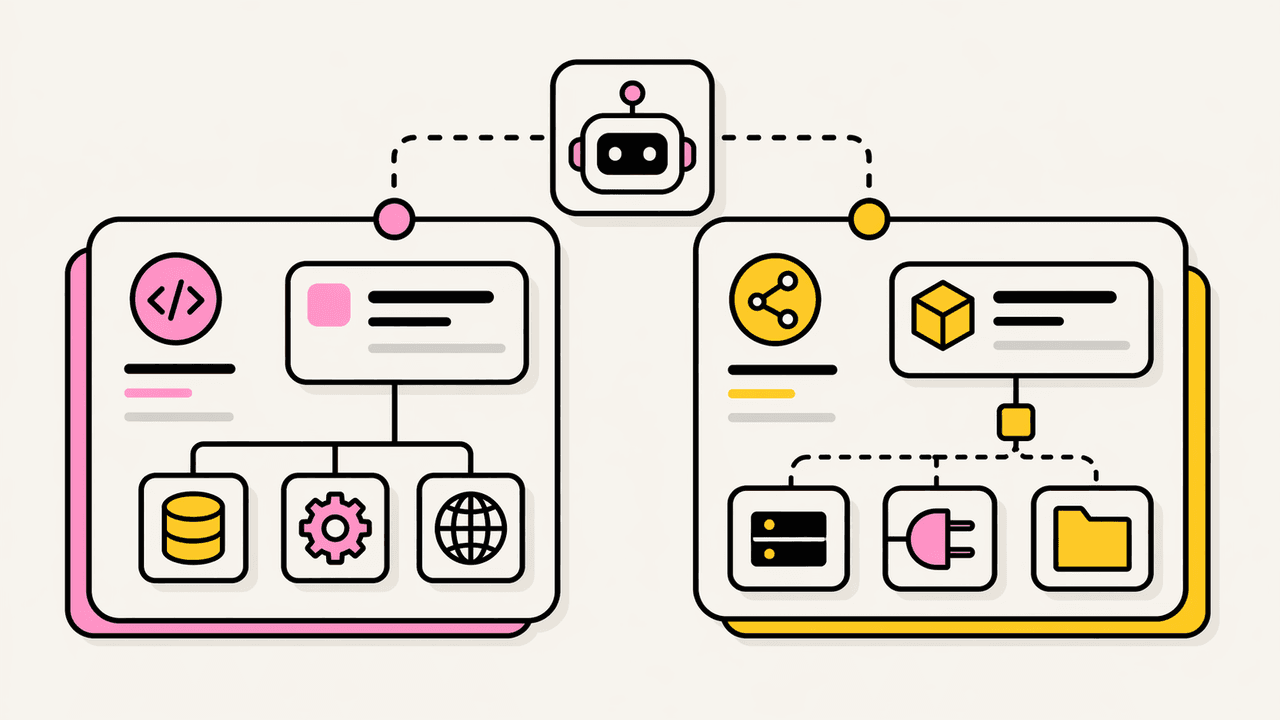
A model capability where the LLM can invoke external tools - running code, searching the web, reading files, calling APIs - as part of generating a response.
In depth
A model capability where the LLM can invoke external tools - running code, searching the web, reading files, calling APIs - as part of generating a response. Tool use turns a passive text generator into an active agent that can interact with the real world.
Example
In practice, developers reach for Tool Use when they need the capability described above as part of an AI feature or workflow.
Go deeper at Developers Digest
Hands-on guides, comparisons, and tutorials that cover Agents.
FAQ
Common questions
What is Tool Use?
A model capability where the LLM can invoke external tools - running code, searching the web, reading files, calling APIs - as part of generating a response.
Why does Tool Use matter for AI developers?
Tool Use sits in the Agents part of the AI stack. Understanding it helps you make better decisions when building, debugging, and shipping AI features.
Where can I learn more about Tool Use?
Developers Digest publishes tutorials and videos that cover Agents topics including Tool Use. Check the blog and YouTube channel for hands-on walkthroughs.
Related
Related terms
Agents
tau-bench
A benchmark from Sierra that tests agents in multi-turn customer-service conversations, where a language-model-simulated user talks to an agent that has domain API tools and a written policy to follow.
Agents
Agent Handoffs
A multi-agent mechanism where one agent passes control of the conversation to a more specialized agent, rather than calling it as a subroutine.
Agents
Token Budget
A limit on how many tokens a model or agent may spend on a task, used to control cost and stop long runs from sprawling.
Put this concept to work
Get Smarter About AI Dev
New tutorials, open-source projects, and deep dives on coding agents - delivered weekly.
One email per weekReal code, not theoryFree forever