Briefing · Saturday, June 20, 2026
Hyundai Owns Boston Dynamics, AlphaFold's Creator Joins Anthropic, and Norway Bans AI in Schools
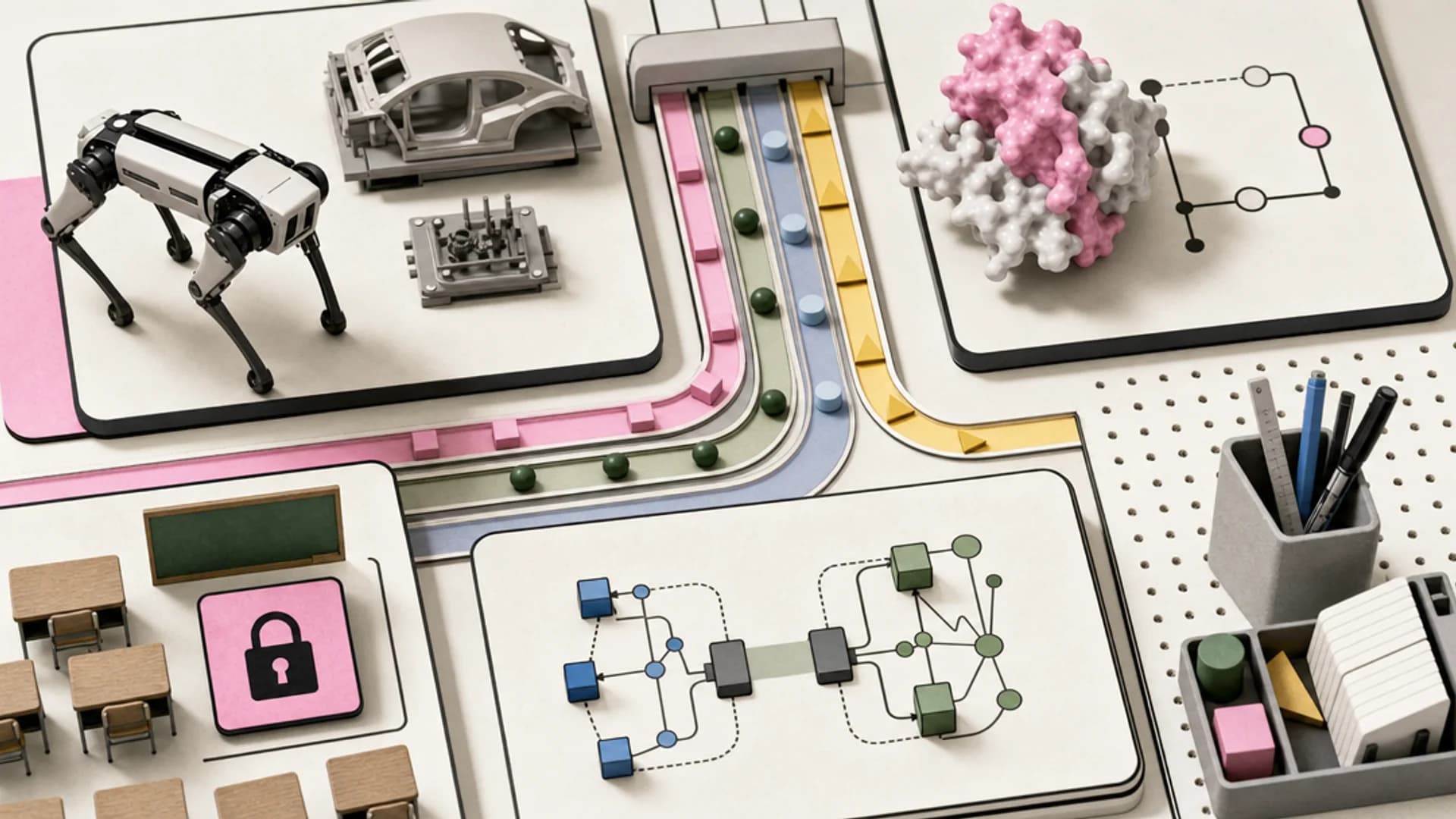
Good morning. It's Saturday, June 20, and we're covering Hyundai completing its acquisition of Boston Dynamics, AlphaFold's lead researcher joining Anthropic, and Norway becoming the first country to ban AI assistants from elementary classrooms.
The Boston Dynamics thread hit 831 points as developers digested what full Hyundai ownership means for robotics research. The Norway ban sparked 472 comments debating whether protecting children from AI dependence is wise policy or counterproductive Luddism.
In today's brief:
- Hyundai pays $325M to own Boston Dynamics outright as SoftBank exits
- John Jumper, AlphaFold's creator and Nobel laureate, announces he's joining Anthropic
- Norway imposes a near-total ban on AI in elementary schools
- Dan Abramov explains the architectural difference that makes ATProto fundamentally unlike Mastodon
THE BIG ONE
Hyundai Takes Full Control of Boston Dynamics
SoftBank is out. Hyundai Motor Group is acquiring SoftBank's remaining 9.65% stake in Boston Dynamics for $325 million, completing full ownership of the robotics company.
The ownership history tells a story about what Big Tech actually wants from robotics. Google bought Boston Dynamics in 2013 during its robotics shopping spree, then sold it to SoftBank in 2017 after deciding the technology was too far from commercialization. Hyundai bought 80% in 2021 at roughly a $1.1 billion valuation. Now SoftBank is cashing out what remains.
What changes: Hyundai does not need to imagine the first customer. It owns the factories, the vehicle programs, and now the whole robotics company. The electric Atlas humanoid is expected to begin work at Hyundai's Georgia EV plant by 2028. The HN thread (831 points, 362 comments) noted that industrial deployment gives Atlas a forcing function that pure research labs never provided.
Why it matters: Boston Dynamics has been research-first for over three decades. Full Hyundai ownership shifts the incentive toward production-first engineering. Whether that accelerates or constrains the work depends on how much autonomy the Georgia plant demands versus tolerates.
TALENT
John Jumper Joins Anthropic
John Jumper, the DeepMind researcher who led the AlphaFold project and shared the 2024 Nobel Prize in Chemistry, announced he is joining Anthropic.
The HN thread (134 points, 101 comments) framed this as the second major talent move this week, following Noam Shazeer's departure from Google to OpenAI. For a field supposedly defined by scale and compute, a remarkable amount of value follows individual researchers.
Jumper's work on AlphaFold solved a 50-year problem in computational biology: predicting protein structure from amino acid sequences. His arrival at Anthropic signals either a push toward scientific research applications or a belief that protein-folding intuitions transfer to language model alignment.
Why it matters: Frontier labs are competing not just on models but on the researchers who know how to make systems reliable on hard problems. Jumper is one of the few people who has shipped a breakthrough that biologists actually use in production.
POLICY
Norway Bans AI in Elementary Schools
Norway's Ministry of Education announced a near-total ban on AI assistants in elementary schools, citing concerns about dependency and the development of foundational skills.
The HN discussion (671 points, 472 comments) split between those who see this as protecting children from outsourcing cognitive development and those who argue it will leave Norwegian students unprepared for an AI-native economy. The policy applies to students through age 12 and takes effect in September.
Norway joins a growing list of jurisdictions restricting AI in education, though most policies have focused on exam integrity rather than developmental concerns. This is the first national ban framed explicitly around skill formation.
Why it matters: The debate is no longer about whether students will use AI but whether early exposure helps or harms cognitive development. Norway is betting that foundational skills require friction, and AI removes too much of it.
INFRASTRUCTURE
Dan Abramov Explains ATProto's Architecture
Dan Abramov published There Are No Instances in ATProto, an explanation of why Bluesky's underlying protocol differs fundamentally from Mastodon's federation model.
The key insight: ATProto separates hosting from aggregation. Your posts exist on a hosting provider you control, and applications aggregate content from all users' hosts. Mastodon bundles hosting and application into "instances" that must federate with each other. Abramov frames it as the difference between RSS plus Google Reader versus email servers that sometimes refuse to talk to each other.
The HN thread (450 points, 227 comments) surfaced the practical implications: you can switch ATProto hosts without losing followers, and new applications can aggregate the entire network without permission from existing players.
Why it matters: Decentralization is a design space, not a single solution. Understanding the hosting-versus-aggregation split clarifies what Bluesky is actually building and why developer adoption patterns might diverge from Mastodon's.
RESEARCH
GPT-5.5 Hallucinates 3x More Than GLM-5.2 on New Benchmark
Oliver Shrimpton published benchmarks showing GPT-5.5 hallucinating at 86% on the AA-Omniscience benchmark while GLM-5.2 - the MIT-licensed open-weights model from Z.ai - hallucinates at 28%.
The test methodology used identical system prompts, temperature 1, and the same reasoning effort settings. On the Artificial Analysis Intelligence Index, GLM-5.2 scored within 4 points of GPT-5.5 and 9 points of Fable 5 despite being open weights and running at a fraction of the inference cost.
The HN thread (165 points, 46 comments) debated whether hallucination benchmarks measure anything developers should optimize for, or whether they conflate calibration with capability.
Why it matters: Open-weights models reaching near-frontier benchmark scores while maintaining better calibration changes the cost-quality tradeoff. For tasks where hallucination rates matter more than peak capability, the math may already favor self-hosted or open-weights routing. Our GLM-5.2 vs DeepSeek V4 vs Qwen3 comparison covers the full open-weights landscape.
WHAT ELSE IS HAPPENING
- AI engineer claims to have cracked Linear A (426 points): Tom Di Mino says he deciphered the 3,500-year-old Minoan script using Claude Code and systematic analysis. His findings are under review at Rutgers and Cambridge.
- Project Valhalla ships in JDK 28 (595 points): After a decade of work, Java gets value classes that "code like a class but work like an int." Our Valhalla breakdown covers what actually changes.
- Is AI ruining our skills? Early results are in (224 points): Nature reports on research showing AI assistance may degrade foundational skills over time.
- Companies rein in AI usage as costs strain budgets (114 points): The FT reports enterprises pulling back on AI deployments as inference bills hit budget ceilings.
- Court records should be free (376 points): The EFF argues PACER's paywall undermines access to justice.
- ClickHouse turns 10 in open source (306 points): A retrospective on the columnar database's decade of public development.
Every link above goes to a primary source or our sourced coverage. Tomorrow's brief lands when the news does - subscribe to get it by email.
Get the next one in your inbox
The daily brief, delivered. Free, unsubscribe anytime.