Qualcomm Modular Acquisition: What It Means for AI Developers

TL;DR
Qualcomm is acquiring Modular for $3.9 billion.
Official Sources#
| Source | Description |
|---|---|
| Qualcomm Acquisition Announcement | Official Qualcomm press release |
| Modular Blog Post | Official Modular announcement |
| Modular Pricing | MAX and Mojo pricing tiers |
| Modular Documentation | MAX and Mojo developer docs |
| Modular GitHub | Open-source components |
| MAX Open Source Page | MAX inference framework details |
Qualcomm announced on June 24, 2026, that it will acquire Modular for approximately $3.9 billion in an all-stock deal. The transaction is expected to close in the second half of 2026.
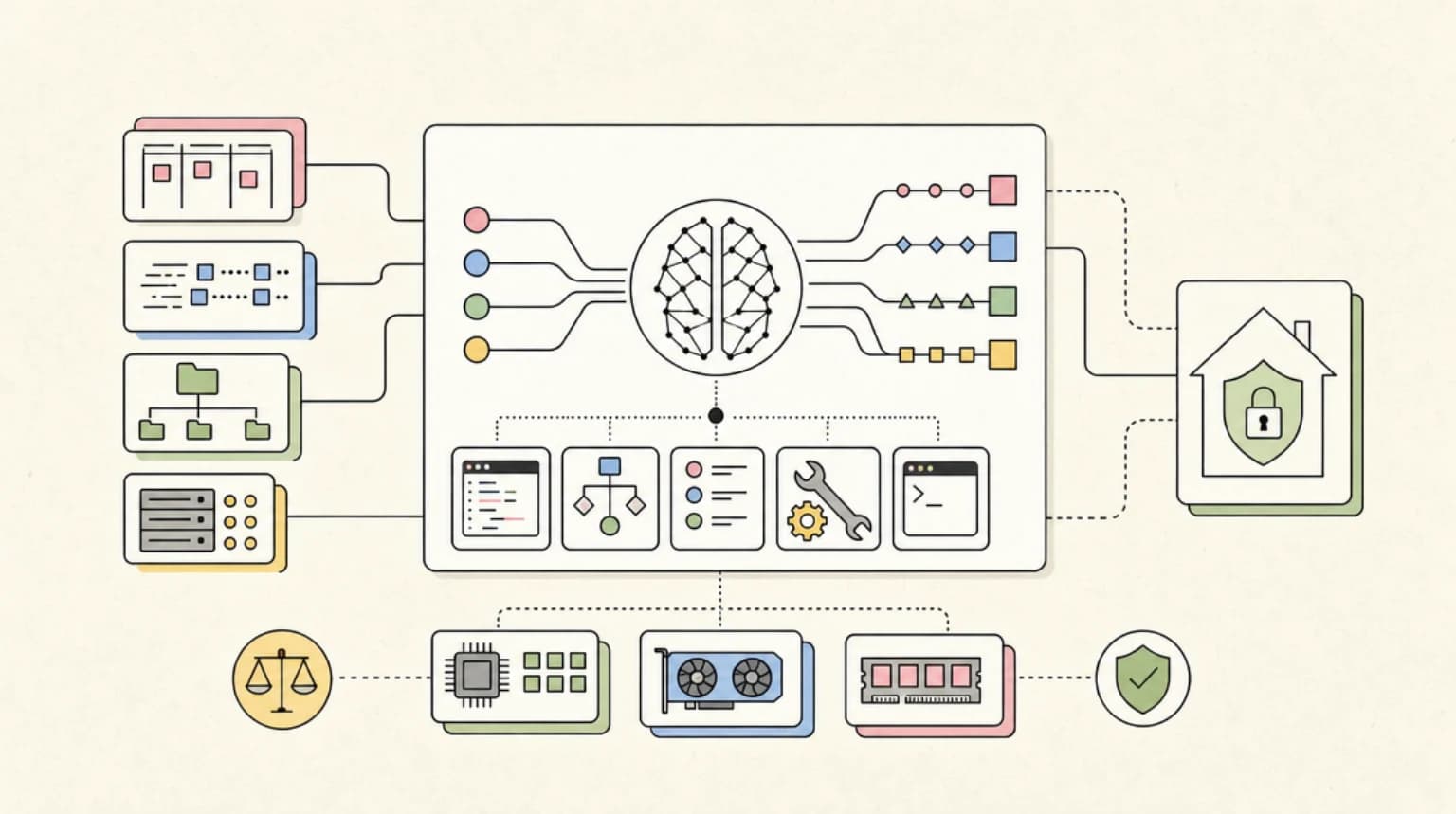
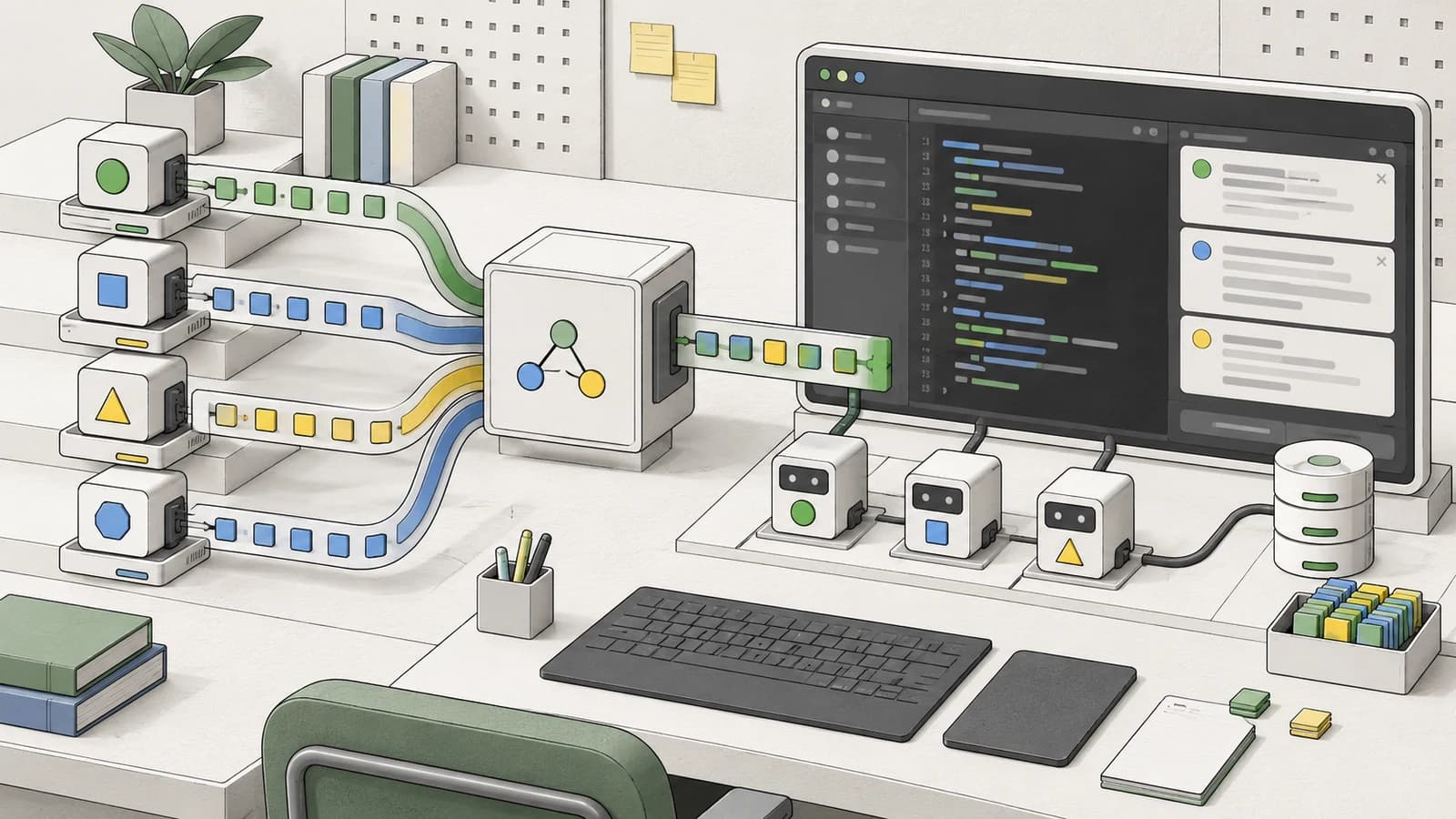
For AI developers, this is a significant infrastructure move. Modular builds the software that lets AI models run across different hardware architectures - NVIDIA, AMD, Intel, ARM, and custom chips - without requiring per-accelerator rewrites. The acquisition pairs Qualcomm's silicon roadmap with Modular's Mojo programming language and MAX inference engine.
This guide covers what the deal means for developers currently using or evaluating Modular's stack, what changes (and what stays the same), and the broader implications for the AI infrastructure landscape.
Last updated: July 18, 2026
What Modular Actually Does#
Modular is a software company, not a chip company. It builds two main products:
MAX is a high-performance inference framework that serves AI models across CPU, GPU, NPU, and custom ASIC architectures. It provides OpenAI-compatible REST endpoints for generative AI models, supports over 1,000 pre-configured models from Hugging Face (including DeepSeek and Kimi), and abstracts hardware complexity so the same deployment works on NVIDIA, AMD, and Apple GPUs.
Mojo is a programming language designed for AI and systems work. It lets developers write custom GPU kernels that run on multiple hardware targets without rewriting for each accelerator. The Mojo standard library is open-source on GitHub, and Modular has committed to open-sourcing the compiler by the end of 2026.
The value proposition is hardware portability. Code optimized for NVIDIA GPUs does not transfer cleanly to AMD or Intel hardware because of CUDA lock-in. Modular's stack attacks that barrier by abstracting hardware behind a unified development and serving layer.
The Deal Structure#
Equity holders of Modular will receive up to 19.2 million newly issued Qualcomm common shares through a private placement. At Qualcomm's stock price at announcement, that values the deal at approximately $3.9 billion.
Modular's entire workforce - around 150 employees - will integrate into Qualcomm's engineering divisions. Chris Lattner, Modular's co-founder and CEO (and the creator of LLVM and Swift), is expected to lead the combined AI software efforts.
The transaction is subject to customary closing conditions and regulatory approvals.
What This Means for Qualcomm#
Qualcomm has a hardware problem that software can solve. Its Snapdragon X processors, cloud AI accelerators, and edge NPUs compete in markets where NVIDIA's CUDA ecosystem creates sticky developer lock-in. Developers write code for CUDA, optimize for CUDA, and stay on NVIDIA hardware because switching costs are high.
Modular's MAX and Mojo directly lower those switching costs. A model served through MAX can run on Qualcomm silicon, NVIDIA GPUs, AMD GPUs, or ARM CPUs without code changes. That makes Qualcomm's hardware more viable for developers who do not want to rewrite their inference stack for every accelerator.
The strategic bet is that software portability increases hardware optionality, and hardware optionality increases Qualcomm's addressable market.
What This Means for Developers Using Modular Today#
Modular has stated that MAX will remain open and continue to support third-party hardware after the acquisition. The current licensing and pricing model is not expected to change immediately.
Current pricing (verified July 2026):
| Edition | Price | Use Case |
|---|---|---|
| Self-Hosted Community | Free forever | Development, research, learning, and production on x86/ARM CPU or NVIDIA GPU |
| Self-Hosted Enterprise | Contact sales | On-premises deployment with SLAs |
| Modular Cloud | Per-token or per-minute | Managed inference endpoints |
| BYOC (Your Cloud) | Per-minute reserved GPU | Guaranteed low-latency availability |
The Self-Hosted Community edition covers most developer use cases at no cost. Production-commercial use is free on x86, ARM CPUs, and NVIDIA GPUs.
What to watch:
-
Qualcomm hardware prioritization. Post-acquisition, expect Qualcomm accelerators to receive first-class optimization in MAX. This is a feature, not a bug - it means better performance on Qualcomm silicon. But if you are evaluating MAX for AMD or Intel hardware, watch for any deprioritization signals.
-
Mojo compiler open-sourcing. Modular committed to open-sourcing the Mojo compiler by end of 2026. That timeline may shift depending on how the acquisition integrates. The standard library is already open-source.
-
Enterprise pricing. Self-hosted community remains free, but enterprise tiers may see adjustments as Qualcomm integrates Modular's sales motion.
MAX vs NVIDIA TensorRT and Other Inference Servers#
MAX competes with NVIDIA TensorRT, vLLM, TGI (Text Generation Inference), and other model serving stacks. The differentiator is hardware portability.
| Feature | MAX | TensorRT | vLLM | TGI |
|---|---|---|---|---|
| Hardware portability | NVIDIA, AMD, Intel, ARM, Apple | NVIDIA only | NVIDIA primarily | NVIDIA primarily |
| OpenAI-compatible API | Yes | No | Yes | Yes |
| Custom kernel language | Mojo | CUDA/C++ | CUDA/Triton | CUDA/Triton |
| Open-source | Partially (stdlib, runtime) | No | Yes | Yes |
| Pre-configured models | 1,000+ from HuggingFace | Limited | Many | Many |
If you are locked into NVIDIA and will stay on NVIDIA, TensorRT often delivers the best raw performance. If you want to hedge across hardware vendors or deploy on non-NVIDIA infrastructure, MAX provides a path without code rewrites.
Mojo for AI Developers#
Mojo is a superset of Python syntax designed for performance-critical AI workloads. It compiles to LLVM and runs kernels on multiple GPU architectures.
When to consider Mojo:
- You need custom GPU kernels that run on multiple hardware targets
- You want Python-like syntax with C-level performance
- You are building inference pipelines that must be portable across cloud and edge
When to stick with Python + existing frameworks:
- Your workload runs fine on existing inference servers
- You do not need hardware portability
- Your team is not ready to adopt a new language
Mojo is not a Python replacement for application code. It is a systems language for the performance-sensitive parts of AI pipelines.
The Broader AI Infrastructure Shift#
This acquisition is part of a larger pattern: the AI infrastructure layer is consolidating around a few competing stacks.
NVIDIA's stack: CUDA, cuDNN, TensorRT, Triton. The incumbent with the deepest ecosystem and the highest switching costs.
The open/portable stack: MAX, Mojo, vLLM, Triton (the kernel language, not NVIDIA Triton Inference Server), and various OpenCL/SYCL efforts. Hardware-agnostic by design.
Cloud provider stacks: AWS Inferentia/Trainium with Neuron SDK, Google TPUs with JAX, Azure FPGA/ASIC efforts. Tied to specific cloud infrastructure.
Qualcomm acquiring Modular strengthens the open/portable stack by adding chip-level resources to the software effort. Whether that is enough to break CUDA's moat depends on execution.
Getting Started with MAX#
If you want to evaluate MAX before the acquisition closes:
# Install MAX (requires Docker or native install)
curl https://get.modular.com | sh

# Serve a model with OpenAI-compatible API
max serve --model deepseek-coder-7b-instruct

# Call the endpoint
curl http://localhost:8000/v1/completions \
  -H "Content-Type: application/json" \
  -d '{"model": "deepseek-coder-7b-instruct", "prompt": "def fibonacci(n):"}'
For Mojo:
# Install Mojo
curl https://get.modular.com | sh -s -- mojo

# Run a Mojo program
mojo run hello.mojo
Full documentation is at docs.modular.com.
My Take#
The Qualcomm-Modular deal is strategically coherent. Qualcomm needs software to make its hardware competitive against NVIDIA's ecosystem lock-in. Modular has the best hardware-agnostic AI inference stack in the market and a programming language designed for portability.
For developers, the immediate impact is minimal - MAX remains free for most use cases, and Modular has committed to continuing third-party hardware support. The longer-term question is whether Qualcomm's ownership shifts priorities toward its own silicon at the expense of the hardware-neutral mission.
If you are currently evaluating inference stacks and want to avoid CUDA lock-in, MAX is worth a serious look before the acquisition landscape settles. If you are already on NVIDIA and happy there, this deal does not change your calculus today.
FAQ#
Is MAX still free after the Qualcomm acquisition?#
As of July 2026, the Self-Hosted Community edition remains free for development, research, and production use on x86/ARM CPUs and NVIDIA GPUs. Modular has stated that pricing is not expected to change immediately post-acquisition.
Will MAX still support non-Qualcomm hardware?#
Modular has stated that MAX will remain open and continue supporting third-party hardware. Watch for any changes in optimization priority or feature parity across hardware vendors post-acquisition.
When will the Mojo compiler be open-sourced?#
Modular committed to open-sourcing the Mojo compiler by the end of 2026. The standard library is already open-source on GitHub.
Should I switch from TensorRT to MAX?#
If you are on NVIDIA hardware and performance is your only concern, TensorRT often delivers the best raw performance. Consider MAX if you want hardware portability, plan to deploy on non-NVIDIA infrastructure, or want OpenAI-compatible APIs without additional tooling.
When does the acquisition close?#
The transaction is expected to close in the second half of 2026, subject to regulatory approvals and customary closing conditions.
What happens to Modular's employees?#
Modular's entire workforce of approximately 150 employees will integrate into Qualcomm's engineering divisions. Chris Lattner is expected to lead the combined AI software efforts.
How does this affect CUDA's market position?#
The acquisition strengthens the hardware-agnostic alternative to CUDA by pairing Modular's software with Qualcomm's chip resources. Whether it is enough to break CUDA's ecosystem lock-in depends on execution and developer adoption.
Continue Reading#
- Claude Managed Agents: Dreaming, Outcomes, and Multi-Agent Orchestration Explained
- Claude Science Developer Guide 2026: AI Workbench for Research
- Cloudflare Billable Usage API: Programmatic Cost Visibility for Agent-Run Accounts
Sources#
- Qualcomm Press Release - June 24, 2026
- Modular Announcement - June 24, 2026
- Modular Pricing - Verified July 18, 2026
- Modular Documentation - Verified July 18, 2026
- Quartz Coverage - June 24, 2026
- AI Business Coverage - June 24, 2026
Get the next deep dive like this in your inbox
One email a week on AI Infrastructure and the rest of the AI dev stack. Free.
Read next
The Best Local Coding LLMs in 2026: Run Enterprise-Grade AI Without the Cloud
Choosing a local coding LLM in 2026 means balancing benchmark performance, hardware cost, and the compliance pressure to keep code off third-party servers. Here is what to run and on what hardware.
8 min readSelf-Hosting Open-Weights Models: The Real Break-Even Math
Open weights are free to download, but inference is not free to run. Here is the honest break-even math on when self-hosting GLM-5.2, DeepSeek V4, or Llama beats paying per-token API prices - GPU rental and ownership costs, real throughput, utilization, the crossover in tokens per month, and the hidden ops bill nobody budgets for.
11 min readAI Infrastructure Agents Need Spend Guardrails
The viral DN42 AWS bill story is funny until you realize the missing primitive: infrastructure agents need hard cloud-spend guardrails before they touch real accounts.
8 min readNew here? Start with
Technical content at the intersection of AI and development. Building with AI agents, Claude Code, and modern dev tools - then showing you exactly how it works.