Demis Hassabis Wants a Frontier AI Standards Body. Here Is the Plan.

TL;DR
The DeepMind chief posted a detailed proposal for a US-led standards body to test frontier models before release, modeled on FINRA.
On July 14, Google DeepMind CEO Demis Hassabis posted a long essay on X laying out something the AI field has mostly avoided putting on paper: a concrete institutional design for governing frontier models. Not a manifesto about risk, and not a call for a new government agency, but a specific structure with a funding model, a review timeline, and a definition of which models are even in scope.
It is worth reading closely, because it is one of the few frontier-lab proposals detailed enough to argue with. Here is what it actually says, and where it gets hard.
The core idea: a standards body, not a regulator#
Hassabis proposes a US-led Frontier AI Standards Body modeled on FINRA, the Financial Industry Regulatory Authority that oversees Wall Street brokerages. The comparison is deliberate. FINRA is industry-funded but operates independently, under federal oversight, as a self-regulatory organization rather than a government department.
Applied to AI, that means a body that is:
- Funded mostly by industry, because the funding "would need to be substantial" to attract world-class technical talent and pay for the compute needed to run large-scale model testing.
- Operated independently, with a board that includes independent technical experts and open-source representatives.
- Focused on testing, not policy. It would build assessment protocols and run them with federal agencies and the US National Labs on questions relevant to national security.
The distinction between a standards body and a regulator is the whole pitch. Hassabis is betting that a technical, industry-adjacent institution can move at the speed of the field, where a classic regulatory agency would stall it.
How the review would actually work#
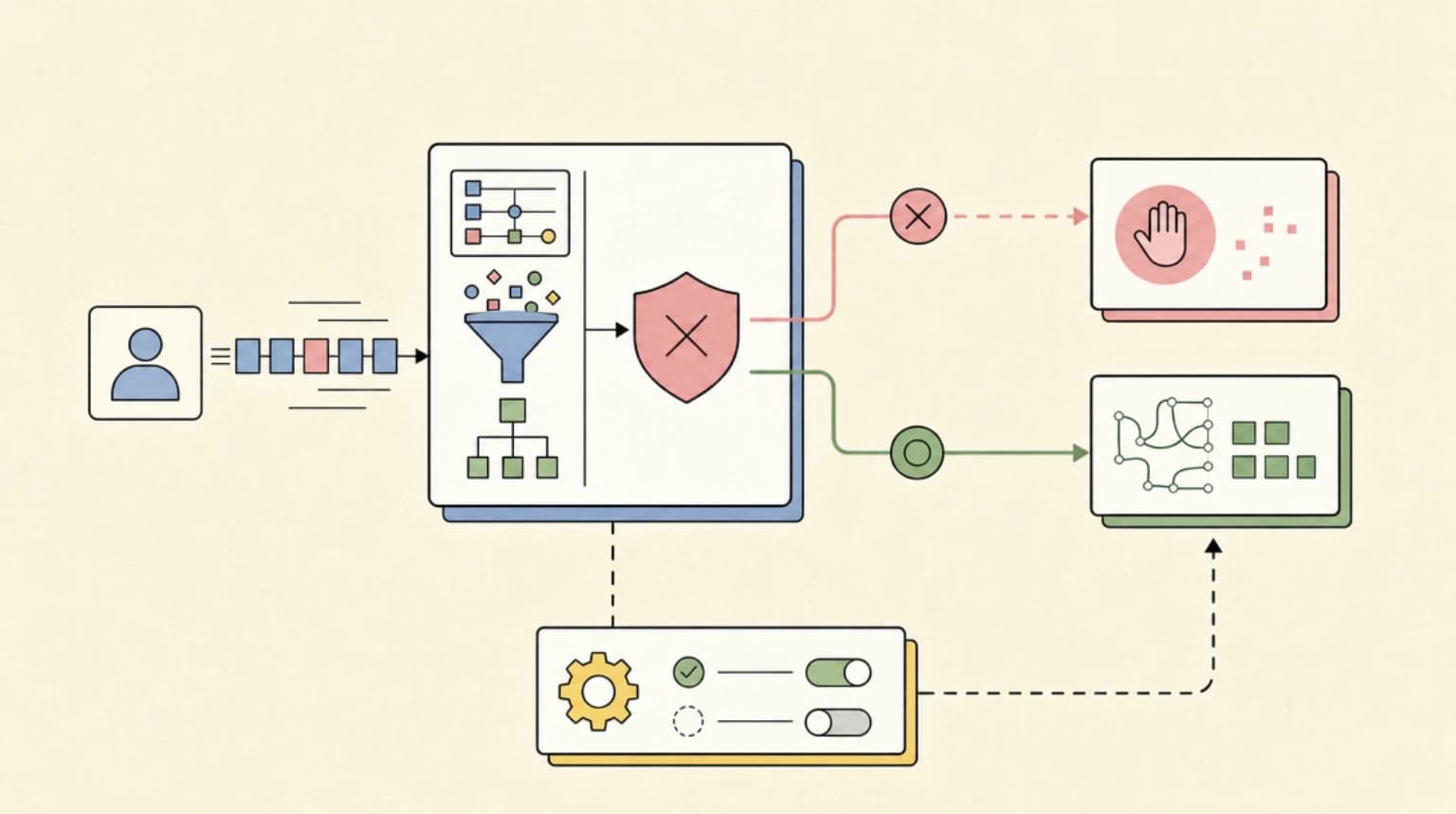
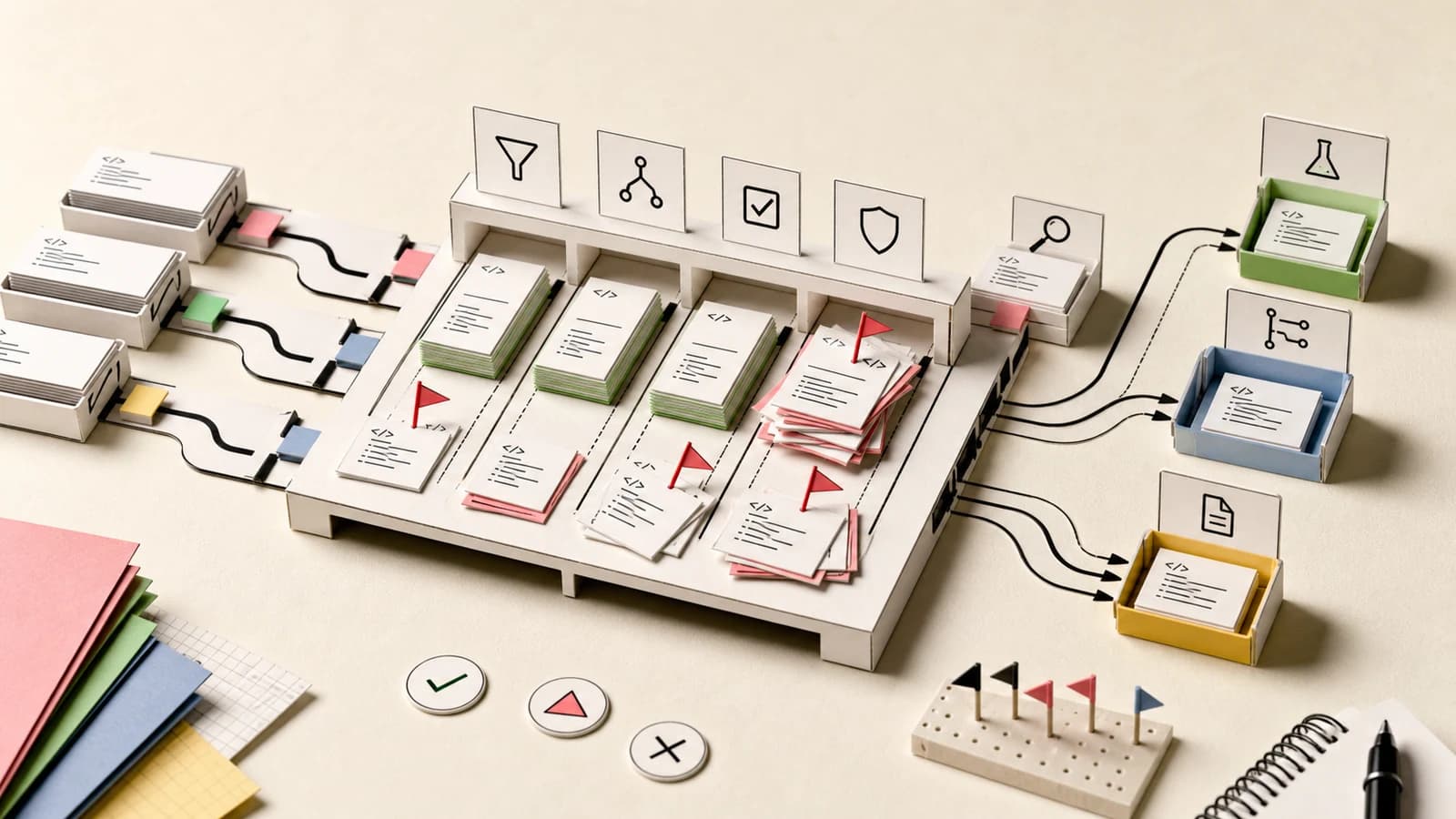
The proposal defines scope by capability, not by company. A model qualifies as Frontier-class if it clears a set of benchmarks the body maintains and updates regularly. Organizations that ship such models become Frontier Labs and are expected to adopt best practices: publishing model cards, maintaining strong internal cybersecurity, vetting key personnel, and resourcing safety research.
The mechanism ramps up in stages:
- Voluntary first. Frontier Labs would share models with the body for review up to 30 days before release.
- Mandatory later. Once the assessment protocol is shown to be effective, passing it could become a requirement to deploy a frontier model in the US market.
- Independent over time. Early evaluations would be built in consultation with the labs, but the body would eventually create its own held-out tests to prevent labs from overfitting to known benchmarks, supported by an ecosystem of third-party auditors.
The evaluations themselves target the domains that keep national-security people up at night: cybersecurity, biological threats, and agentic behavior. Hassabis specifically calls out tests for models trying to bypass safety guardrails or showing signs of deception, plus practices like watermarking AI-generated images and generating human-readable reasoning tokens.
Crucially, the framework would apply to frontier models "no matter their country of origin or whether they are open or closed." Non-frontier models from startups and academia would be exempt.
Why now#
Two things sit behind the timing.
First, the ad-hoc reviews the US government has already run were not popular. According to coverage of the proposal, recent government reviews of Anthropic's Mythos and OpenAI's Sol models were faulted for lacking technical expertise and transparency. A FINRA-style body staffed by technical experts is a direct answer to that critique.
Second, the geopolitics. CNBC reported that Hassabis has previously pushed for an American-led AI coalition at a G7 meeting, and the standards-body proposal lands as the US-China race to deploy models intensifies. Hassabis frames a US-initiated effort as "a strong starting point for creating shared international standards," with the hope it pulls other countries toward consensus.
In the essay, he is blunt about the stakes, calling AGI "much more akin to the discovery of electricity or fire" and arguing that "advances on the frontier are outpacing our understanding of the technology." His recommended posture is "cautious optimism."
Where it gets hard#
The proposal is thoughtful, and some early reactions called it one of the better frameworks on the table precisely because it avoids government-speed bureaucracy. But three problems are already visible.
The labs do not agree on the risks. A standards body only works if there is consensus on what to test for. Right now there is not. Hassabis and OpenAI's Sam Altman have publicly disagreed on how AI can be made safe. A benchmark suite is a statement about which dangers matter, and the frontier labs have not settled that question among themselves.
Industry funding is a conflict of interest, even with independent operation. FINRA is regularly criticized for being captured by the industry that pays for it. A body funded "mostly by industry" that gets to define which models are frontier-class, and can even "coordinate a slowdown in development" among labs, is a lot of power resting on a funding structure with a built-in incentive problem.
The political environment is unfriendly. The proposal has to survive Washington. The Trump White House has already dismissed the idea of an FDA-style AI regulator. Hassabis is careful to frame this as a self-regulatory standards body rather than a regulator, which reads as an attempt to thread exactly that needle. Whether the distinction holds politically is an open question.
Why developers should care#
This is not just a policy story. If a mandatory 30-day pre-release review becomes real, it changes the release cadence of the models every AI product is built on. A "Frontier Labs" designation with published model cards, held-out capability tests, and third-party audits would reshape what teams can expect to know about a model before they ship on top of it, and how quickly new frontier models reach the US market.
The proposal is a starting position, not a done deal. But it is the most specific attempt yet by a frontier lab to define the rules of its own field, which makes it the one worth understanding in detail.
Read the full essay on Hassabis's X post.
Continue Reading#
- AI 2040 Plan A: A Detailed Scenario for Navigating Superintelligence
- Anthropic Now Watermarks All Claude Output: Text Watermarks and C2PA for Files
- Anthropic CEO Dario Amodei on open-weights models: the position, the pushback, and what it means for developers
- Open-Weight AI's Kubernetes Moment: Why the Ecosystem Will Win
Get the next deep dive like this in your inbox
One email a week on AI Safety and the rest of the AI dev stack. Free.
Read next
Claude Mythos and Fable 5 Banned: The Export Controls That Shut Down Two Frontier Models
The US government ordered Anthropic to suspend Fable 5 and Mythos 5 for ALL users after a narrow jailbreak finding. Here is what happened, why it hit everyone, and what changed for developers overnight.
6 min readAnthropic CEO Dario Amodei on open-weights models: the position, the pushback, and what it means for developers
Dario Amodei published Anthropic's stance on open-weights models this week - no total ban, but support for chip export controls, distillation crackdowns, and mandatory safety testing. HN responded with 800+ comments calling it regulatory capture. Here is what the CEO said, what the thread argued, and why the debate matters for every developer deploying AI.
8 min readAnthropic's GLM-5.3 Cyber Report: The Numbers, the Backlash, and What Developers Should Take From It
Anthropic's Frontier Red Team says GLM-5.3 builds working exploits at rates close to Claude Mythos Preview, and that its safeguards can be stripped in days. Here are the verified numbers, the community backlash, and the practical read for developers.
6 min readNew here? Start with
Technical content at the intersection of AI and development. Building with AI agents, Claude Code, and modern dev tools - then showing you exactly how it works.