Why the US Government Pulled Fable 5: Four Theories
TL;DR
A narrow jailbreak that other models can match does not get a frontier model recalled. So what actually happened? The plausible explanations, ranked.
Last updated: June 16, 2026
Official Sources#
| Source | Description |
|---|---|
| Statement on the US government directive to suspend access to Fable 5 and Mythos 5 | Anthropic's official statement on the suspension |
| AnthropicAI on X | Original announcement of the export control directive |
| Anthropic disables access to Fable 5 | CNBC coverage of the suspension |
| What the Fable 5 and Mythos 5 Suspension Means for Security Teams | Snyk analysis of security implications |
| Forbes coverage | Detailed timeline of events |
The Official Reason Does Not Add Up#
The stated trigger for suspending Fable 5 and Mythos 5 is a jailbreak. Anthropic's description of that jailbreak: ask the model to read a specific codebase and fix any software flaws.
That is not a jailbreak. That is the product. It is what every developer with a Claude Code subscription does daily, and Anthropic says the vulnerabilities surfaced in the government's demo were already known, minor, and findable by GPT-5.5 without any bypass.
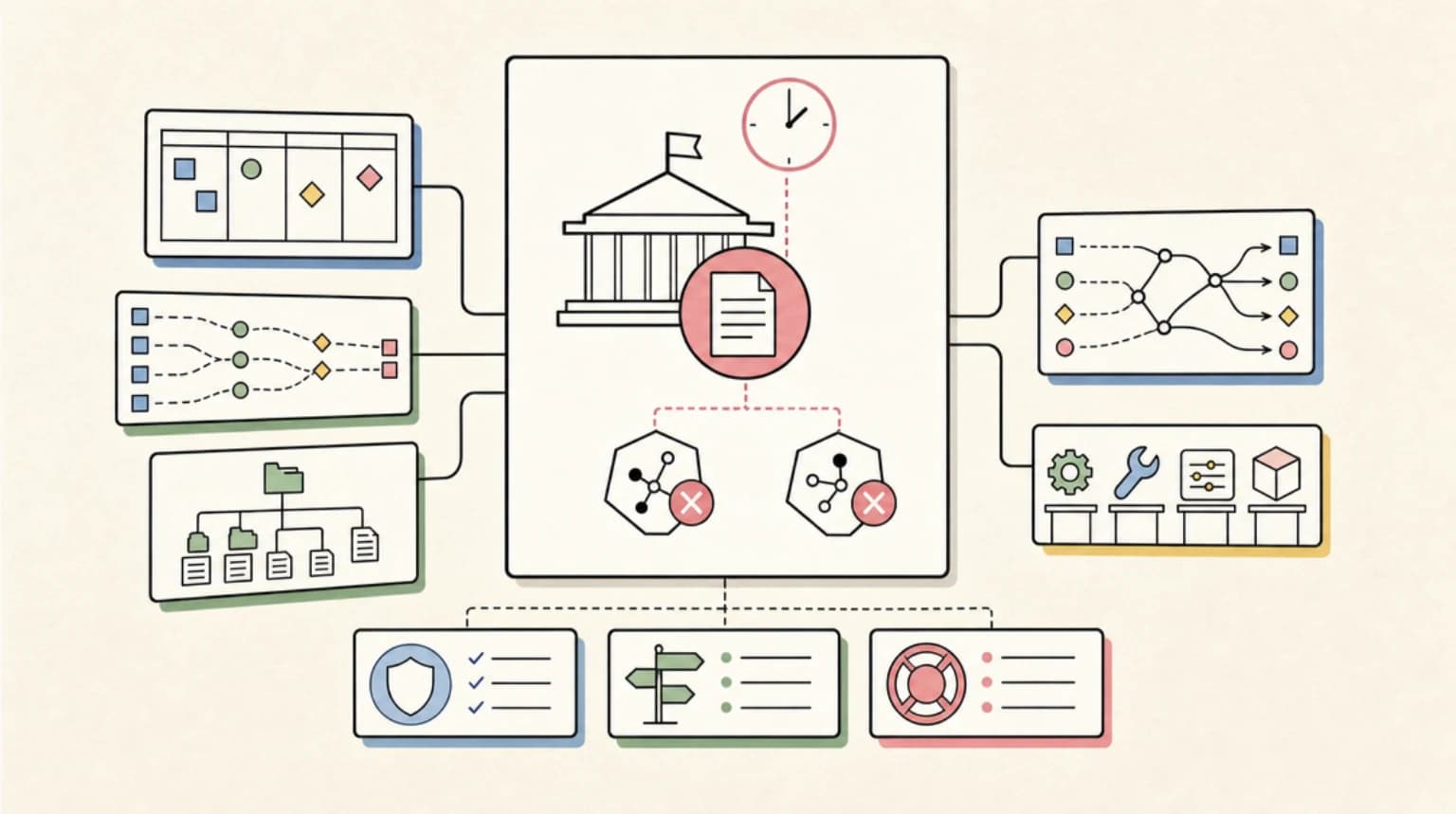
When the stated reason is this thin, the real reason is somewhere else. Four theories, roughly in order of plausibility.
Theory 1: This Is About Anthropic, Not the Model#
Anthropic and the administration have history. The company publicly resisted unrestricted military use of its models, and reporting earlier this year covered friction between Anthropic and the Pentagon over usage limits. OpenAI took a more accommodating posture. Dario Amodei's policy essay on government authority over frontier models, published the day after launch, called for exactly the kind of review power that was then used against the company.
Under this theory, the jailbreak report was a pretext. Export control authority was the available tool, and a Friday 5:21pm directive with no written technical detail is what lashing out looks like when a government is mad at a specific company. The fact that the directive uniquely burdens Anthropic while explicitly leaving GPT-5.5 untouched, despite Anthropic demonstrating equivalent capability there, fits this theory uncomfortably well.
Theory 2: Anthropic Built the Trap Themselves#
Anthropic's entire positioning for the Fable and Mythos launch was: these models are so capable we built a restricted tier, required 30-day data retention, and red-teamed safeguards for thousands of hours. Dario Amodei has argued, in writing, that "the government should have the power to block or deter deployment" of models presenting unacceptable risk.
You cannot spend years telling Washington your product is a national security concern and then act surprised when Washington treats it like one. The HN thread is full of this take, and it is not wrong. It is just incomplete: scaremongering explains why the government had the framing available, not why it pulled the trigger on a finding this weak.
For context on the capability everyone is arguing about, here is our hands-on breakdown of Fable 5:
Theory 3: The Opening Move Toward ID-Gated AI#
Read the directive's scope again: no access for any foreign national, anywhere, including inside the US. There is no way to comply with that other than identity verification of every user.
If that requirement sticks, the infrastructure it forces into existence is the interesting part. Age verification regimes are already normalizing ID checks for online services, and there is pending legislation pushing ID requirements for AI. A nationality-based access rule for frontier models would make KYC for top-tier AI access the default, with "the good models" sitting behind identity checks while everyone else gets the capped tier. This directive may be less about Fable specifically and more about establishing that access to frontier capability is a privilege the government can scope to persons.
Theory 4: It Is Exactly What It Says#
The least popular theory deserves a fair shake: someone in the national security apparatus saw a demonstration of an autonomous model finding software vulnerabilities at scale, did not have the context to know that capability is already commodity, and escalated. Bureaucracies pattern-match. "AI autonomously discovers exploits" reads as a munition to people whose reference class is ITAR, not GitHub Copilot.
This is the dumbest explanation, which historically makes it a contender. It is also the most fixable, which lines up with Anthropic calling it "a misunderstanding" and expecting restoration. The question of whether the model's silent guardrails and trust model played any role in the escalation remains unanswered.
One More Data Point#
Worth flagging, though we cannot confirm it is connected: within hours of the suspension, the well-known jailbreaker Pliny (@elder_plinius) posted that a coordinated effort had broken Fable 5's safeguards, claiming uplift across cyber, chem, and other restricted categories. The described method was decomposition and recomposition, splitting a harmful request into benign-looking chunks and reassembling the answer, combined with out-of-distribution tokens and long-context tricks.
We are not sure whether this is the demonstration that prompted the directive, an unrelated coincidence of timing, or simply the kind of non-universal jailbreak Anthropic openly said would exist. Anthropic's own statement concedes no provider has perfect jailbreak resistance and that narrow bypasses are expected, so a public claim of one does not, by itself, validate the recall. But the timing is striking. And if the government's "demonstration" traces back to community red-teaming rather than a novel state-level capability, that strengthens Theory 1 and Theory 4: the finding was real but commodity, and the response was disproportionate.
The Precedent Is the Point#
Whichever theory is right, the precedent now exists: the US government will recall a deployed commercial model, affecting hundreds of millions of users, on the basis of an undisclosed verbal report, with no statutory process. Anthropic asked for a transparent, technically grounded review power. It got an off switch.
Every company betting its infrastructure on a closed frontier model just watched that switch get used. What that does to building on these models is the subject of the follow-up post.
As of late June, Fable returned to service with updated safeguards. The precedent, however, is the point that remains.
FAQ#
Why did the US government pull Fable 5?#
The stated trigger was a jailbreak, which Anthropic describes as asking the model to read a codebase and fix its software flaws, surfacing vulnerabilities that were already known, minor and findable by GPT-5.5 without any bypass. Because that reason is so thin, this post weighs four explanations: friction between Anthropic and the administration, Anthropic's own national security framing, a move toward ID-gated AI access, or a genuine bureaucratic overreaction.
Was Pliny's jailbreak connected to the Fable 5 suspension?#
That cannot be confirmed. Within hours of the suspension, the jailbreaker Pliny (@elder_plinius) claimed a coordinated effort had broken Fable 5's safeguards using decomposition and recomposition. It could be the demonstration behind the directive, a coincidence of timing, or the kind of narrow jailbreak Anthropic said would exist.
Why would the directive require ID verification for AI?#
The directive bars access by any foreign national anywhere, including inside the US, and the only way to comply with that is to verify the identity of every user. If the requirement sticks, it would push KYC-style identity checks toward becoming the default for frontier model access.
Is Fable 5 available again?#
Yes. As of late June, Fable 5 returned to service with updated safeguards. The precedent of a deployed commercial model being recalled without a statutory process remains.
Continue Reading#
- The US Government Just Pulled Fable 5: What Happened - the initial announcement and what to do
- Model Dependency Risk After Fable 5 - what the recall means for teams that built on Fable
- Fable 5's Silent Guardrails and the Trust Problem - the hidden constraints that shaped the conversation
- Migrating to Claude Fable 5 - a practical migration guide (pre-recall)
- Fable 5 Returns: What Changed - restoration details and updated safeguards
Get the next deep dive like this in your inbox
One email a week on Anthropic and the rest of the AI dev stack. Free.
Read next on Claude Code
Claude Mythos and Fable 5 Banned: The Export Controls That Shut Down Two Frontier Models
Claude Fable 5 and Mythos 5 were suspended for all users by a US export control directive. What it said, why it hit everyone, and what changed for developers.
6 min readThe US Government Just Pulled Fable 5: What Happened
Fable 5 was pulled by a US export control directive, disabling it and Mythos 5 for every customer. What happened, what still works, and what to do next.
5 min readFable 5 Is Back: The Anthropic Model the Government Switched Off
Fable 5 is back after a US export-control suspension. What the Anthropic model is, the specs and refusal behavior to handle, and when to pick Opus 4.8.
6 min readTechnical content at the intersection of AI and development. Building with AI agents, Claude Code, and modern dev tools - then showing you exactly how it works.