Fable 5 Is Back: The Anthropic Model the Government Switched Off
Fable 5 Agent Fleets
7 parts- 1Fable 5 Is Back: The Anthropic Model the Government Switched OffCurrent
- 2Orchestrating a Fleet of Agents with Fable 5
- 3The Economics of Agent Fleets: Fable 5 Orchestrators, Sonnet 5 Workers
- 4Refusals at Fleet Scale: Building Fable 5 Agents That Do Not Silently Fail
- 5Long-Horizon Agents: What Fable 5's 1M Context and Memory Actually Unlock
- 6Running Fable 5 Agent Fleets in Production: The Operations Guide
- 7Fable 5 vs Opus 4.8: Which Should Orchestrate Your Agents?
TL;DR
Anthropic's most capable model launched, got suspended by a US export-control order, and returned today.
Official Sources#
| Resource | Link |
|---|---|
| Claude Fable 5 Announcement | anthropic.com/news/claude-fable-5 |
| Fable 5 System Card | anthropic.com/research/claude-fable-5-system-card |
| Claude Models Documentation | docs.anthropic.com/en/docs/about-claude/models |
| Anthropic API Reference | docs.anthropic.com/en/api |
| Anthropic Pricing | anthropic.com/pricing |
Most model launches are a benchmark table and a price. Fable 5 got a benchmark table, a price, and a three week government suspension. As of today, July 1, 2026, it is back and available globally again. Here is the applied version of the story: what Fable 5 is, what changed on the return, and whether you should build on it.
The three weeks that made Fable 5 famous#
Anthropic shipped Fable 5 on June 9, 2026 as its most capable widely released model. Three days later, on June 12, the US government issued an export-control directive citing national security and barring access by any foreign national. Because Anthropic could not verify user nationality in real time, it suspended the model for every user, not just a subset (its other models kept running).
The trigger, per Anthropic, was a researcher report of a narrow jailbreak that got Fable 5 to identify software vulnerabilities and, in one case, produce exploit-demonstration code. Anthropic argued the technique was not universal and that lesser models could do similar defensive-security work. On June 26 the government approved a limited redeployment; on June 30 the restrictions were lifted; and today Fable 5 returns on the Claude API, Claude apps, and Claude Code.
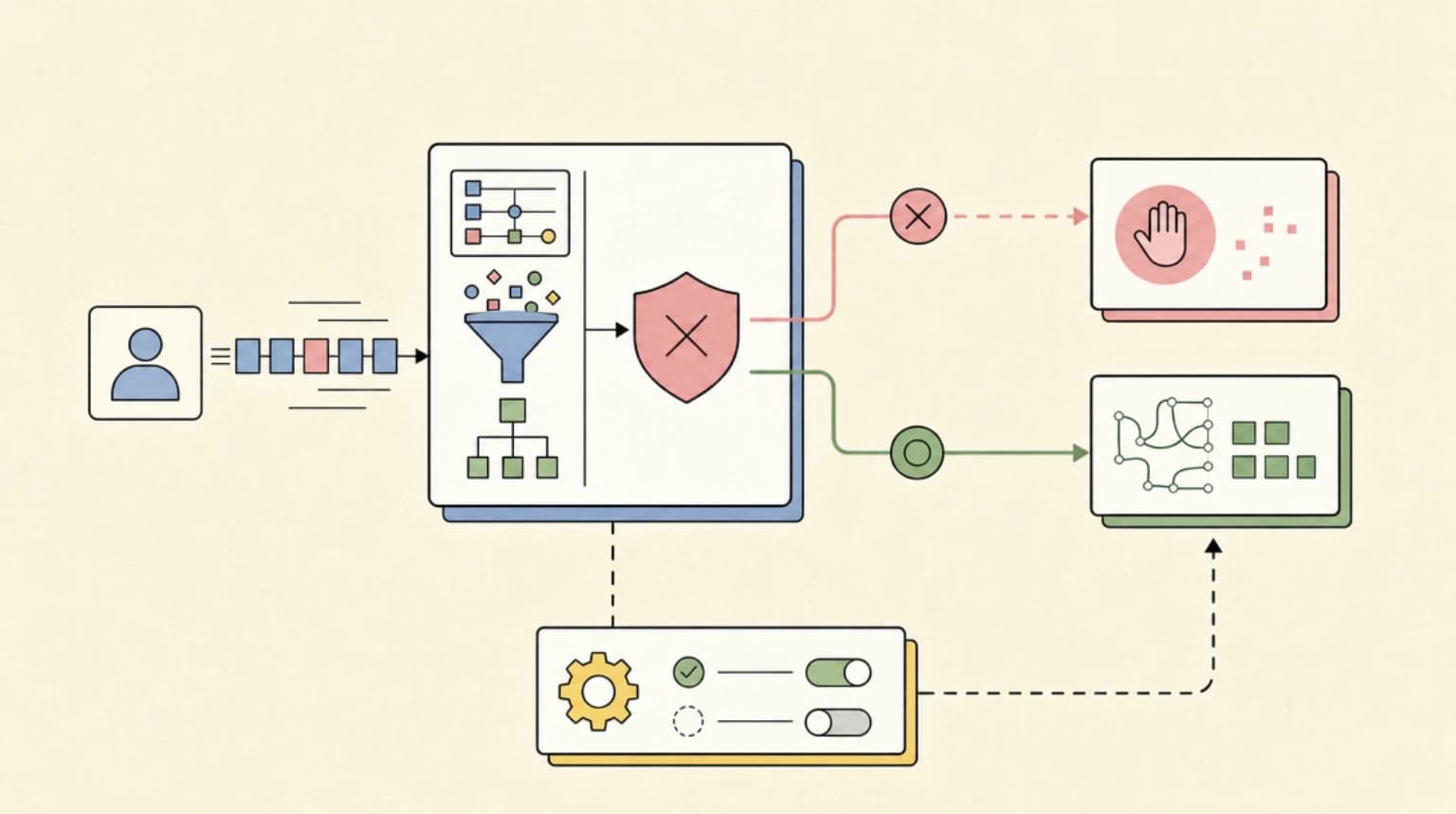
The one change that matters technically: a new safety classifier now blocks the specific reported technique in more than 99 percent of cases, at the cost of more false positives on benign coding and debugging. Blocked requests fall back to Opus 4.8.
What Fable 5 actually is#
Fable 5 is Anthropic's "Mythos-class" model made safe for general use, positioned above Opus 4.8. The pitch: the longer and more complex the task, the bigger its lead. It shipped as a twin release - Fable 5 (claude-fable-5, public, with cybersecurity safety classifiers) and Mythos 5 (claude-mythos-5, the same underlying model with classifiers lifted, limited to vetted cyberdefense partners).
The specs that matter for builders#
- Context: 1M tokens, with output up to 128K tokens per request
- Pricing: $10 per 1M input, $50 per 1M output. Anthropic describes this as less than half the price of the earlier Claude Mythos Preview, but it still sits above the Opus 4.8 tier ($5 / $25)
- Thinking: adaptive thinking is always on. You cannot disable it; you tune depth with the
effortparameter - Data: requires 30 day retention. It is not available to zero-data-retention organizations
- Modalities: text plus high-resolution vision input
The one API behavior every integration must handle#
This is the part almost no one is writing about, and it is the part that will actually break your app if you ignore it.
When Fable 5's safety classifier refuses a request, it returns stop_reason: "refusal" as a normal 200 response, not an error. If your integration only handles HTTP errors, a refusal will look like a successful but empty or truncated completion. Anthropic supports retrying refusals via a server-side fallbacks parameter, SDK middleware, or your own fallback logic, and you are not billed if the model refuses before producing output.
With the post-return classifier increasing benign false positives on coding and debugging, this fallback path is not an edge case you can defer. Build it in on day one, with Opus 4.8 as the fallback target.
What it is good at#
Anthropic and its launch partners report the strongest results in long-horizon, agentic work - which is exactly the lane it should win. Reported highlights (these are Anthropic and partner claims, not independently reproduced benchmarks): a codebase-wide migration across a 50M line Ruby codebase in about a day at Stripe, state-of-the-art scores on Cognition's FrontierCode and Cursor's CursorBench, new vision records including rebuilding a web app from screenshots, and outsized gains from file-based memory on long-running tasks.
Treat the specific numbers as vendor-reported until the system card benchmarks are independently confirmed. The directional claim - that Fable 5's edge grows with task length and complexity - is consistent across sources.
Should you use Fable 5 or stick with Opus 4.8?#
Reach for Fable 5 when: you are running long-horizon agentic work (multi-step migrations, deep research, agent loops), you can absorb the premium price, and your integration handles refusals and fallbacks cleanly.
Stay on Opus 4.8 when: you are cost-sensitive, you need zero-data-retention, or you want fewer false-positive refusals on routine coding. Opus 4.8 is also the model Fable 5 falls back to, so a well-built Opus integration is a prerequisite anyway.
The headline is that Anthropic's most powerful model is back - but for most teams the real decision is not "is it powerful," it is "does my agent handle its refusal behavior and its price." Answer those two questions first.
Frequently Asked Questions#
Is Fable 5 available again?#
Yes. Anthropic began redeploying Fable 5 globally on July 1, 2026 across the Claude API, Claude apps, and Claude Code, after a suspension that ran from June 12 to June 30.
How much does Fable 5 cost?#
$10 per million input tokens and $50 per million output tokens, with a 1M token context window and up to 128K tokens of output per request.
What is the difference between Fable 5 and Mythos 5?#
They are the same underlying model. Fable 5 (claude-fable-5) is the public version with cybersecurity safety classifiers on. Mythos 5 (claude-mythos-5) has those classifiers lifted and is limited to vetted cyberdefense partners.
Why was Fable 5 suspended?#
A US government export-control directive on June 12, 2026 barred access by foreign nationals on national-security grounds, following a report of a jailbreak involving vulnerability analysis. Anthropic could not verify nationality in real time, so it suspended the model for all users until the restrictions were lifted.
Continue Reading#
- Claude Code: The Future of Coding?
- Claude Design: Anthropic's Bet That Designers and Developers Want the Same Tool
Sources#
- Anthropic, Claude Fable 5 and Claude Mythos 5 (launch)
- Anthropic, Statement on the US government directive to suspend access
- Anthropic, Redeploying Fable 5
- Anthropic Docs, Introducing Claude Fable 5 and Claude Mythos 5
- TechCrunch, Trump drops restrictions on Anthropic's Mythos and Fable models
Get the next deep dive like this in your inbox
One email a week on Fable 5 and the rest of the AI dev stack. Free.
Read next on Claude Code
Fable 5 vs Opus 4.8: Which Should Orchestrate Your Agents?
The orchestrator is the most important model choice in an agent fleet. A fair head-to-head between Fable 5 and Opus 4.8 for that role, with a decision matrix by run length, budget, compliance, and refusal-handling tolerance.
8 min readRunning Fable 5 Agent Fleets in Production: The Operations Guide
Standing up a fleet of Fable 5 agents is the easy part. This is the operations layer - data retention rules, refusal-rate alerting, effort tuning, observability, and availability planning - that keeps the fleet running.
8 min readLong-Horizon Agents: What Fable 5's 1M Context and Memory Actually Unlock
1M context, 128K output, a memory tool, compaction, and task budgets change what a single agent run can cover. Here is what is verified, what is plausible, and six projects builders can try now.
9 min readTechnical content at the intersection of AI and development. Building with AI agents, Claude Code, and modern dev tools - then showing you exactly how it works.