Claude Opus 5 in 8 Minutes: What Developers Need to Know
TL;DR
Claude Opus 5 for developers: what changed from Opus 4.8, the breaking API changes to migrate, and when Opus 5 is the right default over Fable 5.
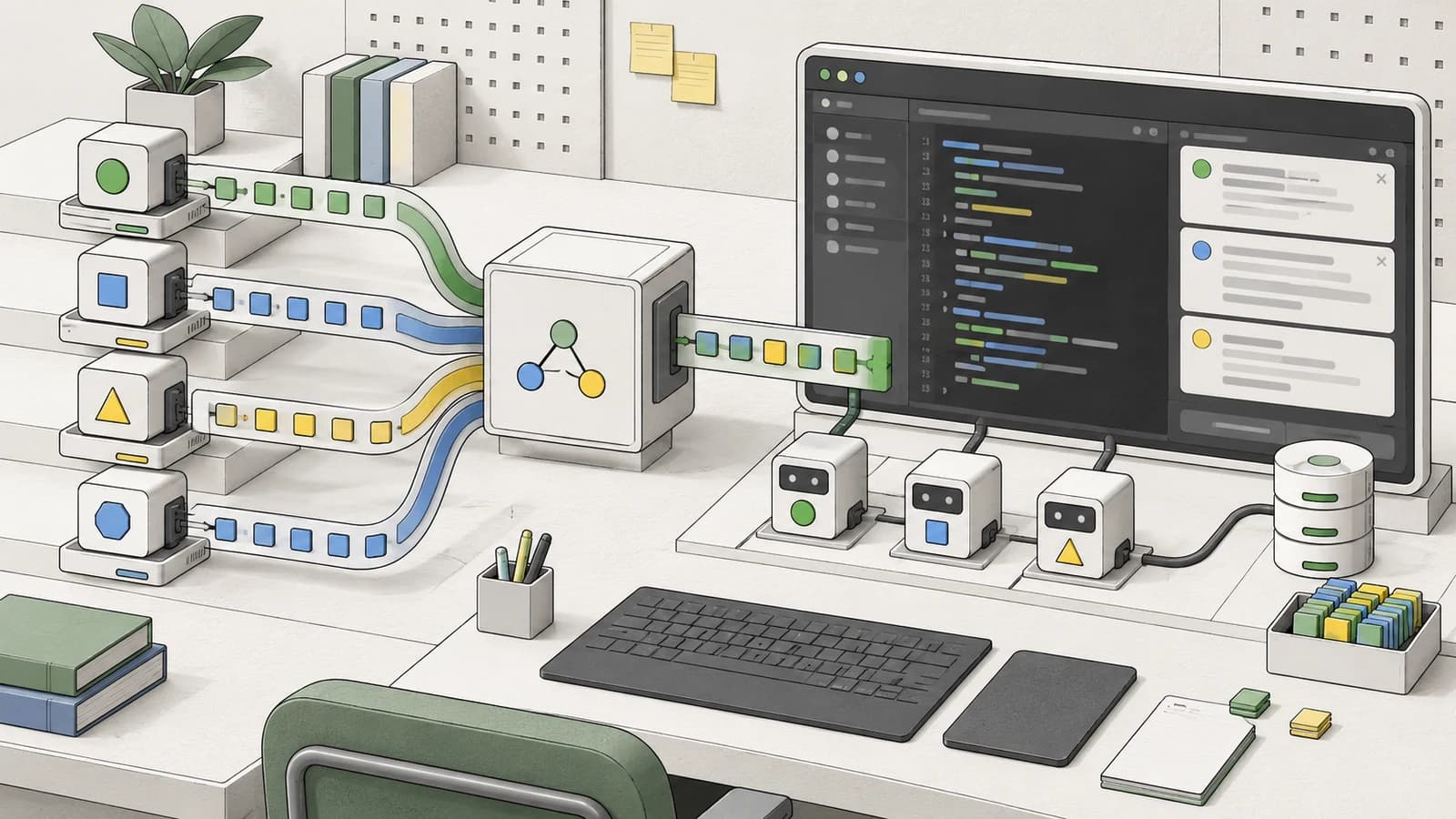
Anthropic dropped Claude Opus 5 today. The model lands at the same $5/$25 per million token pricing as Opus 4.8, but delivers Frontier-Bench SOTA, near-Fable-5 coding performance, and a self-verification loop that catches edge cases before you do.
Watch the full 8-minute walkthrough for the screen flow, live coding demos, and pacing that a static post cannot show.
This is the developer-focused breakdown. What changed, what breaks, and where Opus 5 fits in the model stack for coding agents, knowledge work, and production workloads.
Official Sources#
| Resource | Link | Notes |
|---|---|---|
| Opus 5 announcement | anthropic.com/news/claude-opus-5 | July 24, 2026 launch |
| Claude models overview | docs.anthropic.com/en/docs/about-claude/models | Full model comparison table |
| Migration guide | docs.anthropic.com/en/docs/about-claude/models/migration-guide | Opus 4.8 to Opus 5 migration |
| Prompting Opus 5 | docs.anthropic.com/en/docs/build-with-claude/prompt-engineering/prompting-claude-opus-5 | Model-specific prompting |
| System card | anthropic.com/claude-opus-5-system-card | Safety evaluations and alignment |
| Pricing | anthropic.com/pricing | Current token rates |
| Claude API reference | docs.anthropic.com/en/api | Endpoints, parameters, schemas |
Last updated: July 24, 2026. Verify pricing and availability before standardizing a team workflow.
What Opus 5 Ships#
The model ID is claude-opus-5. No date suffix. It slots into the same API surface as Opus 4.8 with the same 1M-token context window, 128k max output, adaptive thinking, prompt caching, batch processing, and tool use. Two features are absent: web fetch and Priority Tier are not supported on Opus 5.
The pricing is unchanged at $5 per million input tokens and $25 per million output tokens. That is half of what Claude Fable 5 costs ($10/$50) for a model that scores within 0.5 percent of Fable 5 on CursorBench 3.2 at max effort.
A Fast mode runs at roughly 2.5x speed at 2x the base price, same as Opus 4.8.
Benchmarks That Matter#
Numbers to anchor the release, pulled from Anthropic's launch post:
Coding. On Frontier-Bench v0.1, Opus 5 surpasses every other model at every effort level, more than doubling Opus 4.8's performance at a lower cost per task. On CursorBench 3.2, at max effort, Opus 5 performs within 0.5 percent of Fable 5's peak score at half the cost. The AA Coding Agent Index shows Opus 5 outperforming all other models on agentic coding tasks.
Knowledge work. On GDPval-AA v2, Opus 5 sets a new high mark. On ARC-AGI 3, a benchmark of novel problem-solving, Opus 5 scores 3x the next-best model. On Zapier AutomationBench, Opus 5 hits a 1.5x pass rate improvement over the next-best model for the same cost per task -- and at its lowest effort setting, it still passes more tasks than any other model.
Computer use. On OSWorld 2.0, Opus 5 outperforms every other model at any given cost, surpassing Fable 5's best result at just over a third of the cost.
Science. Opus 5 improves over Opus 4.8 on every life sciences evaluation, with the biggest gains in organic chemistry (10.2 percentage points higher on molecular structure inference from spectroscopy) and protein variant effect prediction (7.7 percentage points higher).
Self-Verification as a Feature#
The signature behavior change from Opus 4.8 is that Opus 5 verifies its own work without being told to. Anthropic calls out several examples from early-access testing:
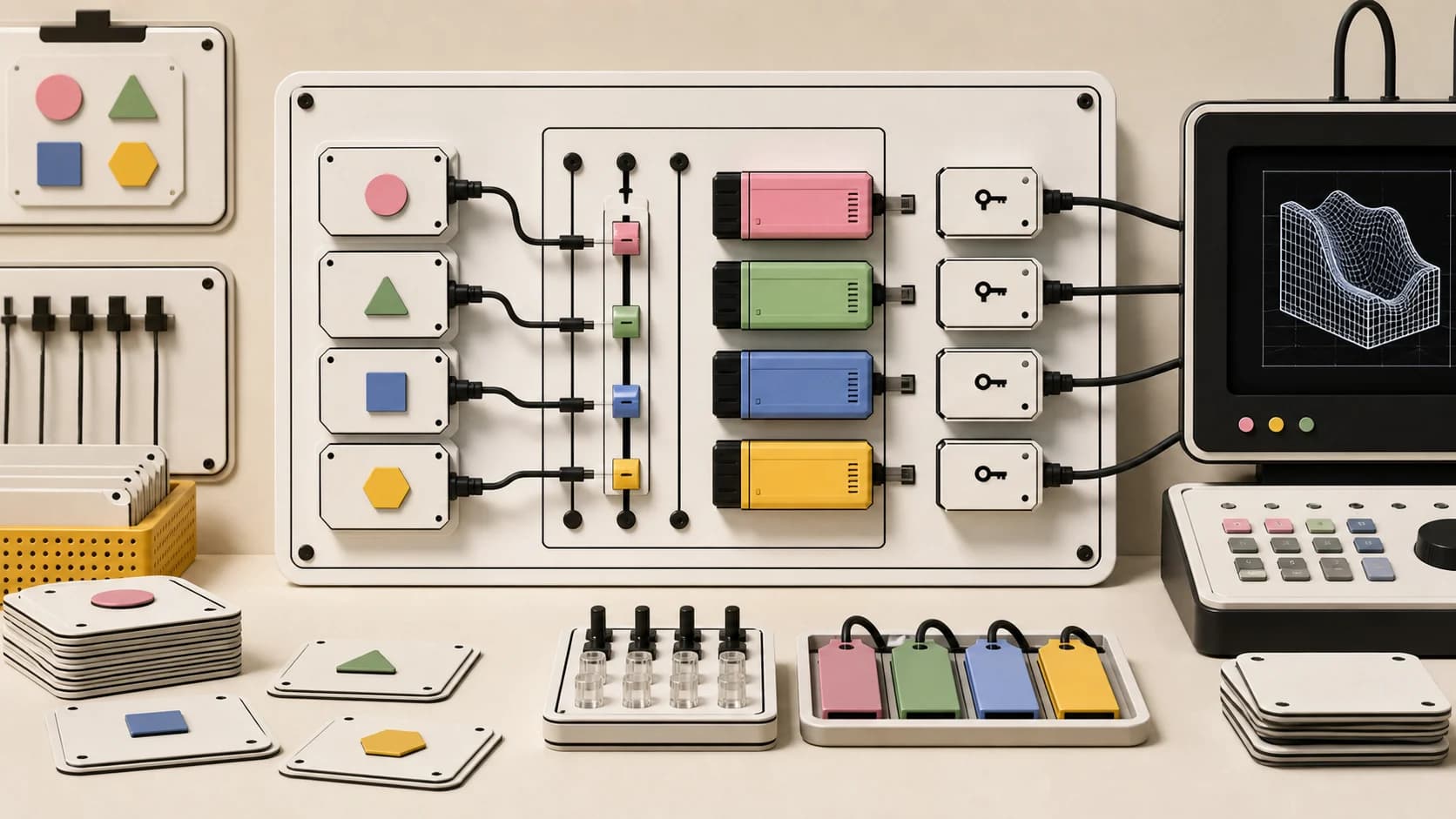
- On a Frontier-Bench task where the model had to reconstruct a machine part from a drawing with no direct viewing capability, Opus 5 wrote its own computer vision pipeline to extract geometry from raw pixels. No competing model could solve this task in five attempts with the same setup.
- Given a real bug in a popular open-source package manager, Opus 5 found the root cause and fixed an edge case the community's patch had missed. A competing model fixed only the surface symptom.
- An engineer at a trading firm used Opus 5 to build a market data feed for a new exchange in a single session. Finding no live feed to validate against, Opus 5 built its own test harness to verify correctness.
The practical implication: remove explicit "verify your work" instructions from prompts tuned for older models. On Opus 5, those instructions cause over-verification. The model already double-checks.
Breaking Changes from Opus 4.8#
Two API changes are breaking if you are migrating from Opus 4.8:
1. Thinking is on by default. On Opus 4.8, requests without a thinking field ran without thinking. On Opus 5, those same requests run with adaptive thinking. Revisit max_tokens -- it remains a hard limit on total output (thinking plus response text). To preserve the old behavior, pass thinking: {type: "disabled"} but only at effort high or below.
2. Disabling thinking is capped at high effort. thinking: {type: "disabled"} combined with effort xhigh or max returns a 400 error. Opus 4.8 accepted this combination, so audit any requests that disable thinking before migrating.
Example migration:
# Before (Opus 4.8 accepted this)
client.messages.create(
    model="claude-opus-4-8",
    max_tokens=16000,
    thinking={"type": "disabled"},
    output_config={"effort": "xhigh"},
    messages=[{"role": "user", "content": "..."}],
)

# After (Opus 5 -- either remove the thinking field)
client.messages.create(
    model="claude-opus-5",
    max_tokens=16000,
    output_config={"effort": "xhigh"},
    messages=[{"role": "user", "content": "..."}],
)

# Or keep thinking disabled and lower effort
client.messages.create(
    model="claude-opus-5",
    max_tokens=16000,
    thinking={"type": "disabled"},
    output_config={"effort": "high"},
    messages=[{"role": "user", "content": "..."}],
)
New Capabilities in Beta#
Two beta features ship alongside Opus 5:
Mid-conversation tool changes. On the Claude Platform, you can now add or remove tools between turns without invalidating the prompt cache. Send the mid-conversation-tool-changes-2026-07-01 beta header. This is useful for agentic workloads that expose tools progressively or retire them as a task advances.
Automatic fallbacks. On the API, you can opt in to have requests flagged by safety classifiers automatically route to another model instead of being blocked. Pass fallbacks: "default" with the server-side-fallback-2026-07-01 beta header. Opus 5's cybersecurity classifiers intervene roughly 85 percent less often than Fable 5's, but when they do fire, the fallback defaults to Opus 4.8.
Effort Levels and Cost Control#
Opus 5 supports the full effort range: low, medium, high, xhigh, max. The default is high. A few guidelines:
lowandmediumon Opus 5 are stronger than on Opus 4.8 and worth testing as cost controlshighis the right default for most agentic coding tasksxhighandmaxdeliver gains on the most capability-sensitive workloads but can overthink simple tasks- If you run at
xhighormax, setmax_tokensto at least 64k so the model has room to think
Opus 5's minimum cacheable prompt length is 512 tokens, down from 1,024 on Opus 4.8. Prompts that were too short to cache before now create cache entries with no code changes.
When to Use Opus 5 vs Fable 5 vs Sonnet 5#
The Claude model lineup now has a clear cost-capability gradient:
| Use case | Recommended model | Why |
|---|---|---|
| Complex agentic coding, enterprise work | Opus 5 | Frontier-Bench SOTA at $5/$25, near-Fable-5 coding |
| Maximum capability, long-horizon agents | Fable 5 | Still ahead on the hardest agentic tasks, $10/$50 |
| Speed-sensitive coding, daily dev work | Sonnet 5 | Fast latency, $3/$15 ($2/$10 intro through Aug 31) |
| High-volume, cost-sensitive tasks | Haiku 4.5 | Fastest, $1/$5 |
| Cybersecurity, defensive workflows | Mythos 5 | Invitation-only, no cyber safeguards |
Opus 5 does not require data retention for general access (unlike Fable 5's 30-day requirement and zero-data-retention exclusion). If your organization has a ZDR arrangement, Opus 5 is available; Fable 5 is not.
Prompting Tips#
Direct from Anthropic's prompting guide:
- Remove verification instructions. Opus 5 checks its own work. Keeping old "verify your answer" prompts causes over-verification loops.
- Constrain task scope explicitly. For narrow tasks, tell the model what not to do. Opus 5 delegates more readily than earlier models, so in multi-agent frameworks, cap the number of subagents or specify which scenarios warrant delegation.
- Prompt for conciseness. Default responses run longer on Opus 5. If you want short output, say so. Lowering effort reduces thinking volume but does not reliably shorten the visible response.
- Test
maxeffort selectively. It delivers gains on the hardest tasks but may waste tokens on simpler ones. Run an effort sweep on your own evals rather than carrying over a setting from an earlier model.
FAQ#
How does Opus 5 compare to Opus 4.8?#
Opus 5 doubles Frontier-Bench v0.1 performance at a lower cost per task. On every life sciences evaluation, it improves over Opus 4.8. Two breaking API changes: thinking is on by default, and disabling thinking is capped at high effort. Pricing is identical ($5/$25).
Is Claude Opus 5 better than GPT-5.5?#
Opus 5 sets a new SOTA on Frontier-Bench, GDPval-AA v2, and ARC-AGI 3. For a head-to-head coding comparison across models, see the AI coding tools comparison matrix.
Should I use Opus 5 or Fable 5?#
Opus 5 is half the price of Fable 5 and scores within 0.5 percent on CursorBench 3.2 at max effort. Use Opus 5 for complex agentic coding and enterprise work. Use Fable 5 when you need the absolute highest capability and can accept the $10/$50 pricing and 30-day data retention requirement.
What is the Opus 5 API model ID?#
claude-opus-5. No date suffix. On AWS Bedrock it is anthropic.claude-opus-5. On Google Cloud it is claude-opus-5.
Does Opus 5 support extended thinking?#
No. Opus 5 uses adaptive thinking (always on by default), not manual extended thinking with token budgets. To control thinking depth, use the effort parameter (low through max).
Watch the Video#
The 8-minute video walks through the key benchmarks, API migration examples, and live coding demos that show Opus 5's self-verification behavior in practice -- the kind of detail that is easier to absorb watching the screen flow than reading a static summary.
Sources#
- Introducing Claude Opus 5 -- Anthropic, July 24, 2026
- Claude Models Overview -- Anthropic documentation
- Migration Guide: Claude Opus 5 -- Anthropic documentation
- Claude Opus 5 System Card -- Anthropic
- Prompting Claude Opus 5 -- Anthropic documentation
- Frontier-Bench v0.1 -- FrontierBench
- GDPval-AA v2 -- Artificial Analysis
- Claude Opus 5 in 8 Minutes -- Developers Digest on YouTube
Continue Reading#
- Claude Opus 4.8 Is an Agent Honesty Release -- the previous Opus generation and what it changed about agent trust
- Claude Fable 5 in 7 Minutes -- the tier above Opus 5, when to reach for maximum capability
- Claude Sonnet 5 Developer Guide -- the speed-tier model for daily dev work
- AI Coding Tools Pricing 2026 -- how the Opus 5 price point stacks up across providers
- Claude Opus 4.7 Developer Guide -- the longer history of Opus releases and what each generation added
Get the next deep dive like this in your inbox
One email a week on Claude and the rest of the AI dev stack. Free.
Read next on Claude Code
Claude Opus 5: Near-Fable Intelligence at Half the Cost
Claude Opus 5 benchmarks, pricing and HN reaction: near Fable 5 performance at the Opus 4.8 price, and what it means for choosing a daily-driver model.
12 min readThe Claude Tokenizer Change: What ~30% More Tokens Means for Your Bill
Anthropic's docs say the tokenizer introduced with Opus 4.7 can use up to 35% more tokens for the same text. Here is what that does to per-request cost, max_tokens, and cross-model comparisons.
8 min readClaude Opus 5.5 Developer Guide: Pricing, API, Claude Code
Claude Opus 5.5 costs $4/$20 per million tokens with $0.20 cache reads. SDK examples, Claude Code setup, and when to pick it over Sonnet 5.5 or Haiku 5.5.
11 min readTechnical content at the intersection of AI and development. Building with AI agents, Claude Code, and modern dev tools - then showing you exactly how it works.