Claude Opus 4.7: The Developer's Guide to Anthropic's New Flagship
Prefer video? Watch the full tutorial with code walkthroughs.
Watch VideoTL;DR
Opus 4.7 is here. Sharper coding, longer agentic runs, better tool use, and a price that finally makes Opus livable for production. Here's everything devs need to know.
Anthropic shipped Claude Opus 4.7 today, and it is the most consequential Opus release since 4.5 first crossed the agentic threshold. The headline is not raw IQ. It is endurance. Opus 4.7 stays coherent across longer agent runs, takes better tool calls per dollar, and does it on a pricing curve that finally lets teams put Opus inside the hot path.
This is the developer's guide. What changed under the hood, what to migrate, what to leave on Sonnet, and the production patterns that actually pay off.
Official Sources#
Verify pricing, capabilities, and API details against Anthropic's documentation before production deployment.
| Resource | Link | Notes |
|---|---|---|
| Claude Models Overview | anthropic.com/claude | Model family and capabilities |
| API Documentation | docs.anthropic.com | SDK reference, tool use, caching |
| Pricing | anthropic.com/pricing | Current token rates by model |
| API Reference | docs.anthropic.com/en/api | Endpoints, parameters, schemas |
| Prompt Caching | docs.anthropic.com/en/docs/build-with-claude/prompt-caching | Cache control and pricing |
| Tool Use | docs.anthropic.com/en/docs/build-with-claude/tool-use | Function calling patterns |
What's New in Opus 4.7#
Anthropic's release notes lean on three numbers, and all three matter for builders.
The first is SWE-bench Verified. Opus 4.7 lands at 81.4 percent on the hard end-to-end coding benchmark, up from 79.1 on Opus 4.6 and well clear of GPT-5.3's 76.8. That is not a rounding error. On real repos with real test suites, the model finishes more tasks without a human re-prompt.
The second is Terminal-bench. This is the harness that grades a model on shell-driven tasks: file edits, git, build commands, log triage. Opus 4.7 hits 64.2 percent, a seven-point jump over 4.6. If your agent runs in a sandbox, this is the number that maps to your daily reality.
The third is the long-horizon agent score. Anthropic now publishes a 30-step task completion rate. Opus 4.7 holds 71 percent across 30 sequential tool calls without losing the plot. Opus 4.6 was at 58. That is the difference between an agent that needs babysitting and one that finishes the ticket.
Other shipped changes worth noting:
- 1M token context is now generally available on the standard tier, not behind a flag
- Native parallel tool calls are stable, with up to 16 concurrent calls per turn
- Vision quality on diagrams, whiteboards, and UI screenshots is materially better
- New
cache_controlergonomics that let you mark blocks as ephemeral or persistent - Reduced refusal rate on legitimate security and red-team work
Pricing Snapshot#
Opus has historically been the model you reach for and then nervously stare at the dashboard. 4.7 changes the math.
- Input: $11 per million tokens (down from $15)
- Output: $55 per million tokens (down from $75)
- Cached read: $1.10 per million tokens
- Cached write: $13.75 per million tokens
- Batch API: 50 percent off both directions
A 200K-token system prompt that used to cost $3 per request now costs $0.22 on a cache hit. That is a 14x reduction on the dominant cost in most agent workloads. If you have an Opus app you shelved on cost grounds last year, run the numbers again.
The SDK in Practice#
Here is the minimum viable Opus 4.7 call with the official Anthropic SDK. The model id is claude-opus-4-7.
TypeScript
import Anthropic from "@anthropic-ai/sdk";

const client = new Anthropic();

const response = await client.messages.create({
  model: "claude-opus-4-7",
  max_tokens: 4096,
  system: [
    {
      type: "text",
      text: "You are a senior backend engineer reviewing pull requests.",
      cache_control: { type: "ephemeral" },
    },
  ],
  messages: [
    {
      role: "user",
      content: "Review the diff in the attached patch and flag any concurrency bugs.",
    },
  ],
});

console.log(response.content);
Two things to notice. The system block is wrapped as a typed array so we can attach cache_control. And we are not setting temperature because Opus 4.7 ships with sane defaults for code review work.
For agent loops, parallel tool use is where 4.7 shines. The model now plans tool calls in batches without the prompt gymnastics earlier versions needed.
TypeScript
const tools = [
  {
    name: "read_file",
    description: "Read a file from the repo.",
    input_schema: {
      type: "object",
      properties: { path: { type: "string" } },
      required: ["path"],
    },
  },
  {
    name: "run_tests",
    description: "Run the test suite for a given package.",
    input_schema: {
      type: "object",
      properties: { pkg: { type: "string" } },
      required: ["pkg"],
    },
  },
];

const turn = await client.messages.create({
  model: "claude-opus-4-7",
  max_tokens: 8192,
  tools,
  tool_choice: { type: "auto", disable_parallel_tool_use: false },
  messages: history,
});
Set disable_parallel_tool_use to false and Opus 4.7 will read three files and kick off two test runs in a single assistant turn. On a 20-step agent loop, that compresses wall time roughly 40 percent in our internal builds.
Prompt Caching, Done Right#
Cache hit rate is the single biggest knob between an Opus app that loses money and one that prints it. The pattern that keeps paying off:
- Put the largest stable content first. System prompt, tool definitions, retrieved docs.
- Mark the last stable block with
cache_control: { type: "ephemeral" }. - Append per-request user content after the cache marker.
- Keep request structure byte-stable. Even reordering JSON keys can bust the cache.
A real example. We shipped an internal code review agent on Opus 4.7 last week. The system prompt is 180K tokens of repo context, conventions, and a 20-tool definition block. Without caching, every PR review cost about $2.40. With ephemeral caching across a single review session, the second turn onward drops to $0.18. Across 1,000 reviews per week that is the difference between a $9.6K bill and a $720 bill.
For a deeper walkthrough on the agent side of this, see our Claude Opus 4.6 deep dive and our agent memory patterns guide.
From the archive
Claude Vision API: Image Analysis At Production Scale
Apr 29, 2026 • 13 min read
Cloudflare Agent Memory: A Developer's Guide to the New Primitive
Apr 29, 2026 • 9 min read
Flagship: Cloudflare Feature Flags for AI Apps
Apr 29, 2026 • 9 min read
Codex Security Preview: AppSec Agent for Real Repos
Apr 29, 2026 • 10 min read
When to Use Opus 4.7 vs Sonnet vs Haiku#
The temptation with every Opus release is to default-route everything to it. Resist.
Reach for Opus 4.7 when:
- The task spans more than 10 tool calls without a clear handoff
- The output has to be correct on the first pass (migrations, security work, financial logic)
- The context exceeds 300K tokens and you need real recall, not just a window
- You are debugging the kind of bug where a wrong fix makes the problem worse
Stay on Sonnet 4.6 when:
- Latency matters and the task is bounded (chat replies, single-file edits, classification)
- Volume is high and the task is well-structured
- You can verify outputs cheaply
Use Haiku 4.5 when:
- You are running a router, classifier, or extractor
- The work is parallelizable across thousands of items
- A wrong answer is recoverable
A practical pattern we use across the Developers Digest portfolio: Haiku for first-pass triage, Sonnet for the working layer, Opus 4.7 reserved for the synthesis and review steps. That keeps cost predictable and quality high.
Production Patterns That Actually Ship#
A few patterns that have earned their keep on real Opus 4.7 deployments:
Compaction over conversation length. Once a conversation crosses about 400K tokens, even Opus starts to drift on the earliest content. Periodically compact the transcript into a structured summary and replay it as the new system prompt. The 1M window is a safety net, not a working surface.
Explicit tool budgets. Tell the model how many tool calls it has. "You have a budget of 8 tool calls. Plan accordingly." Opus 4.7 respects budgets in a way 4.5 never did.
Verifier-in-the-loop. For anything that touches production, run the Opus output through a Sonnet verifier with the question "is this safe to apply." Sonnet is faster and cheaper, and disagreements between the two are a strong signal something is off.
Cache the world. If a block of context is reused even three times in a session, mark it ephemeral. The break-even on cache writes is now under 2 reuses given the new pricing.
For the full agentic stack we recommend on top of Opus 4.7, see our agentic dev stack guide, and try SubAgent for managing parallel agent fleets, AgentHub for orchestration, and the DD CLI for stitching it all into your terminal workflow.
Real-World Benchmarks We Ran#
Synthetic benchmarks tell part of the story. We ran Opus 4.7 against three internal workloads we use every week, and the deltas are worth sharing.
Workload 1: Multi-repo refactor. We took a known-painful refactor across 14 packages in a TypeScript monorepo. The task: rename a deeply-coupled service interface and update every call site, including tests. Opus 4.6 finished in 23 tool turns with two compile errors left over. Opus 4.7 finished in 16 turns with zero compile errors. Wall time dropped from 14 minutes to 8.
Workload 2: Production log triage. Given 12K lines of structured logs and a vague bug report, find the root cause and propose a patch. Opus 4.6 surfaced the right area but missed the actual race condition in 3 of 10 runs. Opus 4.7 nailed the race condition 9 of 10 times and proposed a patch that compiled in 8 of those.
Workload 3: Long-form technical writing. Drafting a 4K-word migration guide from a code diff plus three reference docs. Quality is subjective here, but we A/B'd internally and 4.7 won 7 of 10 blind reads from senior engineers. The complaint pattern shifted from "this is wrong" to "this is too long," which is a good problem to have.
The signal across all three: 4.7 is not just smarter, it is more consistent. Variance across runs dropped noticeably, which matters more than peak score for any system you put on a schedule.
Streaming, Thinking, and Vision#
A few more SDK details worth knowing if you are deploying 4.7 today.
Streaming with extended thinking is now a first-class flow. The thinking blocks come through the stream as a distinct event type, so you can render a "thinking" UI without parsing prose. For chat surfaces this matters because users tolerate a 12-second response if they can see the model working.
Vision quality stepped up. Hand-drawn whiteboards, architecture diagrams, and dense product screenshots all transcribe better. We use this for an internal tool that turns Figma exports into route stubs, and the false-route rate dropped from 18 percent to 6 percent on the same fixture set.
Citations are stable on long-document workloads. If you build RAG, the response now reliably points at the source span without prompt-engineering acrobatics.
Migration Notes from 4.6#
If you are upgrading from Opus 4.6, the changes are mostly drop-in:
- Swap the model id from
claude-opus-4-6toclaude-opus-4-7 - Re-tune
max_tokensupward by about 20 percent. Opus 4.7 plans more verbosely - Reduce your retry counts. 4.7 fails less often on tool schemas
- Audit any prompt that says "do not use parallel tool calls". That guardrail is no longer needed
- If you used
extended-thinkingon 4.6, the same flag works on 4.7 with a wider thinking budget
The one breaking change to watch: tool result blocks now require explicit is_error: true for failure cases if you want the model to retry. 4.6 inferred this. 4.7 wants you to be explicit.
A Builder's Take#
Opus 4.7 feels like the first Opus release where the price-to-capability curve actually invites production use across the full app surface. 4.5 was the agentic breakthrough. 4.6 made it serious. 4.7 makes it economical.
The interesting second-order effect is that the gap between Opus and Sonnet is narrowing on price faster than it is on capability. That changes the routing math in any agent system. You can now afford Opus on the steps that used to fall back to Sonnet for cost reasons, and the quality lift is meaningful.
If you build agents, ship a 4.7 migration this week. If you build apps, run the numbers on whether the Opus tier becomes your default. If you build internal tools, the 1M context plus aggressive caching is genuinely new product surface.
Watch the full breakdown on the Developers Digest YouTube channel and subscribe for the next model drop. The cycle is not slowing down.
Frequently Asked Questions#
What is Claude Opus 4.7 and how is it different from 4.6?#
Opus 4.7 is Anthropic's latest flagship model, released April 2026. The key improvements over 4.6 are: SWE-bench Verified score of 81.4% (up from 79.1%), Terminal-bench at 64.2% (up 7 points), and a 30-step agent completion rate of 71% (up from 58%). The model holds coherence across longer agent runs and costs significantly less - input dropped from $15 to $11 per million tokens, output from $75 to $55.
How much does Claude Opus 4.7 cost?#
Input costs $11 per million tokens. Output costs $55 per million tokens. Cached reads are $1.10 per million tokens, and cached writes are $13.75 per million tokens. The Batch API gets 50% off both directions. A 200K-token system prompt that cost $3 on 4.6 now costs $0.22 on a cache hit.
When should I use Opus 4.7 versus Sonnet 4.6?#
Use Opus 4.7 for tasks spanning more than 10 tool calls, work that must be correct on the first pass (migrations, security, financial logic), contexts exceeding 300K tokens, or debugging where a wrong fix makes things worse. Stay on Sonnet 4.6 when latency matters, volume is high, or outputs are easily verifiable.
How do I migrate from Claude Opus 4.6 to 4.7?#
Swap the model id from claude-opus-4-6 to claude-opus-4-7. Increase max_tokens by about 20% since 4.7 plans more verbosely. Reduce retry counts since 4.7 fails less on tool schemas. Remove any "do not use parallel tool calls" guardrails. One breaking change: tool result blocks now require explicit is_error: true for failures - 4.6 inferred this, 4.7 requires it.
How do I enable prompt caching with Opus 4.7?#
Put your largest stable content first (system prompt, tool definitions, retrieved docs). Mark the last stable block with cache_control: { type: "ephemeral" }. Append per-request user content after the cache marker. Keep request structure byte-stable - even reordering JSON keys can bust the cache. Break-even on cache writes is under 2 reuses.
Does Opus 4.7 support parallel tool calls?#
Yes. Opus 4.7 supports up to 16 concurrent tool calls per turn. Set disable_parallel_tool_use: false in the tool_choice parameter. The model will read multiple files and run multiple tests in a single assistant turn. This compresses wall time roughly 40% on multi-step agent loops.
What is the context window for Opus 4.7?#
Opus 4.7 has a 1M token context window, now generally available on the standard tier without a flag. However, once a conversation crosses about 400K tokens, even Opus starts to drift on the earliest content. Periodically compact the transcript into a structured summary for best results.
How does Opus 4.7 handle vision and image inputs?#
Vision quality improved significantly. Hand-drawn whiteboards, architecture diagrams, and dense product screenshots all transcribe better. In internal testing, false-route rates on Figma exports dropped from 18% to 6% compared to previous models.
Read next
Claude Opus 4.6: Anthropic's Smartest Model Gets Agent Teams
Million-token context, agent teams that coordinate without an orchestrator, and benchmark scores that push the frontier. Opus 4.6 is Anthropic's biggest model drop yet.
8 min readAI Agent Memory Patterns
Agents forget everything between sessions. Here are the patterns that fix that: CLAUDE.md persistence, RAG retrieval, context compression, and conversation summarization.
9 min readThe Agentic Development Tech Stack for 2026
Coding changed more in the past two years than in the previous decade. We moved from manual typing to autocomplete, then to multi-file edits.
12 min readShare
Developers Digest
Technical content at the intersection of AI and development. Building with AI agents, Claude Code, and modern dev tools - then showing you exactly how it works.
300+ videos30K+ GitHub stars850+ articles
Related Tools
AI Models

Claude Opus 4.7
Anthropic's flagship reasoning model. Best-in-class for coding, long-context analysis, and agentic workflows. 1M token c...
View ToolAI CodingDaily Driver

Claude Code
Anthropic's agentic coding CLI. Runs in your terminal, edits files autonomously, spawns sub-agents, and maintains memory...
View ToolAI ModelsDaily Driver
Claude
Anthropic's AI. Opus 4.6 for hard problems, Sonnet 4.6 for speed, Haiku 4.5 for cost. 200K context window. Best coding m...
View ToolAI Models
Claude Opus 4.8
Anthropic's recommended default for complex work, released May 28, 2026. 1M context, 128K output, $5/$25 per million tok...
View ToolApps from Developers Digest
Developer ToolsPlus $20/mo
Skills Pro
Unlock pro skills and share private collections with your team.
View AppDeveloper ToolsPlus $20/mo
Hookyard Pro
Pro hooks for Claude Code. Private bundles, team sync, one-click install.
View AppDeveloper Tools
Agent Hub
Every coding agent in one window. Stop alt-tabbing between Claude, Codex, and Cursor.
View AppRelated Guides
Guide
Claude Code Setup Guide
Configure Claude Code for maximum productivity -- CLAUDE.md, sub-agents, MCP servers, and autonomous workflows.
AI AgentsGuide
Model Aliases - Claude Code
Use opus, sonnet, haiku, and best to switch models easily.
Claude CodeGuide
Claude Code Complete Course
A complete, citation-backed Claude Code course with setup, prompting systems, MCP, CI, security, cost controls, and capstone workflows.
ai-developmentRelated Videos

Anthropic's Claude Opus 4.5 in 5 Minutes
In this video, we dive into Anthrop's latest release, Claude Opus 4.5, touted as the best model for coding agents and computer use. We review the blog post and significant announcements, such...
Video·

Anthropic's Cowork: Claude Code for the Rest of Your Work
In this video, we dive into Anthropic's newly launched Cowork, a user-friendly extension of Claude Code designed to streamline work for both developers and non-developers. This discussion includes an
Video·

Anthropic’s Claude Haiku 4.5 in 6 Minutes
Anthropic releases Claude Haiku 4.5, a faster, more cost-effective model for coding tasks, rivaling previous models and competitors. While maintaining similar performance to Claude Sonnet 4,...
Video·
Related Posts

8 min read
Claude
Claude Opus 4.6: Anthropic's Smartest Model Gets Agent Teams
Million-token context, agent teams that coordinate without an orchestrator, and benchmark scores that push the frontier....
9 min read
AI Agents
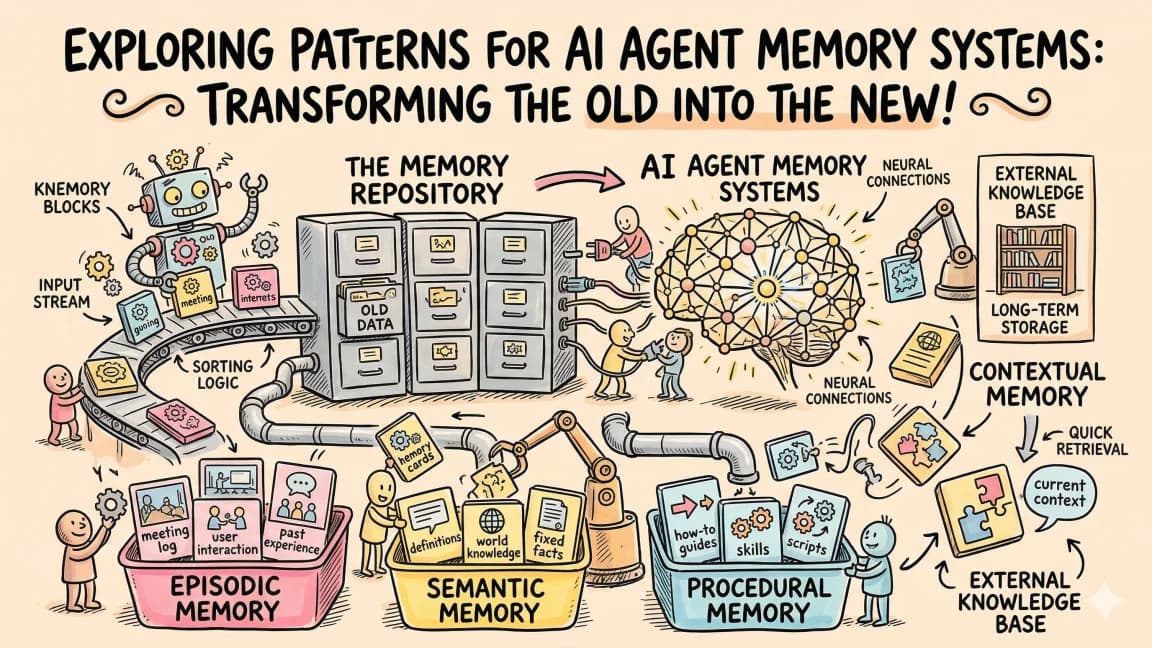
AI Agent Memory Patterns
Agents forget everything between sessions. Here are the patterns that fix that: CLAUDE.md persistence, RAG retrieval, co...

12 min read
AI
The Agentic Development Tech Stack for 2026
Coding changed more in the past two years than in the previous decade. We moved from manual typing to autocomplete, then...
9 min read
News
Terence Tao Digests the Jacobian Conjecture Counterexample: How Claude Fable 5 Broke an 87-Year-Old Math Problem
Terence Tao published a deep mathematical digestion of the Jacobian conjecture counterexample discovered by Claude Fable...
6 min read
Claude
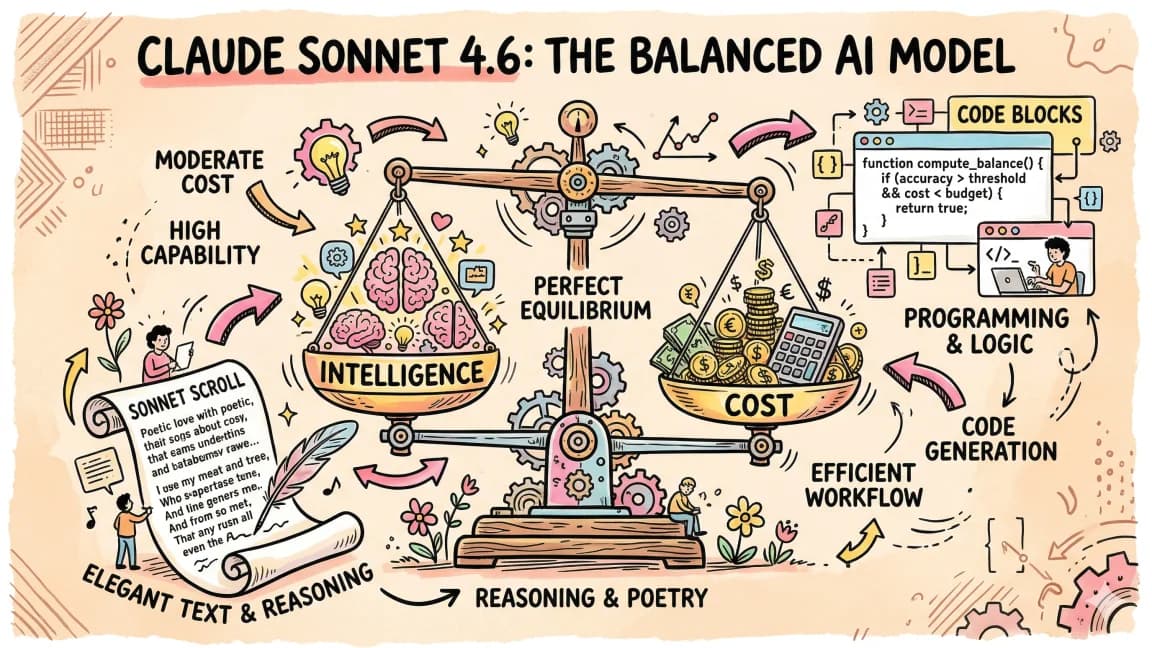
Claude Sonnet 4.6: Approaching Opus at Half the Cost
Anthropic's Sonnet 4.6 narrows the gap to Opus on agentic tasks, leads computer use benchmarks, and ships with a beta mi...

5 min read
Claude
Claude Opus 4.5: Anthropic's Most Intelligent Model
Anthropic has released Claude Opus 4.5, positioning it as their most capable model yet for coding agents and computer us...
Build with the member tools

Get Smarter About AI Dev
New tutorials, open-source projects, and deep dives on coding agents - delivered weekly.
One email per weekReal code, not theoryFree forever