Claude Opus 4.5: Anthropic's Most Intelligent Model
TL;DR
Claude Opus 4.5 is the Anthropic model built for coding agents and computer use. Its pricing, benchmarks, token efficiency, effort parameter and agent features.
Last updated: May 24, 2026
Anthropic has released Claude Opus 4.5, positioning it as their most capable model yet for coding agents and computer use. The release brings significant price cuts, efficiency gains, and enough autonomous capability to outscore human candidates on the company's notoriously difficult technical assessment.
Official Sources#
Verify pricing, capabilities, and API details against Anthropic's documentation before production deployment.
| Resource | Link | Notes |
|---|---|---|
| Claude Models Overview | anthropic.com/claude | Model family and capabilities |
| Models Documentation | docs.anthropic.com/models | Model IDs, context windows, features |
| API Documentation | docs.anthropic.com | SDK reference, messages API |
| Pricing | anthropic.com/pricing | Current token rates by model |
| Tool Use | docs.anthropic.com/tool-use | Function calling patterns |
| Claude Code Overview | docs.anthropic.com/claude-code | Agentic coding environment |
Pricing That Changes the Economics#
Opus 4.5 drops to $5 per million input tokens and $25 per million output tokens - three times cheaper than its predecessor. The model is available across Anthropic's web app, Claude Code, and all major cloud providers. This price reduction makes high-performance agentic workflows economically viable at scale.
For model-selection context, compare this with What Is Claude Code? The Complete Guide for 2026 and 60 Claude Code Tips and Tricks for Power Users; the useful question is not only benchmark quality, but where the model fits in a real developer workflow.
Benchmarks and Efficiency#
On software engineering benchmarks, Opus 4.5 leads across the board. It tops SWE-bench Verified, TerminalBench, and shows strong performance on multilingual coding tasks with an 89.4% on Polyglot. Browser automation scores hit 72.9% on BrowserComp, and the model achieved $4,967 on VendingBench - though still trailing Gemini 3 Pro on that specific metric.
The headline metric, however, is token efficiency. Opus 4.5 matched Sonnet 4.5's best SWE-bench Verified score using 76% fewer output tokens. At maximum effort, it exceeds Sonnet 4.5 by 4.3 percentage points while consuming 48% fewer tokens. Raw performance is easy when you burn unlimited compute - efficiency at the frontier is what matters for production deployments.
Agent Architecture and Control#
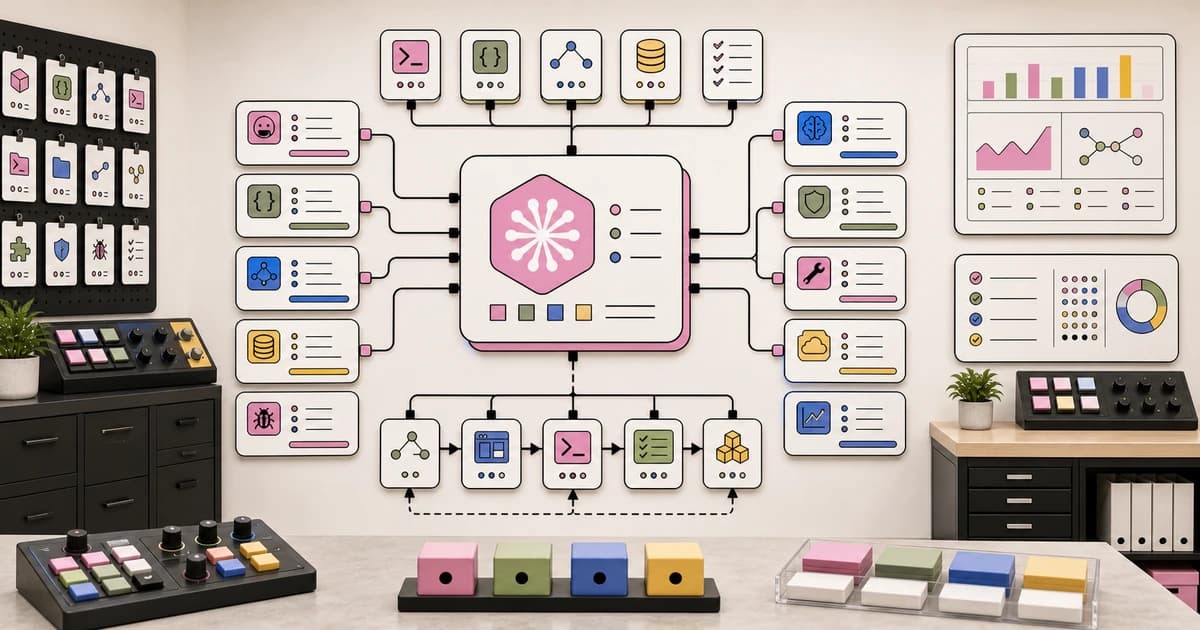
The model introduces an effort parameter in the API, letting developers control how much compute to allocate per task. This pairs with new features including tool search, programmatic tool calling, tool use examples, and context compaction.
Anthropic emphasizes Opus 4.5's ability to manage teams of sub-agents and build complex multi-agent systems without constant intervention. The model handles ambiguous tasks, reasons through trade-offs, and operates autonomously without the handholding earlier models required. Early testers consistently report that Opus 4.5 "just gets it" when handed open-ended technical tasks.
Ecosystem Expansion#
Claude Code now ships as a desktop application alongside the existing CLI and web interfaces. The release adds Microsoft Office integrations for PowerPoint, Excel, and Word, plus expanded Chrome extension support. Conversation limits have increased, and the system supports longer-running agentic workflows.
The Human Benchmark#
Perhaps the most striking claim: Opus 4.5 is the first model to outperform human candidates on Anthropic's technical take-home exam. The assessment tests technical ability and judgment under time pressure - areas where the model now exceeds the strongest human applicants.
This result raises concrete questions about how AI reshapes engineering as a profession. Anthropic acknowledges their exam doesn't measure collaboration, communication, or the instincts developed over years of experience. But on core technical skills, the machine has crossed the threshold.
First Impressions in Practice#
In a demo building a glassmorphism-themed SaaS landing page with Next.js, Opus 4.5 completed the task in approximately five minutes with minimal instruction. The model handled design decisions, component structure, and styling autonomously. Image understanding capabilities suggest it can interpret Figma screenshots and other visual references to match specific design requirements.
The shift is clear: less time prompting, more time reviewing. Opus 4.5 operates as a system you delegate to rather than direct step-by-step.
Watch the Video#
Frequently Asked Questions#
What is Claude Opus 4.5?#
Claude Opus 4.5 is Anthropic's flagship AI model released in November 2025, optimized for coding agents and autonomous computer use. It represents a significant upgrade over Opus 4, with improved token efficiency (76% fewer output tokens for equivalent performance), lower pricing ($5/$25 per million input/output tokens), and the ability to manage multi-agent workflows without constant supervision.
How does Opus 4.5 compare to Sonnet 4.5?#
Opus 4.5 exceeds Sonnet 4.5 by 4.3 percentage points on SWE-bench Verified while consuming 48% fewer tokens. The key difference is reasoning depth: Opus handles ambiguous, open-ended tasks where Sonnet would need more explicit guidance. Use Opus for complex autonomous work and Sonnet for faster, more straightforward tasks where cost matters more than maximum capability.
What is the effort parameter in the Opus 4.5 API?#
The effort parameter lets you control how much compute the model allocates to a task. Higher effort levels enable deeper reasoning and better results on complex problems, while lower effort saves tokens for simpler tasks. This gives developers fine-grained control over the cost-quality tradeoff per API call.
Is Opus 4.5 still the best Claude model?#
As of May 2026, Opus 4.6 and Opus 4.7 have been released with additional capabilities including adaptive thinking and agent teams. However, Opus 4.5 remains highly capable and more cost-effective for many use cases. The effort parameter and pricing make it a strong choice for high-volume autonomous workloads where the newest features are not required.
What is context compaction in Opus 4.5?#
Context compaction is a feature that allows the model to summarize and compress its conversation history during long-running sessions. This prevents the context window from filling up and lets agents run for extended periods without losing track of earlier work. It is particularly useful for multi-hour coding sessions.
Can Opus 4.5 beat human engineers on technical assessments?#
Yes. Anthropic reported that Opus 4.5 outperformed human candidates on their technical take-home exam, which tests coding ability and judgment under time pressure. However, the assessment does not measure collaboration, communication, or engineering intuition developed through years of experience. The result demonstrates strong autonomous technical capability, not full replacement of human engineers.
How do I access Claude Opus 4.5?#
Opus 4.5 is available through the Anthropic API (model ID: claude-opus-4-5-20251101), Claude Code, the Claude web app, and major cloud providers including AWS Bedrock and Google Cloud Vertex AI. Claude Code on the Max plan ($200/month) includes Opus 4.5 access with high usage limits.
What makes Opus 4.5 good for coding agents?#
Three factors: token efficiency, autonomous judgment, and sub-agent management. The model completes SWE-bench tasks using far fewer tokens than competitors, handles ambiguous instructions without constant clarification, and can coordinate multiple sub-agents for parallel work. This combination makes it practical to run long-running autonomous coding workflows at scale.
Continue Reading#
Get the next deep dive like this in your inbox
One email a week on Claude and the rest of the AI dev stack. Free.
Read next on Claude Code
Gemini 4 Argon: What Developers Can Actually Use
Gemini 4 Argon for developers: what Google shipped, what is verified, why access starts narrow, and what to watch before planning a migration around it.
8 min readClaude Opus 4.6: Anthropic's Smartest Model Gets Agent Teams
Claude Opus 4.6 adds agent teams, a million-token context window, adaptive thinking and context compaction. The benchmarks and what changes for agentic coding.
8 min readClaude Sonnet 4.6: Approaching Opus at Half the Cost
Claude Sonnet 4.6 nears Opus on agentic work and computer use at half the cost. Benchmarks, adaptive thinking, model card findings and the 1M context beta.
6 min readTechnical content at the intersection of AI and development. Building with AI agents, Claude Code, and modern dev tools - then showing you exactly how it works.