DataFlow-Harness Shows Why Agents Need Editable Pipelines

TL;DR
DataFlow-Harness shows why coding agents doing data work should produce editable, validated pipelines instead of throwaway scripts, and what to copy first.
| Research notes | |
|---|---|
| Primary paper | arXiv:2607.16617 |
| Hugging Face paper page | HF Papers: DataFlow-Harness |
| HF signal | #2 paper of the day, 130 upvotes when checked July 24, 2026 |
| Google Trends check | Attempted July 24, 2026 for AI coding agent, Claude Code, Codex, coding agent, data pipeline, AI data pipeline, LLM data pipeline, Dockerless, program verifier, MCP connectors, and related clusters. The Google Trends widget-data endpoint returned RetryError before reliable rows were available. No numeric Trends values are used here. |
Last updated: July 24, 2026
Most coding-agent demos end with a script.
That makes sense for small tasks. Ask an agent to clean a CSV, fetch a report, or transform a folder of files, and the obvious output is code you can run. But data teams rarely want the final artifact to be a one-off script hiding in a chat transcript.
They want a pipeline they can inspect, edit, validate, schedule, monitor, and hand to the next person.
That is why DataFlow-Harness, a July 2026 paper that surfaced on Hugging Face Papers, is more interesting than its benchmark table. The paper names a practical gap: agents can translate natural language into scripts, but those scripts are not automatically materialized as persistent, platform-native data pipeline artifacts.
The authors call that the NL2Pipeline gap. I would describe it more bluntly:
Agents keep producing throwaway code when teams need editable workflow state.
The Take#
DataFlow-Harness is useful because it changes the unit of work.
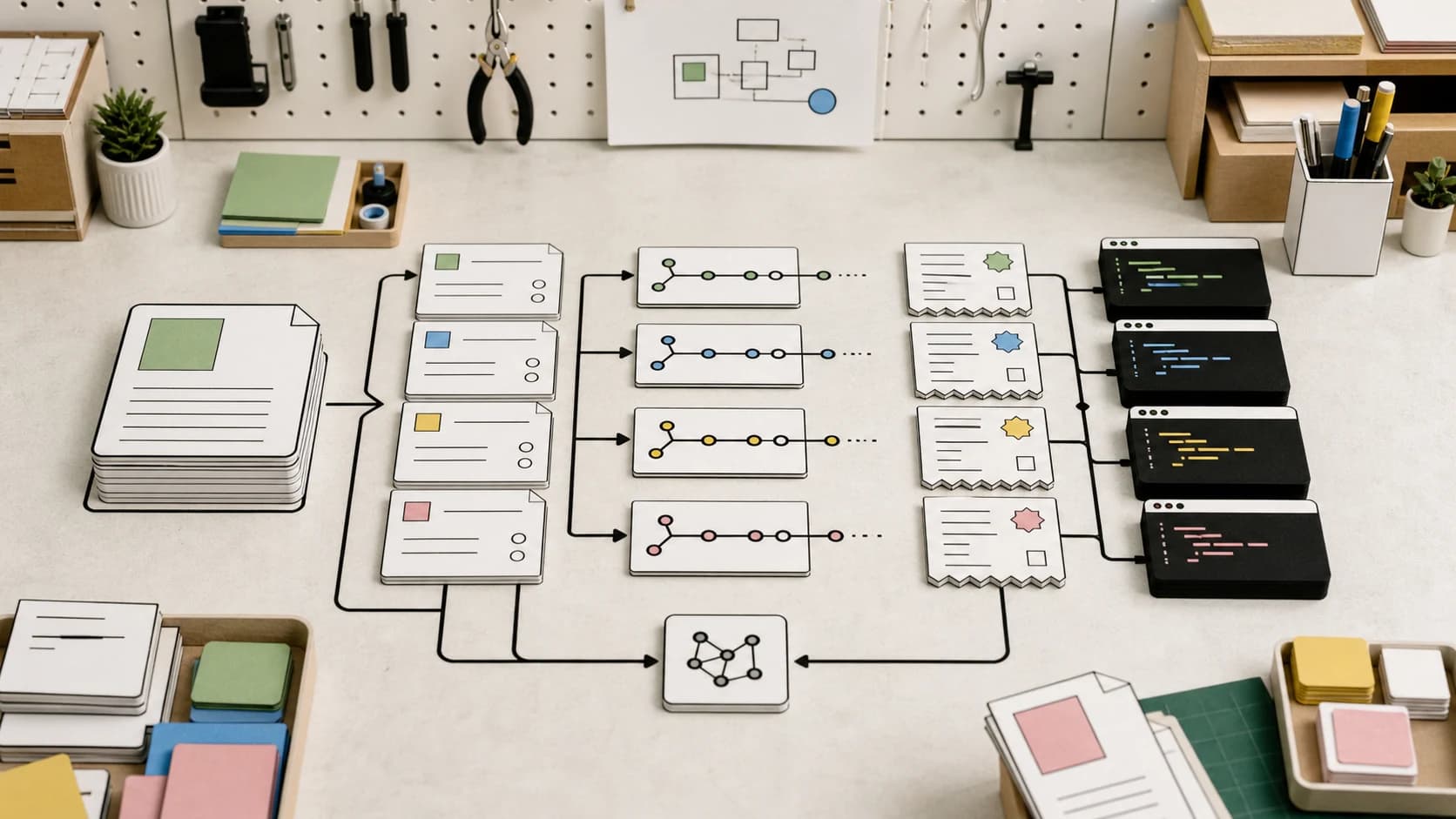
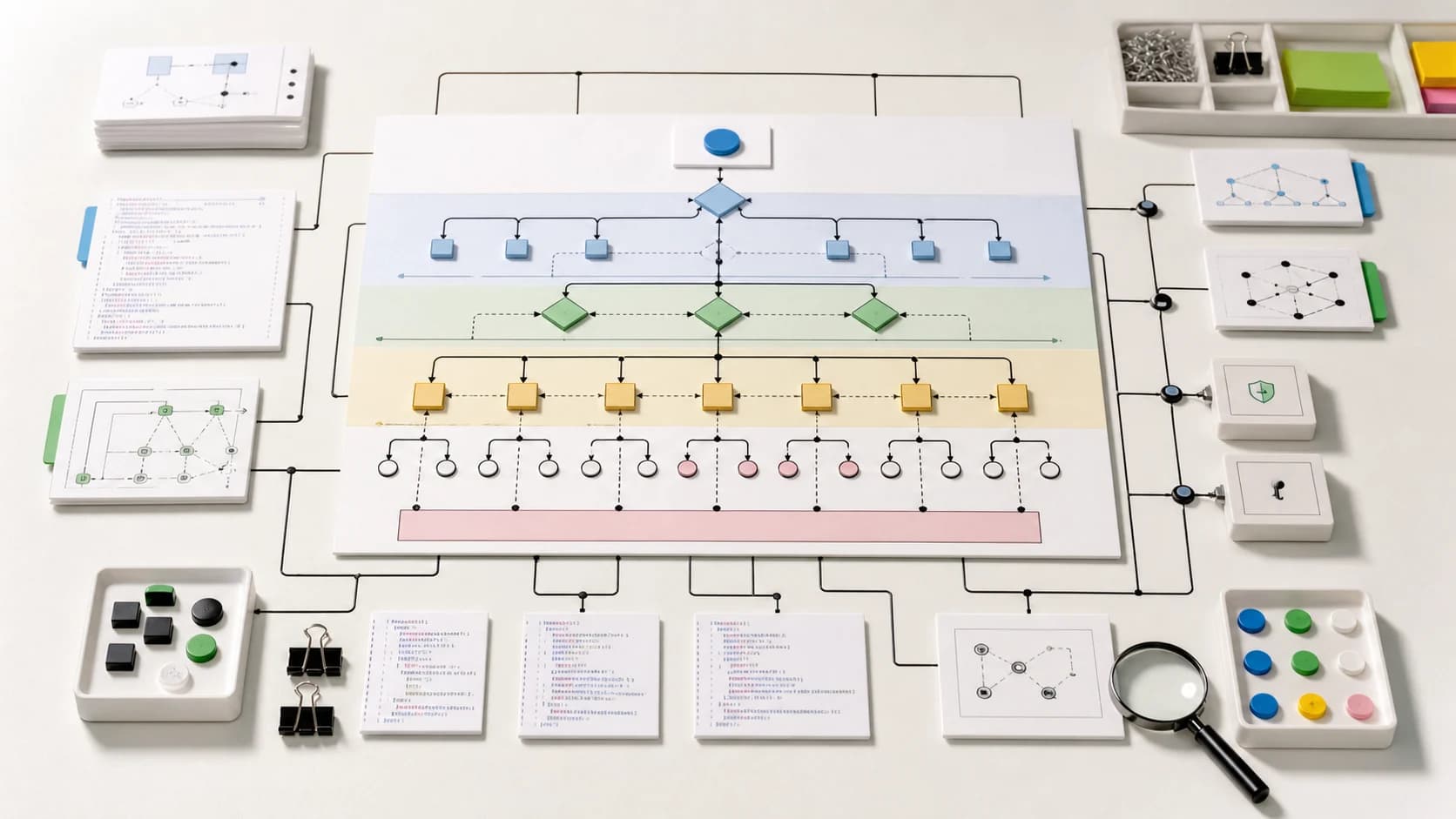
Instead of letting Claude Code produce free-form scripts, the harness guides the agent to build directed acyclic graphs through typed, incremental mutations against a live platform. The agent sees the operator registry, reads the current pipeline state through an MCP layer, follows DataFlow-Skills for procedural guidance, and synchronizes the result with a visual DAG editor.
That architecture matters more than the proper noun.
The durable pattern is:
agent intent
  -> platform schema
  -> typed mutation
  -> validation
  -> persistent workflow artifact
  -> editable UI
That is a better shape for production data work than:
agent intent
  -> generated script
  -> hope someone understands it later
This connects directly to the broader agent-infrastructure thread. Resource2Skill argued that agents need source-backed procedural skills. Harness Handbook argued that agent harnesses need readable, editable control surfaces. Spec-driven agent workflows argued that handoff artifacts matter more than prompt threads.
DataFlow-Harness applies the same lesson to data pipelines: make the platform artifact the source of truth.
What The Paper Claims#
The arXiv abstract describes four main pieces:
- DataFlow-Skills for procedural guidance
- an MCP layer exposing the live operator registry and current pipeline state
- a data pipeline backend as the authoritative state holder
- a web UI that keeps conversational authoring and visual editing synchronized
On a 12-task data-engineering benchmark, the authors report a 93.3 percent observed end-to-end pass rate. They also report lower measured cost and latency relative to a vanilla Claude Code baseline, while staying close to a context-aware Claude Code baseline on observed pass rate.
Those numbers are worth reading, but they should not be the headline for builders.
Small benchmarks can be fragile. A 12-task suite can tell you whether a system works on the authors' task mix. It cannot prove that the same harness will handle your company's messy schemas, overloaded operators, strange compliance rules, half-owned dashboards, and broken historical jobs.
The stronger claim is architectural:
If the platform exposes valid operations and current state, the agent can construct something the platform understands instead of emitting arbitrary glue code.
That is the part worth stealing.
Why Scripts Are The Wrong Final Artifact#
Generated scripts are fine as an intermediate step. They are a bad default destination for repeatable data work.
A script has hidden state:
- assumptions about source schemas
- implicit dependencies
- local environment quirks
- credentials or path conventions
- retry behavior
- validation rules
- output contracts
Data platforms already have concepts for those things. They have nodes, edges, schedules, operators, validation, lineage, permissions, alerts, and run history.
So if an agent writes a script and leaves the platform unaware of that structure, the team loses the very affordances that make data work maintainable.
That is the same mistake teams make when they treat agent work as a chat transcript instead of a harnessed workflow. The agent may complete the immediate task, but the system has not learned how to operate the result.
MCP Is Useful Here For A Specific Reason#
The paper uses MCP as a platform grounding layer, not as a generic tool buffet.
That distinction matters.
Bad MCP integration means handing the model a long list of tools and hoping it calls the right one. Good MCP integration means exposing a narrow, task-relevant interface that lets the agent inspect current state and propose valid mutations.
For a data pipeline builder, that means tools like:
- list available operators
- inspect the current DAG
- add a node with a typed config
- connect two nodes
- validate the graph
- run a small sample
- explain current validation errors
The agent should not need to know every internal platform detail. It needs enough state to make the next valid move.
That is the same progressive-disclosure idea behind skills over MCP: keep the top-level interface compact, then reveal deeper context only when the task requires it.
The Opposing View#
The strongest criticism is that platform-grounded agents can become brittle in a different way.
Free-form scripts are messy, but they are flexible. A typed DAG builder is safer only if the operator registry is complete, the validation layer is accurate, and the platform model matches real production needs.
If the registry is stale, the agent will make valid-looking broken pipelines. If validation is shallow, the graph can pass construction and still fail at runtime. If the UI and backend disagree, the visual artifact becomes false confidence.
There is also a product risk. Teams can overfit the harness to demo-friendly tasks where every operation maps cleanly to a known node. Real data work often includes awkward one-off cleanup, exploratory analysis, human review, external vendor files, and domain knowledge that does not fit a neat operator palette yet.
So the safe read is not "replace data engineers with DAG agents."
The safe read is:
Use agents to draft and edit platform-native pipelines where the platform can constrain, validate, and preserve the result.
That still leaves humans responsible for schema judgment, production readiness, monitoring, and ownership.
What I Would Copy First#
If you are building internal agent tooling, do not start by cloning the whole paper.
Start with one existing workflow surface and add a mutation API around it.
For example:
type PipelineMutation =
  | { type: "add_node"; operator: string; config: Record<string, unknown> }
  | { type: "connect"; from: string; to: string }
  | { type: "set_schedule"; cron: string }
  | { type: "validate" }
  | { type: "sample_run"; rows: number };
Then force the agent to build through those operations instead of asking it to write a final script.
The workflow should produce a receipt:
artifact: pipeline/customer-renewal-risk
mutations: 14
validation: passed
sample_run: 100 rows
owner_review: required
source_request: ticket DATA-1842
That receipt is what makes the result reviewable. It tells the next engineer what changed, how it was validated, and where the request came from.
This is also where agent swarms need receipts stops being a slogan. If multiple agents touch the same workflow, the shared artifact and mutation log are the coordination layer.
The Design Rule#
For production-facing agent tools, avoid making the model the only place where structure exists.
If the work has a durable representation in your system, make the agent edit that representation directly.
That applies beyond data pipelines:
- BI dashboards should become dashboard definitions, not screenshot descriptions.
- CRM changes should become validated account updates, not prose summaries.
- Content workflows should become frontmatter, assets, and publish checks, not loose drafts.
- Deployment work should become commits, run logs, and health probes, not "it seems deployed."
- Agent skills should become versioned files with source evidence, not memory-only advice.
DataFlow-Harness is a good example because the DAG is naturally inspectable. But the deeper lesson is general: agents are more useful when they operate inside the product's native state model.
What Not To Overclaim#
DataFlow-Harness does not prove that every data platform needs a chat-first pipeline builder.
It does not prove that a 93.3 percent observed pass rate on the paper's benchmark transfers to every enterprise data stack.
It does not remove the need for tests, lineage, permissions, cost controls, or human review.
And it does not mean scripts disappear. Scripts remain useful for exploration, small jobs, and custom operations that do not deserve a platform node yet.
The better conclusion is narrower:
When a workflow will live beyond the current prompt, the agent should construct the durable artifact directly, with typed operations and validation, instead of leaving behind a disposable script.
FAQ#
What is DataFlow-Harness?#
DataFlow-Harness is a research platform for using a coding agent to construct editable LLM data pipelines. Instead of producing only scripts, the agent builds platform-native DAGs through typed incremental mutations, with MCP exposing live platform state and operator information.
Why does DataFlow-Harness matter for developers?#
It points at a practical agent-design pattern: let agents edit the durable state your platform already understands. For data teams, that means pipelines and DAGs. For other teams, it may mean specs, dashboards, issues, deployment records, or skill files.
Is DataFlow-Harness better than Claude Code?#
The paper reports better measured cost and latency than a vanilla Claude Code baseline on its 12-task benchmark, while staying close to a context-aware Claude Code baseline on pass rate. Treat that as benchmark evidence, not a universal product comparison. The more important distinction is that DataFlow-Harness constrains Claude Code-style work through platform state.
Should data teams replace scripts with agent-built DAGs?#
No. Scripts are still useful for exploration and custom work. The better rule is to use agent-built DAGs when the workflow needs to be reviewed, edited, scheduled, monitored, or handed off.
What is the main implementation lesson?#
Expose a small set of typed mutations around the artifact you care about. Let the agent inspect current state, propose changes, validate each step, and leave a receipt that humans can review.
Continue Reading#
- Resource2Skill Turns Tutorials Into Agent Skills - how multimodal artifacts can become executable agent skills with provenance.
- Spec-Driven Agent Workflows - why specs, plans, and task ledgers are becoming the handoff layer for agents.
- Harness Handbook Maps Agent Behavior - why evolving agent harnesses need readable and editable control surfaces.
- Skills Over MCP: Progressive Disclosure For Agents - how to keep tool context compact without hiding critical procedures.
- Long-Running Agents Need Harnesses, Not Hope - the operational pattern behind multi-step agent work.
Sources#
- arXiv:2607.16617 - DataFlow-Harness: A Grounded Code-Agent Platform for Constructing Editable LLM Data Pipelines, checked July 24, 2026.
- Hugging Face Papers: DataFlow-Harness, checked July 24, 2026.
- Google Trends via
pytrends, attempted July 24, 2026. The widget-data endpoint returnedRetryError, so no numeric Trends rows were used.
Get the next deep dive like this in your inbox
One email a week on AI Agents and the rest of the AI dev stack. Free.
Read next on AI coding tools
Resource2Skill Turns Tutorials Into Agent Skills
Resource2Skill, a Microsoft paper, turns tutorials, repos, articles, and reference artifacts into executable agent skills with provenance. What to copy from it.
8 min readSpec-Driven Agent Workflows: GitHub Spec Kit, gstack, and the New Handoff Layer
GitHub Spec Kit and gstack are trending for the same reason: coding agents need durable specs, plans, and task ledgers more than another one-shot prompt.
8 min readHarness Handbook Shows the Missing Map for Coding Agents
Harness Handbook maps coding-agent behavior to code evidence. Why code search falls short when one behavior spans prompts, tools, state and permissions.
8 min readNew here? Start with
Technical content at the intersection of AI and development. Building with AI agents, Claude Code, and modern dev tools - then showing you exactly how it works.