Resource2Skill Turns Tutorials Into Agent Skills
TL;DR
Resource2Skill, a Microsoft paper, turns tutorials, repos, articles, and reference artifacts into executable agent skills with provenance. What to copy from it.
| Research notes | |
|---|---|
| Primary paper | arXiv:2606.29538 |
| Hugging Face paper page | HF Papers: Resource2Skill |
| Official code | microsoft/Resource2Skill |
| Dataset | microsoft/RESOURCE2SKILL |
| Google Trends check | Attempted July 20, 2026. pytrends reached the Google Trends widget-data endpoint for Claude Code, AI coding agent, agent skills, AI agent security, and multimodal agent, then failed with a retry error before returning reliable rows. No numeric Trends values are used here. |
Last updated: July 20, 2026
Most agent-skills posts stop at the comfortable part: write a good SKILL.md, put it in version control, and teach agents to load it only when needed.
That is still the right baseline. It is the idea behind skills over MCP, agent skills production checklists, and skills beating prompts. But it leaves a harder question unanswered:
Where do high-quality skills come from after the obvious hand-written runbooks are done?
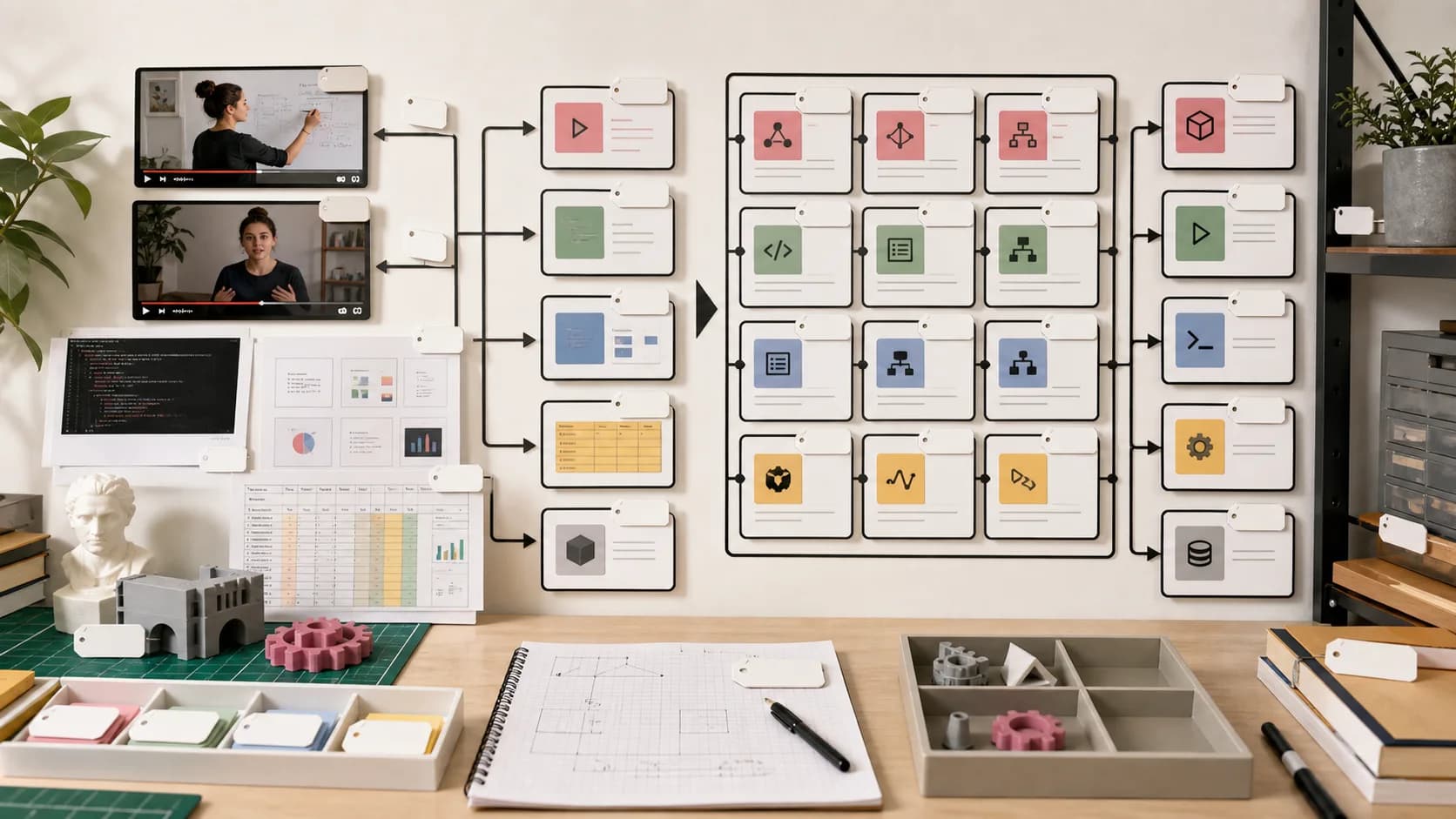
Resource2Skill, a Microsoft Research paper that surfaced on Hugging Face Papers for July 2026, is interesting because it moves that question from prompt authoring to skill distillation. The paper and official repo describe a system that turns human-created resources - tutorial videos, repositories, articles, code, and reference artifacts - into executable skills that agents can browse, compose, and run through real software tools.
That is a different category from "write better instructions."
It is closer to building a compiler for your team's tacit workflow knowledge.
The Take#
The useful takeaway is simple:
Agent skills should not be only documents humans write for agents. They should also become structured artifacts distilled from the way humans already teach, demonstrate, and ship work.
The official microsoft/Resource2Skill repo makes this concrete. It says Resource2Skill turns tutorials, reference artifacts, articles, and code into reusable executable skills for domains including web pages, PowerPoint decks, Excel workbooks, Blender scenes, and REAPER-style audio.
That domain list matters. These are not only coding tasks. They are multimodal authoring workflows where the important knowledge is often visual, temporal, or tool-specific:
- a video showing how a designer layers effects
- a spreadsheet example showing formula structure and chart placement
- a deck template showing layout rhythm
- a Blender scene showing camera, material, and lighting choices
- a repo showing the exact API calls that made the output work
A plain text skill can summarize some of that. A richer skill system can preserve more of it.
What Resource2Skill Adds#
The paper frames skills as reusable procedural knowledge for software agents. The problem is that many skill libraries are hand-written, text-centric, or derived from agent traces. Human resources such as tutorial videos are underused even though they contain the exact operations agents need to imitate.
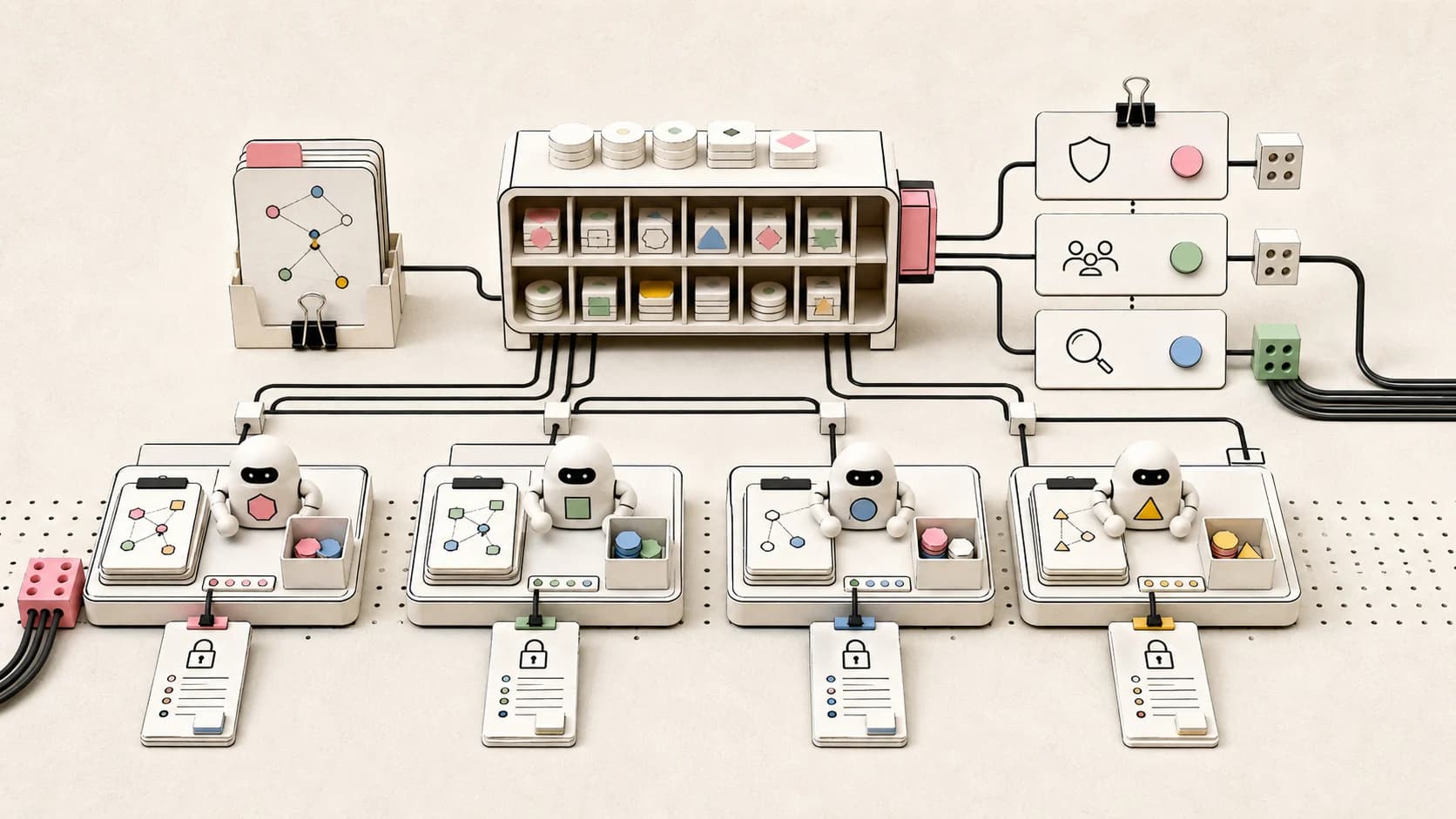
Resource2Skill answers with a hierarchical multimodal Skill Wiki.
Each skill entry can combine:
- structured text
- executable code
- visual examples
- metadata
- provenance
- domain-specific artifacts
At inference time, an agent retrieves and composes relevant skills from that wiki. If the current library does not cover the task, the same construction process can acquire new skills online.
The official repo exposes the practical shape of that idea. The runtime reads from skills_wiki/<domain>/ for searchable structured entries and skills_library/<domain>/ for executable assets used by domain MCP servers. That split is important: the agent needs a browsable semantic map and a separate executable substrate.
This is the pattern agent platforms keep converging on. Anthropic's Agent Skills made progressive disclosure mainstream: keep a compact index in context, then load deeper instructions and assets only when the task needs them. Resource2Skill pushes the same shape into multimodal skill acquisition.
Why Developers Should Care#
The first wave of agent skills was mostly about prompt hygiene.
Do not paste the whole runbook into every prompt. Package the recurring procedure. Add references and scripts. Keep the agent from carrying irrelevant context. Version the files. Review the diffs.
That wave is still necessary. But it does not solve skill coverage.
Every organization has workflow knowledge that lives outside docs:
- screen recordings
- loom walkthroughs
- example spreadsheets
- design boards
- support tickets
- old PRs
- slide decks
- notebook experiments
- "copy this repo and change these parts" examples
Humans learn from those artifacts all the time. Agents mostly do not. They see either a compressed summary or a giant context dump.
Resource2Skill points to a better middle layer: turn those artifacts into reusable, source-backed skill entries with provenance.
That is the part I would copy first, even before copying the runtime.
The Benchmark Claims Are Useful, But Secondary#
The arXiv abstract reports that Resource2Skill improves average overall score by 11.9 percentage points over no-skill agents across seven practical authoring domains, and outperforms strong harness baselines in 26 of 28 main aggregate model-domain cells.
Those claims are worth reading in the paper before making architecture decisions. Benchmarks in authoring domains depend heavily on evaluator design, task mix, and output criteria.
But the architectural claim is more durable than the leaderboard:
Agents get better when they retrieve small, task-relevant, executable skill fragments that preserve the source signals behind them.
That lines up with the broader DevDigest cluster. SkillHone says skills need persistent decision history. Long-Horizon-Terminal-Bench says long agent tasks need better progress signals. Agent skills package-manager governance says skill libraries become dependencies once agents rely on them.
Resource2Skill adds another layer: skills need acquisition pipelines.
The Opposing View#
The obvious criticism is quality control.
If a system can turn random tutorials and repos into skills, it can also turn stale, sloppy, unsafe, or stylistically bad examples into reusable agent behavior.
That is worse than a bad one-off generation. A bad skill compounds. Once it enters the library, future agents may retrieve it with confidence, compose it with other skills, and spread the error across tasks.
The second concern is provenance. If the source was a video, article, repo, or design artifact, teams need to know:
- who created it
- when it was captured
- which version of the tool it used
- whether the license permits reuse
- which parts became executable instructions
- which examples were excluded
- whether the generated skill still passes current probes
Without that, skill distillation becomes another supply-chain problem.
This is why the useful version of Resource2Skill is not "let agents scrape everything and write their own skill packs." The useful version is a governed pipeline:
source artifact
  -> extraction
  -> skill draft
  -> provenance record
  -> probe task
  -> human or reviewer approval
  -> versioned skill library
  -> periodic revalidation
The review step is not optional for workflows that touch production code, customer data, billing, deployment, security, or public content.
How I Would Use This In A Developer Platform#
Start with one domain where the outputs are easy to inspect.
For example, take a team's internal slide-deck workflow:
- Collect three approved decks, one style guide, and one screen recording of a human making edits.
- Distill a small skill wiki: layout rules, slide archetypes, export commands, examples, and anti-patterns.
- Add executable helpers for rendering and checking the deck.
- Create probe prompts that cover realistic tasks.
- Require the agent to cite which skill entries it used.
- Store the source artifact IDs and versions next to the generated skill.
Only then expand to messier domains such as browser workflows, spreadsheets, or codebase operations.
The same idea applies to coding agents:
- Turn a good PR into a migration skill.
- Turn a debugging session into a diagnostic skill.
- Turn a recurring incident response into a runbook skill.
- Turn a design review into a taste skill.
- Turn a release checklist into a deployment skill.
The trick is to keep the skill small enough to retrieve and concrete enough to execute.
What Not To Overclaim#
Resource2Skill does not mean agents can learn any workflow from any tutorial and perform it reliably.
The hard parts remain:
- choosing trustworthy source artifacts
- extracting the right abstraction level
- avoiding brittle tool-version assumptions
- preventing copied mistakes from becoming policy
- testing the skill on tasks beyond the source example
- keeping generated assets licensed and reviewable
The safe claim is narrower and more useful:
Multimodal resources contain procedural knowledge that current agent-skill libraries usually waste. Distilling that knowledge into executable, provenance-rich skill entries is a promising way to make agents better at real software work.
That is enough.
The Practical Rule#
If you are building agent infrastructure, add one field to every skill record:
source_evidence:
That field should point to the artifacts that taught the skill what it knows: a repo commit, a tutorial timestamp, a deck, a video, an issue thread, a test fixture, or a prior agent trace.
Then make the agent output a receipt whenever it uses the skill:
skill_used: deck_layout.grid_comparison_v3
source_evidence: approved-q2-board-deck, slides 4-6
verification: rendered at 16:9, text overflow check passed
That is the bridge between Resource2Skill and production engineering. Not just "the agent has a skill," but "the agent used a skill with known sources and passed a relevant check."
Without that receipt, distilled skills are hard to trust. With it, they become reviewable infrastructure.
My Read#
Resource2Skill is not exciting because it has another agent benchmark table.
It is exciting because it treats tutorials, repos, articles, and artifacts as raw material for agent capability.
That is where skill systems have to go. Hand-written skills are the bootstrap phase. Distilled skills are the scale phase. Governed, provenance-rich, continuously revalidated skills are the production phase.
The teams that get this right will not have one giant prompt library. They will have a skill supply chain with sources, tests, reviewers, and receipts.
That sounds less magical than "agents learn from videos."
Good. It also sounds like something engineers can operate.
FAQ#
What is Resource2Skill?#
Resource2Skill is a Microsoft Research framework for turning human-created multimodal resources, including tutorial videos, repositories, articles, and reference artifacts, into executable agent skills.
How is Resource2Skill different from hand-written Agent Skills?#
Hand-written skills start from a human-authored instruction file. Resource2Skill starts from source artifacts and distills them into a structured skill wiki plus executable assets that an agent can retrieve and compose.
Why do multimodal skills matter for coding agents?#
Many useful workflows are not captured cleanly in text. Videos show temporal operations, screenshots show visual targets, repos show executable patterns, and artifacts show the desired output. Multimodal skill entries can preserve more of that context than a plain prompt.
Is Resource2Skill production-ready for every team?#
No. Treat it as a research-backed architecture pattern first. Production use still needs source vetting, license checks, human review, sandboxing, probes, and periodic revalidation.
What is the safest way to copy the idea?#
Start by adding source evidence and verification receipts to your existing skills. Then experiment with distilling one narrow, reviewable workflow from approved artifacts before expanding the skill library.
Continue Reading#
- MAI-Code-1-Flash Is a Model Routing Signal
- Microsoft's MAI Models and MoE Strategy: What Developers Need to Know for Copilot and Beyond
- Vercel Skill Packs: The Distribution Layer for Agent Skills Just Landed
Sources#
- RESOURCE2SKILL: Distilling Executable Agent Skills from Human-Created Multimodal Resources - arXiv, accessed July 20, 2026.
- HF Papers: Resource2Skill - Hugging Face paper page, accessed July 20, 2026.
- microsoft/Resource2Skill - official repo and runtime README, accessed July 20, 2026.
- microsoft/RESOURCE2SKILL - released dataset, accessed July 20, 2026.
- Equipping agents for the real world with Agent Skills - Anthropic engineering note, used for the progressive-disclosure context, accessed July 20, 2026.
Get the next deep dive like this in your inbox
One email a week on AI Agents and the rest of the AI dev stack. Free.
Read next on AI coding tools
SkillHone Shows Why Agent Skills Need Decision History
SkillHone argues agent skills need decision history, not just the latest SKILL.md. Why saving the reasons behind each change helps future agents improve them.
8 min readSkills Delivered Over MCP: Why Progressive Disclosure Is the Missing Piece of Both Standards
Skills over MCP: an MCP server whose tools are a skill directory, so agents pay context only for what a task needs. The argument and a working implementation.
9 min readAgent Skills Are Becoming Package Managers
Agent skills are becoming package managers. Why coding teams need dependency governance for the instructions their agents inherit, not more prompts.
8 min readNew here? Start with
Technical content at the intersection of AI and development. Building with AI agents, Claude Code, and modern dev tools - then showing you exactly how it works.