Agent Skills Are Becoming Package Managers
TL;DR
GitHub trending is full of agent skill registries. The winning pattern is not more prompts. It is dependency governance for the instructions your coding agents inherit.
Official Sources#
| Source | Link |
|---|---|
| tech-leads-club/agent-skills | github.com/tech-leads-club/agent-skills |
| Agents Towards Production | github.com/NirDiamant/agents-towards-production |
| Zerostack (Rust agent) | crates.io/crates/zerostack |
| OWASP Agentic Skills Top 10 | owasp.org/www-project-agentic-skills-top-10 |
| Claude Code Skills Docs | docs.anthropic.com/claude-code/skills |
| GitHub Copilot Agent Finder | github.blog/changelog |
| GitHub Copilot SDK GA | github.blog/changelog |
| Google Agents CLI | developers.googleblog.com |
| Anthropic Cybersecurity Skills | github.com/mukul975/Anthropic-Cybersecurity-Skills |
Last updated: June 23, 2026
GitHub trending is starting to look like the early days of npm for coding agents.
This week, Tech Leads Club's agent-skills hit the daily trending page with a familiar promise: install reusable skills into Claude Code, Cursor, Codex, Cline, Windsurf, and other AI coding agents. The repo frames skills as packaged instructions, templates, references, and workflow knowledge that can be installed across tools.
That sounds like a prompt library.
It is more important than that.
The useful mental model is package management. Agent skills are becoming dependencies for agent behavior. Once a skill can change how your coding agent plans, edits, shells out, reviews, or deploys, it belongs in the same risk category as any other dependency that can affect production work.
The take#
Agent skills need lockfiles, provenance, review, update policy, and removal paths.
The market is already moving there. agent-skills ships as an npm package, supports multiple agent targets, talks about lockfiles and content hashing, and points directly at skill security scanning. Agents Towards Production is trending in the same lane from the tutorial side: teams want patterns for moving agents from demos into production systems.
At the same time, Hacker News is debating a different but related signal: Zerostack, a small Rust coding agent, became popular because developers are tired of heavyweight agent runtimes. The discussion was not just "Rust is fast." Commenters pushed on sandbox defaults, extension hooks, approvals, memory footprint, and whether performance matters when most time is spent waiting on models.
That is the real story. Developers are no longer only evaluating model quality. They are evaluating the operating system around model work: skills, approvals, sandboxes, registries, update mechanisms, and evidence trails.
Why package manager is the right analogy#
A skill does not just give an agent facts. It can steer behavior.
A skill can say:
- inspect these files before answering
- run this command before committing
- prefer this framework
- avoid this API
- create this artifact shape
- ask these questions before implementation
- use this deployment path
- never touch these files
That is powerful. It is also ambient authority.
If you install ten skills from ten sources into a global agent directory, you are not just collecting helpful markdown. You are changing the default behavior of a tool that can read files, edit code, run shell commands, call MCP servers, and sometimes reach production-adjacent systems.
That is why the older Developers Digest pieces on agent skills in production, skills governance, and Claude Code plugin URL supply-chain risk all converge on the same rule:
Once instructions become executable workflow, they need software discipline.
June 23 Update: Discovery Makes The Governance Problem Bigger#
The package-manager analogy has only gotten stronger since this post first ran.
GitHub's Agent Finder now points Copilot toward task-relevant agents and resources instead of relying only on hand-wired configuration. The Copilot SDK general availability gives tool builders a clearer integration path. Google's Agents CLI pushes the same idea from another ecosystem: create, test, and move agent capabilities toward production from a command line. Meanwhile, repos like Anthropic Cybersecurity Skills show how quickly domain-specific skill packs can spread.
That is good for builders. It also means skill governance cannot stop at "what did I install locally?"
Teams now need to ask:
- which registries can the agent discover from;
- which resources can be invoked without a human approving the match;
- whether a discovered skill is pinned, owned, and reviewable;
- whether security-sensitive skills have a narrower sandbox than general productivity skills;
- what receipt proves which discovered capability shaped the run.
Dynamic discovery reduces setup friction. It does not remove supply-chain risk. It moves the risk from a static config file into a search and ranking layer.
That is why this topic connects directly to GitHub Copilot Agent Finder and ARD, agent config files as executable supply chain, and agent sandbox architecture. Discovery, instructions, and sandbox policy now need to be designed together.
What changed this week#
The new signal is packaging.
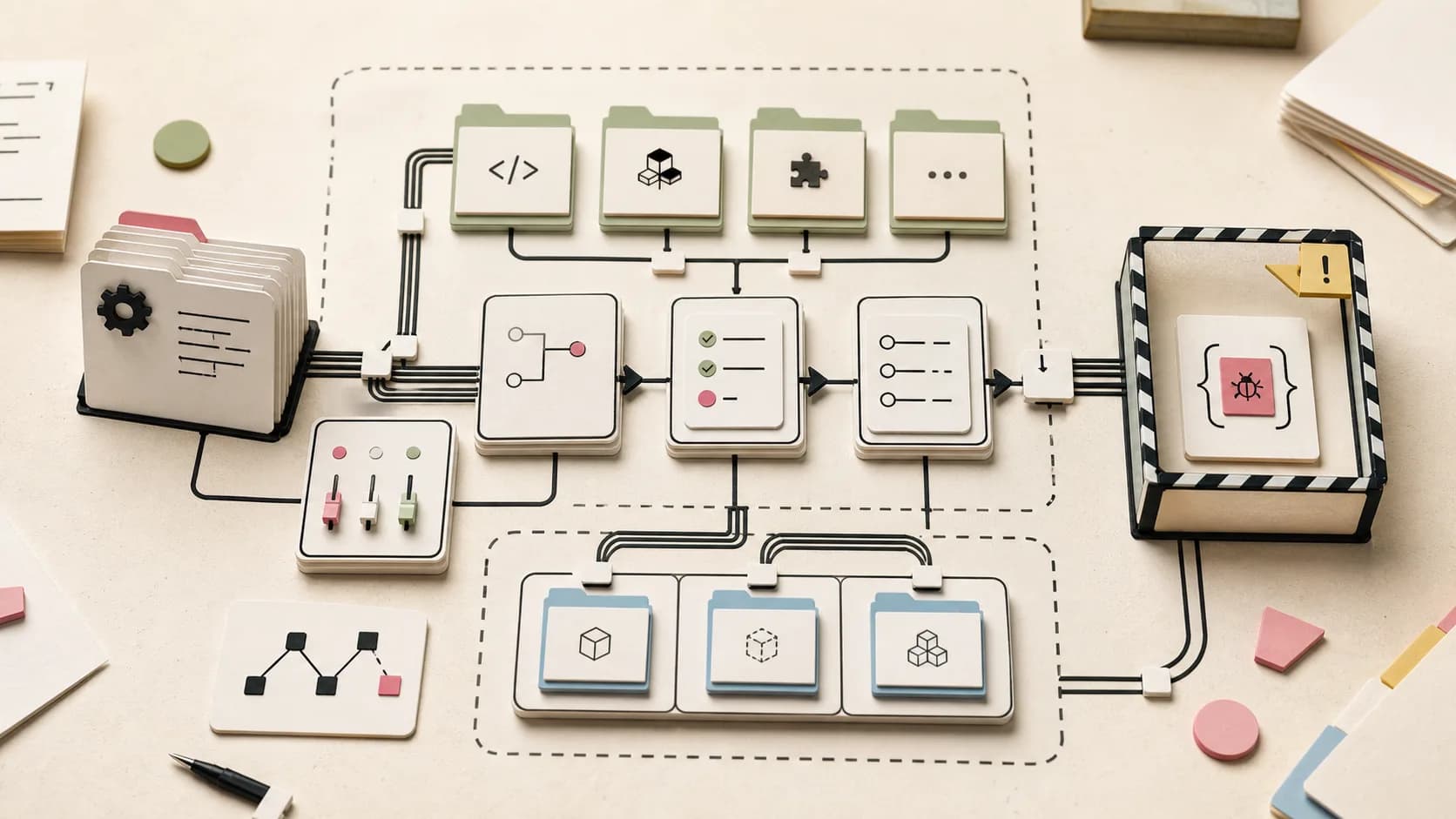
agent-skills is not just a GitHub folder of markdown files. It is a CLI-driven registry with a catalog, install flow, target-agent selection, cache behavior, audit log, and update command. It explicitly treats skills as installable units that can be copied into Claude Code, Cursor, Codex, Gemini CLI, Cline, Windsurf, and several other coding tools.
That matters because cross-agent installation creates a new portability problem.
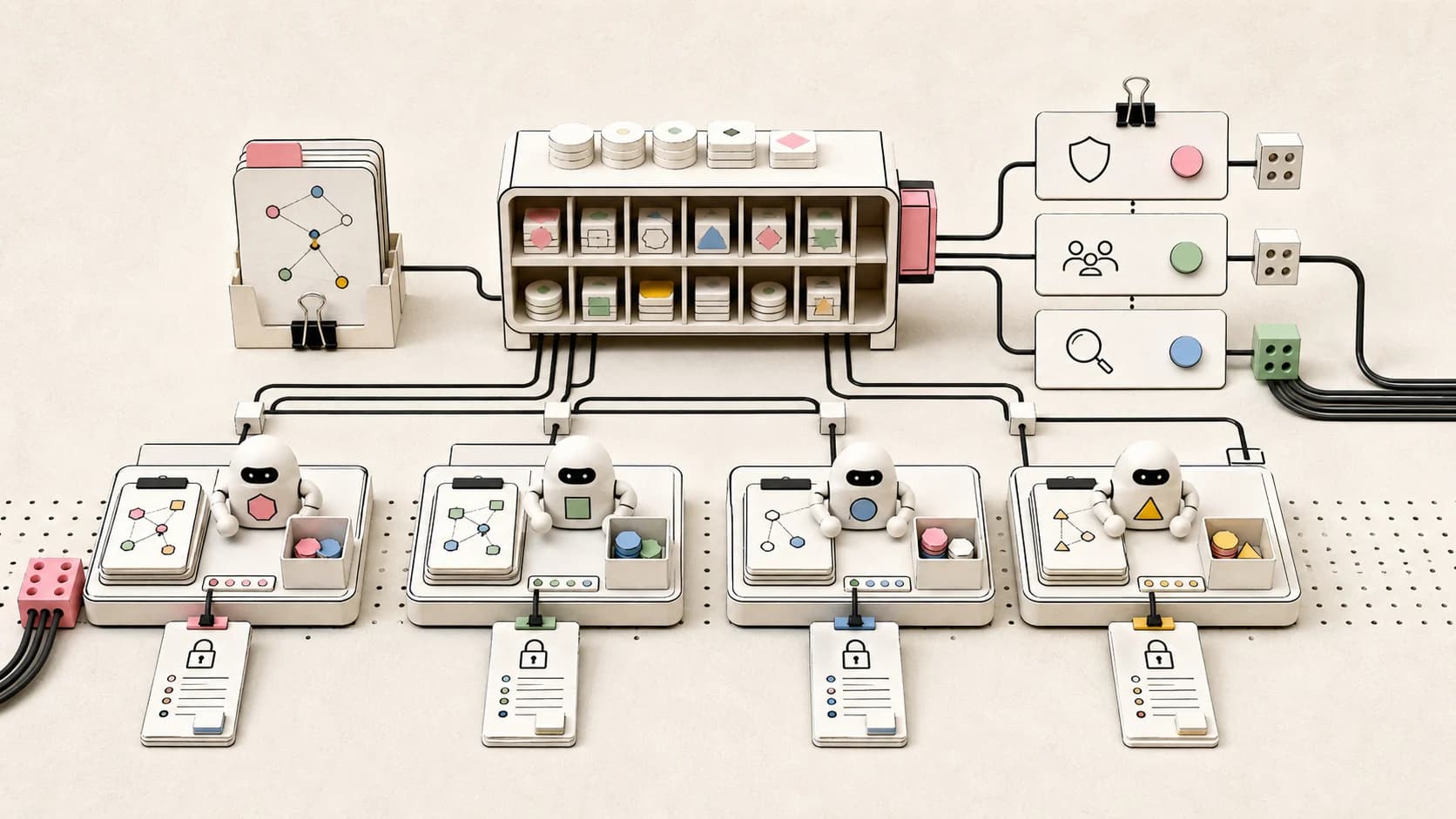
A skill that is harmless in one agent can be risky in another. One tool may require approval before shell commands. Another may run with broader permissions. One tool may expose MCP servers. Another may not. One tool may isolate a workspace. Another may read global files by default.
The same markdown dependency can have different blast radius depending on the runtime.
This is also why terminal agents becoming portable runtime surfaces matters. The model is increasingly swappable. The runtime policy is the product. Skills sit directly inside that policy layer.
The opposing view#
The skeptical view is simple: this is overbuilt.
Maybe skills are just prompts. Maybe registries are premature. Maybe most teams would be better served by one short AGENTS.md file and fewer meetings. Hacker News had a related thread today around the argument that AI will not make broken processes faster. The fair version of that critique is strong: faster code generation does not fix unclear product decisions, overloaded review queues, weak ownership, or approval theater.
I agree with that.
But it does not weaken the package-manager argument. It strengthens it.
If your process is broken, dumping more global skills into every agent makes the system noisier. You do not need a larger prompt library. You need fewer, narrower, reviewed workflow dependencies.
The right question is not "should every team install a skill registry?"
The right question is "which agent behaviors are important enough to standardize, and how do we govern those standards?"
What a skill lockfile should capture#
If skills become dependencies, a team needs a lockfile that is useful to humans, not just tooling.
At minimum, it should capture:
- skill name
- source registry or repository
- exact version or content hash
- installed target agents
- install scope: project, user, or org
- files copied or symlinked
- declared capabilities
- allowed commands, if any
- required external tools or MCP servers
- owner
- review date
- last update date
- rollback path
That sounds boring because the supply-chain solution is usually boring.
Boring is good here.
The failure mode is not that an agent skill becomes malicious in a movie-plot way. The common failure mode is drift. A skill gets copied globally, nobody owns it, the project changes, the agent keeps applying old assumptions, and the team loses time reviewing confident work based on stale instructions.
That is still a dependency bug.
The install flow should be more conservative#
For most teams, skill installation should have three lanes.
Project local. The default. The skill only applies inside one repo. It can reference that repo's commands, routes, deployment rules, and verification standards.
User local. Useful for personal workflow skills, such as summarizing a session, drafting a PR, or taking better notes. These should avoid project-specific commands.
Organization approved. Reserved for skills that encode shared engineering policy, security review, incident response, or release process. These need ownership and review.
Global-by-default skill installation is convenient, but it blurs too many boundaries. The safer pattern is the same one teams already use for dependencies: keep project behavior in the project, pin what matters, and make updates visible in review.
What to measure#
The hard part is not writing a skill. The hard part is proving it changes work.
Good skill governance should track outcomes:
- Did the skill reduce review comments?
- Did it catch missing requirements earlier?
- Did local verification improve?
- Did agents leave better receipts?
- Did diffs get smaller?
- Did rollback get easier?
- Did fewer sessions stall?
- Did the skill create new failure modes?
This connects directly to long-running agents needing harnesses. A skill is not a replacement for a harness. It is one layer inside it. The harness should still own permissions, logs, rollback, budgets, stop conditions, and verification.
What I would install first#
I would not start with a big marketplace.
I would start with three boring project-local skills:
Ambiguity gate. Before implementation, the agent lists unclear requirements, risky assumptions, expected files, and the cheapest verification path.
Change receipt. After implementation, the agent reports files changed, commands run, commands skipped, screenshots or URLs checked, and residual risk.
Public-content guard. For a content site, the agent checks banned language, source links, private-information rules, image requirements, and internal cross-links before committing.
Those skills are narrow. They are reviewable. They encode real process. They also produce evidence that a human can judge.
That is a better starting point than installing fifty generic skills because they are trending.
The practical bottom line#
Agent skills are crossing the line from prompt snippets to workflow dependencies.
That is good. It means teams are trying to preserve engineering taste, not just chase model benchmarks.
But dependency-shaped things need dependency-shaped controls. Pin them. Review them. Scope them. Measure them. Delete them when they stop helping.
The next serious agent stack will not just ask which model wrote the diff. It will ask which skills shaped the run, where they came from, what version they were, what permissions they assumed, and whether the resulting work got better.
Frequently Asked Questions#
What are agent skills?#
Agent skills are packaged instructions, references, templates, and procedures that teach an AI coding agent how to handle a recurring workflow.
Why compare agent skills to package managers?#
Because skills can change agent behavior across projects and tools. Once a skill affects planning, editing, shell usage, review, or deployment, it behaves more like a workflow dependency than a casual prompt.
Should teams install public skill registries?#
Use public registries as a source of examples, but install conservatively. Prefer project-local scope, pinned versions or hashes, clear ownership, and review before global installation.
What is the biggest risk with agent skills?#
The common risk is stale or overbroad instructions. A skill can quietly push an agent toward old commands, wrong architecture, excessive permissions, or review habits that no longer match the project.
Continue Reading#
- Karpathy Skills Show Why CLAUDE.md Is Product Surface Now
- Matt Pocock's Skills Repo Is a Better Pattern Than Vibe Coding
Sources#
- tech-leads-club/agent-skills - GitHub repository, verified June 23, 2026
- GitHub Copilot Agent Finder - GitHub Changelog, verified June 23, 2026
- GitHub Copilot SDK is now generally available - GitHub Changelog, verified June 23, 2026
- Google Agents CLI in Agent Platform - Google Developers Blog, verified June 23, 2026
- Anthropic Cybersecurity Skills - GitHub repository, verified June 23, 2026
Get the next deep dive like this in your inbox
One email a week on AI Coding and the rest of the AI dev stack. Free.
Read next on Claude Code
Agent Skills Need Exit Criteria, Not More Prompt Lore
Addy Osmani's agent-skills repo is trending because it turns vague AI coding advice into reusable engineering checklists. The real value is not the markdown. It is the exit criteria.
7 min readSkills for Real Engineers Need Governance, Not Fandom
Matt Pocock's skills repo is a useful signal for AI coding teams. The next step is treating skills like governed production controls, not a folder of viral prompts.
7 min readClaude Code Plugin URLs Turn Skills Into a Supply Chain
Claude Code's newer plugin URL and hard-deny controls are small release-note items with a big implication: agent extensions now need supply-chain discipline.
6 min readTechnical content at the intersection of AI and development. Building with AI agents, Claude Code, and modern dev tools - then showing you exactly how it works.