Agent Memory Benchmarks Are Not Enough
TL;DR
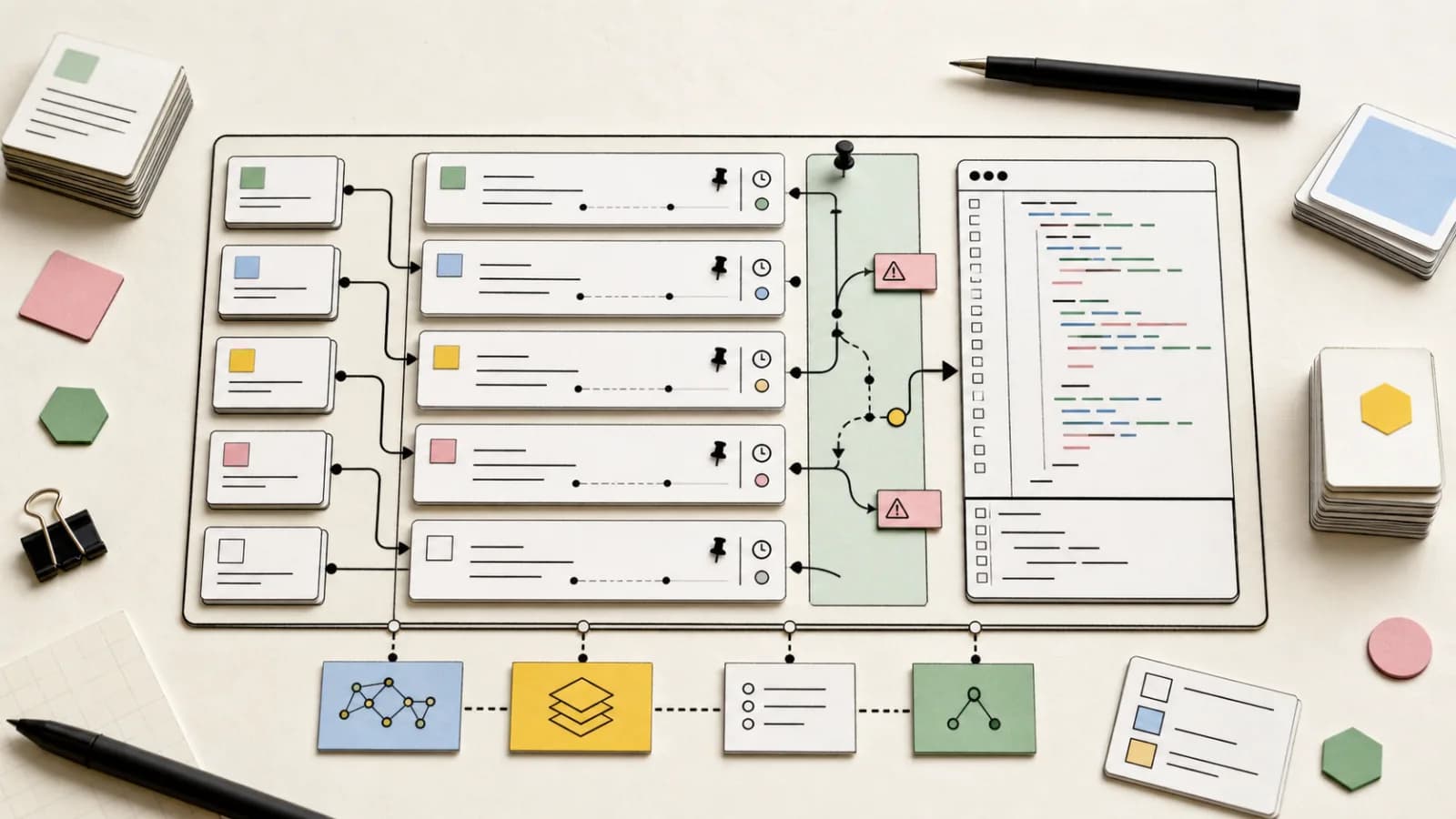
Persistent memory for coding agents is trending because every session still starts too cold. The hard part is not saving facts. It is proving recall, freshness, deletion, and rollback under real development pressure.
Official Sources#
| Source | Link |
|---|---|
| agentmemory GitHub | rohitg00/agentmemory |
| Letta Docs - Memory | Memory overview |
| Letta Docs - MemGPT Architecture | Agent architectures |
| LangChain Docs - Memory | Memory overview |
| Claude Code Docs | Claude Code overview |
| STALE benchmark paper | arXiv:2605.06527 |
Agent memory is having its GitHub trending moment.
Today, rohitg00/agentmemory is near the top of GitHub Trending, pitching persistent memory for Claude Code, Codex CLI, Cursor, Gemini CLI, and other MCP-capable coding agents. The promise is obvious: stop re-explaining the same architecture, bugs, preferences, and workflow rules every session.
That is a real pain. Anyone using Claude Code, Codex, or terminal agents long enough has hit it. The agent forgets the migration plan. It rediscovers a test command. It misses a convention you corrected yesterday.
But the interesting question is not whether agents need memory. They do. The question is what kind of memory you can trust.
For coding agents, retrieval accuracy is only the first benchmark. The production bar is higher: can the agent remember the right thing, forget the stale thing, show where the memory came from, and roll back a bad learning without poisoning future sessions?
That is the difference between useful memory and a second hallucination surface.
Why This Is Trending Now#
The trend makes sense because the agent stack has matured around it.
We already have better runtime surfaces for agents, from terminal tools to managed job systems. We already have context reduction patterns that keep raw logs and tool output outside the model window. We already have skills, hooks, plugins, worktrees, traces, and MCP servers. And if you are shopping the managed memory layers whose benchmark claims this post is skeptical of, weigh them in best AI agent memory providers in 2026: Mem0 vs Zep vs Letta vs Cloudflare.
Memory is the next control plane.
The agentmemory repo is not just a vector store wrapper. Its README claims cross-agent support, hooks, MCP tools, a local server, replayable sessions, SQLite-backed storage, benchmark reports, and a viewer. It also compares itself against Mem0, Letta, Khoj, claude-mem, and other memory systems.
That broader shape is the signal. Developer memory is moving from "paste this into CLAUDE.md" to a runtime layer with capture, retrieval, replay, deletion, and governance.
That is exactly where teams should slow down.
The Benchmark Trap#
Most memory demos optimize for the happy path:
- Save a fact.
- Start a new session.
- Ask a related question.
- Watch the agent recall the fact.
That proves something. It does not prove enough.
The agentmemory README highlights LongMemEval-S retrieval numbers and token savings. Letta's docs frame memory as context-window management across core memory, recall memory, and archival memory. LangChain's memory docs split the problem into semantic, episodic, and procedural memory.
Those are useful frames. But real coding agents fail in messier ways:
- they retrieve a true memory that no longer applies
- they mix two project conventions from different repos
- they overfit to a one-off correction
- they bury the source of a learned rule
- they keep private or sensitive facts longer than they should
- they recall "we tried X and it failed" without the conditions that made it fail
- they inject too much memory and increase token burn
Retrieval benchmarks reward finding stored facts. Coding work also needs contradiction handling, provenance, permissioning, and deletion.
The most important memory test is not "can the agent find a fact?" It is "can the agent decide whether this fact still deserves authority?"
From the archive
Matt Pocock's Skills Repo Is a Better Pattern Than Vibe Coding
May 13, 2026 • 8 min read
Claude Platform on AWS Is Enterprise Agent Plumbing, Not Just Procurement
May 12, 2026 • 8 min read
Interaction Models Are the Next AI Developer Tool Interface
May 12, 2026 • 8 min read
TanStack's npm Compromise Is the CI Lesson Agent Teams Needed
May 12, 2026 • 9 min read
Four Memory Types Teams Actually Need#
For developer workflows, I would separate memory into four buckets.
Project memory is stable repo context: build commands, route structure, architecture decisions, service boundaries, design rules, and deployment quirks. This belongs in explicit files like AGENTS.md, CLAUDE.md, DESIGN.md, or repo docs. It should be readable, reviewed, and versioned.
Episodic memory is what happened in a session: which bug was investigated, what failed, what test confirmed the fix, what deploy was verified. This is where replayable sessions and receipts matter. It complements long-running agent harnesses because the agent can resume from evidence, not vibes.
Procedural memory is how the agent should do work: review checklists, handoff formats, QA routines, branch discipline, and source-quality rules. This is where self-improving skills are powerful because they turn corrections into auditable workflow artifacts.
User memory is preference and personal context: tone, priorities, preferred tools, boundaries, and recurring workflows. This is valuable, but it needs the strictest deletion and visibility controls because it can easily cross from helpful into creepy or wrong.
Lumping all four into "memory" makes the system harder to reason about. A source link should have different authority from a preference. A one-session debugging note should not outrank a repo instruction. A stale deploy workaround should not survive a platform migration.
The Minimum Viable Memory Contract#
If you are adding memory to a coding agent, ask for a contract before you ask for a benchmark.
At minimum, the memory layer should expose:
- source provenance for every injected memory
- memory type: project, episodic, procedural, or user
- created and last-verified timestamps
- confidence or authority level
- scope: repo, organization, user, or global
- expiration or stale-after rules
- deletion paths that actually remove the memory from retrieval
- review and rollback for automatically learned rules
- receipts showing which memories affected a run
This sounds like paperwork until it saves you from a bad day.
Imagine an agent recalls "deploys use Vercel" after the project moved to Coolify. If the memory has a timestamp, source file, scope, and stale-after rule, the agent can downgrade it. If it is just an embedding in a memory store, the agent may confidently run the wrong playbook.
That is why transparent memory beats clever memory for engineering teams.
The Opposing View Is Right About One Thing#
The skeptical take is that agents already have too much context and too many hidden influences. Adding another retrieval layer can make them less predictable.
That critique is valid.
Bad memory systems create failure modes that are harder to debug than a cold-start agent. The model appears to "know" something, but the user cannot see which memory caused the behavior. A stale preference gets retrieved because it is semantically close. A low-confidence observation becomes a rule. A memory extracted from a failed session becomes future guidance.
This is why I prefer memory that behaves more like Git than magic.
For durable workflow knowledge, put the final form in markdown files, skills, repo instructions, or structured manifests. For episodic memory, keep session logs, summaries, and receipts. For semantic search, make retrieval visible and scoped. For automatic learning, require review above a confidence threshold.
Memory should make an agent easier to inspect, not harder.
Where agentmemory Looks Interesting#
The interesting part of agentmemory is not only that it stores memories. It is that it treats memory as a shared local service for multiple agents.
That matches where developer workflows are going. A real team may use Claude Code for one task, Codex for another, Cursor for IDE edits, Gemini CLI for cheap research, and custom MCP tools for internal systems. If each agent maintains a separate memory silo, you get duplicated context, conflicting facts, and no central deletion story.
A shared memory layer could become the place where agents coordinate:
- previous session summaries
- accepted workflow rules
- failed approaches
- recurring file paths
- deploy receipts
- known flaky tests
- user-approved preferences
But it only works if the memory layer is governed. Cross-agent memory multiplies value and blast radius at the same time.
That is the tradeoff to evaluate, not just the star count.
How I Would Evaluate It#
Before installing any persistent memory layer across a team, I would run a small harness.
Create five realistic repo tasks:
- A bug fix where the agent must remember a prior failed approach.
- A feature where a repo convention matters.
- A migration where an old convention becomes false.
- A security-sensitive task where private details must not be recalled broadly.
- A cleanup task where a memory should be deleted and stay deleted.
Run each task cold, then run it with memory. Measure:
- fewer repeated explanations
- fewer irrelevant memories injected
- lower token cost per successful run
- higher task completion rate
- fewer stale-memory mistakes
- source receipts for every memory used
- deletion and rollback behavior
If memory improves recall but increases stale mistakes, it is not ready for broad automation. If it reduces repeated context and produces receipts you can audit, it is worth expanding.
This pairs naturally with Claude Code token observability and agent receipts. Memory without cost and provenance telemetry is just another hidden dependency.
The Practical Take#
Persistent memory is going to become standard in coding agents.
Not because it is flashy. Because stateless agents waste human attention. They force developers to repeat architecture, preferences, failures, and operating rules that should compound.
But the winning memory systems will not be the ones that simply retrieve the most facts. They will be the ones that make memory governable:
- explicit enough to inspect
- scoped enough to avoid cross-project leakage
- fresh enough to survive migrations
- reversible enough to undo bad learnings
- measured enough to prove it helps
The agent that remembers everything is not the goal.
The agent that remembers what still deserves trust is.
FAQ#
What is agent memory?#
Agent memory is persistent state that helps an AI agent carry useful context across turns, sessions, or tasks. For coding agents, this can include repo conventions, previous debugging attempts, user preferences, session summaries, and reusable procedures.
Is persistent memory better than a larger context window?#
Not by itself. A larger context window lets the model read more at once. Persistent memory decides what should be carried forward across sessions. Good systems use both, plus context reduction so raw logs and tool output do not flood the prompt.
Should agent memory live in a vector database?#
Sometimes. Vector search is useful for semantic recall, but durable coding rules often belong in explicit files, skills, manifests, or structured records with source links. The safest systems combine searchable memory with readable, reviewable artifacts.
What is the biggest risk with coding-agent memory?#
Stale or over-scoped recall. A true memory can become wrong after a migration, or a rule from one repo can leak into another. That is why scope, timestamps, provenance, expiration, deletion, and rollback matter.
How should teams evaluate memory tools?#
Use real repo tasks and measure repeated-context reduction, task completion, token cost, stale-memory failures, source receipts, and deletion behavior. Do not rely only on retrieval benchmarks.
Read next
The 98% Context Reduction Pattern
Efficient agents do not stuff every tool result into the model context. They keep intermediate state in code, files, and execution environments, then return compact summaries and receipts.
8 min readSelf-Improving Skills: Claude Code That Learns From Every Session
Claude Code skills can now reflect on sessions, extract corrections, and update themselves with confidence levels. Your agent gets smarter every time you use it.
7 min readTerminal Agents Are the New Developer Runtime
Terminal agents like Claude Code, Codex CLI, OpenCode, Copilot CLI, and DeepSeek-TUI are converging on the same runtime layer: permissions, sandboxing, rollback, diagnostics, subagents, receipts, and cost controls.
9 min readShare
Developers Digest
Technical content at the intersection of AI and development. Building with AI agents, Claude Code, and modern dev tools - then showing you exactly how it works.
300+ videos30K+ GitHub stars850+ articles
Related Tools
ProductivityNew
A
AgentCanvas
A hosted infinite canvas your headless AI agents drive over MCP. Any MCP-speaking agent - Claude Code, Codex, Cursor, or...
View ToolAI CodingDaily Driver

Claude Code
Anthropic's agentic coding CLI. Runs in your terminal, edits files autonomously, spawns sub-agents, and maintains memory...
View ToolAI Coding
C
Conductor
Mac app for running parallel Claude Code, Codex, and Cursor agents in isolated workspaces. Watch every agent work at onc...
View ToolAI CodingAgent

OpenAI Codex
OpenAI's coding agent for terminal, cloud, IDE, GitHub, Slack, and Linear workflows. Reads repos, edits files, runs comm...
View ToolApps from Developers Digest
Developer Tools
Agent Hub
Every coding agent in one window. Stop alt-tabbing between Claude, Codex, and Cursor.
View AppSaaS Products
Overnight Agents
Spec out AI agents, run them overnight, wake up to a verified GitHub repo.
View AppDeveloper ToolsIn Progress
Skill Builder
Turn a one-liner into a working Claude Code skill. From idea to installed in a minute.
View AppRelated Guides
Guide
AGENTS.md - Claude Code
Define custom subagent types within your project's memory layer.
Claude CodeGuide
Subagent Frontmatter - Claude Code
Configure model, tools, MCP, skills, memory, and scoping.
Claude CodeGuide
Subagent Persistent Memory - Claude Code
Auto-memory that persists across multiple subagent invocations.
Claude CodeRelated Videos
Zed: The Open Source Agentic IDE - Use Claude Code, Codex & Gemini CLI in one place
Check out Zed here! https://zed.dev In this video, we dive into Zed, a robust open source code editor that has recently introduced the Agent Client Protocol. This new open standard allows...
Video·

Generate Videos in Codex + Claude Code with This...
Check out HeyGen! https://heygen.1stcollab.com/developersdigest The video introduces HeyGen, an AI video generation platform with a rich API and a CLI that lets developers create, fetch, and manipula...
Video·

10x Design in Claude Code and Codex
Try Higgsfield: https://higgsfield.ai/s/higgsfield-general-campaign-developersdigest-juDMTi AI coding agents can build entire websites in minutes, but the default results often still look generic and...
Video·
Related Posts

8 min read
Context Engineering
The 98% Context Reduction Pattern
Efficient agents do not stuff every tool result into the model context. They keep intermediate state in code, files, and...
7 min read
Claude Code
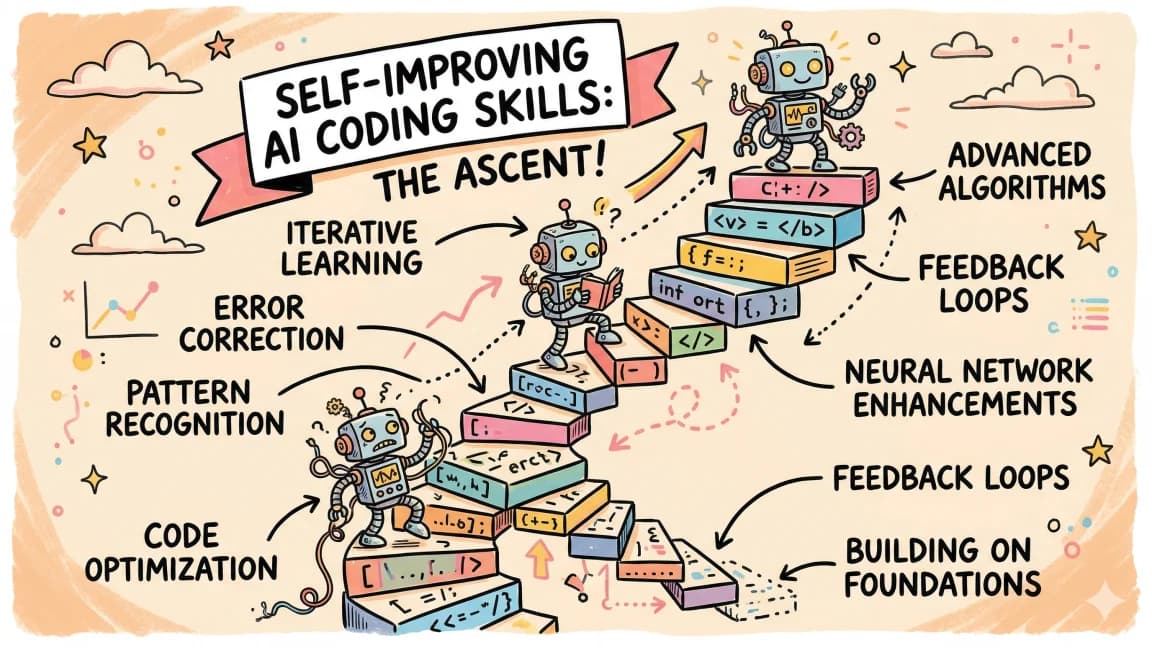
Self-Improving Skills: Claude Code That Learns From Every Session
Claude Code skills can now reflect on sessions, extract corrections, and update themselves with confidence levels. Your...

9 min read
AI Coding
Terminal Agents Are the New Developer Runtime
Terminal agents like Claude Code, Codex CLI, OpenCode, Copilot CLI, and DeepSeek-TUI are converging on the same runtime...
8 min read
Claude Code
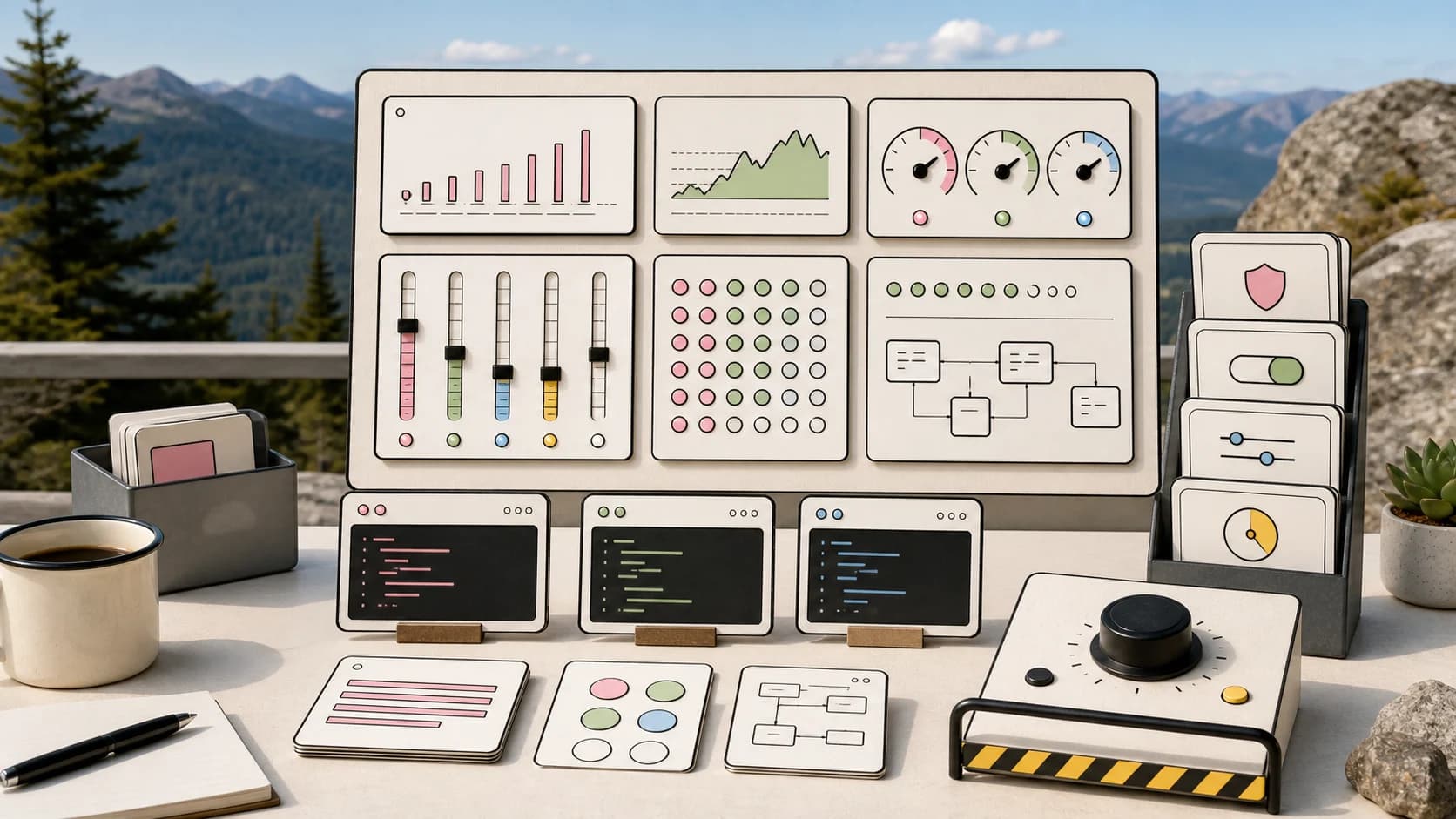
Claude Code Token Burn Is an Observability Problem
The latest Claude Code cache-burn debate is not just a quota complaint. It is a reminder that coding agents need cache-h...
9 min read
AI Agents
Long-Running Agents Need Harnesses, Not Hope
A long-running coding agent is only useful if the environment around it can queue tasks, capture logs, checkpoint state,...

15 min read
Claude Code
What Is Claude Code? The Complete Guide for 2026
Claude Code is Anthropic's AI coding agent for terminal, IDE, desktop, and browser workflows. Learn what it does, how it...
Build with the member tools

Get Smarter About AI Dev
New tutorials, open-source projects, and deep dives on coding agents - delivered weekly.
One email per weekReal code, not theoryFree forever