Claude Platform on AWS Is Enterprise Agent Plumbing, Not Just Procurement

TL;DR
Claude Platform on AWS matters because it moves agent adoption into identity, billing, commitments, and platform controls. That is where enterprise AI work gets real.
Anthropic's Claude Platform on AWS announcement looks like a procurement story at first glance: AWS customers can access Claude platform features with AWS authentication, billing, and commitment retirement.
That framing undersells it. For engineering leaders, this is about where agent adoption actually gets unblocked.
Most teams do not fail to adopt AI coding agents because nobody can write a prompt. They fail because the platform questions pile up:
- Who owns identity?
- Which budget pays for the runs?
- Can usage retire an existing cloud commitment?
- Where do logs and access controls live?
- Can security review the integration without another vendor path?
- Can developers use the same models across experimentation and production?
That is why this announcement belongs next to Claude Managed Agents as backend job runtime, Claude Code vs Codex App, and OpenAI vs Anthropic developer experience. The battleground is no longer only model quality. It is the operational path from first prototype to approved platform.
The Real Product Is Approval Surface Area#
Every serious AI tool has two products:
- the thing developers touch;
- the thing the company can approve.
Developers see Claude Code, API calls, agents, and model quality. Platform teams see authentication, billing, data controls, audit, support paths, vendor risk, and existing cloud contracts.
Claude Platform on AWS is aimed at the second product. It says: use the Claude platform through infrastructure your company may already have approved.
That matters because a lot of AI adoption dies in the gap between "this works in a local demo" and "this can run inside our enterprise constraints."
Why AWS Billing Is a Developer Feature#
Billing sounds boring until it changes behavior.
If Claude platform usage can flow through AWS billing and commitment retirement, the buying motion changes. A team that could not get a separate AI vendor budget may be able to route usage through an existing cloud relationship. A platform team that already reports AWS spend can put AI agent usage beside compute, storage, and data costs.
That makes agent FinOps less theoretical.
The useful question becomes:
TXT
Which product team, repo, environment, and workflow burned these tokens?
Not:
TXT
Who has the shared API key?
Enterprise agent adoption needs that shift. Agents will not stay small. They will run code review, migration tasks, test generation, incident summaries, docs refreshes, and background maintenance loops. The spend has to become attributable.
From the archive
Interaction Models Are the Next AI Developer Tool Interface
May 12, 2026 • 8 min read
TanStack's npm Compromise Is the CI Lesson Agent Teams Needed
May 12, 2026 • 9 min read
Codebase Graphs Are the New Agent Map
May 10, 2026 • 8 min read
Ruflo Is an Agent Meta-Harness. Treat the Star Count as a Warning Label.
May 10, 2026 • 8 min read
Identity Is the Other Half#
Authentication is not just login polish. It defines what an agent can touch.
When agent platforms integrate with an enterprise cloud identity path, companies can ask sharper questions:
- Which teams can create agent environments?
- Which roles can access production context?
- Which workloads can call which models?
- Which usage belongs to experimentation vs approved production?
- Which logs are visible to security and platform owners?
This is the same reason Codex cloud internet controls matter. The moment an agent can read code, call tools, or run tasks in a company environment, identity becomes part of the product.
Opposing View: This Is Just Channel Strategy#
There is a cynical read: this is just Anthropic making Claude easier to buy through AWS.
That is partly true. Distribution matters. Cloud marketplaces and billing relationships are sales infrastructure.
But for developer platforms, distribution is architecture. A model that can be bought, governed, and monitored through existing enterprise systems is more likely to become part of production workflows. A model that requires a one-off contract, a separate admin layer, and manual usage reconciliation stays in the experimentation bucket longer.
So yes, this is channel strategy. It is also product strategy.
What This Means for Agent Builders#
If you are building internal agent systems, take the hint. Enterprise buyers will ask for:
- cloud-native identity integration;
- project-level spend attribution;
- environment-level policy;
- model routing controls;
- audit logs;
- data retention settings;
- support for existing procurement and commitment structures;
- clean separation between experimentation and production use.
The agent runtime matters, but the wrapper around the runtime determines whether it can scale inside a company.
That is why terminal agents as runtime surfaces are only one side of the story. The other side is platform plumbing.
What Developers Should Watch#
For individual developers, the near-term benefit is not "AWS is involved." It is that enterprise AI workflows may get less fragmented.
Watch for these practical changes:
- fewer separate vendor approvals for Claude-based tools;
- more company-approved Claude Code and API environments;
- cleaner budget tags for agent runs;
- stronger admin controls around model access;
- more teams standardizing on approved agent workflows instead of shadow tools.
This could make Claude easier to use in serious company contexts, especially where AWS is already the center of gravity.
The Bigger Pattern#
OpenAI, Anthropic, GitHub, AWS, Google, and Microsoft are all converging on the same truth: agent adoption is a platform problem.
The winning setup will not be "one model endpoint and a clever prompt." It will look like:
- identity;
- policy;
- runtime isolation;
- spend controls;
- audit trails;
- model choice;
- environment routing;
- human escalation;
- deployment verification.
That is why the Claude Code token burn observability conversation and the enterprise-platform conversation are connected. You cannot responsibly scale agent usage if you cannot govern it.
The Takeaway#
Claude Platform on AWS is not exciting because it adds another way to buy Claude. It is exciting because it moves AI agent adoption into the systems enterprises already use to approve software.
That is the quiet bottleneck.
The teams that win with agents will not only pick the best model. They will build a platform where agents have identity, budgets, boundaries, receipts, and a path to production.
Claude on AWS is one more sign that the category is growing up.
FAQ#
What is Claude Platform on AWS?#
Anthropic describes it as a way for AWS customers to access Claude platform features using AWS authentication, billing, and commitment retirement. It is generally available as of the May 2026 announcement.
Why does this matter for developers?#
It can make Claude-based tools easier to approve, budget, and govern inside companies that already operate through AWS. That matters for production agent workflows because identity, spend attribution, and policy controls become part of the adoption path.
Does this replace Claude Code?#
No. Claude Code remains a developer-facing coding agent. Claude Platform on AWS is more about enterprise access and platform integration around Claude capabilities.
Sources: Anthropic: Introducing the Claude Platform on AWS, Hacker News discussion, AWS Marketplace documentation, Anthropic Claude Code documentation, Anthropic Claude API documentation.
Continue Reading#
Read next
Claude Knowledge Work Plugins Turn Agent Setup Into Team Infrastructure
Anthropic's knowledge-work plugin repo is trending because it packages skills, connectors, slash commands, and sub-agents around job functions. The interesting shift is from personal prompts to team-distributed operating systems.
7 min readZero-Touch OAuth Is the MCP Feature Enterprises Were Waiting For
MCP's new enterprise-managed authorization flow is not just less login friction. It moves agent tool access into identity, policy, and audit systems enterprises already understand.
8 min readNon-Developers Using AI Agents Need Platform Engineering
OpenAI's workplace agent data points to a practical shift: non-developers are starting to use agents for real work, so engineering teams need paved paths, policy, and receipts.
7 min readShare
Developers Digest
Technical content at the intersection of AI and development. Building with AI agents, Claude Code, and modern dev tools - then showing you exactly how it works.
300+ videos30K+ GitHub stars850+ articles
Related Tools
ProductivityNew
A
AgentCanvas
A hosted infinite canvas your headless AI agents drive over MCP. Any MCP-speaking agent - Claude Code, Codex, Cursor, or...
View ToolAI CodingDaily Driver

Claude Code
Anthropic's agentic coding CLI. Runs in your terminal, edits files autonomously, spawns sub-agents, and maintains memory...
View ToolAI FrameworksNew

Claude Agent SDK
Anthropic's Python SDK for building production agent systems. Tool use, guardrails, agent handoffs, and orchestration. R...
View ToolAI Coding

Augment Code
AI coding platform built for large, complex codebases. Context Engine indexes 500K+ files across repos with 100ms retrie...
View ToolApps from Developers Digest
Developer Tools
Agent Hub
Every coding agent in one window. Stop alt-tabbing between Claude, Codex, and Cursor.
View AppDeveloper ToolsIn Progress
Skill Builder
Turn a one-liner into a working Claude Code skill. From idea to installed in a minute.
View AppDeveloper ToolsIn Progress
Subagent Studio
Design subagents visually instead of editing YAML by hand.
View AppRelated Guides
Guide
Claude Code Setup Guide
Configure Claude Code for maximum productivity -- CLAUDE.md, sub-agents, MCP servers, and autonomous workflows.
AI AgentsGuide
AI Agent Frameworks Compared: LangGraph vs CrewAI vs Mastra vs CopilotKit
Deep comparison of the top AI agent frameworks - LangGraph, CrewAI, Mastra, CopilotKit, AutoGen, and Claude Code.
AI AgentsGuide
Writing Your First Claude Code Skill
A practical walk-through of how to design, write, and ship a Claude Code skill - from choosing when to trigger, through allowed-tools, to the steps the agent will actually follow.
Getting StartedRelated Videos
Zed: The Open Source Agentic IDE - Use Claude Code, Codex & Gemini CLI in one place
Check out Zed here! https://zed.dev In this video, we dive into Zed, a robust open source code editor that has recently introduced the Agent Client Protocol. This new open standard allows...
Video·
Claude Code NEW Sub Agents in 7 Minutes
Leveraging Anthropic's Subagent for Claude Code: A Step-by-Step Guide In this video, we explore Anthropic's newly released subagent feature for Cloud Code, which allows developers to create...
Video·
VectorShift: The No-Code Platform for AI Agents, Assistants, Chatbots and Automations
In this video, I'll introduce you to VectorShift, a powerful no-code AI automation platform, and show you how to use its functionalities for various use cases, including agents, chatbots, and...
Video·
Related Posts

7 min read
AI Agents
Non-Developers Using AI Agents Need Platform Engineering
OpenAI's workplace agent data points to a practical shift: non-developers are starting to use agents for real work, so e...

8 min read
MCP
Zero-Touch OAuth Is the MCP Feature Enterprises Were Waiting For
MCP's new enterprise-managed authorization flow is not just less login friction. It moves agent tool access into identit...
7 min read
Claude
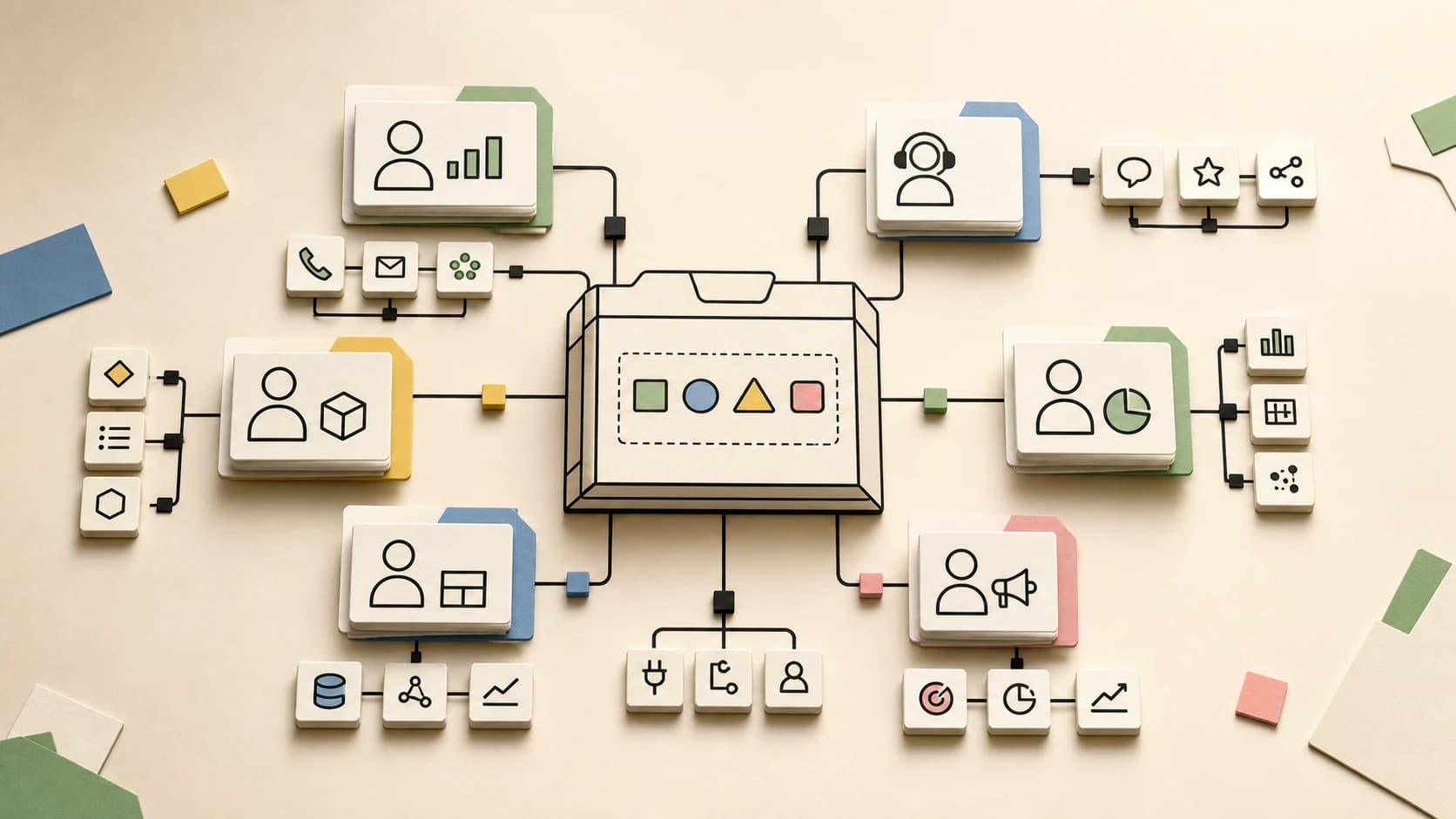
Claude Knowledge Work Plugins Turn Agent Setup Into Team Infrastructure
Anthropic's knowledge-work plugin repo is trending because it packages skills, connectors, slash commands, and sub-agent...
8 min read
AI Security
AI Security Scanners Move the Bottleneck to Triage
Anthropic's Project Glasswing update is a useful signal for developer teams: AI can find vulnerability candidates faster...
10 min read
Research
Your Agent Has a Five-Constraint Budget
Give an agent one instruction and it obeys. Give it eight and it obeys all of them about five percent of the time, no ma...
6 min read
News
Vercel Skill Packs: The Distribution Layer for Agent Skills Just Landed
skills.sh now lets you bundle multiple agent skills into a shareable, unlisted pack and install it with one command. Pac...
Build with the member tools

Get Smarter About AI Dev
New tutorials, open-source projects, and deep dives on coding agents - delivered weekly.
One email per weekReal code, not theoryFree forever