Why Skills Beat Prompts for Coding Agents in 2026

TL;DR
Skills beat prompts for coding agents because giant prompts do not scale. The 2026 control stack: project rules, reusable skills, bounded sub-agents and tools.
Last updated: June 24, 2026
| Official Sources | |
|---|---|
| Claude Code Skills Documentation | Official Anthropic docs on creating and using skills |
| Claude Code Overview | Getting started with Claude Code |
| Model Context Protocol Specification | Official MCP architecture and concepts |
| MCP Core Architecture | Technical specification for MCP |
| OpenAI Codex Documentation | Official OpenAI Codex CLI guide |
| Anthropic Effective Agents | Anthropic's guide to building effective AI agents |
The most useful coding-agent shift in 2026 is not a new model release. It is the industry's slow realization that giant prompts do not scale.
Hacker News has been circling this point for months. The threads around Skills Officially Comes to Codex, OpenAI quietly adopting skills, and the broader control-layer discussion in Why AI coding agents feel powerful at first, then become harder to control all point in the same direction:
Prompting is not disappearing, but it is being demoted.
The better pattern is a stack:
- repo-local rules for project constraints
- skills for reusable methodology
- sub-agents for bounded responsibility
- MCP or CLI tools for observation and action
- hooks, tests, and review steps for guarantees
That stack is much closer to how real software work already behaves.
Prompts Worked Fine Until They Did Not#
At small scale, prompting feels magical.
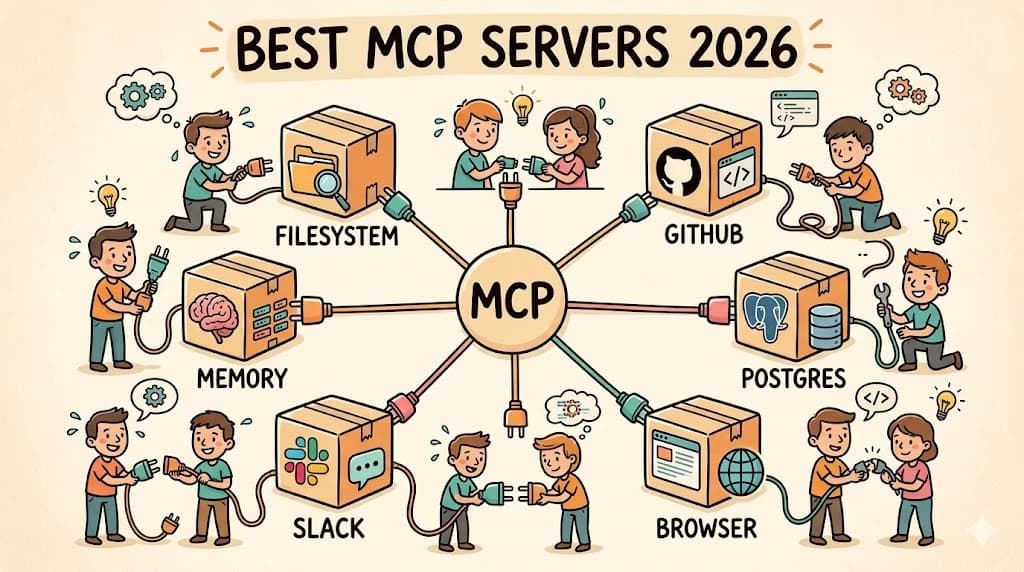
For the broader MCP map, pair this with What Is MCP (Model Context Protocol)? A TypeScript Developer's Guide and The Complete Guide to MCP Servers; those pieces cover the concepts and server-selection layer behind this article.
You write a careful request. The agent does something impressive. You refine it a little. Everything feels fast.
Then the codebase grows.
Now the same session has to remember:
- file naming conventions
- deployment rules
- testing expectations
- security constraints
- dependency preferences
- product-specific edge cases
- internal architectural decisions
That is when prompt-only workflows start to degrade.
The prompt gets longer. The same instructions get repeated every day. Constraints leak into task wording. One session behaves well, the next ignores the exact same preference. The system still looks capable, but it becomes inconsistent.
That inconsistency is what developers are actually complaining about when they say coding agents "feel harder to control" over time.
Skills Solve a Different Problem Than MCP#
One reason this conversation gets muddled is that people keep comparing skills and MCP as if they are substitutes.
They are not.
MCP is mostly about connection:
- expose tools
- pass data
- standardize integration
- centralize auth and observability
Skills are mostly about operating knowledge:
- when to use a tool
- how to approach a recurring task
- what sequence of steps works best
- which local conventions the agent should respect
This is why the strongest HN comments on skills keep making the same point: a markdown-based skill can tell the agent how to properly use existing tools, including MCP tools, without forcing that behavior into the main prompt every time.
That is a big deal.
A good skill is not just a stored prompt. It is reusable method.
Why Skills Win in Practice#
Skills are becoming a standard because they match the shape of repeated developer work.
Most useful coding work is not unique. It rhymes.
You keep doing variations of the same things:
- add a feature with tests
- debug a deployment
- triage a flaky failure
- review a security-sensitive diff
- wire a new API integration
- migrate a route or schema
Each of those tasks benefits from a preferred approach. Not just a desired output. An approach.
That is where skills outperform prompts.
1. Skills compress repeated context#
Instead of restating the same instructions in every session, you keep the repeatable parts in a reusable unit.
That makes prompts shorter and easier to reason about.
2. Skills compose better#
One task might need a deployment-debugging skill plus a documentation-checking skill plus a repo-specific testing skill.
That is a more scalable model than trying to encode every possible combination into one giant system prompt.
3. Skills reduce token waste#
The model does not need the full body of every workflow instruction at all times. It only needs to load the relevant one when the task calls for it.
That is one reason the "skills as lazy-loaded markdown" model keeps resonating with power users.
A framework like obra/superpowers shows the high-ceremony version of this pattern: brainstorming, worktrees, plans, subagents, TDD, review, and branch completion encoded as skills. You do not need to adopt the whole framework to learn from it. The useful lesson is that repeatable engineering discipline belongs in inspectable procedures, not in a giant always-on prompt.
4. Skills are editable by normal engineers#
You do not need a separate prompt-engineering platform or a complex orchestration product to start. A markdown file in the repo is often enough.
That matters. The winning pattern in developer tooling is usually the one that ordinary teams can author and maintain without ceremony.
The Real Control Stack#
The most useful framing I have seen recently is that agent features are not random bells and whistles. They are control layers.
Very roughly:
- rules constrain decisions
- commands trigger execution
- skills encode repeatable methodology
- sub-agents limit scope and ownership
- MCP enables tool access and observation
- hooks and checks enforce guarantees
When teams mix these layers up, things get messy.
Examples:
- using prompts to encode durable repo policy
- using MCP as a substitute for methodology
- using hooks to compensate for poor task decomposition
- using one generalist agent where two bounded specialists would be safer
That is why some teams feel like coding agents are chaotic while others are getting strong results from the same underlying models.
The better teams are not just "prompting better." They are building a better control stack.
Where MCP Still Wins#
This is not an anti-MCP argument.
MCP remains the right abstraction when the problem is:
- authenticated tool access
- structured interaction with external systems
- remote capability exposure
- centralized auditability
If your agent needs to talk to GitHub, Linear, a database, a browser harness, or a deployment system, MCP is often the right connective tissue.
But MCP does not automatically tell the agent how to behave well with those tools.
That is why the sharpest recent HN critiques of "MCP everywhere" are also useful. Developers are noticing that connecting tools is not the same as teaching good operational judgment.
The connector layer is necessary. It is not sufficient.
What This Means for Teams#
If you are using coding agents seriously, the practical next step is not "write a better master prompt."
It is:
1. Move durable instructions out of task prompts#
Project rules, coding conventions, and repeated operational workflows should live in repo-local files, not in copy-pasted prompts.
2. Encode common tasks as skills#
Start with the boring, high-frequency work:
- fix CI
- debug deploys
- add tests
- review security-sensitive changes
- handle migrations
Those are the areas where methodology matters most.
3. Separate tool access from method#
Use MCP or CLI tooling for capability. Use skills for approach. Do not try to jam both concerns into one layer.
4. Use sub-agents to bound responsibility#
The point of sub-agents is not novelty. It is blast-radius control.
If one agent is researching docs and another is patching infra config, that is often safer than one giant session doing both with one giant context pile.
5. Keep human review focused on trust, not transcription#
The goal is not to eliminate oversight. It is to move humans up the stack so they review intent, risk, and correctness instead of micromanaging every keystroke.
The Bottom Line#
The prompt era is not over, but prompt maximalism is.
The emerging best practice is to treat coding agents less like chatbots and more like systems. Systems need structure. They need reusable knowledge. They need separation of concerns. They need bounded scopes and deterministic checks.
That is why skills are becoming more important.
Not because they are fashionable. Because they solve a real scaling problem in day-to-day agent use.
In 2026, the teams getting the most leverage from coding agents are not the teams writing the cleverest prompts.
They are the teams building the clearest control stack around the model.
FAQ#
What are skills in coding agents?#
Skills are reusable units of operating knowledge that encode how to approach recurring tasks. Unlike prompts that specify desired outputs, skills capture methodology - the sequence of steps, tool usage patterns, and local conventions an agent should follow. They are typically stored as markdown files in your repo and loaded on demand when a task matches.
How are skills different from MCP servers?#
MCP (Model Context Protocol) is about connection - exposing tools, passing data, standardizing integration, and centralizing auth. Skills are about methodology - when to use tools, how to approach tasks, what sequences work best, and which conventions to respect. MCP gives the agent capabilities; skills teach it judgment about using those capabilities.
Why do giant prompts stop working at scale?#
As codebases grow, prompts must encode more context: file naming conventions, deployment rules, testing expectations, security constraints, dependency preferences, and architectural decisions. This leads to longer prompts, repeated instructions across sessions, and inconsistent behavior where the same constraints are sometimes followed and sometimes ignored.
What is a control stack for coding agents?#
A control stack is a layered architecture where different concerns live at different levels: rules constrain decisions, commands trigger execution, skills encode methodology, sub-agents limit scope, MCP enables tool access, and hooks enforce guarantees. Teams that separate these layers get more consistent results than those who jam everything into prompts.
When should I use sub-agents instead of one agent?#
Use sub-agents to bound responsibility and control blast radius. If one agent is researching docs while another patches infra config, that is safer than one giant session doing both. Sub-agents work best when tasks have clear boundaries and limited overlap in required context.
How do I start moving from prompts to skills?#
Start with high-frequency, boring work: fixing CI, debugging deploys, adding tests, reviewing security-sensitive changes, handling migrations. These tasks benefit most from encoded methodology. Move durable instructions out of task prompts and into repo-local skill files.
Do skills eliminate the need for prompts?#
No. Skills demote prompts from the primary control mechanism to one layer in a stack. You still use prompts for task-specific instructions, but project rules, conventions, and repeated workflows live in reusable skills instead of being copy-pasted into every session.
What makes skills more maintainable than prompts?#
Skills are editable by normal engineers - a markdown file in the repo is often enough. They compress repeated context, compose well across tasks, reduce token waste by loading only when needed, and match the shape of how development work actually repeats.
Sources#
- Claude Code Skills Documentation
- Claude Code Overview
- Model Context Protocol Core Architecture
- OpenAI Codex Documentation
- Anthropic: Building Effective Agents
- Hacker News: Skills Officially Comes to Codex
- Hacker News: OpenAI quietly adopting skills
- Hacker News: Why AI coding agents feel powerful at first, then become harder to control
Get the next deep dive like this in your inbox
One email a week on AI Coding and the rest of the AI dev stack. Free.
Read next on Claude Code
What Hacker News Gets Right About AI Coding Agents in 2026
What Hacker News gets right about AI coding agents: workflows beat demos, skills beat prompts, orchestration beats autonomy, and verification is the bottleneck.
11 min readThe MCP Server Ecosystem: A Developer's Guide for 2026
MCP server ecosystem guide for 2026: curated picks by tier and category, real Claude Code configurations, install commands and honest assessments of what works.
13 min readSelf-Improving Skills: Claude Code That Learns From Every Session
Self-improving Claude Code skills reflect on sessions, extract your corrections and update their skill file with confidence levels, so mistakes stop repeating.
7 min readTechnical content at the intersection of AI and development. Building with AI agents, Claude Code, and modern dev tools - then showing you exactly how it works.