AI Code Review Is the New Bottleneck

TL;DR
Coding agents make code faster than teams can review it. The next advantage is not bigger prompts. It is review systems that force reproduction, small diffs, tests, and receipts.
| Official Sources | |
|---|---|
| Debt Behind the AI Boom (arXiv) | Empirical study of 302.6k AI-authored commits across 6,299 GitHub repos |
| Coding Agents Don't Know When to Act (arXiv) | FixedBench benchmark testing agent abstention on already-fixed issues |
| Microsoft Research: To Copilot and Beyond | Survey of 22 AI systems developers want - bounded delegation patterns |
| Claude Code Documentation | Official Claude Code overview and best practices |
| OpenAI Codex Documentation | OpenAI's official Codex usage guide |
| GitHub Copilot Docs | GitHub Copilot features and integration |
The AI coding story has moved from "can it write code?" to "can we review the amount of code it writes?"
That is the more useful question in 2026. Claude Code, Codex, Cursor, Copilot, and terminal agents can all produce working diffs quickly. The weak point is no longer generation. The weak point is the review queue behind it.
Two recent research signals make the pattern hard to ignore. The arXiv paper Debt Behind the AI Boom studied 302.6k verified AI-authored commits across 6,299 GitHub repositories and found 484,366 distinct introduced issues. Code smells made up 89.3 percent of the total, and 22.7 percent of tracked AI-introduced issues still survived at the latest repository revision.
Then Coding Agents Don't Know When to Act tested whether agents abstain when a reported issue has already been fixed. Even recent models still proposed unnecessary code changes in 35 to 65 percent of no-change tasks. The paper calls this action bias. In normal team language: the agent wants to do something, even when the correct move is to leave the code alone.
That connects directly to what developers keep debating on Hacker News, in issue trackers, and in AI tool changelogs: coding agents are impressive, but they create a new kind of review debt. The team gets more code, more diffs, more generated tests, more "looks right" explanations, and more pressure to merge.
The take: the winning AI development workflow is not the one that generates the most code. It is the one that makes agent output easiest to reject, verify, and maintain.
The Review Problem Got Bigger#
Traditional code review assumed human-paced output.
A developer writes a branch. Another developer reviews the diff. CI runs. Maybe a staff engineer looks at the architecture. The whole workflow is built around the idea that code creation is slow enough for review to keep up.
Agents break that assumption.
You can now ask one agent to write the feature, another to add tests, another to update docs, and another to handle review comments. That is useful. It is also how a small task turns into a 2,000-line pull request before lunch.
The problem is not that the code is always bad. Often it works. The problem is that working code is not the same thing as maintainable code.
AI agents are especially good at producing plausible glue:
- extra adapters that duplicate existing helpers
- tests that assert implementation details
- abstractions that only serve the generated patch
- verbose type guards around impossible states
- "fixed" code for bugs that are no longer reproducible
- documentation that describes the diff instead of the product behavior
Each item is small. Together they become a maintenance tax.
That is why the agent reliability cliff matters. The first demo works. The tenth workflow depends on whether your system can catch subtle wrongness before it compounds.
The Opposing View Is Fair#
There is a reasonable counterargument: humans also introduce technical debt.
They do. A tired developer can over-abstract, copy-paste, skip tests, or patch symptoms. Code review has never been perfect. AI-generated code is not uniquely dangerous just because a model wrote it.
The difference is throughput.
An agent can produce more mediocre code per hour than a person can. It can also produce that code with a confident summary, a passing narrow test, and no intuitive sense that the repo is getting harder to understand.
That changes the control system. If a human introduces one questionable helper, review can catch it. If an automation lane opens five AI pull requests a day, the reviewer needs better evidence than "the agent says it ran tests."
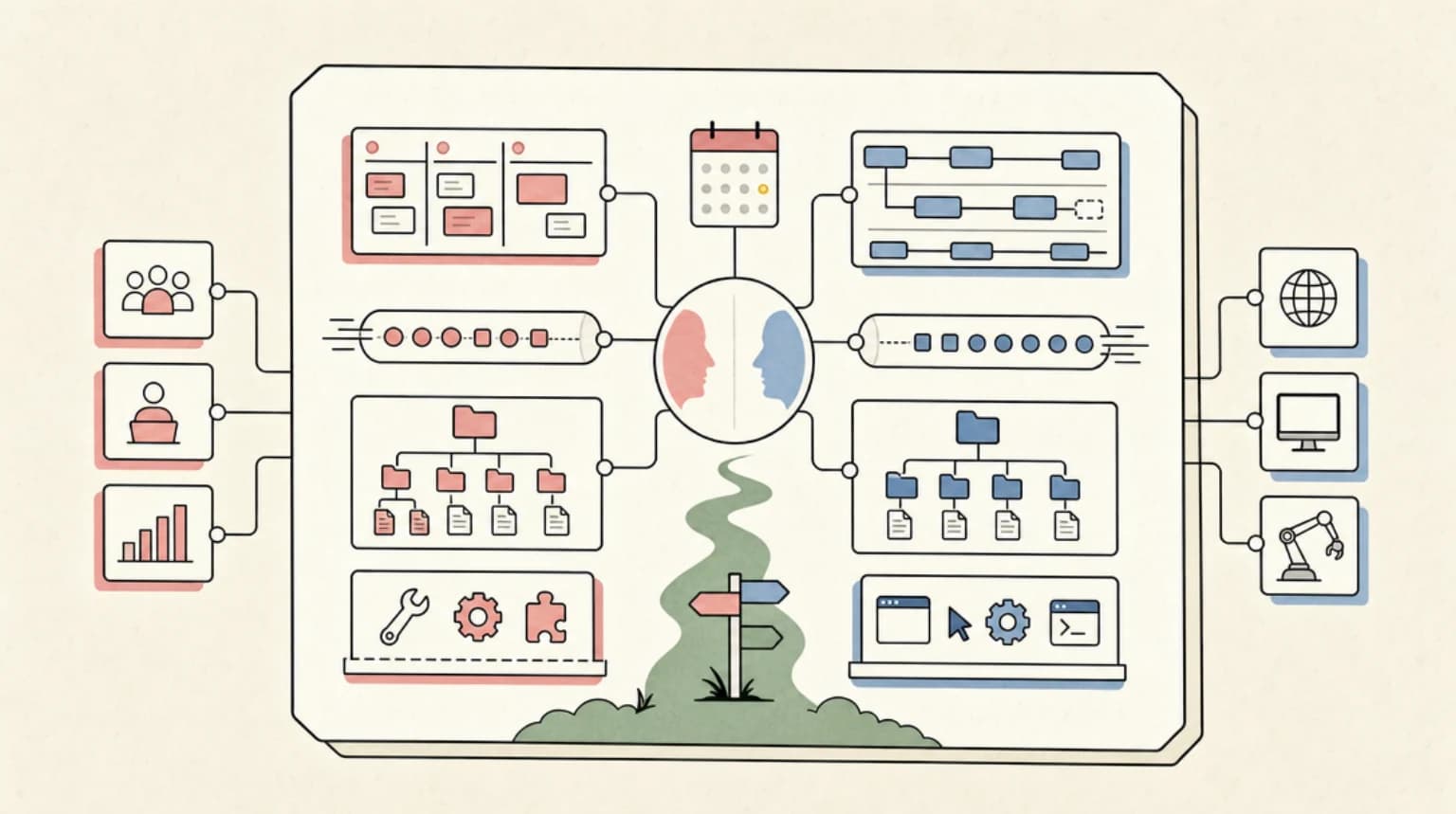
This is why Microsoft Research's April 2026 paper is worth reading. The surveyed developers did not simply ask for more code generation. They wanted quality signals earlier in the workflow, clearer authority boundaries, provenance, uncertainty signaling, and least-privilege access. Microsoft calls the pattern bounded delegation: developers want AI to absorb surrounding assembly work without taking over the craft itself.
That is the right frame.
AI should not remove review. It should make review sharper.
The New Review Stack#
If your team is adopting coding agents seriously, treat review as infrastructure. Not vibes. Not "one more senior engineer will skim it." Infrastructure.
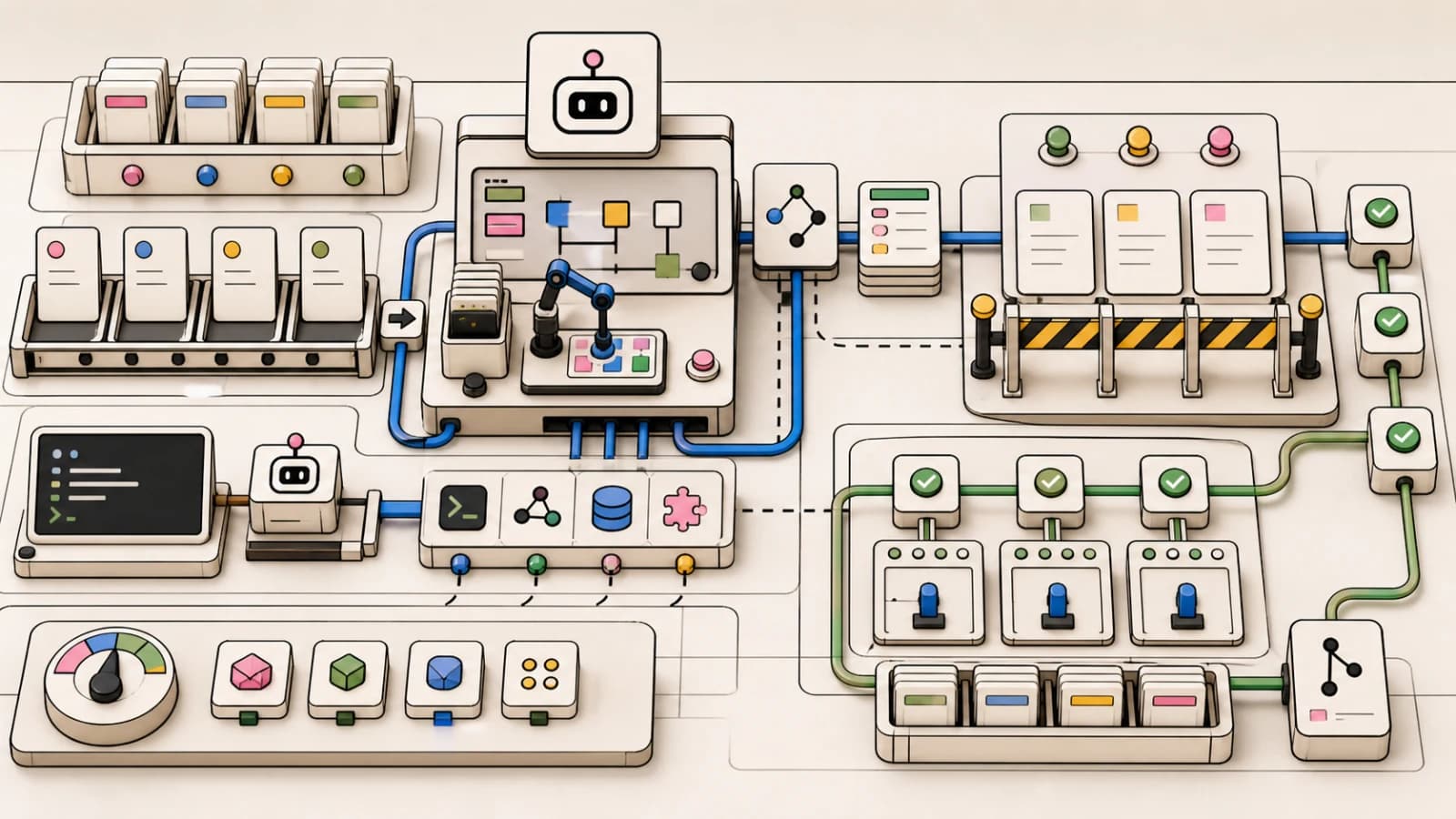
A practical stack has five gates.
1. Reproduction before patching#
The agent should prove the bug exists before editing.
This is the direct lesson from FixedBench. If the issue is already fixed, the correct output is no diff. That has to be a valid success state in your workflow.
Add a rule to your agent instructions, skills, or issue template:
Before patching, reproduce the reported behavior or explain why it cannot be reproduced.
If the bug no longer reproduces, return a no-change report with the evidence.
Do not modify code just to satisfy the task shape.
That rule sounds boring. It prevents a lot of useless churn.
2. Diff budgets#
Every agent task should have a rough diff budget.
Small bug fix: 1 to 3 files. UI copy change: no new abstraction. Test-only improvement: no production code unless reproduction proves a bug. Migration: explicit file list and rollback note.
Diff budgets are not bureaucracy. They are a way to make agent output reviewable. If the agent exceeds the budget, it should stop and explain why before continuing.
This pairs well with Codex's review-oriented workflow and Claude Code skills. The tool can generate. The skill defines where it should stop.
3. Evidence receipts#
Every agent-authored change should end with a receipt:
- files changed
- tests run
- tests not run
- screenshots or browser checks for UI work
- source links for factual content
- risks left open
- reviewer focus area
This is not a status update. It is the review surface.
The faster agents get, the more important receipts become. A reviewer should not have to reverse-engineer what the agent believed, which commands it ran, or where it was uncertain.
4. Separate reviewer passes#
Do not let the same agent that wrote the patch be the only reviewer.
A separate reviewer can be another model, another agent harness, or a deterministic check. For code, the best reviewer is still a mix of tests, static analysis, and a human. But even an agent reviewer is useful if it receives the diff cold and is instructed to look for deletion risk, missed tests, duplicated logic, and scope creep.
This is where tools like GitHub Copilot coding agent, Codex cloud tasks, and Claude Code subagents start to matter. The future workflow is not "agent writes code." It is "agent writes, independent reviewer checks, CI gates, human approves."
5. Provenance without theater#
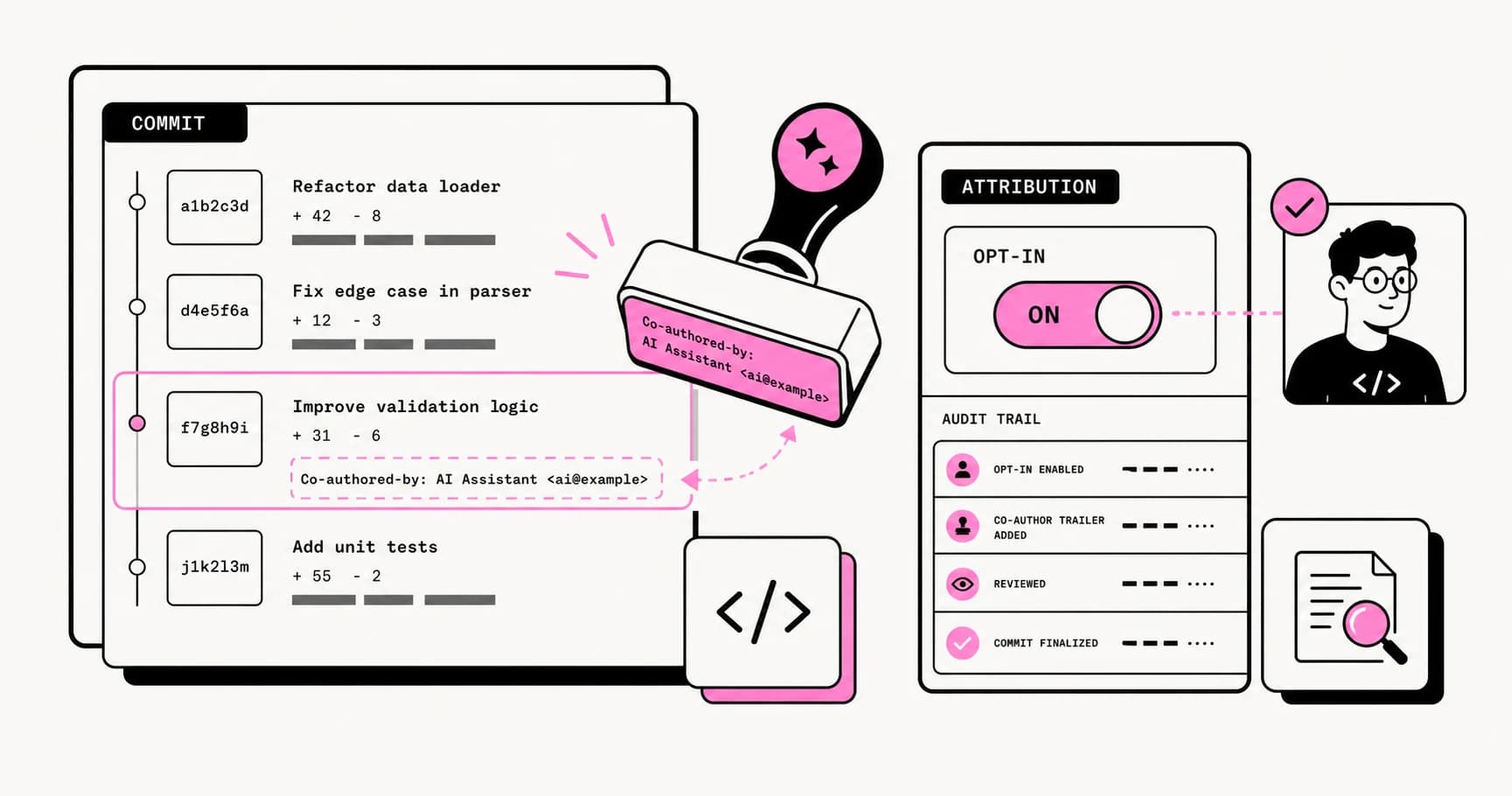
Teams need to know when a change was AI-assisted, but they do not need performative co-author spam on every commit.
The useful provenance is operational:
- which tool produced the diff
- which prompt or issue created it
- which model or agent mode was used
- which tests and review gates passed
- whether a human materially rewrote the result
That is the point of the AI co-author attribution debate. The weak argument is credit. The strong argument is reviewability.
What This Means for Tool Choice#
The best AI coding tool is increasingly the one with the best review loop.
For a solo developer, Claude Code still wins when you want tight local iteration, strong planning, and project-specific skills. It is excellent when you stay close to the diff and steer the work.
Codex is compelling when the task is issue-shaped and you want an async branch or pull request to review later. Its product direction is clearly about delegated work returning reviewable artifacts.
GitHub Copilot's advantage is distribution. If the whole team already lives in issues, pull requests, Actions, code owners, and branch protection, Copilot can fit into the system without inventing a new task surface.
Cursor remains strong for visual diff control. It is still the easiest place to accept or reject generated edits line by line while your mental model is warm.
The mistake is choosing by generation speed alone. Speed without review structure just moves the bottleneck.
For budget planning, pair this with the AI coding tools pricing guide. Agent cost is not only token cost. It is also review cost.
The Practical Rule#
Give agents permission to do less.
That sounds backwards. It is not.
An agent that can say "no code change needed" is safer than one that always patches. An agent that stops after a diff budget is safer than one that refactors the neighborhood. An agent that returns a receipt is more useful than one that writes a confident paragraph.
The next wave of AI development will reward teams that make inaction, verification, and rejection first-class outcomes.
Do not ask "how do we make agents write more code?"
Ask "how do we make generated code cheap to review and easy to refuse?"
That is where the leverage is now.
Frequently Asked Questions#
Why is AI code review becoming a bottleneck?#
AI coding agents can produce diffs faster than teams can inspect them. The bottleneck shifts from writing code to verifying whether the generated code is correct, scoped, maintainable, tested, and aligned with the existing codebase.
Do AI coding agents create more technical debt?#
They can. The issue is not that every AI-generated change is bad. The risk is volume plus confidence. A large empirical study of AI-authored commits found persistent code smells, correctness issues, and security issues in real repositories, which means teams need stronger review gates around generated code.
What should an AI coding agent do before editing files?#
It should reproduce the reported issue, inspect the relevant code path, and confirm that a change is actually needed. If the bug no longer reproduces, the agent should return a no-change report with evidence instead of modifying code.
How do you make AI-generated pull requests easier to review?#
Use small task scopes, diff budgets, required tests, independent reviewer passes, and evidence receipts. The reviewer should see what changed, why it changed, what was verified, what was not verified, and where to focus. A running preview is one of the strongest receipts: give every agent PR a live copy of the app and the reviewer can click the change before reading the diff.
Should AI-generated code be labeled?#
Yes, but the useful label is operational provenance, not credit theater. Track which tool produced the diff, which task or prompt started it, which checks passed, and whether a human materially rewrote it. That helps reviewers and future maintainers understand the change.
Continue Reading#
- Vibe Maintenance: A Practical Workflow for AI-Generated Pull Requests
- Put an AI Reviewer on Every Pull Request: A Webhook Build with OpenCode and Railway - the mechanical half of this problem, deployable in under an hour
Get the next deep dive like this in your inbox
One email a week on AI Coding and the rest of the AI dev stack. Free.
Read next on Claude Code
The Agent Reliability Cliff: Why Your 10-Step Chain Only Succeeds 20% of the Time
The math of agent pipelines is brutal. 85% reliability per step compounds to about 20% at 10 steps. Here is why long chains collapse in production, and the six patterns the field has converged on to fight the decay.
9 min readGitHub Copilot Coding Agent and CLI: Why GitHub Is Back in the Agent Race
GitHub Copilot is moving from autocomplete into asynchronous coding agents, terminal workflows, MCP, skills, and model choice. Here is what changed in 2026.
8 min readCodex vs Claude Code in 2026: Which AI Coding Agent Should You Use?
Pick Claude Code for ambiguous, multi-file work you want to plan, extend with skills and MCP, and orchestrate across agents. Pick Codex for well-scoped tasks, strong defaults, and one ChatGPT subscription for chat and code. GPT-6, Opus 5.5, and pricing verified September 28, 2026.
12 min readTechnical content at the intersection of AI and development. Building with AI agents, Claude Code, and modern dev tools - then showing you exactly how it works.