Codex vs Claude Code in April 2026: Which Agent for Which Job

TL;DR
Opus 4.7 vs GPT-5.5, the new Codex CLI vs the Claude skills ecosystem. An opinionated April 2026 verdict on which terminal agent to reach for, by job.
Direct answer
Codex vs Claude Code in April 2026: Which Agent for Which Job
Opus 4.7 vs GPT-5.5, the new Codex CLI vs the Claude skills ecosystem. An opinionated April 2026 verdict on which terminal agent to reach for, by job.
Best for
Developers comparing real tool tradeoffs before choosing a stack.
Covers
Verdict, tradeoffs, pricing signals, workflow fit, and related alternatives.
Official Sources#
Always verify current pricing and features against the official documentation:
| Tool | Documentation | Pricing | Changelog |
|---|---|---|---|
| Claude Code | code.claude.com/docs | anthropic.com/pricing | Claude updates |
| Codex | developers.openai.com/codex | Codex pricing | Codex changelog |
Pricing and model access change frequently. The official pages are the source of truth.
Last updated: June 11, 2026. Verify pricing, plan limits, and CLI behavior against the official sources before standardizing a team workflow.
Two agents, two philosophies#
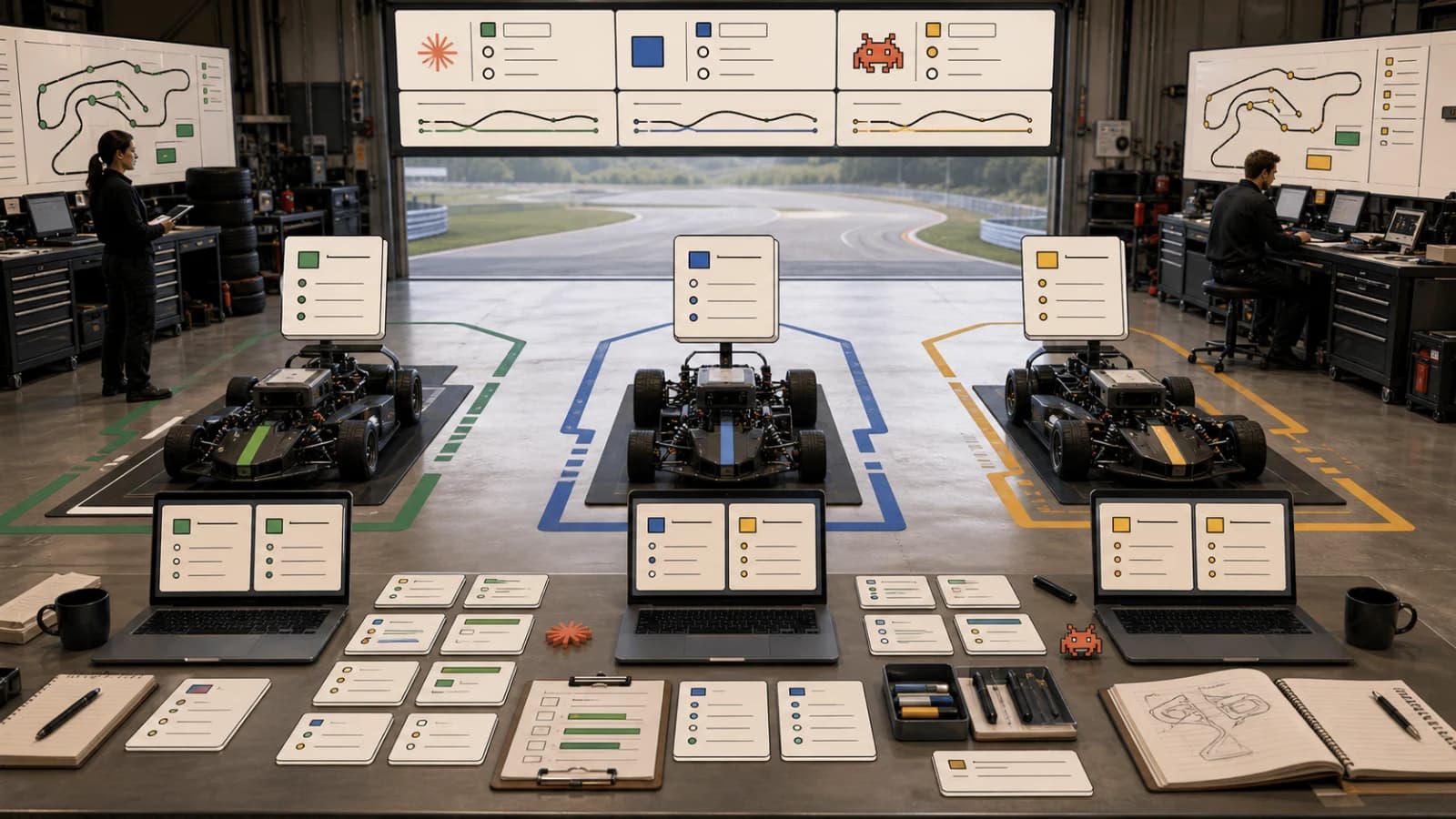
In April 2026, the terminal-agent question is no longer "which CLI is more capable." Both Claude Code and Codex are competent enough to ship real production work in real repos. The question now is which one fits which job - because the two products have visibly diverged.
Claude Code optimizes for extensibility on top of a planning model. Opus 4.7 is the thinking head; skills, sub-agents, hooks, MCP servers, and plugins are the body. The bet is that you will want to bend the agent to your repo and your team.
Codex optimizes for a tightly integrated agent loop with strong defaults. GPT-5.5, the rebuilt Codex CLI, the new app-server, the in-app browser, and the automatic reviewer are designed to behave well out of the box without much customization.
Both bets are reasonable. They lead to different daily ergonomics.
If your main question is longer-running work, the sharper follow-up is Codex /goal vs Claude Managed Outcomes: Codex is moving toward persistent execution loops, while Claude's managed-agent outcomes are moving toward rubric-graded task closure.
TL;DR decision path#
- Want the fastest side-by-side verdict? Use the dedicated Claude Code vs Codex comparison page.
- Want cost to be the deciding factor? Start with the pricing hub and the AI coding tools pricing comparison.
- Want your agent rollout to stay within budget? Read AI agent PMF is a cost control problem now.
- Want the April 2026 changes and command details? Read the Codex changelog analysis and the OpenAI Codex guide.
What changed in the last 30 days#
A quick state-of-the-world before the verdict, because anything older than April is already stale.
Anthropic released Claude Opus 4.7 on April 16. Roughly 13% better than Opus 4.6 on a 93-task internal coding benchmark, with stronger vision and noticeably more taste on UI and document tasks. The official Claude docs list Opus 4.7 at $5 / $25 per million tokens, Sonnet 4.6 at $3 / $15, and Haiku 4.5 at $1 / $5 (verified June 11, 2026 against the Claude models overview). Since this post was written, Anthropic shipped Claude Opus 4.8 at the same price point - see the What changed section at the end. For full Claude Code documentation, see the official Claude Code docs.
OpenAI released GPT-5.5 on April 24. Inside Codex, OpenAI explicitly says it produces better results with fewer tokens than GPT-5.4 (see OpenAI pricing). The Codex changelog over the last month also added Unix socket transport for the app-server, sticky environments, remote plugin install, automatic reviewer agents that gate risky approvals, in-app browser hand-off for local dev servers, and codex exec --json reasoning-token output. For full Codex CLI documentation, see the official Codex CLI docs.
Google shipped Gemini 3 Pro and Antigravity on April 22. Relevant context, but it does not change the head-to-head between the two terminal agents.
Round 1: raw coding ability#
This is closer than the marketing suggests. On hard, multi-file refactors in real repos, both Opus 4.7 and GPT-5.5 produce working diffs most of the time. The differences:
- Opus 4.7 plans more. It writes longer scratch reasoning, asks more clarifying questions, and is more willing to push back on a bad plan. This is great for ambiguous specs and painful for "just fix this lint error."
- GPT-5.5 in Codex acts more. Token-efficient, faster to a first diff, less internal monologue surfaced. For tightly scoped tasks (write this function, fix this test, port this util) it is often quicker.
Net: if you measure SWE-bench-style numbers, they look similar. If you measure your own happiness on a Tuesday, the personalities diverge.
Terminal
# Same task, two agents
claude -p "add a /healthz endpoint with 200 OK and a tiny test"
codex exec "add a /healthz endpoint with 200 OK and a tiny test"
For tasks at that altitude, Codex usually finishes first.
Newsletter
Get the weekly deep dive
Tutorials on Claude Code, AI agents, and dev tools, delivered free every week.
From the archive
Convex to Neon: The Playbook After 4 App Migrations
Apr 28, 2026 • 10 min read
The DD Stack Cookbook: Five Recipes That Compose
Apr 28, 2026 • 9 min read
DESIGN.md: The Contract That Keeps AI Agents On Brand
Apr 28, 2026 • 9 min read
Claude Context Is Code Search For Agents. Treat It Like Retrieval Infrastructure.
Apr 28, 2026 • 8 min read
Round 2: extensibility and customization#
This is where Claude Code is currently in a different league.
The skills ecosystem became real this month. If you want a fast snapshot of what people are building, browse the community-curated claudemarketplaces.com directory and the open-source claude-code-plugins-plus-skills marketplace repo. For the current extension model, start with the Claude Code plugins documentation:
Code
~/.claude/skills/deploy-vercel/SKILL.md
A plugin bundles skills, MCP servers, slash commands, and sub-agents into one installable unit. Hooks let you run shell commands at lifecycle events (see hooks documentation). Sub-agents let you fan work out cleanly. None of this requires SDK code.
Codex's plugin model exists - the recent changelog added remote plugin install and marketplace upgrades - but it is younger, smaller, and less culturally embedded. If you want a community library to copy from on day one, Claude Code wins.
If your team already has an AGENTS.md or DESIGN.md and a folder of skills, that investment compounds in Claude Code. Move to Codex and most of it does not transfer.
Round 3: defaults and reviewer behavior#
Codex catches up here, and arguably surpasses Claude Code.
The new automatic reviewer agent in Codex CLI gates risky approvals through a separate agent before they execute. Permission profiles round-trip across TUI sessions, user turns, MCP sandbox state, and shell escalation. The in-app browser lets Codex click through a real local app to verify a fix. codex exec --json reports reasoning-token usage so you can budget cost programmatically.
Claude Code's hook system is more flexible (you can run any shell command on PreToolUse, PostToolUse, Stop), but Codex's defaults out of the box are tighter. If you want a junior teammate to run an agent and not break prod, Codex is the safer first install.
Round 4: cost#
Use this as a decision frame, not a price calculator:
- Opus 4.7 only: highest Claude API cost, but strongest when the task needs deep planning.
- Opus 4.7 planner + Haiku 4.5 sub-agents: often cheaper when the subtasks are narrow enough for a faster model.
- GPT-5.5 in Codex: check both OpenAI API pricing and Codex pricing, because the right answer depends on model choice, token use, and plan limits.
- Claude Max or ChatGPT Pro: flat-rate plans may be the right answer if you run an agent for hours every day, but plan limits and included usage can change.
For pricing tiers, see our Q2 2026 AI coding tools pricing breakdown.
The verdict, by job#
Pick Claude Code when:
- The task is ambiguous and benefits from planning ("redesign our auth flow," "split this monolith")
- You want to invest in skills, hooks, sub-agents, MCP servers as long-lived team infrastructure
- You already have an
AGENTS.md/CLAUDE.md/ DESIGN.md and want the agent to actually read them - You care about UI/visual taste (Opus 4.7's vision and design output is genuinely better)
- You want to run multi-agent fan-outs from one orchestrator
Pick Codex when:
- The task is well-scoped (fix this test, write this function, refactor this file)
- You want strong defaults and an opinionated approval/review loop without configuring much
- You need the in-app browser to click through a local UI
- Cost-per-task matters and you do not have a flat-rate plan
- The team is new to agent CLIs and you want fewer ways to shoot yourself in the foot
Use both when:
- You are running serious software and want second opinions. A pattern that works: Claude Code for planning and architectural diffs, Codex for tightly scoped follow-ups. They commit to the same branch, you read the PR.
A practical setup#
Here is the configuration most heavy users I trust are running this week.
~/.claude/settings.json:
JSON
{
  "model": "claude-opus-4-8",
  "subagent_model": "claude-haiku-4-5"
}
~/.codex/config.toml:
TOML
model = "gpt-5.5"
auto_review = true
Then alias them so your fingers pick the right tool:
Terminal
alias plan="claude"        # ambiguous, big-picture
alias do="codex"           # tight, well-scoped
It sounds silly. It works.
What this means for the next quarter#
Both products are converging on "agent that reads your repo, plans, edits, runs, verifies." They will keep getting closer on raw ability. The differentiation is going to be:
- Claude Code: the ecosystem (skills, plugins, marketplaces, MCP). Your team's accumulated context lives here.
- Codex: the loop (reviewer, browser, sandbox, sticky environments). The product around the model.
If I had to bet, the team that wins is the team whose users build things on top of it without permission. That favors Claude Code in the long run. But Codex's April 2026 release is the closest the gap has been, and on a strict cost-per-task basis it is currently the better default for "small, scoped" coding work.
For a deeper field comparison including Cursor and OpenCode, see our four-way matchup.
What changed#
Verified June 11, 2026 against the Claude models overview, the Opus 4.8 announcement, and the Codex changelog:
- Anthropic shipped Claude Opus 4.8 on May 28, 2026 at the same $5 / $25 per million tokens. It is now the default Opus tier in Claude Code; Opus 4.7 remains available at the same price as a legacy model.
- Claude Fable 5 went GA on June 9, 2026 at $10 / $50 per million tokens with a 1M-token context window - a new top tier above Opus for the hardest long-horizon work.
- Codex still runs GPT-5.5. The June changelog added Sites (OpenAI-hosted web apps and dashboards), Amazon Bedrock support, standalone web search in code mode, and goal management on mobile.
- The April pricing table above still checks out: Opus 4.7 and 4.8 at $5 / $25, Sonnet 4.6 at $3 / $15, Haiku 4.5 at $1 / $5.
- For the current head-to-head, read the June edition of this matchup in Codex vs Claude Code in June 2026 and the Codex June 2026 changelog breakdown.
Frequently Asked Questions#
Which is better for coding in 2026: Codex or Claude Code?#
Neither is universally better - they optimize for different workflows. Claude Code excels at ambiguous, planning-heavy tasks where you want the agent to think deeply before acting. It has a mature skills and plugin ecosystem for team customization. Codex excels at well-scoped tasks where you want fast execution with strong defaults and built-in safety rails. For most developers, the answer is "use both" - Claude Code for architecture and planning, Codex for tight implementation work.
How much does Codex cost compared to Claude Code?#
Codex and Claude Code cost depend on model choice, token use, and whether you are using API pricing or a flat-rate subscription. Claude's docs list Opus 4.8 and Opus 4.7 at $5 / $25 per million tokens, Sonnet 4.6 at $3 / $15, and Haiku 4.5 at $1 / $5 (verified June 11, 2026). For Codex, check OpenAI API pricing and Codex pricing before making a cost call.
What models power Codex and Claude Code in April 2026?#
Codex runs GPT-5.5 (released April 24, 2026), which OpenAI says produces better results with fewer tokens than GPT-5.4. Claude Code runs Claude Opus 4.7 (released April 16, 2026), roughly 13% better than Opus 4.6 on coding benchmarks with stronger vision capabilities. As of a June 11, 2026 check, Codex still runs GPT-5.5, while Claude Code now defaults to Claude Opus 4.8 (released May 28, 2026) at the same $5 / $25 price point.
Can I use both Codex and Claude Code on the same project?#
Yes, and many developers do exactly this. A common pattern: use Claude Code for planning and architectural decisions, then use Codex for tightly scoped follow-up tasks. Both agents can commit to the same branch, and you review the combined PR. This dual-agent approach gives you second opinions and plays to each tool's strengths.
Which agent has better defaults out of the box?#
Codex currently has tighter defaults. The automatic reviewer agent gates risky approvals, permission profiles persist across sessions, and the in-app browser lets it verify changes by clicking through your local dev server. Claude Code's hook system is more flexible - you can run any shell command at lifecycle events - but requires more setup. For teams new to agent CLIs, Codex is the safer first install.
Which has the better plugin ecosystem?#
Claude Code wins here decisively. The community library of skills and plugins is broader and more mature. Codex's plugin model exists and recently added remote install, but it is younger and smaller. If you want community resources to copy from on day one, choose Claude Code.
What is the main philosophical difference between Codex and Claude Code?#
Claude Code optimizes for extensibility on top of a planning model - skills, sub-agents, hooks, MCP servers, and plugins are first-class concepts. The bet is that you will customize the agent to your repo and team. Codex optimizes for a tightly integrated agent loop with strong defaults - the model, CLI, app-server, browser, and reviewer are designed to work well out of the box without much configuration.
When should I use Claude Code instead of Codex?#
Use Claude Code when: the task is ambiguous and benefits from planning (redesigning auth flow, splitting a monolith), you want to invest in skills and hooks as team infrastructure, you already have AGENTS.md or CLAUDE.md files you want the agent to respect, you care about UI and visual taste (Opus 4.7's vision output is better), or you want to run multi-agent fan-outs from one orchestrator.
When should I use Codex instead of Claude Code?#
Use Codex when: the task is well-scoped (fix this test, write this function), you want strong defaults without much configuration, you need the in-app browser to verify changes visually, cost-per-task matters and you lack a flat-rate plan, or your team is new to agent CLIs and you want fewer footguns.
Read next
Codex vs Claude Code in June 2026: The Fable 5 Era Rematch
Anthropic shipped Fable 5 and a June 22 subscription cliff. OpenAI shipped GPT-5.5 inside Codex plus automations, browser use, and computer control. Here is the honest June 2026 update on which tool fits which developer.
9 min readCodex /goal and Claude Managed Outcomes: The New Control Loops
A deep comparison of Codex's new /goal loop and Claude managed agents outcomes, with practical workflow examples, control tradeoffs, and migration guidance for long-running tasks.
18 min readClaude Code vs Codex App in 2026: Local Agent Pairing vs Cloud Agent Orchestration
A deep comparison of Claude Code and OpenAI Codex app based on official docs and product updates: execution model, security controls, pricing, workflows, and when each wins.
11 min readShare
Suggest an editSave
Developers Digest
Technical content at the intersection of AI and development. Building with AI agents, Claude Code, and modern dev tools - then showing you exactly how it works.
300+ videos30K+ GitHub stars50+ articles
Try These Tools
Related Tools
AI Coding

Conductor
Mac app for running parallel Claude Code, Codex, and Cursor agents in isolated workspaces. Watch every agent work at onc...
View ToolProductivityNew
A
AgentCanvas
A hosted infinite canvas your headless AI agents drive over MCP. Any MCP-speaking agent - Claude Code, Codex, Cursor, or...
View ToolAI CodingDaily Driver
Claude Code
Anthropic's agentic coding CLI. Runs in your terminal, edits files autonomously, spawns sub-agents, and maintains memory...
View ToolAI CodingAgent
OpenAI Codex
OpenAI's coding agent for terminal, cloud, IDE, GitHub, Slack, and Linear workflows. Reads repos, edits files, runs comm...
View ToolApps from Developers Digest
Developer Tools
Agent Hub
Every coding agent in one window. Stop alt-tabbing between Claude, Codex, and Cursor.
View AppDeveloper ToolsIn Progress
ctx-peek
Inspect Claude Code transcripts to see which files, tools, and tokens are filling the context window.
View AppDeveloper ToolsIn Progress
Skill Builder
Turn a one-liner into a working Claude Code skill. From idea to installed in a minute.
View AppRelated Guides
Guide
Subagent Tool Restrictions - Claude Code
Limit which tools a subagent can access.
Claude CodeGuide
Claude Code Setup Guide
Configure Claude Code for maximum productivity -- CLAUDE.md, sub-agents, MCP servers, and autonomous workflows.
AI AgentsGuide
AI Agent Frameworks Compared: LangGraph vs CrewAI vs Mastra vs CopilotKit
Deep comparison of the top AI agent frameworks - LangGraph, CrewAI, Mastra, CopilotKit, AutoGen, and Claude Code.
AI AgentsRelated Videos
Zed: The Open Source Agentic IDE - Use Claude Code, Codex & Gemini CLI in one place
Check out Zed here! https://zed.dev In this video, we dive into Zed, a robust open source code editor that has recently introduced the Agent Client Protocol. This new open standard allows...
Video·
Nimbalyst: The Open-Source Visual Workspace for Building with Codex and Claude Code
Nimbalyst Demo: A Visual Workspace for Codex + Claude Code with Kanban, Plans, and AI Commits Try it: https://nimbalyst.com/ Star Repo Here: https://github.com/Nimbalyst/nimbalyst This video demos N...
Video·
Introducing GPT-5 Codex: Optimized Agentic Coding for Developers
In this episode, we explore the newly released GPT-5 Codex by OpenAI, a specialized version of GPT-5 designed for agentic coding tasks. Codex offers advanced features, including enhanced code...
Video·
Related Posts
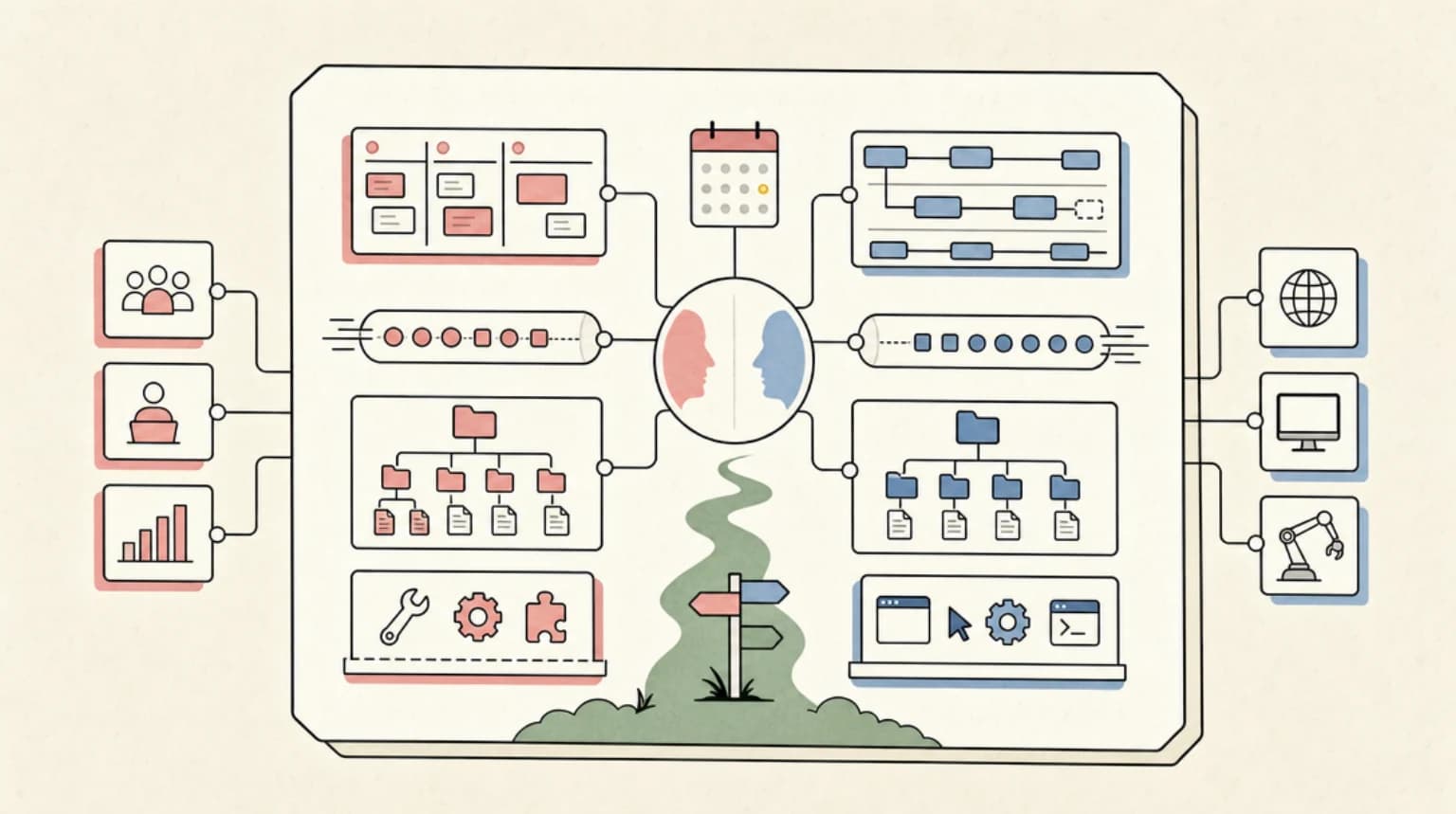
9 min read
ai-coding
Codex vs Claude Code in June 2026: The Fable 5 Era Rematch
Anthropic shipped Fable 5 and a June 22 subscription cliff. OpenAI shipped GPT-5.5 inside Codex plus automations, browse...

18 min read
AI Agents
Codex /goal and Claude Managed Outcomes: The New Control Loops
A deep comparison of Codex's new /goal loop and Claude managed agents outcomes, with practical workflow examples, contro...

11 min read
Claude Code
Claude Code vs Codex App in 2026: Local Agent Pairing vs Cloud Agent Orchestration
A deep comparison of Claude Code and OpenAI Codex app based on official docs and product updates: execution model, secur...
8 min read
Claude Code
Claude Code vs Cursor vs Codex: Which Should You Use?
Terminal agent, IDE agent, local-plus-cloud agent. Three architectures compared - how to decide which fits your workflow...

10 min read
Aider
Aider vs Claude Code in 2026: Git-First Open Source vs Subagent Runtime
Updated 2026 comparison of Aider and Claude Code using official docs and current workflow patterns: architecture, contro...

9 min read
Codex
Codex Changelog April 2026: Goals, Browser Use, GPT-5.5, and Safer Agents
OpenAI's April 2026 Codex changelog shows a clear product shift: Codex is becoming a full agent workspace with goals, br...

5 min read
OpenAI
OpenAI Codex: Terminal and Cloud AI Coding Agent
Codex works from the terminal, cloud tasks, IDEs, GitHub, Slack, and Linear. Here is how to use it and how it compares t...
10 min read
OpenAI
OpenAI vs Anthropic in 2026 - Models, Tools, and Developer Experience
A developer's comparison of OpenAI and Anthropic ecosystems - models, coding tools, APIs, pricing, and which to choose f...
Build with the member tools

Get Smarter About AI Dev
New tutorials, open-source projects, and deep dives on coding agents - delivered weekly.
One email per weekReal code, not theoryFree forever