Skills Are the New Agent Operating System
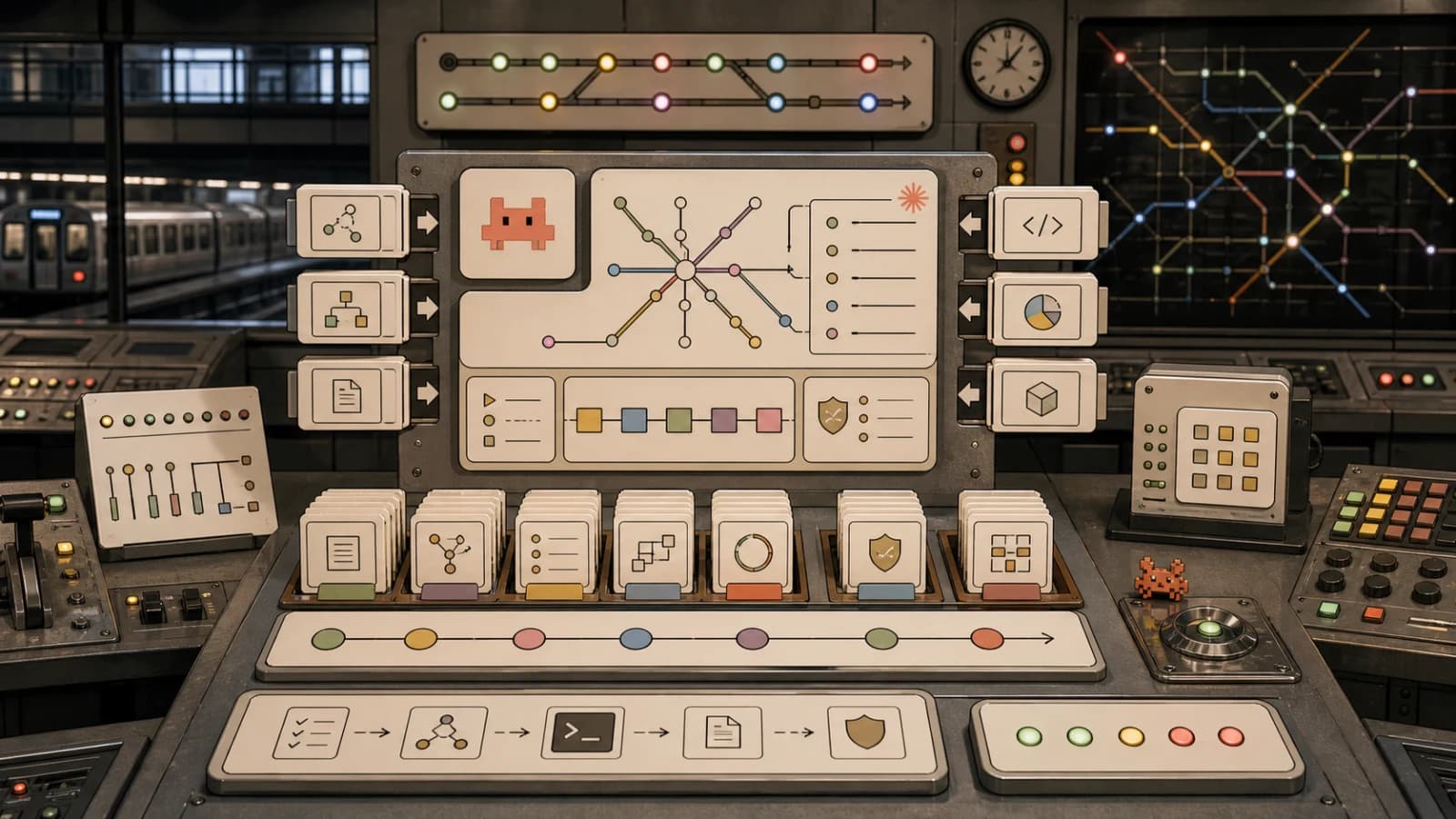
TL;DR
GitHub trending is full of agent skill frameworks. The real shift is not bigger prompts or more agents. It is turning team process into inspectable, reusable operating instructions.
Last updated: June 24, 2026. The dated Superpowers trend snapshots now redirect here so this page can serve as the durable explanation of why agent skills matter.
The most interesting AI developer trend today is not another benchmark.
It is the return of process.
On May 2, 2026, GitHub trending had multiple agent-shaped projects near the top. The clearest signal at the time was obra/superpowers, Jesse Vincent and Prime Radiant's agentic skills framework and software development methodology. As of this refresh, the public GitHub API shows the repo around 237k stars, 21k forks, MIT licensed, recently pushed on June 23, 2026, and shipping v6.0.3 from June 18.
That is a different category from "AI writes code now."
These projects are not trying to make the model smarter. They are trying to make the model behave like it works on a team.
The take: skills are becoming the operating system for coding agents.
Not because markdown files are magic. They are not.
Because every serious agent workflow eventually runs into the same wall: prompts do not preserve engineering discipline by themselves.
The old failure mode was prompt drift#
Most teams start with one giant instruction file.
For the larger agent workflow map, read What Is Claude Code? The Complete Guide for 2026 and 60 Claude Code Tips and Tricks for Power Users; they give the architecture and implementation context this piece assumes.
It says how to run tests. It says how to name branches. It says not to touch billing logic without review. It says to use the design system. It says to check current docs before answering framework questions. It says twenty other things that are all important.
Then the agent ignores half of it.
Not because the model is malicious. Because the context is too broad, the task feels urgent, and the instruction that mattered most was buried under a pile of other rules.
This is prompt drift.
The workflow starts disciplined. Then the prompt grows. Then the model treats the whole thing like ambient style guidance instead of an execution contract. Eventually, a human writes "please actually run the tests" for the third time in the same afternoon.
Skills are an answer to that problem.
Instead of carrying every rule all the time, the agent gets small, named operating procedures that load when relevant:
- how to research a library
- how to review a pull request
- how to make a Gumroad-style blog image
- how to run browser QA
- how to decompose a task across agents
- how to save session context
- how to debug a known deployment target
That is a better primitive than one huge prompt because it matches how engineering teams already work. You do not keep the whole company handbook in your head. You pull the runbook for the situation in front of you.
Why Superpowers hit a nerve#
The Hacker News thread around Superpowers is useful because it shows both sides of the reaction.
One developer described a structured workflow: brainstorm first, write a design plan, review it, write an implementation plan, use worktrees and subagents, then require implementation, spec review, and code review before merge.
That is a real methodology. It is slow compared with a one-shot prompt, but it maps cleanly to the parts of software work that keep code from rotting.
The pushback was also fair. Another commenter argued that much of this is already available in modern coding tools: worktrees, memory files, plan review, research subagents, IDE integration, and documentation fetching. The skeptical version is: why install another framework when the base tools are catching up every week?
That criticism lands.
If a skill framework only wraps features your agent already has, it is ceremony.
But the stronger argument for skills is not feature access. It is repeatability.
The built-in tool can create a plan. A skill can define what your team considers a good plan.
The built-in tool can spawn a subagent. A skill can define when a subagent should be used, what evidence it must return, and what files it is allowed to touch.
The built-in tool can run a test. A skill can define which tests count for this project, when a screenshot is required, and what unresolved risk has to be reported.
That is the difference between a capability and an operating procedure.
From the archive
VS Code Copilot Co-Author Attribution: The Real Problem Is Workflow Consent
May 2, 2026 • 8 min read
Warp Open Sourced the Terminal. The Real Story Is Agent Operations
May 2, 2026 • 8 min read
12 Tools in One Night: An Honest Overnight Agent Report
Apr 29, 2026 • 11 min read
Agent Architecture: Building Multi-Step AI Workflows That Survive Production
Apr 29, 2026 • 11 min read
Skills turn taste into infrastructure#
Senior engineers carry a lot of tacit rules.
They know when a refactor is too broad. They know when a UI change needs browser verification. They know when a migration needs a rollback path. They know when a library answer needs current docs instead of memory. They know when a task should be split and when splitting it will create coordination overhead.
Agents do not naturally have that local judgment.
A skill is a way to package some of it.
For example, this site has rules that matter:
- no emojis
- no gradients
- no em dashes
- Gumroad-style cards and pill buttons
- pink only on white or black
- blog posts need frontmatter and a hero image
- public content cannot include private business details
Those are not universal programming laws. They are local taste and local safety rules. They belong in project instructions and project skills, not in a generic model prompt.
This is why skills are more interesting than the current hype suggests. The market tends to frame them as "downloadable powers." The better frame is "portable team process."
The security story is not optional#
There is a hard caveat: agent skills are also a new supply chain surface.
A recent paper, Towards Secure Agent Skills, argues that skills create structural risk because they mix natural-language instructions, local files, scripts, and persistent trust. The authors call out issues like weak data-instruction boundaries, single-approval trust, missing marketplace review, prompt injection, credential leakage, and post-install modification.
That should change how developers install skills.
Treat a third-party skill less like a blog post and more like a package with a shell script.
Before installing one, ask:
- Does it run code?
- Does it fetch remote dependencies?
- Does it ask the agent to read secrets or config?
- Does it change memory or persistent settings?
- Is the source pinned to a commit?
- Can I inspect every file quickly?
- Would I run this in a repo with production credentials?
If the answer is fuzzy, do not install it globally.
Use project-local skills for project-local behavior. Vendor the skill when it matters. Keep execution helpers small. Prefer read-only workflows unless a skill truly needs write access.
The uncomfortable truth is that the skill ecosystem currently feels like early npm, but with natural-language instructions sitting beside executable code. That is powerful. It is also messy.
The practical stack#
For a development team, the useful stack is simple:
Text
AGENTS.md or CLAUDE.md
Project identity, rules, architecture, commands, safety boundaries.

Skills
Reusable procedures for recurring work.

Tools
Real observation and execution: tests, browser, docs, database, logs.

Receipts
Diffs, command output, screenshots, source links, open risks.
That stack keeps the agent grounded.
The project file answers "where am I?"
The skill answers "how do we do this kind of work here?"
The tool answers "what is actually true?"
The receipt answers "how can a human verify it?"
Leave out any layer and the workflow degrades. A project file without skills becomes a giant prompt. Skills without tools become ritual. Tools without receipts become invisible work. Receipts without project rules become generic status reports.
What to automate first#
Do not start by installing fifty public skills.
Start with the repetitive work you already correct agents on.
Good first skills:
- code review checklist for your repo
- frontend visual QA flow
- deployment debugging runbook
- documentation lookup policy
- content publishing checklist
- database migration safety checklist
- PR closeout checklist
Each skill should be small enough to audit and specific enough to trigger only when useful.
Bad first skills:
- "be a better engineer"
- "write cleaner code"
- "understand our company"
- "build anything end to end"
Those are aspirations, not procedures.
A good skill has a concrete activation moment. When the user asks for a PR review, load the review skill. When a file imports Stripe, load the payment safety skill. When the work touches app/page.tsx, load the design-system skill.
That is how skills stay useful instead of becoming a second prompt landfill.
The recommendation#
Skills are worth taking seriously, but not as a marketplace shopping spree.
Use public frameworks like Superpowers to study the workflow shape. Borrow the parts that improve your agent behavior. Then write your own smaller project-local skills for the work your team repeats.
The best skill system is not the one with the most commands.
It is the one that makes the agent stop skipping the boring steps that protect the codebase.
That means plans before risky edits. Tests before claims. Browser checks before UI summaries. Source links before research conclusions. Diff boundaries before merge.
The agent future is not just more autonomy.
It is more inspectable process.
And right now, skills are the cleanest place to put that process.
Frequently Asked Questions#
What are agent skills and how do they differ from prompts?#
Agent skills are small, named operating procedures that load only when relevant to a specific task. Unlike a single large prompt that carries every instruction at once, skills activate based on context - a PR review skill loads during code review, a deployment skill loads when debugging infrastructure. This prevents prompt drift, where agents ignore buried instructions because the context is too broad.
What frameworks exist for building agent skills?#
Several frameworks have emerged for structuring agent skills. Superpowers by obra provides an agentic skills framework with a full software development methodology including brainstorming, planning, worktrees, TDD, review, and branch completion. Matt Pocock's skills repo shows the smaller composable-workflow version of the same pattern, while Claude Code supports project-local skills through CLAUDE.md files and the skills directory structure.
How should I evaluate third-party skills before installing them?#
Treat third-party skills like packages with shell scripts, not like blog posts. Before installing, check whether the skill runs code, fetches remote dependencies, reads secrets or config, changes memory or persistent settings, and whether the source is pinned to a specific commit. If any answer is unclear, avoid installing globally. Use project-local skills and vendor them when they matter.
What makes a good first skill to write for my team?#
Good first skills address repetitive work you already correct agents on: code review checklists, frontend visual QA flows, deployment debugging runbooks, documentation lookup policies, content publishing checklists, database migration safety, and PR closeout procedures. Each should be small enough to audit and specific enough to trigger only when useful.
What should I avoid when creating agent skills?#
Avoid vague aspirational skills like "be a better engineer" or "write cleaner code." These are not procedures - they are goals. A good skill has a concrete activation moment and specific steps. Skills that try to "build anything end to end" or "understand our company" become a second prompt landfill instead of useful operating instructions.
How do skills fit into the larger agent architecture?#
Skills sit in a stack with project files (AGENTS.md or CLAUDE.md), tools, and receipts. The project file answers "where am I?" with identity, rules, and architecture. Skills answer "how do we do this kind of work here?" Tools answer "what is actually true?" through tests, browser, docs, and logs. Receipts answer "how can a human verify it?" through diffs, output, and source links. Remove any layer and the workflow degrades.
What are the security risks of agent skills?#
Skills create a new supply chain surface because they mix natural-language instructions, local files, scripts, and persistent trust. Risks include weak data-instruction boundaries, single-approval trust, missing marketplace review, prompt injection, credential leakage, and post-install modification. The skill ecosystem currently resembles early npm but with natural-language instructions alongside executable code.
Why are skills becoming more important than bigger models?#
Skills encode team-specific engineering discipline that generic models lack. Senior engineers carry tacit rules about when refactors are too broad, when UI changes need browser verification, when migrations need rollback paths. Agents do not naturally have this local judgment. Skills package that judgment as inspectable, reusable operating instructions rather than hoping bigger prompts or smarter models will figure it out.
Continue Reading#
Sources#
Read next
Best Claude Code Skills in 2026: A Curated Directory
A curated list of the Claude Code skills worth installing in 2026, with real install paths, what each one does, and how to build your own when nothing in the directory fits.
10 min readAgent Swarms Need Receipts
GitHub is filling with multi-agent frameworks, skills, and coding harnesses. The useful lesson is not that every team needs a swarm. It is that every agent needs receipts: tests, logs, diffs, and reviewable checkpoints.
8 min readProgressive Disclosure: How Claude Code Cut Token Usage by 98%
CloudFlare, Anthropic, and Cursor independently discovered the same pattern: don't load all tools upfront. Let agents discover what they need. The results are dramatic.
10 min readShare
Developers Digest
Technical content at the intersection of AI and development. Building with AI agents, Claude Code, and modern dev tools - then showing you exactly how it works.
300+ videos30K+ GitHub stars850+ articles
Try These Tools
Related Tools
AI CodingDaily Driver

Claude Code
Anthropic's agentic coding CLI. Runs in your terminal, edits files autonomously, spawns sub-agents, and maintains memory...
View ToolAI CodingAgent

OpenAI Codex
OpenAI's coding agent for terminal, cloud, IDE, GitHub, Slack, and Linear workflows. Reads repos, edits files, runs comm...
View ToolAI Coding

Jules
Google's asynchronous coding agent. Point it at a GitHub repo, it clones to a cloud VM, plans with Gemini, and opens a p...
View ToolAI Coding
C
Conductor
Mac app for running parallel Claude Code, Codex, and Cursor agents in isolated workspaces. Watch every agent work at onc...
View ToolApps from Developers Digest
SaaS Products
Overnight Agents
Spec out AI agents, run them overnight, wake up to a verified GitHub repo.
View AppDeveloper ToolsIn Progress
Skill Builder
Turn a one-liner into a working Claude Code skill. From idea to installed in a minute.
View AppDeveloper ToolsIn Progress
agentfs
Give your agents a filesystem that branches like git. Crash-safe by default.
View AppRelated Guides
Guide
Claude Code Setup Guide
Configure Claude Code for maximum productivity -- CLAUDE.md, sub-agents, MCP servers, and autonomous workflows.
AI AgentsGuide
AI Agent Frameworks Compared: LangGraph vs CrewAI vs Mastra vs CopilotKit
Deep comparison of the top AI agent frameworks - LangGraph, CrewAI, Mastra, CopilotKit, AutoGen, and Claude Code.
AI AgentsGuide
AGENTS.md - Claude Code
Define custom subagent types within your project's memory layer.
Claude CodeRelated Videos
Claude Code NEW Sub Agents in 7 Minutes
Leveraging Anthropic's Subagent for Claude Code: A Step-by-Step Guide In this video, we explore Anthropic's newly released subagent feature for Cloud Code, which allows developers to create...
Video·

I Gave My Agents a Voice… And It’s Wildly Useful
Make Your AI Coding Agents Talk: Natural Voice Replies with the Rime CLI Check out Rime: https://rime.plug.dev/u8AOkAH The video demonstrates a simple way to make AI coding agents respond in human-s...
Video·

Buzz: Open-Source Collaboration for Humans + AI Agents
Buzz by Block: Open-Source Slack-Style Collaboration for Humans + AI Agents (Demo & Setup) Check out Arcade: https://arcade.dev.plug.dev/xiDRwlA Repo: https://github.com/block/buzz The video introd...
Video·
Related Posts

10 min read
Claude Code
Best Claude Code Skills in 2026: A Curated Directory
A curated list of the Claude Code skills worth installing in 2026, with real install paths, what each one does, and how...
8 min read
AI Coding
Agent Swarms Need Receipts
GitHub is filling with multi-agent frameworks, skills, and coding harnesses. The useful lesson is not that every team ne...

10 min read
Claude Code
Progressive Disclosure: How Claude Code Cut Token Usage by 98%
CloudFlare, Anthropic, and Cursor independently discovered the same pattern: don't load all tools upfront. Let agents di...

12 min read
Claude Code
How to Write a CLAUDE.md: The Complete 2026 Guide
CLAUDE.md is the highest-leverage file in any Claude Code project. Here's what goes in one, what doesn't, and the patter...

9 min read
AI Coding
Why Skills Beat Prompts for Coding Agents in 2026
The coding-agent workflow is maturing past giant hand-written prompts. The winning pattern in 2026 is a control stack: p...
9 min read
Claude Code
Claude Code Usage Limits in 2026: The Practical Playbook for Pro and Max Teams
A practical operational guide to Claude Code usage limits in 2026: plan behavior, API key pitfalls, routing choices, and...
Build with the member tools

Get Smarter About AI Dev
New tutorials, open-source projects, and deep dives on coding agents - delivered weekly.
One email per weekReal code, not theoryFree forever