ML Intern Shows Where Coding Agents Are Heading: Domain Tools, Not Generic Chat

TL;DR
Hugging Face's ml-intern is trending because it narrows the agent loop around one domain: papers, datasets, model training, Hub traces, and ML shipping workflows.
One of the strongest GitHub trending signals today is huggingface/ml-intern: an open-source ML engineer that reads papers, trains models, and ships ML code using the Hugging Face ecosystem.
That description sounds like a big claim. The interesting part is more specific.
ML Intern is not trying to be a generic coding assistant with a Hugging Face logo on it. It is a domain agent. Its loop is shaped around ML work: papers, datasets, models, repositories, cloud compute, Hub uploads, and session traces.
That is where serious coding agents are heading.
The first wave of AI coding tools asked: "Can the model edit files?"
The next wave asks: "Can the model operate inside the actual domain system where the work happens?"
For ML engineering, that system is not just a repo. It is papers, datasets, experiment runs, model cards, metrics, jobs, GPUs, evaluation artifacts, and a public or private Hub history.
What ML Intern actually adds#
The README describes ML Intern as a CLI agent with deep access to Hugging Face docs, papers, datasets, repositories, jobs, local tools, planning, MCP servers, and model provider routing through LiteLLM.
For the larger agent workflow map, read AI Agents Explained: A TypeScript Developer's Guide and How to Build AI Agents in TypeScript; they give the architecture and implementation context this piece assumes.
It supports interactive mode:
Terminal
ml-intern
And headless mode:
Terminal
ml-intern "fine-tune llama on my dataset"
It can use OpenAI or Anthropic models, take an HF token, use a GitHub token, and run for a configurable number of iterations.
The most important detail is not the command. It is the trace model.
Every session can be uploaded to a private Hugging Face dataset in Claude Code JSONL format, which the HF Agent Trace Viewer can inspect. The default dataset is private and tied to the user. The user can opt out, override the destination, or make traces public.
That turns an agent run into a reviewable artifact.
For ML workflows, this is not a nice-to-have. It is the difference between "the agent trained something" and "here is the run history, tool sequence, model response stream, and artifact trail."
From the archive
The trend is domain compression#
Generic agents have to learn the shape of every job from scratch.
Domain agents cheat in the right way.
They bundle the boring context:
- where docs live
- which APIs matter
- how datasets are named
- how jobs are launched
- how artifacts are uploaded
- which failures repeat
- what a good trace looks like
- when approval is required
That compression matters more than a slightly better prompt.
An ML agent that knows the difference between a dataset card, a model repo, a paper, a training job, and an evaluation artifact can do better work than a generic assistant that only sees a folder and a vague request.
The same pattern is showing up across developer tools. Cloud agents know deployment platforms. IDE agents know worktrees and diagnostics. Terminal agents know tests and shell history. Browser agents know page state and interactions. Skills packages encode local process.
The winning interface is not one universal chat box. It is a narrow agent loop with enough domain tools to be useful and enough receipts to be trusted.
The hard part is not autonomy#
The README includes a maximum-iteration loop, approval checks, a tool router, context management, session uploads, and a doom loop detector. That last piece is more important than it sounds.
Long-running agents fail in boring ways:
- repeating the same command
- searching instead of deciding
- editing without validating
- chasing a transient error
- filling context with stale observations
- making hidden assumptions about credentials
- producing a final answer without a useful artifact
ML makes those failures expensive. A bad web app diff wastes a few minutes. A bad training job wastes GPU budget, dataset time, and human attention.
So the product surface has to include controls that interrupt bad loops. That means approvals, iteration limits, traces, notifications, private-by-default logs, and a clear way to inspect what happened.
This is where ML Intern is more interesting than a demo. It is built like an operations loop, not just a prompt wrapper.
The opposing view#
The fair skeptical read is simple: ML engineering is too empirical for an agent to "ship models" reliably.
That skepticism is right if the agent is treated as an oracle. Reading a paper, choosing a method, preparing data, launching training, interpreting results, and deciding whether a model is good enough are not one-shot tasks. They involve judgment, failure, and iteration.
But that is not an argument against domain agents. It is an argument against hiding the loop.
The useful version of ML Intern is not "press button, receive model." It is "delegate a bounded ML task, get back code, runs, traces, errors, and artifacts that a human can inspect."
That is a much more credible bar.
In that frame, the agent is closer to a junior ML engineer with a very fast toolbelt than a magic model factory. It can read, implement, run, and report. The human still owns the experimental judgment.
What builders should copy#
If you are building a domain-specific coding agent, copy the shape, not the branding.
Start with a tight domain:
- ML engineering
- database migrations
- security review
- frontend accessibility
- infra cost tuning
- test triage
- documentation maintenance
Then give the agent first-class tools for that domain. Not just shell access. Real domain operations.
For ML, that means datasets, papers, model repos, compute jobs, and traces. For security, it might mean SARIF, dependency graphs, secret scanners, policy files, and review comments. For database work, it might mean schema diffs, migrations, query plans, and sampled failures.
Finally, make receipts unavoidable.
The final output should include:
- what changed
- what ran
- what failed
- what artifact was produced
- what needs human judgment
That is the difference between a toy agent and a teammate you can route work to.
My take#
ML Intern is part of a bigger shift: agents are moving from general-purpose coding chat into domain-specific operating loops.
That is good.
The generic agent category is crowded and increasingly hard to evaluate. Domain agents are easier to judge because they either complete the workflow or they do not. They either leave usable traces or they do not. They either understand the tools of the trade or they do not.
For ML engineering, a useful agent has to live where ML work lives: papers, datasets, jobs, model repos, and evaluation trails.
That is why ML Intern is worth watching. The headline is "open-source ML engineer." The deeper signal is that the next useful coding agents will be narrower, tool-rich, and receipt-heavy.
Read next
Agent Swarms Need Receipts
GitHub is filling with multi-agent frameworks, skills, and coding harnesses. The useful lesson is not that every team needs a swarm. It is that every agent needs receipts: tests, logs, diffs, and reviewable checkpoints.
8 min read7 AI Agent Orchestration Patterns Every Developer Should Know
From single-agent baselines to multi-level hierarchies, these are the seven patterns for wiring AI agents together in production. Each with a decision rule, an implementation sketch, and the tradeoffs that actually matter.
10 min readSelf-Improving AI Agents: Building Systems That Learn From Their Mistakes
AI agents that reflect on failures, accumulate skills, and get better with every session. Reflection patterns, memory architectures, skill extraction, and working code examples for building agents that actually learn.
13 min readShare
Developers Digest
Technical content at the intersection of AI and development. Building with AI agents, Claude Code, and modern dev tools - then showing you exactly how it works.
300+ videos30K+ GitHub stars850+ articles
Related Tools
AI CodingDaily Driver

Claude Code
Anthropic's agentic coding CLI. Runs in your terminal, edits files autonomously, spawns sub-agents, and maintains memory...
View ToolAI CodingAgent

OpenAI Codex
OpenAI's coding agent for terminal, cloud, IDE, GitHub, Slack, and Linear workflows. Reads repos, edits files, runs comm...
View ToolAI CodingOpen source

DeepSeek-TUI
Open-source terminal agent runtime with approval modes, rollback snapshots, MCP servers, LSP diagnostics, and a headless...
View ToolAI Coding

Windsurf
Codeium's AI-native IDE. Cascade agent mode handles multi-file edits autonomously. Free tier with generous limits. Stron...
View ToolApps from Developers Digest
Developer ToolsIn Progress
Agent Benchmark Lab
Compare AI coding agents on reproducible tasks with scored, shareable runs.
View AppDeveloper ToolsPlus $20/mo
Agent Eval Bench Plus
Score every coding agent on your own tasks. Catch regressions in CI.
View AppDeveloper ToolsIn Progress
Browser Flow Design
Plan browser automation flows as inspectable product journeys before agents run them.
View AppRelated Guides
Guide
Claude Code Setup Guide
Configure Claude Code for maximum productivity -- CLAUDE.md, sub-agents, MCP servers, and autonomous workflows.
AI AgentsGuide
MCP Servers Explained
What MCP servers are, how they work, and how to build your own in 5 minutes.
AI AgentsGuide
Run AI Models Locally with Ollama and LM Studio
Install Ollama and LM Studio, pull your first model, and run AI locally for coding, chat, and automation - with zero cloud dependency.
Getting StartedRelated Videos
VectorShift: The No-Code Platform for AI Agents, Assistants, Chatbots and Automations
In this video, I'll introduce you to VectorShift, a powerful no-code AI automation platform, and show you how to use its functionalities for various use cases, including agents, chatbots, and...
Video·
Chaindesk: Setting Up No-Code Custom ChatGPT Agents
#Databerry #AIChatbot #NoCodePlatform Welcome to our first look at ChainDesk, the no-code platform that allows you to create your very own custom AI chatbot trained on your data in seconds!...
Video·

I Gave My Agents a Voice… And It’s Wildly Useful
Make Your AI Coding Agents Talk: Natural Voice Replies with the Rime CLI Check out Rime: https://rime.plug.dev/u8AOkAH The video demonstrates a simple way to make AI coding agents respond in human-s...
Video·
Related Posts
8 min read
AI Coding
Agent Swarms Need Receipts
GitHub is filling with multi-agent frameworks, skills, and coding harnesses. The useful lesson is not that every team ne...
10 min read
AI Agents
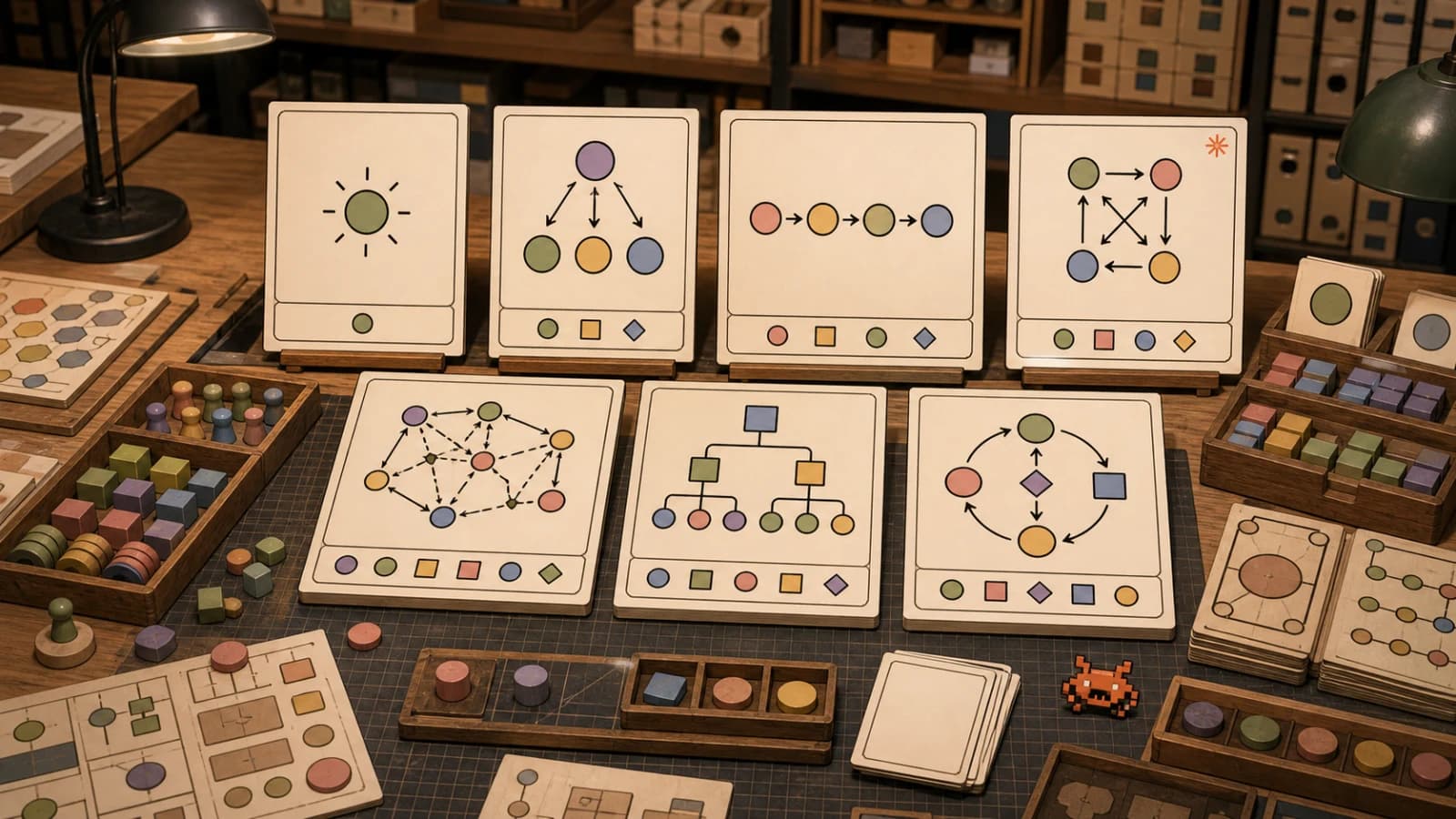
7 AI Agent Orchestration Patterns Every Developer Should Know
From single-agent baselines to multi-level hierarchies, these are the seven patterns for wiring AI agents together in pr...
13 min read
AI Agents
Self-Improving AI Agents: Building Systems That Learn From Their Mistakes
AI agents that reflect on failures, accumulate skills, and get better with every session. Reflection patterns, memory ar...
11 min read
Claude Code
Building Multi-Agent Workflows in Claude Code: A Practical Tutorial
How to use Claude Code's Task tool, custom sub-agents, and worktrees to run parallel development workflows. Real prompt...
8 min read
AI Coding
jcode and the Coding Agent Harness Wars
jcode is trending because it competes on a less glamorous but important agent metric: how cheap it is to keep many codin...

8 min read
Warp
Warp Open Sourced the Terminal. The Real Story Is Agent Operations
Warp going open source is not just a terminal story. It is a signal that AI coding tools are shifting from chat UX towar...
Build with the member tools

Get Smarter About AI Dev
New tutorials, open-source projects, and deep dives on coding agents - delivered weekly.
One email per weekReal code, not theoryFree forever