lib0xc Is the Opposite of Rewrite Culture
TL;DR
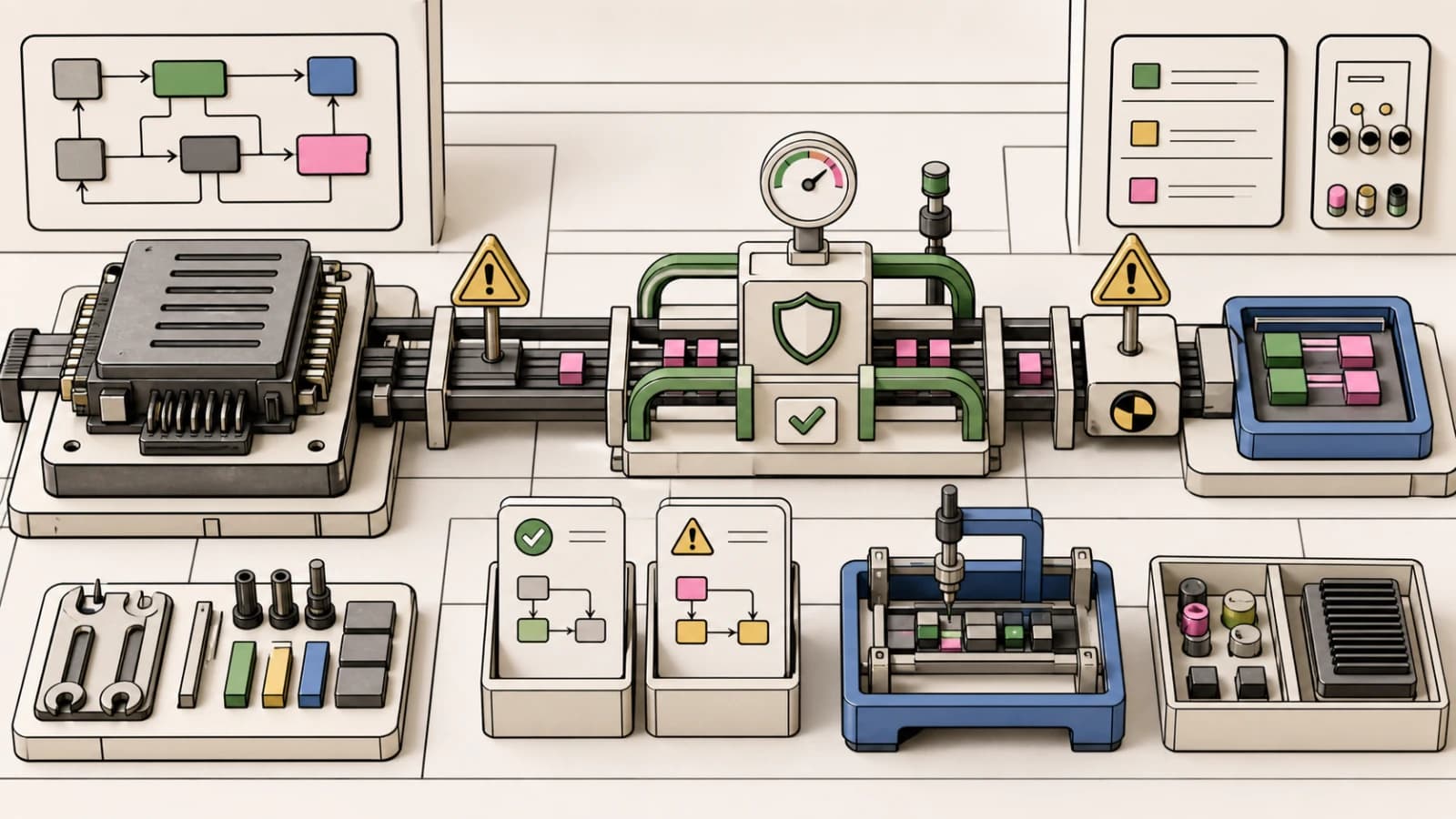
Microsoft's lib0xc landed on Hacker News with a practical message: safer systems code often means better C APIs, warnings, bounds checks, and incremental adoption, not a heroic rewrite.
lib0xc hit Hacker News today with a refreshingly unfashionable pitch: make C safer by codifying better standard-library-adjacent APIs.
Not "rewrite everything in Rust."
Not "pretend C can become fully memory safe."
Not "ship a grand new language."
Just a set of C11/GNU-extension APIs that make existing systems code less dangerous: static bounds, safer integer conversions, cursor-based formatting, context pointers, queue macros with bounds-safety annotations, allocation helpers, logging, unit tests, and compatibility with Clang's -fbounds-safety extensions.
That is a useful counterweight to the current AI coding mood.
AI makes rewrites feel cheaper. It is now easier than ever to ask an agent to port a subsystem, translate a library, or produce a replacement implementation. Sometimes that is the right call. Often it is just a faster way to create new risk.
lib0xc is interesting because it takes the opposite stance: improve the codebase you actually have.
What lib0xc is trying to do#
The README is explicit about the scope. C cannot be made completely type-safe or bounds-safe at the language level, but common C usage can be made safer.
For the security frame around this, see OpenAI Codex Cloud Security Playbook 2026: Internet Access, Prompt Injection, and Safe Defaults and Open Source Has a Bot Problem: Prompt Injection in Contributing.md; both focus on the places where agent autonomy needs explicit boundaries.
The project goals are practical:
- enable aggressive warnings and
-Werror - provide familiar APIs that look like standard-library replacements
- embrace static bounds
- support Clang
-fbounds-safety - document and test patterns that have circulated informally for years
- make safer API contracts easier to use than unsafe ones
That last goal is the whole story. Good safety work changes the default path.
The examples are not flashy. A bounded CURSOR tracks remaining buffer space during formatting. A context_t exports and imports typed context pointers with size checks. Integer conversion helpers trap on overflow instead of silently truncating. Portable printf helpers avoid format-specifier footguns.
This is the texture of real systems maintenance. Small contracts. Fewer unchecked assumptions. Better compiler leverage.
From the archive
Long-Running Agents Need Harnesses, Not Hope
May 2, 2026 • 9 min read
ML Intern Shows Where Coding Agents Are Heading: Domain Tools, Not Generic Chat
May 2, 2026 • 8 min read
One Tool Beats Ten Endpoints
May 2, 2026 • 8 min read
OpenAI Codex, Managed Agents, and AWS: What Developers Should Watch
May 2, 2026 • 8 min read
Hacker News split along the right line#
The HN response was positive, but not naive.
Some commenters saw obvious low-hanging fruit: safer C and C++ interfaces could remove a large class of spatial memory problems if teams actually used them. Others liked the incremental adoption story and the -fbounds-safety angle.
The skepticism was just as important. One commenter asked whether Microsoft uses this in production or whether it is a side project. Another noted that a Microsoft project depending on GNU extensions and not supporting MSVC or Windows is surprising. The sharper objection was philosophical: this can look like an excuse to keep using unsafe languages instead of moving to safer ones.
That objection deserves respect.
If you are starting a greenfield service, "use safer APIs in C" is often weaker advice than "do not write this in C." Rust, Zig, Swift, Go, Java, C#, and other safer options exist for many problem shapes.
But that does not answer the installed-base problem.
Large C and C++ codebases are not going away because a migration memo says they should. Operating systems, embedded stacks, media pipelines, databases, runtimes, device software, and old infrastructure will keep carrying C for a long time.
For those codebases, incremental safety is not a compromise. It is the work.
Why this matters more in the agent era#
AI coding agents change the risk profile of old systems code.
They make it easier to touch unfamiliar files. They make it easier to produce large diffs. They make it easier to translate patterns without understanding every invariant. They also make it easier to accidentally paper over a warning, widen a cast, or copy an unsafe idiom because it appeared elsewhere in the codebase.
That means old C code needs stronger rails, not just stronger reviewers. The same "make the safe path the default path" logic is why Claude Code skills beat one-off prompts for repeatable work - codified conventions survive being handed to a different agent or a different developer.
Libraries like lib0xc are one form of rail. Compiler warnings are another. Bounds-safety annotations are another. Tests, static analysis, fuzzing, and narrow review hooks are all part of the same control layer.
The AI-era version of C safety is not:
"Ask an agent to rewrite it."
It is:
"Make the safe path obvious enough that agents and humans both fall into it."
When an agent edits a codebase with safer APIs, high warning levels, checked conversions, and tests, the environment pushes back. The agent can still be wrong, but wrong changes are more likely to fail loudly.
That is what you want.
The adoption test#
The real question for lib0xc is not whether the API is clever.
The question is whether a team can adopt one piece without accepting the whole worldview.
Incremental adoption wins when a developer can say:
- use cursor formatting in this module
- replace unsafe integer casts here
- add bounds annotations around this buffer boundary
- turn on one more warning class
- add tests around the safer wrapper
If adoption requires a rewrite, the library loses its main advantage.
The README is at least aiming at the right shape: familiar names, drop-in replacements where appropriate, no allocator assumption for most APIs, POSIX static library builds, and support for macOS and Linux on arm64 and x86_64.
The gaps matter too. Windows and MSVC support are obvious questions. GNU extensions are a pragmatic choice, but they narrow the adoption path. If the project is meant to influence industrial C, those constraints need a clear story.
What AI tool builders should learn from it#
This is not just a C post.
It is a lesson for AI coding tools.
Agents work better when codebases expose safer primitives. If a repo has no conventions, no helper APIs, no strict warnings, no tests, and no reviewable contracts, an agent is forced to infer too much from ambient code.
If a repo has well-named primitives, tight APIs, and loud failure modes, the agent has something to grab onto.
That applies across stacks:
- React apps need design-system components instead of one-off styling.
- Backend services need typed clients instead of raw fetch calls everywhere.
- Database code needs migration helpers and query boundaries.
- Infra repos need modules with policy baked in.
- C code needs safer standard-library-adjacent APIs.
The pattern is the same. Make the correct move easier than the dangerous move.
AI does not remove that engineering work. It makes that engineering work more valuable.
My take#
lib0xc is not a Rust killer. It is not a full answer to memory safety. It is not even trying to be.
That is why it is useful.
The practical world is full of code that cannot be rewritten this quarter, and maybe should not be rewritten at all. Those systems still need safer APIs, better warnings, static bounds, fewer silent casts, and tests that encode the local contract.
In 2026, the boring safety layer matters more because more code will be touched by agents, junior developers, generators, and rushed migration work.
The strongest AI-era engineering move is not always a rewrite. Sometimes it is making yesterday's codebase harder to misuse tomorrow.
Read next
Open Source Has a Bot Problem: Prompt Injection in Contributing.md
AI coding agents now read repository docs, config, issues, and comments before opening pull requests. That turns CONTRIBUTING.md and AGENTS.md into part of the security boundary.
8 min readCodex CLI Hooks for PLC and IoT Firmware Review on the Factory Floor
Manufacturing teams ship ladder logic and ESP32 firmware without code review. Here is a Codex CLI setup with hooks that catches the dangerous patterns first.
11 min read10 TypeScript Patterns Every AI Developer Should Know
The TypeScript patterns that show up in every AI project. Streaming responses, type-safe tool definitions, structured output, retry logic, and more.
10 min readShare
Developers Digest
Technical content at the intersection of AI and development. Building with AI agents, Claude Code, and modern dev tools - then showing you exactly how it works.
300+ videos30K+ GitHub stars850+ articles
Try These Tools
Related Tools
AI CodingEssential

Cursor
AI-native code editor forked from VS Code. Composer mode rewrites multiple files at once. Tab autocomplete predicts your...
View ToolInfrastructureThis Site

Cloudflare
CDN, DNS, DDoS protection, and edge computing. Free tier handles most needs. This site uses Cloudflare for DNS and analy...
View ToolAI Coding

Cline
Open-source autonomous coding agent inside VS Code. Creates files, runs commands, and can use a browser for UI testing a...
View ToolMCP Tools

Glama
Largest MCP server directory with 17,000+ servers. Security grading (A/B/C/F), compatibility scoring, and install config...
View ToolApps from Developers Digest
Developer ToolsIn Progress
HookReel
Paste a video transcript, get 10 ranked first-3-second hook rewrites optimized for Shorts/Reels retention.
View AppDeveloper ToolsIn Progress
Key Vault
Document API key ownership, rotation context, and integration notes without storing secrets.
View AppDeveloper ToolsIn Progress
Maintainer Dashboard
Track open-source maintenance signals, release tasks, and repo follow-ups in one dashboard.
View AppRelated Guides
Guide
Claude Code Complete Course
A complete, citation-backed Claude Code course with setup, prompting systems, MCP, CI, security, cost controls, and capstone workflows.
ai-developmentGuide
Chronicle Research Preview Setup Guide
Set up Codex Chronicle on macOS, manage permissions, and understand privacy, security, and troubleshooting.
Getting StartedGuide
Terminal CLI - Claude Code
The primary command-line entry point for Claude Code sessions.
Claude CodeRelated Videos
Zed: The Open Source Agentic IDE - Use Claude Code, Codex & Gemini CLI in one place
Check out Zed here! https://zed.dev In this video, we dive into Zed, a robust open source code editor that has recently introduced the Agent Client Protocol. This new open standard allows...
Video·
NVIDIA's NEW Open Source Nemotron Nano 2 VL Model in 5 Minutes
NVIDIA just released Nemotron Nano 2 VL - an open-source vision language model that's 4x more efficient than previous models. In this video, I break down what makes this 12-billion parameter...
Video·

Introducing FireGeo: The Open Source AI Brand Visibility SaaS Starter Kit
In this video, I am excited to introduce FireGeo, an AI-powered brand visibility platform designed to kickstart your SaaS application. FireGeo leverages advanced tools such as Firecrawl for...
Video·
Related Posts

8 min read
AI Security
Open Source Has a Bot Problem: Prompt Injection in Contributing.md
AI coding agents now read repository docs, config, issues, and comments before opening pull requests. That turns CONTRIB...

11 min read
Codex CLI
Codex CLI Hooks for PLC and IoT Firmware Review on the Factory Floor
Manufacturing teams ship ladder logic and ESP32 firmware without code review. Here is a Codex CLI setup with hooks that...
10 min read
TypeScript
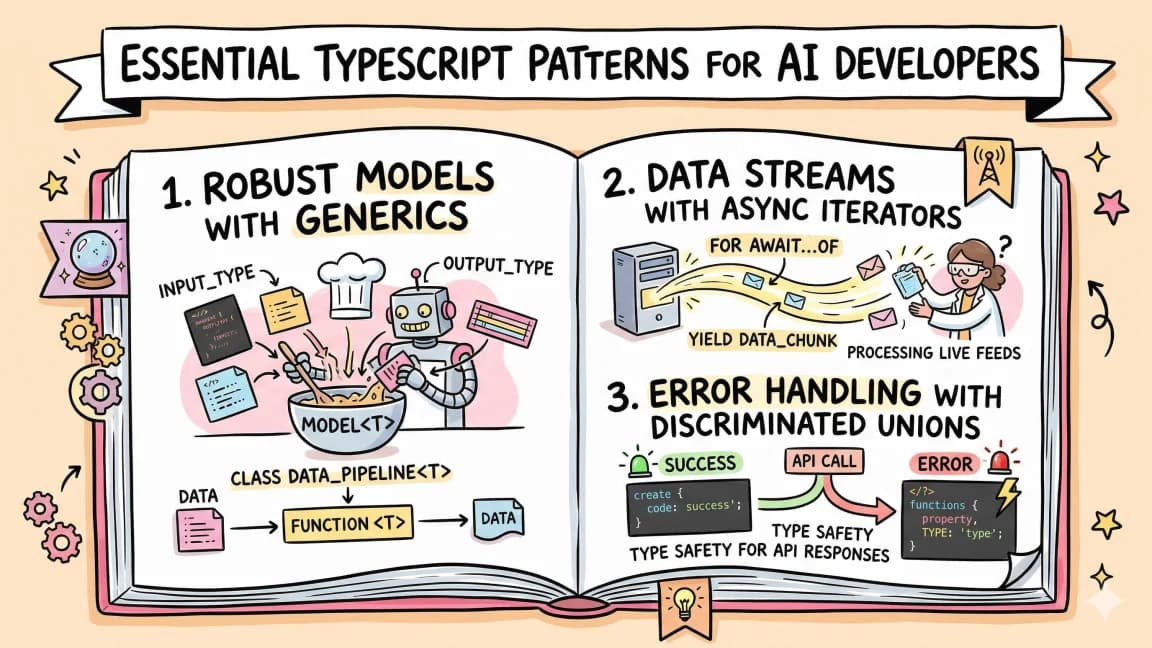
10 TypeScript Patterns Every AI Developer Should Know
The TypeScript patterns that show up in every AI project. Streaming responses, type-safe tool definitions, structured ou...

12 min read
MCP
Open-Source MCP Servers Worth Installing in 2026
The MCP ecosystem crossed 22,000 servers in early 2026. Most are noise. Here are the open-source servers that have earne...
8 min read
AI Coding
jcode and the Coding Agent Harness Wars
jcode is trending because it competes on a less glamorous but important agent metric: how cheap it is to keep many codin...

8 min read
AI Coding
Open Design Shows the Next Agent Wrapper
Open Design is trending because it turns Claude Code, Codex, Cursor, Gemini, and other CLIs into a design engine. The us...
Build with the member tools

Get Smarter About AI Dev
New tutorials, open-source projects, and deep dives on coding agents - delivered weekly.
One email per weekReal code, not theoryFree forever