DeepSeek V4 Changes the Coding Agent Cost Equation
TL;DR
DeepSeek V4 is trending because it is close enough to frontier coding models at a much lower token price. The real question for developers is where cheap reasoning belongs in an agent stack.
Official Sources#
| Source | Link |
|---|---|
| DeepSeek API Docs | api-docs.deepseek.com |
| DeepSeek V4 Preview Announcement | api-docs.deepseek.com/news/news260424 |
| Simon Willison Analysis | simonwillison.net - DeepSeek V4 |
| DeepSeek Platform | platform.deepseek.com |
| DeepSeek GitHub | github.com/deepseek-ai |
| Hacker News Discussion | HN Thread |
DeepSeek V4 is the most useful kind of model news: not a vague benchmark victory, but a pricing shock that changes what developers can afford to automate.
The model was sitting on the Hacker News front page on May 2, 2026 through Simon Willison's writeup, DeepSeek V4 - almost on the frontier, a fraction of the price. The HN thread was unusually practical. People were not only arguing about whether DeepSeek V4 is "frontier." They were comparing it against Claude Code limits, OpenAI pricing, Opus-quality planning, OpenRouter routing, privacy tradeoffs, and the actual cost of running long coding-agent sessions.
That is the right frame.
The point is not that DeepSeek V4 replaces Claude Opus, GPT-5.5, or Gemini Pro everywhere. It probably does not. The point is that it makes a new stack shape rational: use cheaper strong models for wide, repetitive, or review-heavy work, then reserve expensive frontier models for the parts of software engineering where mistakes are costly.
What Changed#
DeepSeek V4 shipped as two preview models:
For cost context, read AI Coding Tools Pricing Comparison 2026 alongside The $400 Overnight Bill: Why Managed Agents Need FinOps Now; together they separate sticker price from the operational habits that make agent work expensive.
- DeepSeek V4 Flash: a 284B total parameter mixture-of-experts model with 13B active parameters.
- DeepSeek V4 Pro: a 1.6T total parameter mixture-of-experts model with 49B active parameters.
Both support a 1M token context window and use an MIT license. DeepSeek's own pricing page lists OpenAI-compatible and Anthropic-compatible base URLs, JSON output, tool calls, chat prefix completion, and context caching.
The price is the headline. DeepSeek's official docs list V4 Flash at $0.14 per million cache-miss input tokens and $0.28 per million output tokens. V4 Pro launched at a list price of $1.74 per million input and $3.48 per million output with a temporary 75% discount, and as of June 2026 the official pricing page lists V4 Pro at $0.435 per million cache-miss input tokens and $0.87 per million output tokens.
For developers, the more interesting number is cache-hit input pricing. DeepSeek lists cache-hit input for V4 Flash at $0.0028 per million tokens and V4 Pro cache-hit input at $0.003625 per million tokens.
That matters because coding agents reread the same project context constantly.
Why Coding Agents Care About Cache Economics#
An agent run is not a single chat completion. It is a loop:
- Read files.
- Form a plan.
- Edit code.
- Run tests.
- Read failures.
- Patch again.
- Summarize the diff.
Most of that loop is repeated context. The repo conventions, API surface, relevant files, previous tool results, and test output come back again and again. If the provider can cache that prefix cheaply, long sessions get dramatically cheaper.
That is why the HN comments around DeepSeek V4 were full of agentic coding math instead of generic benchmark takes. One commenter described the model as usable for frontend prototyping. Another said V4 Pro review runs were slower than Opus or GPT-5.5 but far cheaper. Others pushed back that reasoning-token usage can erase some of the advantage in pathological cases.
All three can be true.
Cheap tokens do not magically make a model better at planning. They do make it affordable to ask for more passes, more tests, more review, and more narrow agents working in parallel.
From the archive
Flue: The Agent Harness Framework and Why It Feels Different
May 2, 2026 • 24 min read
Flue and the Agent Harness Layer
May 2, 2026 • 8 min read
GitHub Copilot Coding Agent and CLI: Why GitHub Is Back in the Agent Race
May 2, 2026 • 8 min read
jcode and the Coding Agent Harness Wars
May 2, 2026 • 8 min read
The Right Use Cases#
Here is where I would try DeepSeek V4 first.
1. Second-pass code review#
Use your strongest model to implement. Then ask DeepSeek V4 Pro or Flash to review the diff against a checklist:
- Did the change touch unrelated files?
- Are there missing tests?
- Are there obvious type holes?
- Did the implementation violate project conventions?
- Is there a smaller patch that would solve the same problem?
This is exactly the kind of high-volume reasoning pass where cost matters. You want to run it on every PR, maybe multiple times, without caring about token burn.
2. Repo mapping#
Before giving an expensive model the task, use V4 Flash to build a map:
- relevant entry points,
- adjacent tests,
- data models,
- route handlers,
- config files,
- risky dependencies.
Then pass the compact map to the frontier model. The cheaper model does the wide scan. The expensive model spends its budget on the actual decision.
3. Bulk documentation and migration chores#
DeepSeek V4 is a good candidate for repetitive work with reviewable output:
- convert old docs to a new template,
- add missing examples,
- write migration notes,
- generate test names,
- summarize long issue threads,
- draft release notes from merged PRs.
These tasks are valuable, but they are not usually worth Opus pricing. They are perfect candidates for a cheaper model with a strict diff review gate.
4. Parallel speculative agents#
If one agent is expensive, you ask it for the answer. If agents are cheap, you can ask three agents for three different approaches and keep the best one.
That sounds wasteful until the model price drops far enough. DeepSeek V4 pushes more teams toward that line.
Where I Would Still Pay For Frontier Models#
I would not hand DeepSeek V4 the hardest planning work blindly.
For large architectural migrations, security-sensitive rewrites, payment flows, auth, database migrations, or subtle production bugs, I still want the best model I can get. Not because benchmarks are everything, but because agent mistakes compound. A cheap bad plan can cost more than an expensive correct one.
The comments around the HN thread also surfaced three practical cautions.
First, some users see much longer thinking traces than they expect. If output or reasoning tokens balloon, the bill can surprise you.
Second, data policy matters. Developers who are angry about code being used for training should be equally careful about where they send proprietary repo context.
Third, "almost frontier" is not the same as "best at open-ended software work." A model can be strong at implementation and still weaker at long-horizon planning.
The Stack I Would Try#
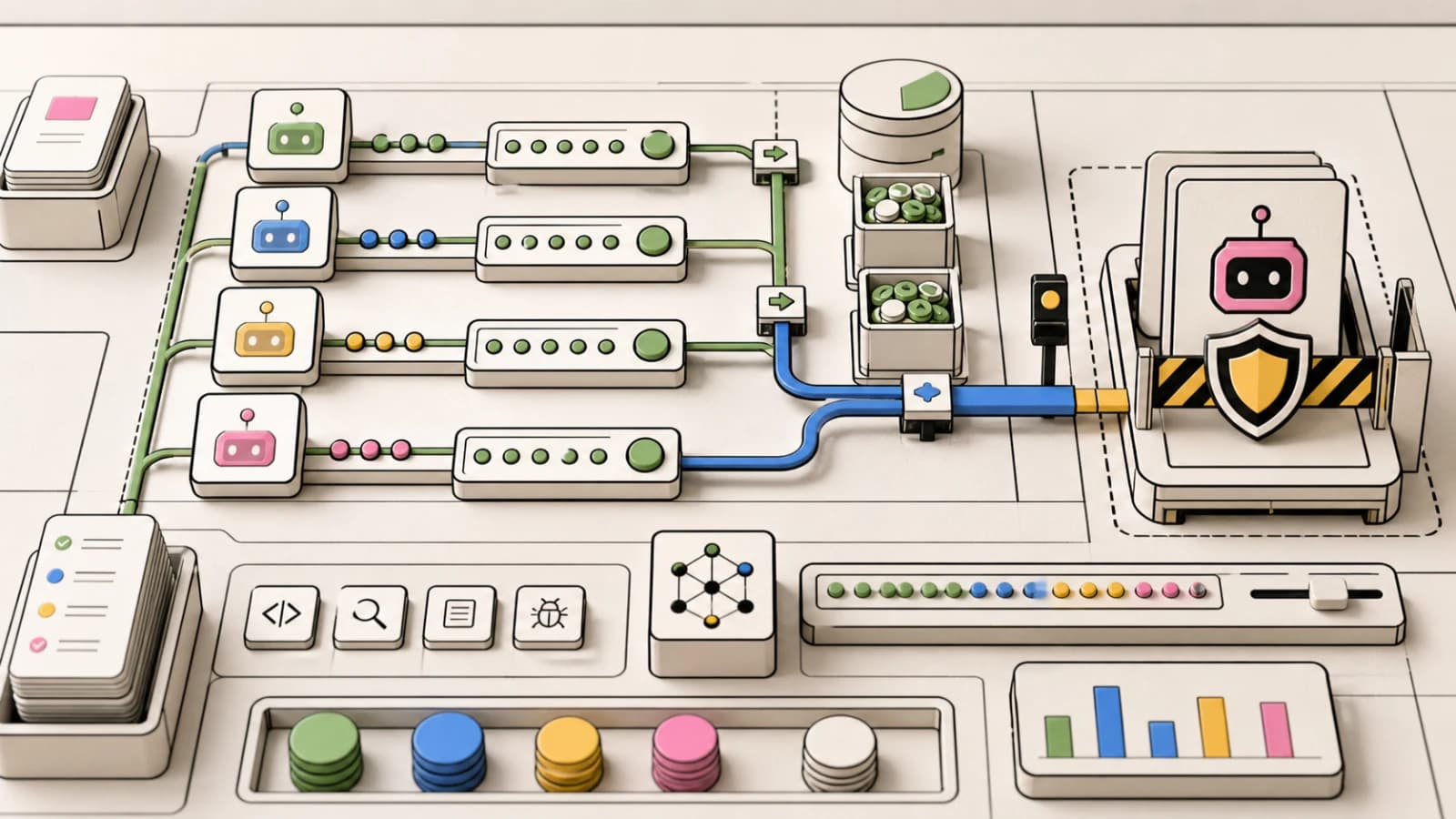
The practical architecture looks like this:
Text
cheap model
  repo scan
  issue summarization
  test failure clustering
  second-pass review
  docs and release notes

frontier model
  architecture decisions
  risky implementation
  security-sensitive changes
  final patch synthesis

deterministic tools
  tests
  typecheck
  lint
  secret scanning
  diff constraints
Do not treat DeepSeek V4 as a replacement brain. Treat it as a cheaper worker in a larger engineering system.
That is the deeper story behind the HN reaction. Developers are not just shopping for the best model. They are learning how to route tasks across a model portfolio.
The Takeaway#
DeepSeek V4 makes coding agents cheaper in the places where agents are most token-hungry: long context, repeated review, bulk exploration, and parallel attempts.
That does not remove the need for tests, review, or expensive frontier models. It changes where you spend them.
The teams that get the most out of this release will not be the ones that switch everything to DeepSeek overnight. They will be the ones that separate their agent workflow into cost tiers:
- cheap wide work,
- expensive judgment work,
- deterministic verification.
That is how model pricing turns into engineering leverage.
FAQ#
What is DeepSeek V4?#
DeepSeek V4 is a family of mixture-of-experts language models from DeepSeek. V4 Flash has 284B total parameters with 13B active, and V4 Pro has 1.6T total parameters with 49B active. Both support 1M token context windows and are released under the MIT license.
How much does DeepSeek V4 cost compared to Claude or GPT?#
DeepSeek V4 Flash costs $0.14 per million input tokens and $0.28 per million output tokens. V4 Pro launched at a $1.74/$3.48 list price, and as of June 2026 DeepSeek's pricing page lists it at $0.435 per million input (cache miss) and $0.87 per million output. For comparison, Claude Opus is $15/$75 and GPT-5.5 is in a similar range. Cache-hit pricing drops V4 Flash to $0.0028 per million input tokens.
Is DeepSeek V4 good enough to replace Claude or GPT for coding?#
For straightforward implementation tasks, many developers find DeepSeek V4 Pro close to frontier performance. For complex architectural decisions, security-sensitive code, or long-horizon planning, frontier models still have an edge. The practical approach is routing different tasks to different cost tiers.
What are the best use cases for DeepSeek V4 in coding agents?#
DeepSeek V4 excels at high-volume, reviewable work: second-pass code review, repo mapping before handing context to a frontier model, bulk documentation, migration chores, test generation, and parallel speculative agents where you try multiple approaches cheaply.
Why does cache pricing matter for coding agents?#
Coding agents repeatedly read the same project context - conventions, API surfaces, test output, previous results. With cache-hit pricing as low as $0.0028 per million tokens on V4 Flash, long agent sessions become dramatically cheaper. This makes it affordable to run more passes, more tests, and more parallel agents.
Should I use DeepSeek V4 Flash or V4 Pro?#
Use V4 Flash for high-volume, simpler tasks like documentation, test naming, or initial repo scanning. Use V4 Pro for tasks requiring stronger reasoning like code review or implementation. DeepSeek's pricing page currently lists V4 Pro at $0.435 per million cache-miss input tokens and $0.87 per million output tokens, making it worth testing for heavier workloads.
What are the risks of using DeepSeek V4 for coding?#
Three main concerns: output/reasoning tokens can balloon unexpectedly in some cases, erasing cost savings. Data sent to the API may be subject to different privacy policies than US-based providers. And "almost frontier" performance does not guarantee the same reliability on complex, open-ended software work.
How should I structure a cost-optimized coding agent stack?#
Route cheap work (repo scanning, documentation, review checklists, test summarization) to DeepSeek V4. Route expensive judgment work (architecture decisions, security-sensitive changes, final patch synthesis) to frontier models like Claude Opus or GPT-5.5. Use deterministic tools (tests, typecheck, lint) for verification regardless of which model generated the code.
Read next
DeepSeek R1 and V3: The Developer's Guide to Open-Source AI
DeepSeek's R1 and V3 models deliver frontier-level performance under an MIT license. Here's how to use them through the API, run them locally with Ollama, and decide when they beat closed-source alternatives.
9 min readAI Coding Tools Pricing Comparison 2026
Complete pricing breakdown for every major AI coding tool. Claude Code, Cursor, Copilot, Windsurf, Codex, Augment, and more. Free tiers, pro plans, hidden costs, and what you actually get for your money.
12 min readThe Agent Reliability Cliff: Why Your 10-Step Chain Only Succeeds 20% of the Time
The math of agent pipelines is brutal. 85% reliability per step compounds to about 20% at 10 steps. Here is why long chains collapse in production, and the six patterns the field has converged on to fight the decay.
9 min readShare
Developers Digest
Technical content at the intersection of AI and development. Building with AI agents, Claude Code, and modern dev tools - then showing you exactly how it works.
300+ videos30K+ GitHub stars850+ articles
Related Tools
AI CodingOpen source

DeepSeek-TUI
Open-source terminal agent runtime with approval modes, rollback snapshots, MCP servers, LSP diagnostics, and a headless...
View ToolAI Models
DeepSeek
Open-source reasoning models from China. DeepSeek-R1 rivals o1 on math and code benchmarks. V3 for general use. Fully op...
View ToolAI Models
DeepSeek V3.2
DeepSeek's reasoning-first model built for agents. First model to integrate thinking directly into tool use. Ships along...
View ToolAI Coding

Kimi Code
Open-source terminal coding agent from Moonshot AI. Powered by Kimi K2.5 (1T params, 32B active). 256K context window. A...
View ToolApps from Developers Digest
Developer ToolsIn Progress
Agent Benchmark Lab
Compare AI coding agents on reproducible tasks with scored, shareable runs.
View AppDeveloper ToolsPlus $20/mo
Agent Eval Bench Plus
Score every coding agent on your own tasks. Catch regressions in CI.
View AppSaaS Products
Overnight Agents
Spec out AI agents, run them overnight, wake up to a verified GitHub repo.
View AppRelated Guides
Guide
Claude Code Setup Guide
Configure Claude Code for maximum productivity -- CLAUDE.md, sub-agents, MCP servers, and autonomous workflows.
AI AgentsGuide
MCP Servers Explained
What MCP servers are, how they work, and how to build your own in 5 minutes.
AI AgentsGuide
Run AI Models Locally with Ollama and LM Studio
Install Ollama and LM Studio, pull your first model, and run AI locally for coding, chat, and automation - with zero cloud dependency.
Getting StartedRelated Videos

I Gave My Agents a Voice… And It’s Wildly Useful
Make Your AI Coding Agents Talk: Natural Voice Replies with the Rime CLI Check out Rime: https://rime.plug.dev/u8AOkAH The video demonstrates a simple way to make AI coding agents respond in human-s...
Video·

Buzz: Open-Source Collaboration for Humans + AI Agents
Buzz by Block: Open-Source Slack-Style Collaboration for Humans + AI Agents (Demo & Setup) Check out Arcade: https://arcade.dev.plug.dev/xiDRwlA Repo: https://github.com/block/buzz The video introd...
Video·

Agents 101: How to Build and Deploy Anything with AI Agents
Build Anything with Vercel, the Agentic Infrastructure Stack Check out Vercel: https://vercel.plug.dev/cwBLgfW The video shows a behind-the-scenes walkthrough of how the creator rapidly builds and d...
Video·
Related Posts

9 min read
DeepSeek
DeepSeek R1 and V3: The Developer's Guide to Open-Source AI
DeepSeek's R1 and V3 models deliver frontier-level performance under an MIT license. Here's how to use them through the...

12 min read
AI Coding
AI Coding Tools Pricing Comparison 2026
Complete pricing breakdown for every major AI coding tool. Claude Code, Cursor, Copilot, Windsurf, Codex, Augment, and m...

9 min read
AI Agents
The Agent Reliability Cliff: Why Your 10-Step Chain Only Succeeds 20% of the Time
The math of agent pipelines is brutal. 85% reliability per step compounds to about 20% at 10 steps. Here is why long cha...

8 min read
AI Coding
The 10 Best AI Coding Tools in 2026
From terminal agents to cloud IDEs - these are the AI coding tools worth using for TypeScript development in 2026.
12 min read
AI Coding
AI Coding Tools Pricing Comparison 2026
Complete pricing breakdown for every major AI coding tool. Claude Code, Cursor, Copilot, Windsurf, Codex, Augment, and m...
12 min read
AI Coding
AI Coding Tools Pricing Comparison 2026
Complete pricing breakdown for every major AI coding tool. Claude Code, Cursor, Copilot, Windsurf, Codex, Augment, and m...
Build with the member tools

Get Smarter About AI Dev
New tutorials, open-source projects, and deep dives on coding agents - delivered weekly.
One email per weekReal code, not theoryFree forever