Claude Agent SDK Credits End the Subscription Arbitrage
TL;DR
Anthropic's June 15 Agent SDK credit split is not just a pricing tweak. It is a signal that autonomous coding workflows need separate budgets, lanes, and receipts.
Official Sources#
| Resource | URL |
|---|---|
| Claude Agent SDK plan usage | support.claude.com |
| Claude Code overview | docs.anthropic.com/claude-code |
| Claude Code GitHub Actions | docs.anthropic.com/claude-code/github-actions |
| Claude Agent SDK (Python) | docs.anthropic.com/agent-sdk |
| Anthropic pricing | anthropic.com/pricing |
Anthropic just drew a line through the middle of Claude Code usage.
Starting June 15, 2026, the Claude Agent SDK credit separates programmatic agent usage from normal subscription usage. Agent SDK calls, claude -p, Claude Code GitHub Actions, and third-party Agent SDK apps draw from a new monthly credit. Interactive Claude Code in the terminal or IDE keeps using the regular subscription pool.
That sounds like billing housekeeping. It is bigger than that.
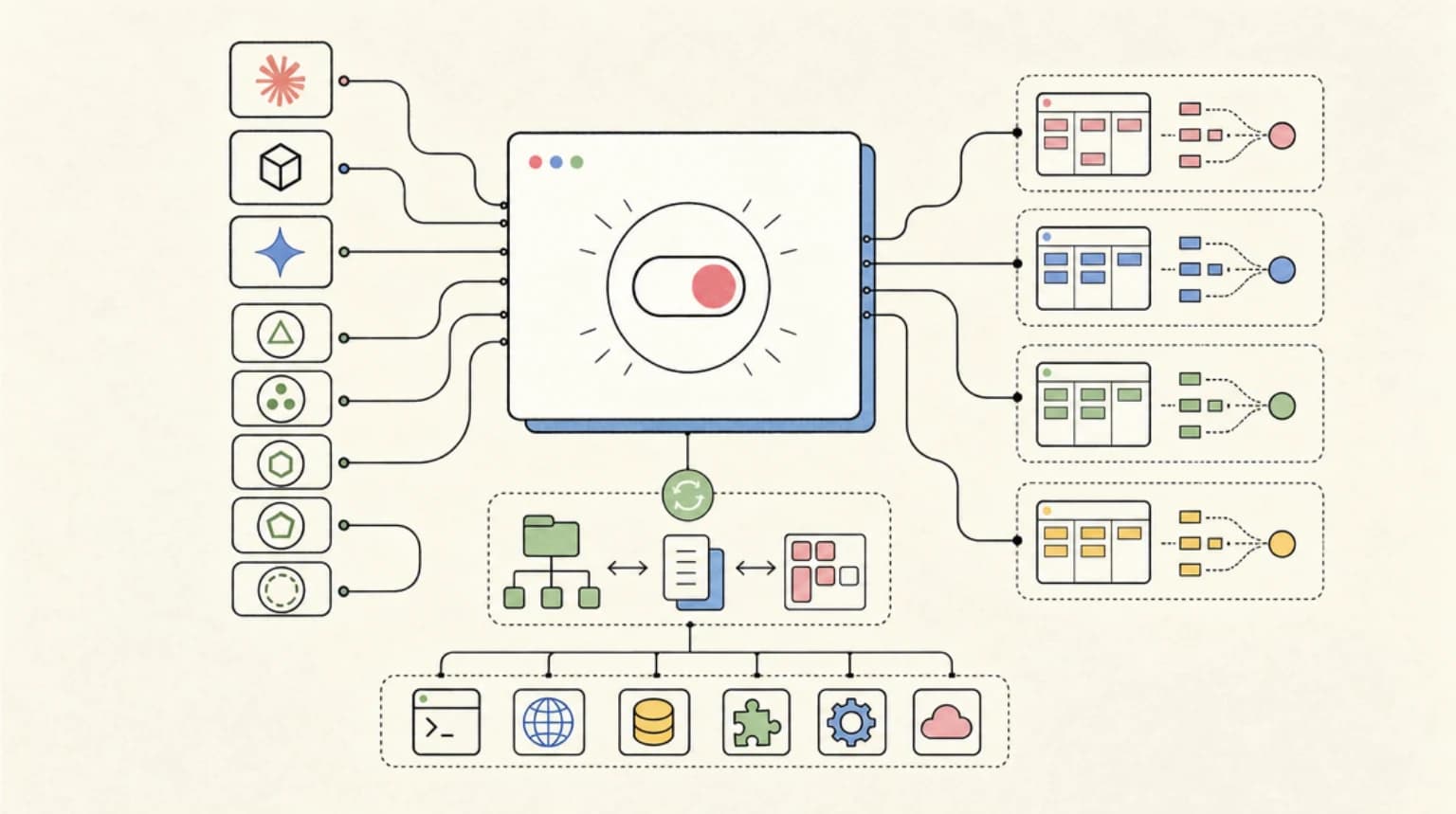
The era where every agent workflow could hide inside a flat subscription is ending. Coding teams now need to separate interactive work, scripted agent work, CI agents, and third-party orchestration as different budget lanes.
If you have been following the Claude Code token-burn observability problem, agent FinOps, or the rise of terminal agents as portable runtime surfaces, this is the same story from the pricing side. The agent runtime is maturing. The meter is catching up.
What changed#
Anthropic's support article says eligible Pro, Max, Team, and Enterprise users can claim a separate monthly Agent SDK credit beginning June 15, 2026.
The credit covers:
- Claude Agent SDK usage in Python or TypeScript projects
claude -pnon-interactive mode- the Claude Code GitHub Actions integration
- third-party apps that authenticate through the Agent SDK
It does not cover:
- interactive Claude Code in the terminal or IDE
- Claude conversations on web, desktop, or mobile
- Claude Cowork
- API-key usage from the Claude Developer Platform
The published individual-plan numbers are simple: Pro gets $20, Max 5x gets $100, and Max 20x gets $200. Team and Enterprise seats have their own eligibility rules. Credits are per-user, refresh monthly, do not roll over, and do not pool across teammates.
The important operational detail is what happens after the credit runs out. If extra usage is enabled, Agent SDK usage moves to standard API rates. If extra usage is not enabled, Agent SDK requests stop until the credit refreshes.
The old mental model is wrong now#
The old developer mental model was:
I pay for Claude. Therefore my local agent scripts, terminal usage, CI experiments, and third-party wrappers are all basically part of the same bucket.
That was always a little fuzzy. Now it is explicitly wrong.
There are at least four different usage lanes:
| Lane | Example | Budget posture |
|---|---|---|
| Interactive coding | Claude Code in a terminal or IDE | subscription usage limit |
| Headless local automation | claude -p scripts, cron jobs, local loops | Agent SDK credit, then API-style extra usage |
| CI and repository automation | Claude Code GitHub Actions, PR checks | Agent SDK credit or platform API budget |
| Third-party orchestrators | Agent SDK-based apps and harnesses | Agent SDK credit or API-key billing |
That distinction matters because these lanes fail differently.
Interactive coding usually fails with a human present. A headless script can loop while you are away. A CI agent can run for every pull request. A third-party harness can multiply sessions across worktrees. A shared team automation can burn through individual credits in ways nobody sees until the run stops.
That is why the official docs tell teams running shared production automation to use the Claude Developer Platform with an API key for predictable pay-as-you-go billing.
The community reaction is rational#
The Reddit reaction is noisy, but the underlying concern is rational.
Developers built real workflows around claude -p, Agent SDK integrations, Zed-style editor agents, OpenClaw-style harnesses, board-based orchestrators, and GitHub Actions. Many of those workflows were economically attractive because they appeared to sit near a subscription-shaped ceiling.
Anthropic is now saying: interactive native use remains in the subscription lane; programmatic use gets its own credit and then behaves more like API usage.
The fair complaint is predictability. A workflow that was "I have Max, let it run" becomes "I have Max, plus an SDK credit, plus possible extra usage, plus per-user non-pooled limits, plus a cutover date."
The fair counterargument is also real. Autonomous workloads are not the same product as a human driving Claude Code. They can run unattended, batch tasks, power third-party apps, and create support costs that look much more like API infrastructure than chat usage.
The practical take is not "Anthropic is wrong" or "users are entitled." The practical take is that agent pricing is becoming a product architecture constraint.
What to change before June 15#
Do not wait until the cutover to discover which workflows are programmatic.
Start with a usage inventory:
- Search your repos for
claude -p,@anthropic-ai/claude-agent-sdk,ClaudeSDK, and Claude Code GitHub Actions. - List every third-party tool that asks you to authenticate with Claude rather than an API key.
- Separate personal scripts from shared automation.
- Mark which jobs can stop safely when the credit runs out.
- Mark which jobs need API-key billing, a hard spend cap, or a different provider route.
Then add receipts.
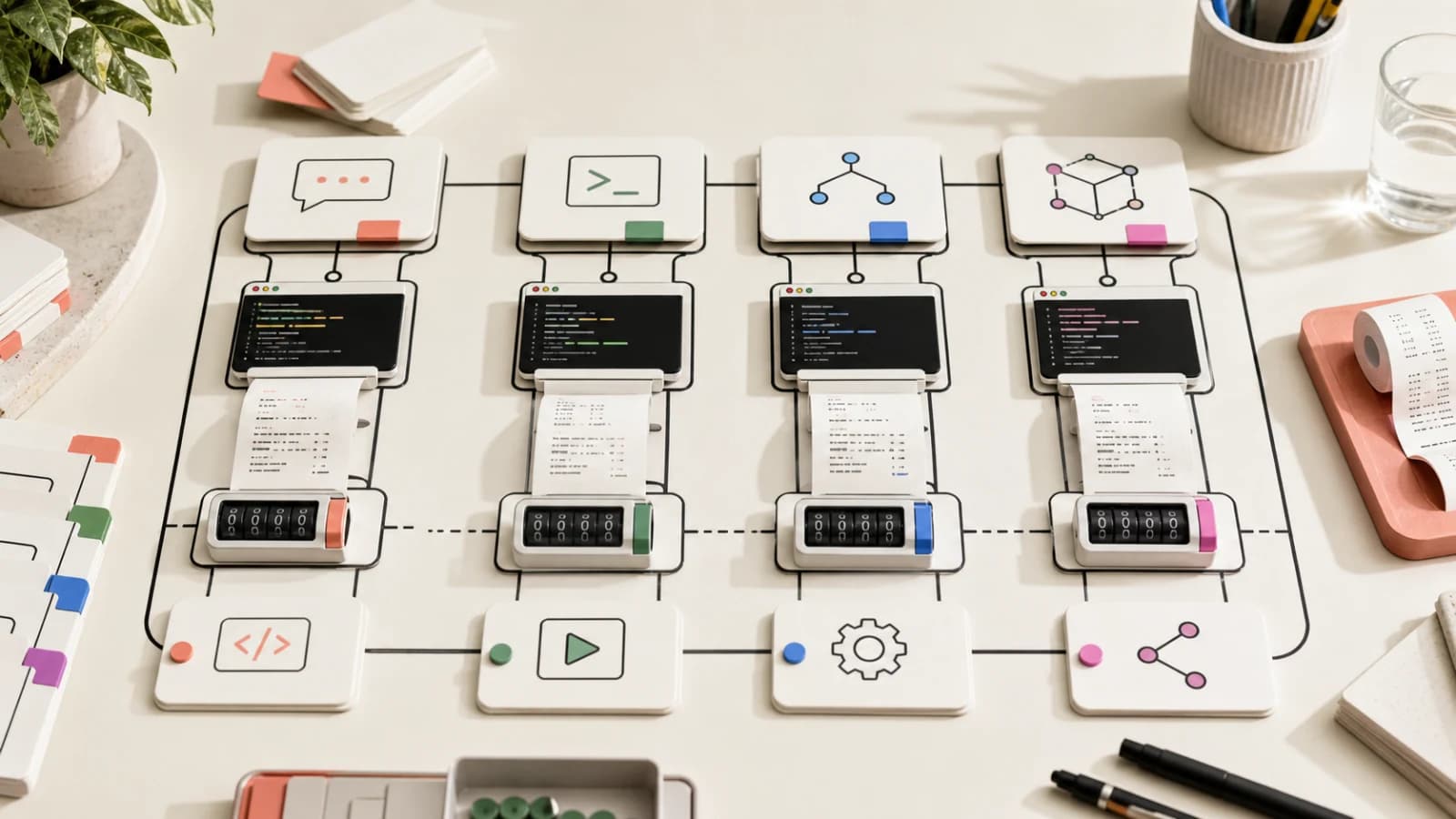
Every programmatic agent run should record:
- agent surface:
claude -p, Agent SDK, GitHub Action, or third-party app - account or seat owner
- model
- estimated cost
- input and output tokens when available
- task type
- repository
- success or failure
- stop reason
- whether extra usage was enabled
This is the same argument behind agent swarms needing receipts and parallel coding agents needing merge discipline. Once agents run outside a human typing loop, a final answer is not enough. You need a billable event trail.
The engineering pattern: separate lanes#
The cleanest response is to split your agent workflow into lanes.
Interactive lane. Human-driven Claude Code sessions for exploration, refactors, and debugging. Keep this on the normal subscription path.
Personal automation lane. Small claude -p scripts, local loops, and one-off helpers. Let these use the Agent SDK credit, but add local stop limits and a visible monthly ledger.
Production automation lane. CI reviewers, nightly issue triage, deploy repair loops, and shared repo agents. Move these to API-key billing with explicit spend caps, account ownership, and logs.
Provider-routing lane. Workflows that can run on Codex, Claude, local models, or cheaper models depending on task risk. This is where Codex loops, OpenAI Codex managed workflows, and multi-provider agent stacks become practical rather than ideological.
That split avoids the worst version of the June 15 surprise: a critical automation depending on an individual user's non-pooled monthly credit.
The opportunity#
There is a product opportunity hiding in the backlash.
Developers do not only need cheaper usage. They need an agent budget router:
- classify each run as interactive, personal automation, CI, or production
- choose subscription, Agent SDK credit, API key, or alternate provider
- apply a task-level budget before the first token
- stop when the marginal value is gone
- write a receipt that finance and engineering can both understand
That is where agent tooling should go next. Not just prettier chat panes. Not just more wrappers. Budget-aware execution.
The companies that win this layer will make the meter feel boring. You will know which account paid, which lane ran, why it stopped, and whether the result justified the spend.
The take#
Claude Agent SDK credits are the end of subscription arbitrage for unattended coding agents.
That is annoying for some workflows. It is also clarifying.
Interactive Claude Code can stay a subscription product. Autonomous agent infrastructure needs budgets, ownership, metering, stop conditions, and receipts. The sooner teams model those lanes explicitly, the less painful June 15 will be.
Continue Reading#
Sources#
- Anthropic Help Center: Use the Claude Agent SDK with your Claude plan
- Claude Code Docs: Legal and compliance
- Anthropic: Claude pricing
- InfoWorld: Anthropic puts Claude agents on a meter across its subscriptions
- Reddit: ClaudeCode discussion of the June 15 programmatic usage change
Frequently Asked Questions#
Does the June 15 change affect normal Claude Code usage?#
Not for interactive Claude Code in the terminal or IDE. Anthropic says interactive Claude Code continues to use normal subscription usage limits. The separate credit applies to Agent SDK usage, claude -p, Claude Code GitHub Actions, and third-party Agent SDK apps.
How much Agent SDK credit do Claude Pro and Max users get?#
Anthropic lists $20 per month for Pro, $100 per month for Max 5x, and $200 per month for Max 20x. Team and Enterprise eligibility depends on seat type.
What happens when the Agent SDK credit runs out?#
If extra usage is enabled, additional Agent SDK usage moves to standard API rates. If extra usage is not enabled, Agent SDK requests stop until the monthly credit refreshes.
Should teams use personal Claude subscriptions for CI agents?#
Usually no. Anthropic's own guidance says teams running shared production automation should use the Claude Developer Platform with an API key for predictable pay-as-you-go billing.
Is claude -p still useful?#
Yes. It is still useful for personal scripts, quick audits, and local automation. The difference is that it now belongs in a metered programmatic lane, not the same mental bucket as interactive terminal work.
Get the next deep dive like this in your inbox
One email a week on Claude Code and the rest of the AI dev stack. Free.
Read next on Claude Code
Local Coding Agent Workspaces Are the New IDE Surface
A new layer is forming around Claude Code, Codex, Copilot CLI, and local memory tools: the local coding agent workspace. It is not the model. It is the bench where agents get supervised.
8 min readThe Model, IDE, CLI, and Agent Framework Changes That Actually Matter
The AI coding market is noisy. The changes that matter are easier to spot when you separate model capability, editor loops, terminal agents, background agents, agent frameworks, UI layers, context, security, and cost.
10 min readCodebase Graphs Are the New Agent Map
Graphify is trending because coding agents keep hitting the same wall: they can edit files, but they still need a durable map of how the codebase, docs, schemas, and decisions connect.
8 min readTechnical content at the intersection of AI and development. Building with AI agents, Claude Code, and modern dev tools - then showing you exactly how it works.