Local Code Graphs Are the Agent Context Layer
TL;DR
CodeGraph shows why coding agents need a local, queryable repo map. The win is not magic token savings. It is faster orientation, fewer wrong files, and better review receipts.
Last updated: June 24, 2026
The Trend Was Real. The Canonical Is The Pattern.#
The older CodeGraph posts on this site covered the same moment from three angles: a GitHub Trending spike, an MCP tool story, and an evergreen local-index thesis. That is too many URLs for one idea.
The idea is worth keeping: coding agents need a local repo map before they start spending tokens.
As of this refresh, the GitHub API shows colbymchenry/codegraph at roughly 53.9k stars, 3.3k forks, MIT licensed, TypeScript-first, and pushed on June 23, 2026. The latest GitHub and npm release is v1.1.0, published June 23, 2026. The npm package now describes CodeGraph as local-first code intelligence for AI agents, with its own bundled runtime.
That matters because the old dated posts had stale claims: 7.8k stars, 12k stars, Node 18, older installer behavior, older benchmark numbers, and older support lists.
The durable take is broader: local code graphs are becoming the repo context layer for AI coding agents.
This sits next to agent context reduction patterns, agent memory context ledgers, AgentMemory governance, long-running agent harnesses, and codebase graphs for AI coding agents. The model is only one part of the system. The context layer is now product surface.
What CodeGraph Actually Adds#
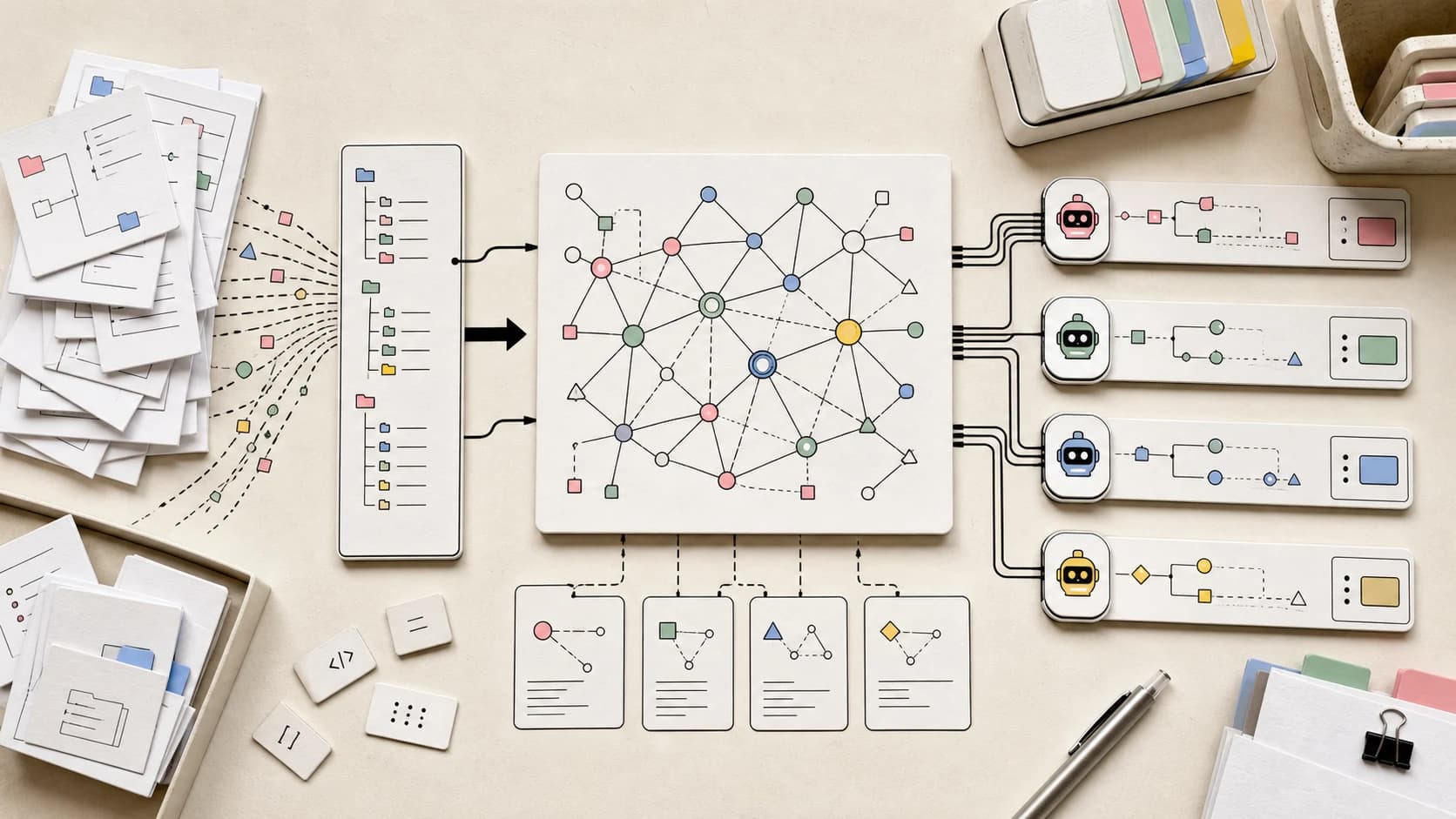
CodeGraph builds a local .codegraph/ index for a repository and exposes structural code intelligence to agents through MCP. The current README positions it for Claude Code, Cursor, Codex, OpenCode, Hermes Agent, Gemini, Antigravity, and Kiro.
The core workflow is simple:
codegraph install
cd your-project
codegraph init
Install wires CodeGraph into the agent clients you use. Init builds the local project graph. Auto-sync is enabled by default, so the graph updates as files change.
The current README emphasizes:
- local operation, with a repo-local
.codegraph/directory - MCP access for multiple coding agents
- source, call path, and blast-radius context in one tool call
- auto-sync on file changes
- 20+ language support and 17 route frameworks in the current docs
- a bundled runtime, so Node.js is not required for the shell installer path
- npm install as an option when you already have Node 20 through 24
codegraph upgradeto update in placecodegraph uninstallandcodegraph uninitto remove agent wiring or project indexes
The most important correction: CodeGraph is not mainly a cheaper prompt trick. It is an orientation tool. It helps the agent ask better structural questions before it edits.
The Benchmark Claim Needs Better Framing#
The old posts led with big numbers: 94 percent fewer tool calls, 35 percent cost reduction, 73 percent fewer tokens, 77 percent faster exploration. Those claims were directionally tied to the project, but they are no longer the cleanest current summary.
The current README says CodeGraph was revalidated on Opus 4.8 on June 2, 2026 across seven real open-source codebases, with headless Claude Code answering one architecture question with and without CodeGraph. The headline current benchmark is:
- 58 percent fewer tool calls
- 22 percent faster answers
- file reads cut to nearly zero
The README is also careful about token and dollar savings. It says token and cost wins are real but scale-dependent: modest or noisy on smaller repos, more meaningful on large and tangled codebases with repeated agent usage.
That caveat makes the project more credible. A local graph should not promise universal cost miracles. It should promise better navigation.
Why Agents Need Maps#
AI coding agents have a predictable first-run behavior.
They inspect the tree. They search for names. They open nearby files. They infer ownership. They search again. They read tests. Then, finally, they edit.
That loop is reasonable once. It becomes wasteful when the same agent, or three parallel agents, repeats it every session.
A local code graph gives the agent a different path:
- ask the graph for entry points
- inspect callers and callees
- identify likely affected files
- read the exact source files
- run focused verification
- include the graph-derived assumptions in the final receipt
That is the right boundary. Use the graph for navigation. Use source files, tests, and runtime behavior for truth.
The Opposing View#
The skeptical view is strong: static indexes can go stale, static analysis misses dynamic behavior, and agents still need to read the actual file before editing.
That is true.
JavaScript frameworks generate routes through conventions. Python systems hide behavior behind decorators and dynamic imports. Ruby and metaprogramming-heavy codebases can make static symbol maps feel confident and incomplete at the same time. Even in TypeScript, real behavior might live in config, generated schemas, runtime environment variables, or test fixtures that a symbol graph does not explain.
There is also a second objection: Claude Code, Codex, and Cursor keep getting better at native repository search. If the baseline search loop improves, a graph layer has to justify setup, maintenance, and cognitive overhead.
That is the correct bar. CodeGraph should not be adopted because it is trending. It should be adopted if it reduces wrong-file edits, shrinks discovery loops, improves impact analysis, and makes review easier.
The Rule: Graph For Navigation, File For Truth#
The operating rule should be explicit:
Use the graph to choose where to look. Use the file, test, and runtime to decide what is true.
That gives teams a practical policy:
- query the graph for likely impact radius before editing
- read the source files before changing behavior
- challenge graph results with direct search when stakes are high
- run focused tests before claiming completion
- mention graph-derived assumptions in the final receipt
This is the same discipline behind agent skills governance, Claude Code plugin supply-chain review, and agent config files as executable supply chain. Once a helper changes what an agent reads, trusts, or ignores, it belongs in the harness review path.
Where This Fits With MCP#
MCP matters because it gives local tools a standard-ish way to show up inside multiple agent runtimes.
CodeGraph is not only a Claude Code helper. The project lists support for Claude Code, Cursor, Codex, OpenCode, Hermes Agent, Gemini, Antigravity, and Kiro. Developers do not want one index for every agent UI. They want one repo-local context surface that multiple tools can query.
For broader background, see what MCP is, how to use MCP servers, MCP vs function calling, and the best MCP servers shortlist.
The design question is tool routing. If every repo has a graph server, docs server, database server, memory server, and deployment helper, the agent no longer has only a context problem. It has a tool-selection problem.
That is why graph tools should stay narrow. A good graph tool answers structural questions. It should not pretend to be the entire software engineer.
What I Would Measure#
Do not judge a local code graph by vibes. Run the same task with and without it.
Measure:
- tool calls before the first edit
- file reads before the first edit
- wrong-file edits
- missed-impact review comments
- staleness incidents
- final verification quality
- whether the final report is easier to review
If those improve, keep the graph. If they do not, remove it. Agent infrastructure should be earned.
The Practical Adoption Path#
Start with one large repo and one narrow workflow.
Good workflows:
- routing changes
- SDK API changes
- refactors across call sites
- test-target selection
- architecture explanations for onboarding
- impact analysis before deleting code
- background job or event-flow tracing
Then write the rule into the repo's agent instructions:
Use the local code graph for orientation and impact analysis.
Read source files before editing.
Run focused tests before claiming completion.
Mention graph-derived assumptions in the final receipt.
That is enough. You do not need a grand platform migration to benefit from a better context primitive.
The Take#
The agent ecosystem is moving from chat prompts toward operational context.
Skills package the team's workflow. MCP exposes local tools. Harnesses capture logs and verification. Memory stores session-derived facts. Local code graphs preserve repo structure.
That is the real story behind CodeGraph.
Developers are realizing that "give the model the repo" is too vague. The useful version is more specific: give the agent a cheap map, make it read the actual terrain, and force it to prove the route before merging.
Local code graphs are not magic. They are maps.
For AI coding agents, better maps are starting to matter as much as better drivers.
FAQ#
What is CodeGraph?#
CodeGraph is an open-source local code knowledge graph for AI coding agents. It indexes repository structure and exposes context through MCP so agents can inspect symbols, call paths, and likely impact areas before editing.
What version is current?#
As of this refresh, GitHub releases and npm both show @colbymchenry/codegraph at 1.1.0, published June 23, 2026.
Does CodeGraph require Node.js?#
The current README says the shell installer bundles its own runtime, so Node.js is not required for that path. The npm package remains available if you already use Node, and package.json currently declares >=20.0.0 <25.0.0.
Does CodeGraph replace grep?#
No. Grep is still fast, transparent, and essential. CodeGraph helps with relationship questions like callers, callees, routes, and impact radius. The strongest workflow uses both.
Does CodeGraph replace long context windows?#
No. A local graph helps decide what should enter the context window. Long windows still help when the agent needs to read large files, logs, traces, or design documents.
What is the main risk?#
The main risk is overtrusting an incomplete or stale graph. Keep auto-sync on, inspect the graph output, read source files before editing, and verify with tests.
What should I compare CodeGraph against?#
Compare it against native agent search, rg, project documentation, AgentMemory, and context-reduction patterns. CodeGraph earns its place when it reduces discovery loops and improves review quality.
Sources#
Get the next deep dive like this in your inbox
One email a week on AI Coding and the rest of the AI dev stack. Free.
Read next on Claude Code
Agent Memory Benchmarks Are Not Enough
Persistent memory for coding agents is trending because every session still starts too cold. The hard part is not saving facts. It is proving recall, freshness, deletion, and rollback under real development pressure.
9 min readLong-Running Agents Need Harnesses, Not Hope
A long-running coding agent is only useful if the environment around it can queue tasks, capture logs, checkpoint state, verify behavior, limit cost, and recover from failure.
9 min readTerminal Agents Are the New Developer Runtime
Terminal agents like Claude Code, Codex CLI, OpenCode, Copilot CLI, and DeepSeek-TUI are converging on the same runtime layer: permissions, sandboxing, rollback, diagnostics, subagents, receipts, and cost controls.
9 min readTechnical content at the intersection of AI and development. Building with AI agents, Claude Code, and modern dev tools - then showing you exactly how it works.