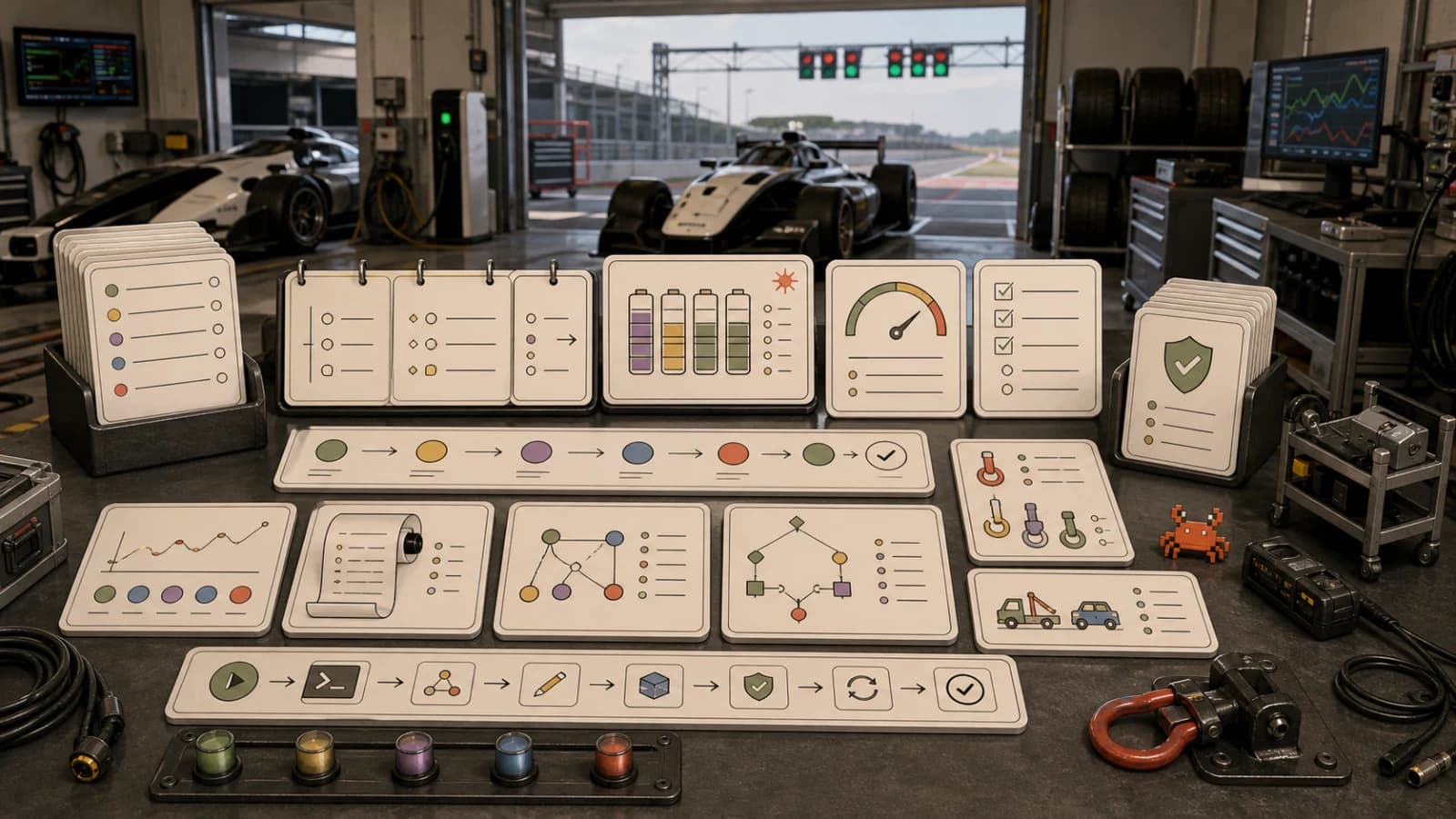
Claude Opus 4.8 Is an Agent Honesty Release
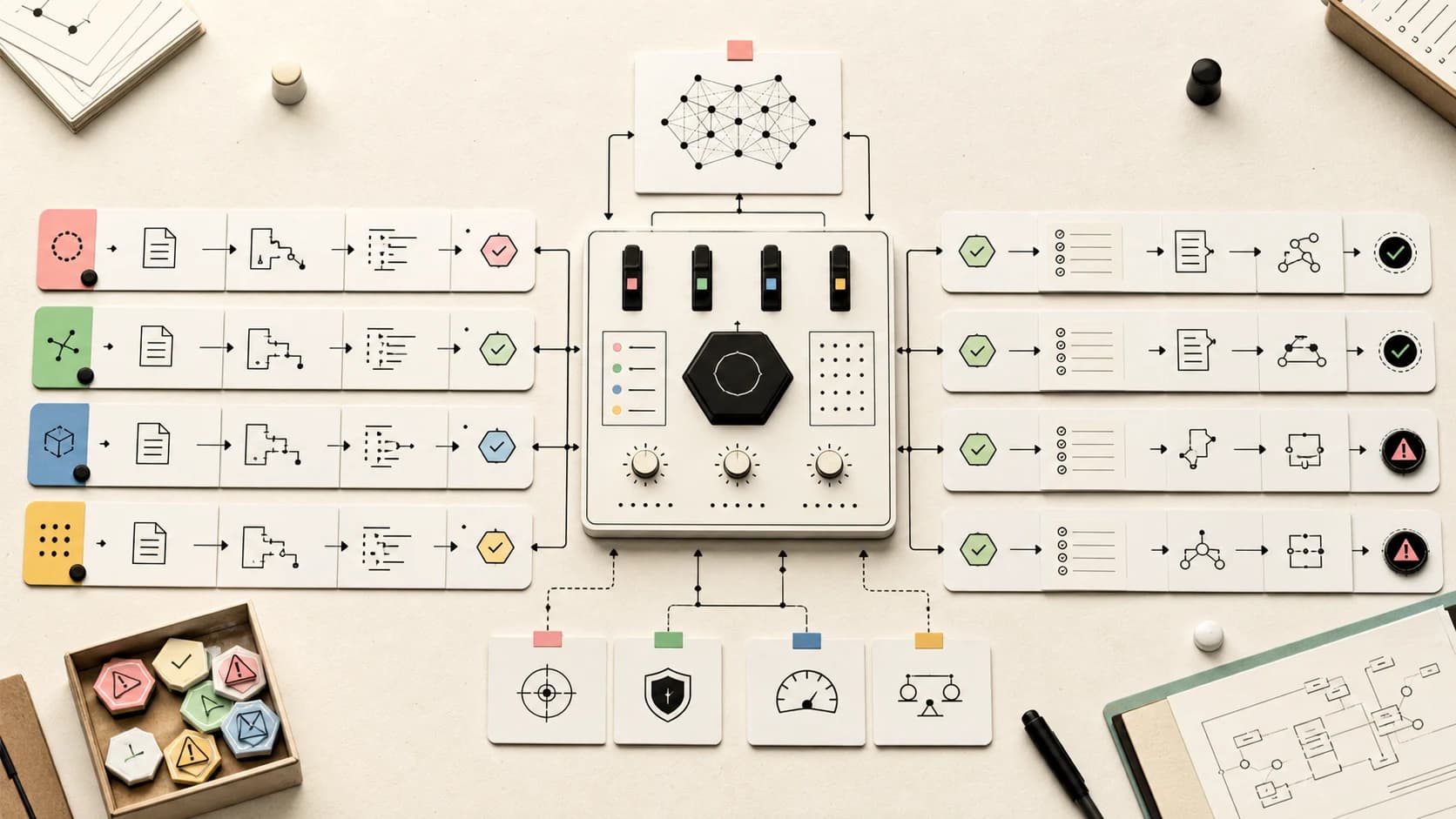
TL;DR
Claude Opus 4.8 looks like a benchmark bump, but the developer story is better honesty, dynamic workflows, and effort controls that make long-running agent work easier to review.
Official Sources#
Always verify model access, pricing, and product behavior against the official documentation:
| Topic | Official source |
|---|---|
| Claude Opus 4.8 release notes | Anthropic announcement |
| Claude model docs | Models overview |
| Claude Opus 4.8 details | What's new in Opus 4.8 |
| Claude Code docs | Claude Code overview |
| Pricing | Anthropic pricing |
Last updated: May 30, 2026. Verify current pricing and model availability before standardizing a team workflow.
Anthropic released Claude Opus 4.8 on May 28, 2026. The easy headline is the benchmark lift over Opus 4.7.
The better headline is that this is an agent honesty release.
Anthropic says Opus 4.8 improves coding, long-horizon task execution, dynamic workflows, and "honesty" around what the model does and does not know. That matters more than another abstract score. Coding agents are already fast enough to generate a lot of work. The harder problem is knowing when to trust the work, when to route more effort into a task, and when to force the agent back to evidence.
If you use Claude Code, Codex, or multi-agent harnesses, Opus 4.8 is worth reading as an operations release, not just a model release.
The take#
Opus 4.8 is not only "Opus 4.7 but smarter."
It is Anthropic tuning the flagship model for the part of agent work that keeps biting teams: confidence, effort allocation, and tool-mediated follow-through.
That connects directly to the pattern we keep seeing in production agent work:
- stronger models reduce first-draft mistakes
- better harnesses reduce review chaos
- explicit effort controls reduce waste
- honest uncertainty reduces silent wrong answers
The model still needs tests, logs, local files, and a human review path. But when the base model is more willing to surface uncertainty and better at dynamic workflows, the surrounding harness gets easier to operate.
That is the practical story.
TL;DR decision path#
- Want the shortest practical verdict between the two terminal agents? Start with Claude Code vs Codex.
- Want cost and plan limits to drive the decision? Start with the pricing hub and AI coding tools pricing 2026.
- Want a concrete migration playbook? Use Migrating from Cursor to Claude Code.
What actually changed#
Anthropic's release post frames Opus 4.8 around three themes: coding performance, dynamic task execution, and improved honesty.
The coding part is expected. Opus has been Anthropic's premium reasoning and agentic coding tier since the Claude 4 line became the backbone of serious Claude Code workflows. The 4.8 release keeps that positioning and updates the official docs with a dedicated "what's new" path for the new model.
The dynamic workflow part is more interesting. Agentic coding is rarely a single-shot code-generation task. It is a loop:
- inspect the repo
- infer the architecture
- choose files
- edit
- run checks
- recover from failures
- summarize the risk
Small improvements across that loop compound. A model that chooses better search paths, asks for more evidence before editing, and recovers cleanly from a failed test can save more time than a model that simply writes prettier code.
The honesty part is the one to watch. A coding agent can be wrong in two ways. It can generate incorrect code, or it can misrepresent how confident it should be. The second failure is often more expensive because it gets past review until production or CI finds it.
Why honesty matters more than eloquence#
Developers do not need agents that sound confident. They need agents that leave useful receipts.
That means:
- "I changed these files"
- "I verified with this command"
- "This test failed for this reason"
- "I did not check this path"
- "This assumption came from docs, not runtime proof"
- "This area is risky because the graph or search result may be stale"
This is the same argument behind long-running agents needing harnesses. The model should not be the sole source of truth. It should participate in a system that captures evidence.
Opus 4.8's honesty improvements are valuable only if the workflow gives the model places to express them. If your prompt asks for "done?" you will still get an oversimplified answer. If your task contract asks for changed files, commands run, commands skipped, residual risk, and deployment state, the model has a much better target.
Better honesty does not remove review. It makes review less adversarial.
Effort controls are the underrated developer feature#
Anthropic's current model documentation now has a dedicated "What's new in Claude Opus 4.8" section, and the release messaging emphasizes effort and dynamic task behavior.
That fits the broader model-provider trend. Frontier models are no longer only sold as one fixed intelligence level. They are increasingly sold as controllable workers: spend more reasoning when the task needs it, spend less when the task is easy, and expose enough behavior that developers can route tasks intelligently.
This matters for cost. Agent reliability is tied to economics. A $0.10 workflow can retry often. A $5 workflow cannot. If Opus 4.8 can spend effort more selectively, the right stack shape becomes clearer:
- use Opus for planning, risky edits, architecture, and hard debugging
- use Sonnet or Haiku for cheap parallel sub-agents
- use tools and indexes for local evidence
- use tests and static checks for proof
That is also how the Claude Code agent teams pattern should evolve. The expensive model should not do every task. It should make the expensive decisions.
What to test first#
Do not migrate every workflow because the version number changed.
Start with tasks where honesty and recovery matter:
Ambiguous bug fixes. Ask Opus 4.8 to identify possible causes, rank them by evidence, and state what would disconfirm each hypothesis.
Large refactors. Use it to map the impact radius, then require direct file reads and focused tests before edits.
Failed CI recovery. Give it logs and ask for the minimum patch plus a receipt explaining why the failure happened.
Long context reviews. Feed the relevant spec, implementation, and test output. Ask it to separate verified facts from assumptions.
Parallel-agent synthesis. Have cheaper workers collect evidence, then use Opus 4.8 to reconcile conflicts and produce the final plan.
Those tasks reveal whether the model is actually better for engineering, not just better at a benchmark prompt.
The opposing view#
The skeptical view is fair: this might be another premium model bump that mostly helps Anthropic defend the top of the market while developers still pay with latency and cost.
That critique is worth taking seriously.
If your current bottleneck is boilerplate, CRUD pages, formatting, test generation, or shallow code review, Opus 4.8 is probably overkill. Use a cheaper model. If your workflow has weak tests, unclear acceptance criteria, and no receipts, Opus 4.8 will still produce work you cannot safely merge.
There is also the Mythos problem. Anthropic has already signaled that Claude Mythos is the larger next-generation release. That makes Opus 4.8 feel like a late-cycle refinement instead of a new platform jump.
But late-cycle refinements can be exactly what working developers need. Better uncertainty handling, better dynamic task behavior, and steadier coding loops are not flashy. They are the kind of improvements that reduce review tax.
How I would update a Claude Code workflow#
If you run Claude Code every day, I would make four changes.
First, pin Opus 4.8 only for hard paths. Do not let the premium model become the default for every trivial edit.
Second, update task prompts to reward honesty. Ask for assumptions, evidence, commands run, commands skipped, and unresolved risk.
Third, keep sub-agents cheap. Use smaller models for search, summarization, and repetitive inspection. Reserve Opus for synthesis and risky implementation.
Fourth, compare receipts, not vibes. Run the same bug or refactor on Opus 4.7 and 4.8. Judge the output by missed files, failed checks, review comments, and how clearly the model explained uncertainty.
The winning workflow is not "new model, same prompt."
The winning workflow is "new model, stricter operating contract."
What this means for Codex users#
Codex users should still care about Opus 4.8 because model-provider releases are shaping expectations across the whole category.
OpenAI, Anthropic, Google, Cursor, and the open-source agent ecosystem are all converging on the same product truth: the agent runtime matters as much as the model. See the Claude Code vs Codex comparison and what Hacker News gets right about AI coding agents for the broader frame.
The interesting question is not whether Opus 4.8 beats GPT-5.5 on one chart. The question is which stack gives you the best loop:
- context discovery
- local tool use
- edit quality
- test recovery
- reviewable receipts
- cost control
Opus 4.8 raises the bar specifically on the model side of that loop. Codex, Cursor, and other tools now have to answer with runtime improvements, not just model swaps.
Bottom line#
Claude Opus 4.8 is worth testing if your work involves long-running agents, complex refactors, high-risk debugging, or synthesis across many sources.
It is less exciting if you only need fast code generation.
The practical value is not that the model sounds smarter. It is that it may be better at admitting uncertainty, spending effort where it matters, and staying coherent through dynamic agent workflows.
That is what serious AI coding needs now.
Frequently Asked Questions#
What is Claude Opus 4.8?#
Claude Opus 4.8 is Anthropic's latest flagship Opus model, released on May 28, 2026. It focuses on stronger coding, dynamic task execution, and improved honesty.
Is Claude Opus 4.8 better than Opus 4.7?#
Anthropic positions Opus 4.8 as an upgrade over Opus 4.7, especially for coding and agentic workflows. Teams should still test it on their own tasks before migrating critical workflows.
Should I use Opus 4.8 for every coding task?#
No. Use Opus 4.8 for hard planning, risky edits, architecture, debugging, and synthesis. Use cheaper models for repetitive search, summarization, and low-risk implementation.
Why does model honesty matter for coding agents?#
Coding agents fail dangerously when they sound certain about unverified work. Better honesty helps the model surface assumptions, missing checks, failed tests, and residual risk in a way reviewers can act on.
How should I test Opus 4.8 in Claude Code?#
Run the same ambiguous bug fix, large refactor, or failed CI recovery task on Opus 4.7 and Opus 4.8. Compare missed files, failed checks, review comments, and the quality of the final receipt.
Continue Reading#
Get the next deep dive like this in your inbox
One email a week on Claude and the rest of the AI dev stack. Free.
Read next on Claude Code
The Model, IDE, CLI, and Agent Framework Changes That Actually Matter
The AI coding market is noisy. The changes that matter are easier to spot when you separate model capability, editor loops, terminal agents, background agents, agent frameworks, UI layers, context, security, and cost.
10 min readClaude Opus 4.6: Anthropic's Smartest Model Gets Agent Teams
Million-token context, agent teams that coordinate without an orchestrator, and benchmark scores that push the frontier. Opus 4.6 is Anthropic's biggest model drop yet.
8 min read10 Trending AI Dev Tools, Week of April 28 2026
From Claude Opus 4.7 and GPT-5.5 to Andrej-karpathy-skills and EvoMap - the AI dev tools actually shipping the last 30 days, with commands, links, and pricing.
9 min readTechnical content at the intersection of AI and development. Building with AI agents, Claude Code, and modern dev tools - then showing you exactly how it works.