AI Agent Memory Needs a Context Ledger

TL;DR
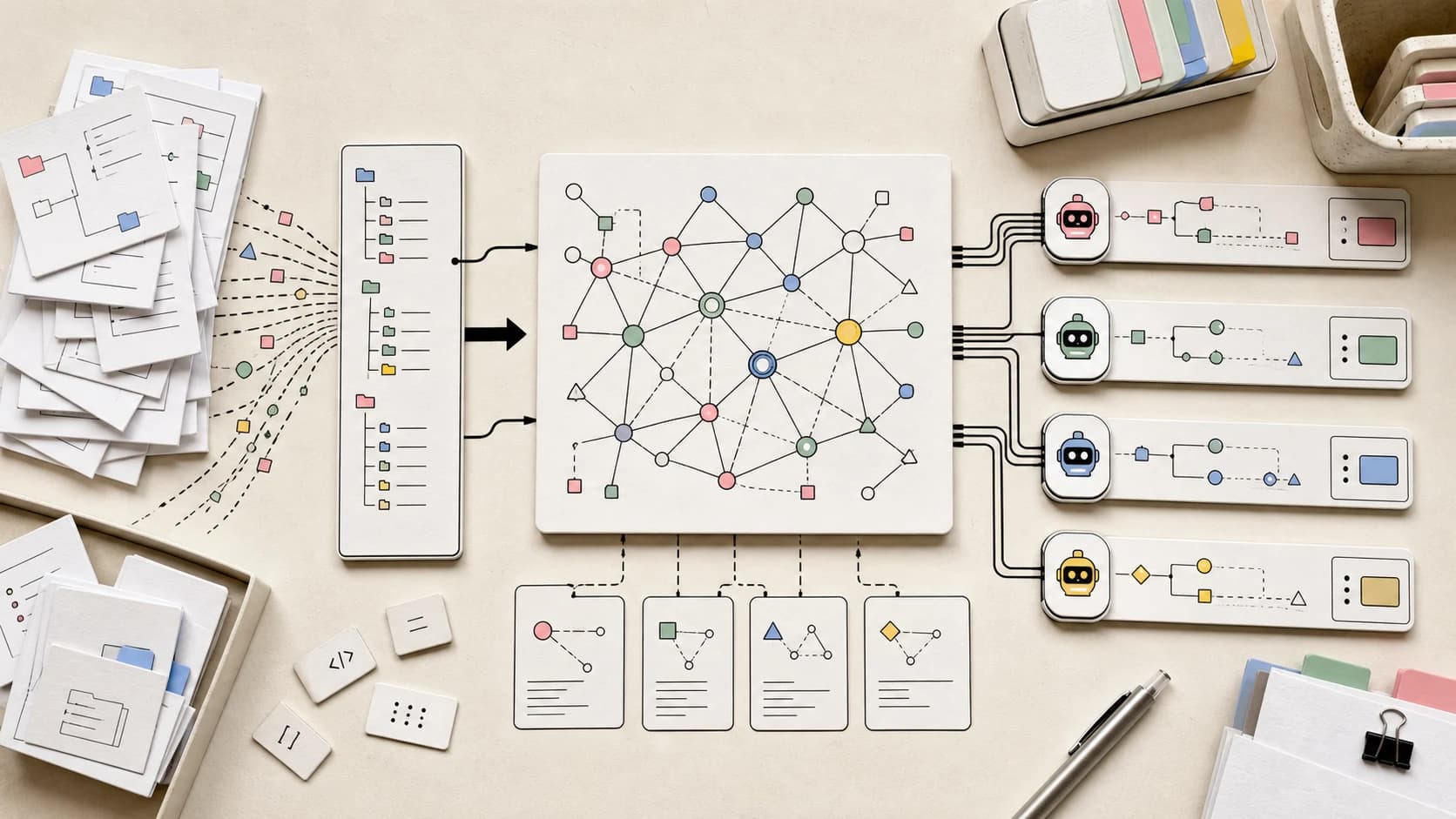
GitHub Trending is full of agent memory and context tools. The useful version is not magic recall. It is a context ledger: source-linked, scoped, expiring memory that agents can inspect and users can audit.
Official Sources#
| Source | Description |
|---|---|
| Supermemory | Open-source memory API and app for AI systems |
| MCP Servers Repository | Official Model Context Protocol server implementations |
| OWASP Agent Memory Guard | OWASP project addressing agent memory security |
| Claude Code Memory Docs | Anthropic's official documentation on Claude Code memory |
| OpenAI Codex Documentation | OpenAI's official Codex usage guide |
GitHub Trending has a clear pattern right now: everyone is trying to give agents better memory and better context plumbing.
That includes projects like supermemory, a fast-growing memory API and app for AI systems, plus the broader wave of MCP servers, local indexes, code graphs, and context routers built around the same frustration. Agents forget useful facts. They repeat decisions. They miss old constraints. They need context that survives a single chat.
The problem is that "memory" is too soft a word.
For developer tools, the useful feature is not magic recall. It is a context ledger.
If you are building with Claude Code memory, Codex automations, MCP, RAG, or a custom coding agent, the memory layer should answer the same questions a reviewer would ask:
- Where did this fact come from?
- When was it last verified?
- Which project, branch, user, or run does it apply to?
- What did it replace?
- What should expire?
- What proof did the agent leave behind?
That is the difference between an agent that "remembers" and an agent that can be trusted over time.
Last updated: June 2, 2026
The Trend Signal#
The memory push makes sense.
Short prompts are not enough for real work. Large context windows help, but they do not solve selection, freshness, provenance, or contradiction. A coding agent can read a whole repo and still miss the one design rule that matters. It can also remember a stale rule too aggressively and apply it after the architecture changed.
That is why the current tool wave is converging on persistent context:
- memory APIs that store durable facts across apps
- MCP servers that expose personal or project state to agents
- code graph tools that help agents navigate repos
- skills, rules, and instruction files that package repeatable workflows
- evaluation harnesses that check whether the remembered context produced correct work
This connects directly to the context engineering guide. The hard part is not adding more tokens. The hard part is giving the agent the right context, at the right time, with enough structure to keep it from hallucinating authority.
HN Skepticism Is the Useful Part#
Hacker News discussions around memory tools usually split into two camps.
One camp wants a universal layer: save everything, index everything, let every app and agent use it. That is attractive because every knowledge worker has the same pain. Context is scattered across repos, docs, Slack, email, tickets, browser tabs, and past agent runs.
The opposing camp worries about the failure modes. That concern is getting more concrete. The OWASP Agent Memory Guard project and related HN submissions frame memory poisoning as its own agent-security problem: if an attacker can write to long-term memory, they may not need to win the next prompt. They can poison the context the agent will trust later.
The product risks are practical:
- memory becomes another black box
- stale preferences silently override new instructions
- private data leaks across projects
- agents cite remembered summaries instead of source documents
- users cannot tell whether the agent is using current evidence or old vibes
- attacker-controlled content becomes durable instruction
That skepticism is not anti-memory. It is the product spec.
If memory is going to matter for AI development workflows, it needs the boring controls that databases, audit logs, and code review already taught us to respect.
Memory Is Not Source Truth#
The sharpest rule is simple:
Memory is a pointer to evidence.
Memory is not the evidence.
An agent can remember that "the billing service uses usage-based pricing." That memory is useful only if it points back to the relevant files, docs, migrations, or decisions.
Without the source link, the memory becomes a confident shortcut. That is dangerous because agents are already good at sounding consistent. A stale memory gives them a plausible reason to be wrong.
For code work, the memory record should look less like this:
The app uses Convex.
And more like this:
fact: Convex is still live for video/search data
scope: developers-digest-site
source: AGENTS.md and current route imports
verified_at: 2026-06-02
confidence: high
expires_when: Neon migration removes remaining Convex callers
last_used_in: build verification for blog publishing automation
That is not over-engineering. It is the minimum viable shape for memory that can survive real engineering work.
The same rule appears in a different form in Anthropic's Claude Code memory docs: project and user memory are editable files, not hidden mystical state. That editability matters because human review is part of the trust model. OpenAI's Codex documentation points in the same operational direction: agents need instructions, environment setup, and verifiable task context, not only a bigger chat transcript.
The Context Ledger Pattern#
A context ledger is a persistent, reviewable store of what the agent believes it knows.
It has five properties.
First, every entry has provenance. The memory links to a source file, URL, command output, issue, commit, or user instruction. Summaries are allowed, but the pointer matters more than the prose.
Second, every entry has scope. A fact can apply to one repo, one workspace, one user, one branch, one customer, or one automation. A memory layer without scope will eventually leak a correct fact into the wrong place.
Third, every entry has freshness. Some facts are durable, like a design principle. Some facts rot quickly, like pricing, deployment state, package versions, or which commit production is serving.
Fourth, every entry can be contradicted. If the agent finds a newer source, it should mark the old memory as superseded instead of quietly averaging the two.
Fifth, every entry can be ignored. The agent should be able to say, "I found a remembered rule, but current repo evidence contradicts it."
That last behavior is the difference between useful memory and automation superstition.
OWASP's memory-guard framing adds a sixth property: write control. Not every tool result, web page, user message, or retrieved document should be allowed to create durable memory. Treat memory writes like tool writes. They need policy.
Why This Matters for Coding Agents#
Coding agents do not fail only because they lack context. They also fail because they trust the wrong context.
A local code graph can help the agent navigate a repo. That was the point in local code graphs as the next context layer. But even a perfect graph does not know whether a rule is still intended.
A long-running harness can keep an agent on task. That was the point in long-running agents need harnesses. But a harness still needs to decide which instructions belong in the run.
The context ledger sits between those pieces.
It tells the agent:
- which repo rules are durable
- which facts require live verification
- which prior decisions are only historical
- which memories came from the user versus another agent
- which memories are private and should not enter public content
- which checks must run before an output is trusted
That is why memory belongs next to permissions, logs, and rollback. The same way agent permissions need audit trails, agent memory needs review trails.
The Privacy Problem Is a Scope Problem#
Universal memory sounds powerful until you imagine the wrong memory crossing a boundary.
A personal writing preference should not leak into a client project. A private sponsor note should not leak into a public blog post. A production incident detail should not become generic documentation. A stale deploy workaround should not keep getting applied after the platform changed.
The fix is not "never store memory." The fix is scoped memory by default.
Useful scopes include:
- user preference
- brand voice
- repo convention
- project decision
- automation state
- customer-specific rule
- temporary incident note
- source freshness warning
Each scope should have different defaults for retention, visibility, and sharing.
For public content, this matters a lot. A site like Developers Digest can remember that public posts need primary sources, inline internal links, no fake social proof, and no private business data. Those are durable publishing rules. It should not blindly reuse private commercial context from a collaboration note.
That is memory doing its job: preserving constraints while respecting boundaries.
What Builders Should Implement#
If you are adding memory to an AI agent or developer tool, start with the ledger before the interface.
A practical record can be plain JSON or markdown:
{
  "fact": "Public technical posts must link to primary sources.",
  "scope": "developers-digest-site/content",
  "source": "AGENTS.md",
  "verified_at": "2026-06-02",
  "freshness": "durable",
  "visibility": "project",
  "confidence": "high",
  "supersedes": [],
  "review_rule": "Check before publishing public content"
}
Then make the agent use it in a disciplined loop:
1. Load only memories scoped to the current task.
2. Separate durable rules from drift-prone facts.
3. Verify drift-prone facts against live sources.
4. Cite source evidence in the final work product.
5. Add or update memory only when the run taught a repeatable rule.
6. Mark contradicted memory as superseded instead of deleting history.
7. Require policy checks before untrusted content can write memory.
That loop is slower than "remember everything."
It is also more useful.
The Take#
The next agent memory layer should not feel like a second brain.
It should feel like source control for context.
Every important fact has a source. Every source has a scope. Every scope has retention rules. Every stale fact can be challenged. Every output can show which remembered constraints shaped it.
That is what developers need as agents move from chat windows into recurring work: not infinite recall, but auditable context.
Memory without a ledger is just another place for hallucinations to hide.
FAQ#
What is a context ledger for AI agents?#
A context ledger is a persistent, auditable store of agent memory. Each entry records the fact, source, scope, freshness, confidence, and review status so the agent can use remembered context without treating stale summaries as source truth.
How is a context ledger different from RAG?#
RAG retrieves documents or chunks for a task. A context ledger records what the agent believes it learned from prior work, where that belief came from, how fresh it is, and when it should be rechecked. The two patterns can work together.
Should coding agents remember everything?#
No. Coding agents should remember durable rules, project conventions, user preferences, and repeatable workflow lessons. They should verify drift-prone facts like package versions, prices, deploy state, and current product behavior before acting on them.
Why does agent memory need scope?#
Scope prevents correct context from being applied in the wrong place. A useful memory layer should distinguish personal preferences, repo rules, customer-specific facts, temporary incident notes, and public publishing constraints.
Continue Reading#
Get the next deep dive like this in your inbox
One email a week on AI Agents and the rest of the AI dev stack. Free.
Read next on AI coding tools
Context Engineering: The Highest-Leverage Skill in AI-Assisted Development
Context engineering is the practice of designing the persistent information that surrounds every AI interaction. CLAUDE.md files, system prompts, skill libraries, and memory systems. It is the single highest-leverage skill for developers working with AI agents in 2026.
14 min readThe 98% Context Reduction Pattern
Efficient agents do not stuff every tool result into the model context. They keep intermediate state in code, files, and execution environments, then return compact summaries and receipts.
8 min readLocal Code Graphs Are the Agent Context Layer
CodeGraph shows why coding agents need a local, queryable repo map. The win is not magic token savings. It is faster orientation, fewer wrong files, and better review receipts.
9 min readNew here? Start with
Technical content at the intersection of AI and development. Building with AI agents, Claude Code, and modern dev tools - then showing you exactly how it works.