MAI-Code-1-Flash Is a Model Routing Signal

TL;DR
MAI-Code-1-Flash, Microsoft's in-house coding model, signals Copilot becoming a routing layer for cost, latency, and review quality. A routing matrix to steal.
Last updated: June 3, 2026
Official Sources#
| Resource | Link |
|---|---|
| MAI-Code-1-Flash Announcement | Microsoft AI News |
| GitHub Copilot Model Comparison | GitHub Copilot Docs |
| GitHub Copilot Features | GitHub Copilot |
| GitHub Copilot Pricing | Copilot Plans |
Microsoft's MAI-Code-1-Flash landed on Hacker News with the obvious headline: Microsoft trained its own coding model and says it is now powering parts of GitHub Copilot. That is interesting, but it is not the most useful takeaway for teams building with AI coding tools.
The real story is routing.
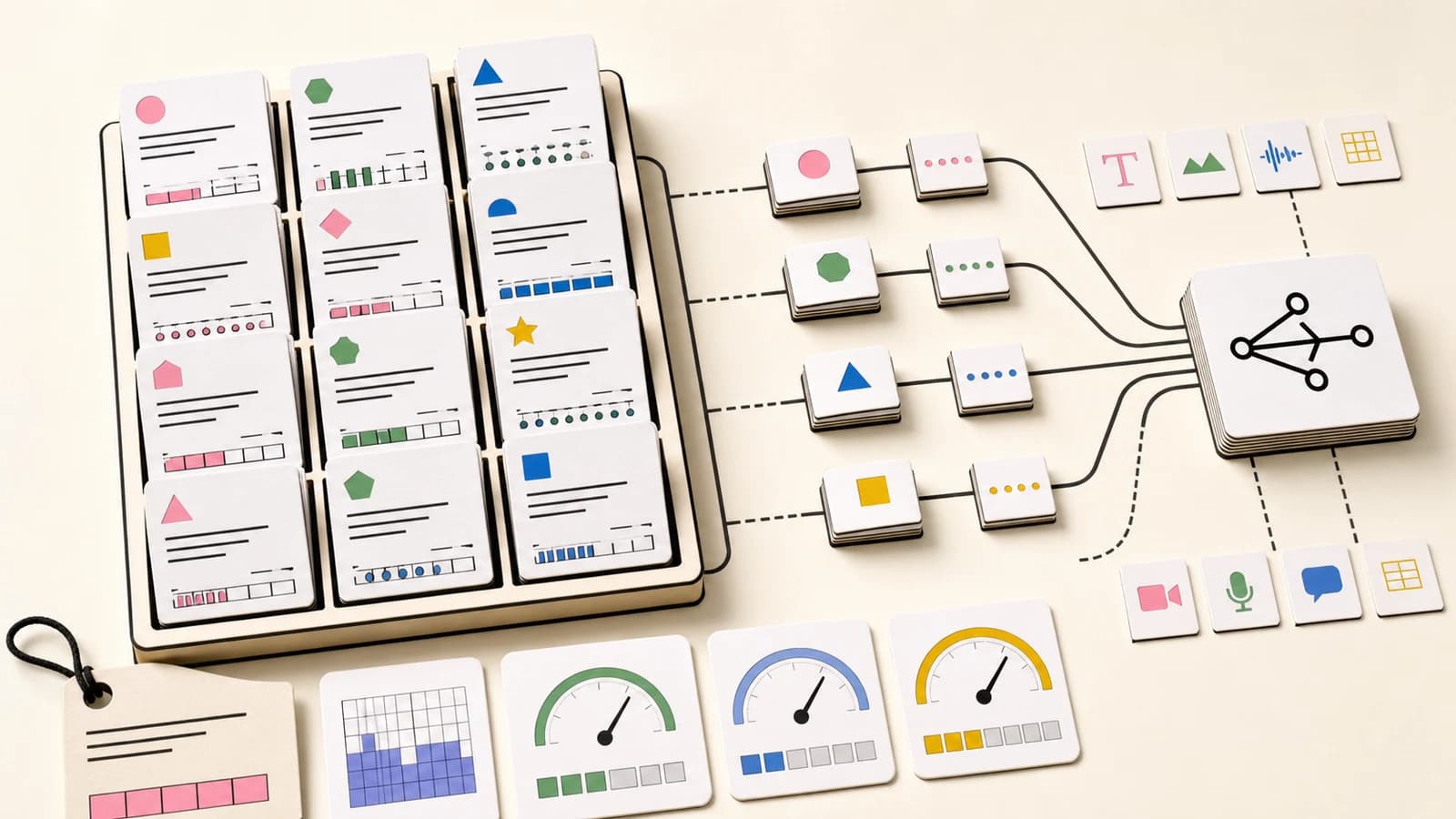
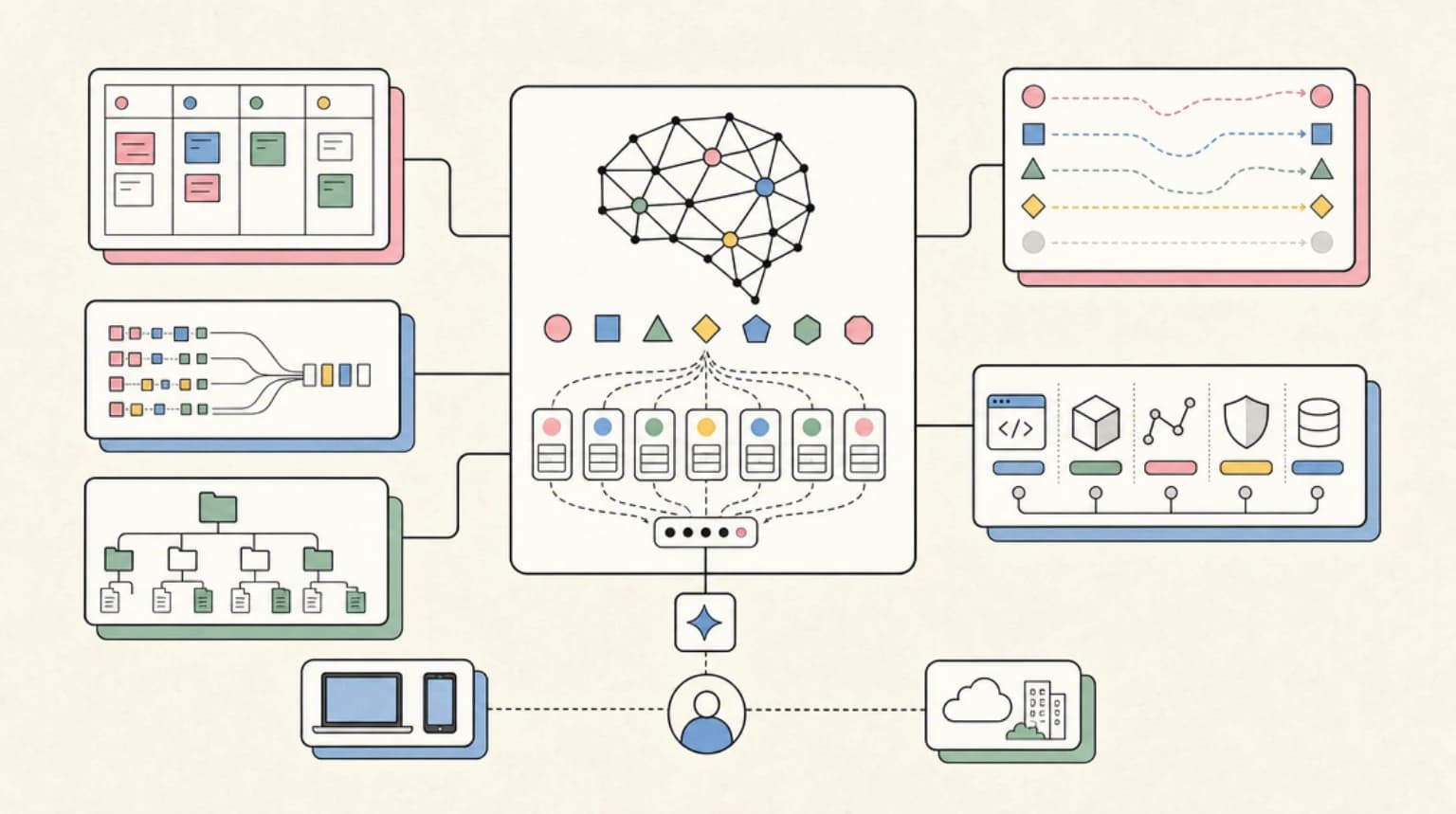
Copilot is no longer just an editor feature wrapped around a single frontier model. It is becoming a model router with product-specific economics: fast paths for completions, heavier paths for agentic tasks, specialized paths for code review, and enough telemetry to decide which path should handle which job. That matters more than whether MAI-Code-1-Flash beats your favorite model on a benchmark this week.
We already saw this direction in GitHub Copilot Agent Metrics Are the Real Product Update: the product surface that matters is session visibility, validation, and review quality. MAI-Code-1-Flash adds a second layer to that same argument. Once the coding assistant has its own model supply, the routing layer becomes the product.
What Microsoft Actually Announced#
Microsoft describes MAI-Code-1-Flash as its first fully in-house coding model, trained for fast code generation, edit tasks, and developer workflows. The post says Microsoft used a specialized pre-training mix, post-training, and internal feedback from Copilot-style workloads. Microsoft also says the model is already being used in production inside GitHub Copilot for some features.
GitHub's model comparison docs are the other half of the story. Copilot exposes multiple model choices today, and GitHub describes them in terms of practical tradeoffs: reasoning, speed, coding, multimodal support, and availability by plan. That framing is more important than any single launch post.
The product is telling developers: do not think about "the model" as one fixed dependency. Think about model selection as an operating decision.
That is the same pattern behind Models.dev Makes Model Routing Feel Like Infrastructure. Model metadata, price, context, latency, tool support, and task fit are becoming infrastructure inputs. MAI-Code-1-Flash is Microsoft making sure it owns one of the inputs.
The Hacker News Pushback Is Fair#
The Hacker News thread around MAI-Code-1-Flash had a lot of healthy skepticism. Some readers argued that the announcement was thin on hard technical detail. Others questioned whether the model is meaningfully competitive with Claude, GPT, Gemini, or open coding models. A few treated it as a distribution story: if GitHub owns the editor surface, Microsoft can ship its own model into the workflow whether or not developers asked for it.
That pushback is worth taking seriously.
Teams should not read a launch post and immediately rewrite their coding-agent stack around a new model. Benchmark claims age quickly. Product routing is opaque. A model that feels excellent for short code edits can still be weak at repository-wide planning, dependency reasoning, test repair, or migration work.
But the skeptical version still leads to the same practical conclusion: the routing layer needs to become explicit.
If Microsoft can choose which model handles which Copilot action, engineering teams should do the same inside their own workflows. The question is not "which model wins?" The question is "which jobs deserve which model, under which constraints, with which review gates?"
Why In-House Coding Models Change the Economics#
Most developers talk about coding models in terms of quality. Product teams talk about them in terms of gross margin, latency, quotas, and control.
An in-house coding model gives Microsoft more room to optimize the parts of Copilot that happen constantly:
- Inline completions
- Small edits
- Rename-and-refactor operations
- Test suggestions
- Code explanation
- Repeated agent substeps
- Lightweight review comments
Those are not glamorous, but they are the places where cost compounds. If every tiny step in an agent loop goes to a premium frontier model, the product either becomes expensive, rate-limited, or both.
That is why the right comparison is not only "MAI-Code-1-Flash vs Claude" or "MAI-Code-1-Flash vs GPT." The better comparison is:
- Can a cheaper specialized model handle the first pass?
- Can a stronger model review only the high-risk result?
- Can the system escalate when tests fail?
- Can it choose a slower model for architecture planning and a faster model for edit application?
- Can the user see enough of that decision to trust the output?
This is also why Free Claude Code Is Really a Model Gateway Bet has aged well. Developers keep reaching for gateways because they want control over model supply. Large platforms want the same thing, just at product scale.
The Routing Matrix Teams Should Steal#
You do not need Microsoft's internal stack to apply the lesson. Start with a routing matrix that maps coding work to model classes and verification.
| Task | Default route | Escalation trigger | Required proof |
|---|---|---|---|
| Autocomplete and small edits | Fast coding model | Compile error or user rejection | Typecheck or focused test |
| Test generation | Fast coding model | Low coverage or flaky output | Test actually runs |
| Bug fix | Strong reasoning model | Multi-file causal chain | Failing test becomes green |
| Migration | Strong reasoning model plus repo tools | Schema/API ambiguity | Build plus targeted smoke |
| Security review | Specialized reviewer plus strong model | Data access, auth, secrets | Human review receipt |
| Documentation update | Fast model | API claims or version claims | Primary-source links |
The most important column is not the model. It is required proof.
Without proof, routing becomes cost theater. A fast model that silently creates review debt is not cheap. A premium model that cannot show what it validated is not trustworthy. The workflow needs a receipt, not just a better answer.
That is the practical bridge between model routing and Codex vs Claude Code in April 2026: Which Agent for Which Job. The best tool depends on the job shape. The best model route does too.
Product Teams Should Expose More of the Decision#
The current generation of AI coding products still hides too much. Developers can sometimes pick a model, but they rarely see the routing policy behind a workflow. That is fine for autocomplete. It is weaker for agents that modify a repo, run tests, open PRs, or spend team quota.
Copilot, Cursor, Claude Code, Codex, and every internal agent platform should converge on a few visible controls:
- What model handled planning?
- What model handled edits?
- Was a cheaper model used for repetitive substeps?
- When did the system escalate?
- What did it validate before asking for review?
- How much quota did the session consume?
That sounds like admin plumbing, but it is part of the developer experience. When a team caps AI spend or asks why a code review feels noisy, they need more than a token bill. They need a session ledger.
This connects to MAI-Code-1-Flash as a broader signal: model ownership and product telemetry are merging. The platform that owns both can optimize aggressively. The users of that platform need visibility so optimization does not turn into surprising behavior.
The Take#
MAI-Code-1-Flash is not interesting because every developer should switch to it. Most developers will experience it indirectly, through Copilot routes they do not fully control.
It is interesting because it makes the next phase of AI coding tools clearer.
The winning products will not be the ones that staple one powerful model onto an editor. They will be the ones that route tasks across models, expose the important tradeoffs, and attach proof to every meaningful change. Microsoft is building toward that world because it has to. Copilot cannot scale as an agent product if every action costs frontier-model money and every decision stays hidden.
For engineering teams, the move is simple: stop asking for one model policy. Build a task policy.
Use fast models where mistakes are cheap. Use strong models where reasoning matters. Escalate when tests, types, or security boundaries complain. And make the receipt visible enough that a human reviewer can tell whether the agent did real work or just spent more tokens.
Frequently Asked Questions#
What is MAI-Code-1-Flash?#
MAI-Code-1-Flash is Microsoft's in-house coding model for fast code generation and edit workflows. Microsoft says it is already used in some GitHub Copilot production paths.
Does MAI-Code-1-Flash replace Claude, GPT, or Gemini in Copilot?#
No. GitHub Copilot still exposes multiple model options depending on plan and feature. The more useful interpretation is that Copilot is becoming a routing layer across different model strengths.
Should teams build their own model router?#
Teams running serious coding-agent workflows should at least define a routing policy. That can be a simple task matrix at first: fast model for cheap edits, stronger model for planning, mandatory tests or review gates for risky changes.
What should developers watch next?#
Watch whether Copilot and other coding agents expose clearer session ledgers: model used, escalation path, validation performed, and quota consumed. That visibility will matter as much as benchmark claims.
Continue Reading#
Get the next deep dive like this in your inbox
One email a week on GitHub Copilot and the rest of the AI dev stack. Free.
Read next on AI coding tools
GitHub Copilot Agent Metrics Are the Real Product Update
GitHub's Copilot cloud agent updates are not just about autonomous coding. The bigger shift is usage metrics, session visibility, validation, and review quality.
7 min readCodex vs Claude Code in 2026: Which AI Coding Agent Should You Use?
Codex vs Claude Code in 2026: pick Claude Code for ambiguous multi-file work with skills and MCP, or Codex for well-scoped tasks and strong defaults.
12 min readAI Coding Tools Pricing Comparison 2026
AI coding tools pricing, verified Sep 28, 2026: Claude Code, Codex, Cursor, Copilot, Antigravity, Windsurf and more. Free tiers, pro plans and hidden costs.
12 min readNew here? Start with
Technical content at the intersection of AI and development. Building with AI agents, Claude Code, and modern dev tools - then showing you exactly how it works.