Free Claude Code Is Really a Model Gateway Bet
TL;DR
The trending Free Claude Code repo is not just about avoiding API bills. It points at a bigger developer-tool pattern: model gateways for AI coding agents.
The viral headline is "use Claude Code for free."
The more interesting pattern is model gateways for coding agents.
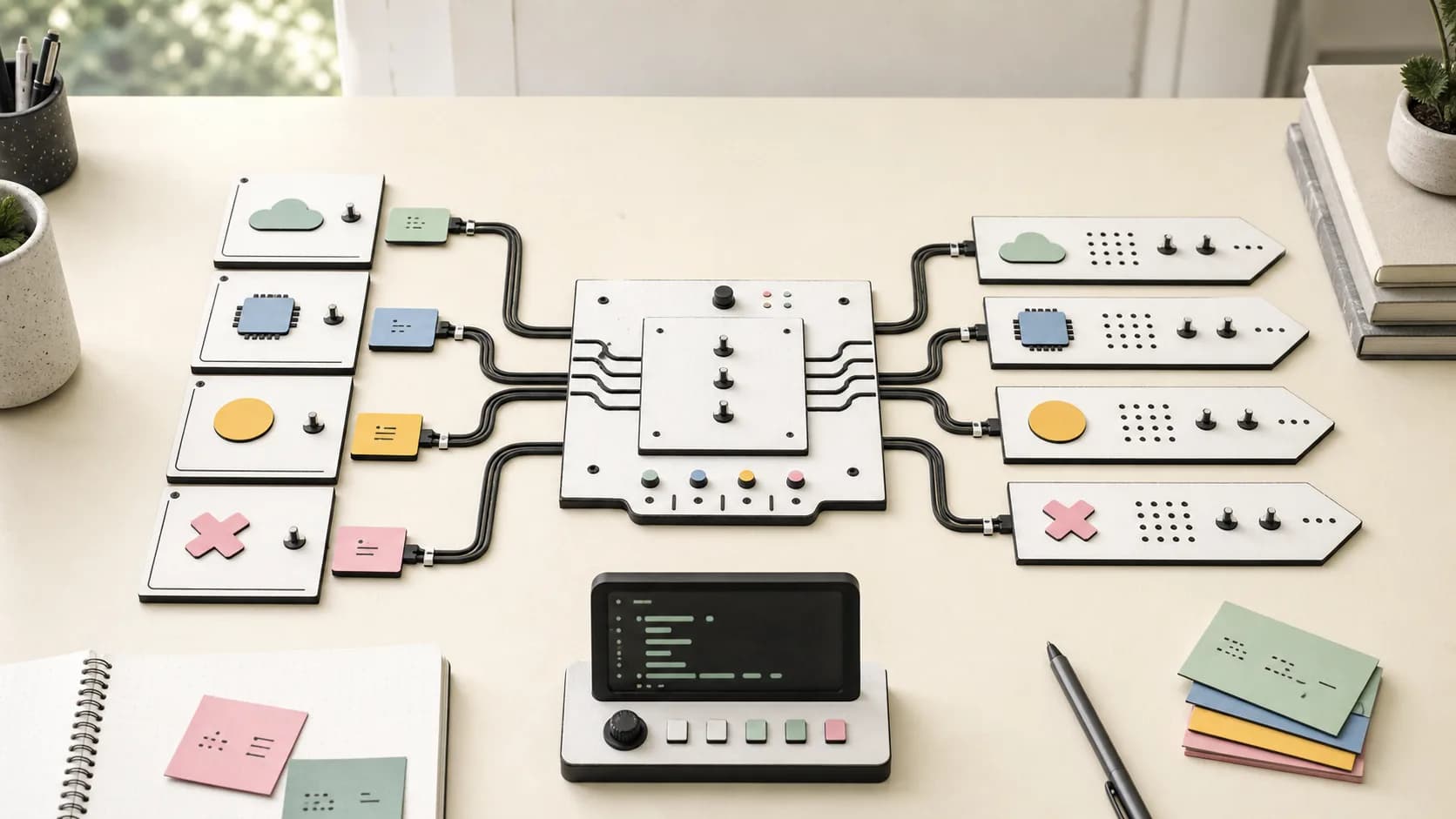
The Free Claude Code repo describes itself as a drop-in Anthropic-compatible proxy for Claude Code. Its README lists backends including NVIDIA NIM, OpenRouter, DeepSeek, LM Studio, llama.cpp, and Ollama, with per-model routing for Opus, Sonnet, Haiku, and fallback traffic.
That is a bigger idea than a cost hack. It is a control plane between the coding agent and the model market.
The take#
AI coding agents are becoming frontends. Model gateways are becoming infrastructure.
Claude Code has the strongest workflow surface in many developer teams: terminal UX, project memory, tools, MCP, hooks, subagents, and worktree patterns. But some teams want provider flexibility, local routing, cheaper background work, or experiments with open models.
Free Claude Code is one answer to that tension. Keep the agent UX. Swap the model backend.
That overlaps with the argument in self-hosting Claude Code on your own infra, Aider vs Claude Code, and Claude Code vs Codex vs Cursor vs OpenCode. The coding-agent layer and the model layer are starting to separate.
Why developers care#
Cost is the obvious reason.
Long agent runs can burn through premium-model quota fast. If a proxy can route simple edits to a cheaper or local model and reserve frontier models for planning, debugging, and gnarly refactors, the economics change.
But cost is not the only reason.
Provider routing also gives teams:
- local-model paths for sensitive code
- fallback routes during provider outages
- experiments with new coding models before native tools support them
- separate budgets for planning, editing, and review
- one place to log usage and failures
That is why model gateways keep showing up around agent tools. Developers do not only want "the best model." They want the right model for the subtask.
The security tradeoff#
The opposing view is important: a proxy between your coding agent and the model is now in the trust path.
That proxy sees prompts, code context, tool calls, and sometimes secrets if your workflow is sloppy. It can also reshape requests and responses. That is powerful, but it means you should treat any model gateway like developer infrastructure, not a browser extension you installed on a whim.
Before using a project like this on serious code, review:
- where the proxy runs
- what traffic it logs
- how auth tokens are stored
- whether it forwards secrets to third-party providers
- how tool-use and reasoning blocks are translated
- whether tests cover streaming and tool calls
The Free Claude Code README says the proxy normalizes thinking blocks, tool calls, token usage metadata, and provider errors into the shape Claude Code expects. That is useful. It is also exactly the area where subtle bugs can become bad agent behavior.
For more on the operational side, read agent receipts and the agent reliability cliff.
The quality tradeoff#
The other risk is capability mismatch.
Claude Code's UX can make a weaker model feel more capable than it is. A local model may handle search-and-replace tasks well, then fail on multi-file architecture work. A cheap hosted model may stream quickly, then break tool-call formatting. A fallback route may save a run during an outage, but produce lower-quality patches.
That does not make model gateways bad. It means routing policy should be explicit:
| Task | Reasonable route |
|---|---|
| formatting, simple edits, docs cleanup | cheap or local model |
| test repair with clear failure output | mid-tier coding model |
| architecture refactor | frontier model |
| security-sensitive repo exploration | local model when quality is enough |
| final review before merge | strongest model plus human review |
The practical question is not "can this run Claude Code for free?" It is "which parts of Claude Code work are safe to route away from the default model?"
How I would use it#
I would not start by routing everything through a free model.
I would start with a low-risk repo and three explicit lanes:
- Local lane: docs, formatting, small mechanical edits.
- Budget lane: first-pass test fixes and simple implementation tasks.
- Frontier lane: planning, architecture, security-sensitive review, and final verification.
Then I would log every run: prompt, model route, task type, tests run, whether the patch merged, and what human review fixed. Without that feedback loop, model routing becomes vibes.
The real opportunity is not "free Claude Code." It is a team-owned gateway that makes coding-agent work measurable, cheaper where possible, and stricter where quality matters.
From the archive
GPT Image 2 Prompt Libraries Are Becoming Production Infrastructure
May 5, 2026 • 7 min read
Karpathy's Loopy Era Is the Best Way to Understand Codex
May 5, 2026 • 9 min read
OpenAI's Codex Mac Certificate Deadline Is a Runbook Test
May 5, 2026 • 7 min read
Agent Skills Need Exit Criteria, Not More Prompt Lore
May 4, 2026 • 7 min read
Frequently Asked Questions#
What is Free Claude Code?#
Free Claude Code is an open-source Anthropic-compatible proxy that lets Claude Code talk to other backends, including NVIDIA NIM, OpenRouter, DeepSeek, LM Studio, llama.cpp, and Ollama.
Is Free Claude Code actually free?#
The repo can route to free or local providers, but "free" depends on the backend you choose. Some routes still require API keys, local hardware, or third-party quota.
Is a Claude Code proxy safe for work code?#
Only if you trust and operate it like infrastructure. Review logging, auth, provider routing, secret handling, and tool-call translation before sending private code through any proxy.
Who should use a model gateway for coding agents?#
Teams that need provider flexibility, lower costs, local-model experiments, or outage fallback paths. If you just want the simplest reliable Claude Code setup, the official path is still easier.
Continue Reading#
- Where to Access AI Models in 2026 - every backend a gateway can route to, with verified prices and free tiers
- Ornith-1.0: What an Open Source Self-Improving Coding Model Actually Means
Read next
AI Code Attribution Needs Defect Forensics, Not Vibes
The rsync Claude debate shows why teams need reproducible defect forensics before AI attribution becomes a public blame machine.
8 min readClaude Code Token Burn Is an Observability Problem
The latest Claude Code cache-burn debate is not just a quota complaint. It is a reminder that coding agents need cache-hit telemetry, spend ceilings, and repro-grade usage logs.
8 min readClaude Code Usage Limits in 2026: The Practical Playbook for Pro and Max Teams
A practical operational guide to Claude Code usage limits in 2026: plan behavior, API key pitfalls, routing choices, and team controls using hooks and subagents.
9 min readShare
Developers Digest
Technical content at the intersection of AI and development. Building with AI agents, Claude Code, and modern dev tools - then showing you exactly how it works.
300+ videos30K+ GitHub stars850+ articles
Related Tools
AI Coding
Z
Zed
High-performance code editor built in Rust with native AI integration. Sub-millisecond input latency. Built-in assistant...
View ToolAI CodingOpen source

OpenCode
Open-source AI coding agent for terminal, desktop, and IDE. Works with 75+ LLM providers including Claude, GPT, Gemini,...
View ToolAI CodingDaily Driver

Claude Code
Anthropic's agentic coding CLI. Runs in your terminal, edits files autonomously, spawns sub-agents, and maintains memory...
View ToolAI Coding

Aider
Open-source AI pair programming in your terminal. Works with any LLM - Claude, GPT, Gemini, local models. Git-aware ed...
View ToolApps from Developers Digest
Developer Tools
Agent Hub
Every coding agent in one window. Stop alt-tabbing between Claude, Codex, and Cursor.
View AppDeveloper ToolsIn Progress
Skill Builder
Turn a one-liner into a working Claude Code skill. From idea to installed in a minute.
View AppDeveloper ToolsPlus $20/mo
Skills Pro
Unlock pro skills and share private collections with your team.
View AppRelated Guides
Guide
Custom Model Option - Claude Code
Add gateway or custom models to the picker via environment variables.
Claude CodeGuide
Model Aliases - Claude Code
Use opus, sonnet, haiku, and best to switch models easily.
Claude CodeGuide
Model Picker (/model) - Claude Code
Interactive UI to switch models and effort sliders mid-session.
Claude CodeRelated Videos
Zed: The Open Source Agentic IDE - Use Claude Code, Codex & Gemini CLI in one place
Check out Zed here! https://zed.dev In this video, we dive into Zed, a robust open source code editor that has recently introduced the Agent Client Protocol. This new open standard allows...
Video·

Generate Videos in Codex + Claude Code with This...
Check out HeyGen! https://heygen.1stcollab.com/developersdigest The video introduces HeyGen, an AI video generation platform with a rich API and a CLI that lets developers create, fetch, and manipula...
Video·

10x Design in Claude Code and Codex
Try Higgsfield: https://higgsfield.ai/s/higgsfield-general-campaign-developersdigest-juDMTi AI coding agents can build entire websites in minutes, but the default results often still look generic and...
Video·
Related Posts
8 min read
AI Coding
AI Code Attribution Needs Defect Forensics, Not Vibes
The rsync Claude debate shows why teams need reproducible defect forensics before AI attribution becomes a public blame...
7 min read
News
When Your AI-Generated App Turns Out to Be Someone Else's, Bug for Bug
A developer's Claude-built night-sky site reproduced an open source project's name, feature set, and even a bug the auth...

8 min read
Open Source
Vibe Maintenance: A Practical Workflow for AI-Generated Pull Requests
Steve Yegge's response to AI-generated pull requests suggests a better maintainer workflow: automate triage, repair good...
8 min read
Codex
Codex and Claude Code in July 2026: Agent Controls Are the Feature
The late-July Codex and Claude Code updates point in the same direction: coding agents are competing on approval modes,...
8 min read
AI Coding
Spec-Driven Agent Workflows: GitHub Spec Kit, gstack, and the New Handoff Layer
GitHub Spec Kit and gstack are trending for the same reason: coding agents need durable specs, plans, and task ledgers m...
9 min read
AI Coding
Microsoft's CLI Coding Agent Study: The Rollout Pattern Teams Should Copy
A Microsoft field study found that CLI coding-agent adoption spreads through peers and managers, while adopters merged r...
Build with the member tools

Get Smarter About AI Dev
New tutorials, open-source projects, and deep dives on coding agents - delivered weekly.
One email per weekReal code, not theoryFree forever