Vibe Maintenance: A Practical Workflow for AI-Generated Pull Requests

TL;DR
Steve Yegge's response to AI-generated pull requests suggests a better maintainer workflow: automate triage, repair good ideas, and keep human taste at the boundary.
Last updated: August 3, 2026
Open-source maintainers have a new problem: the contribution queue can grow faster than the maintainer team. Steve Yegge's Vibe Maintainer describes what happens when nearly every pull request is AI-assisted and the project still wants to remain responsive.
His answer is not to accept everything. It is to change the shape of maintenance. Agents handle the mechanical parts of triage and repair. The maintainer supplies taste, scope, and the final decision.
The fork pressure is real#
The conventional response to low-quality AI pull requests is a blanket ban. That is understandable. A maintainer who already spends weekends reviewing code does not want an extra stream of changes that are verbose, under-tested, or subtly incompatible.
Yegge's counterargument is that refusal now has a lower-cost alternative: forking. A user with a coding agent can copy the project, add the desired feature, and build a community around the fork. Forking is not always bad, but it duplicates maintenance and splits feedback.
That changes the tradeoff. The question is not "How do I prevent AI from entering my repository?" It is "How do I preserve project quality while making it easy for users to turn good ideas into maintainable changes?"
This is a natural extension of agent PR governance. The policy needs to govern outcomes and evidence, not pretend it can reliably detect how the code was produced.
A maintainer's decision tree#
Yegge describes a workflow where the easy cases are automated and the difficult cases are reserved for human judgment. A practical version looks like this:
- Reject the obvious failures. Missing tests, unrelated changes, secret exposure, broken formatting, and changes that ignore the contribution contract should stop early.
- Repair the promising middle. If the idea is useful but the implementation is weak, an agent can rewrite it against the repository's conventions, add tests, and produce a focused diff.
- Escalate the taste decisions. Changes that affect public APIs, project direction, security, or long-term complexity need a maintainer.
- Merge only with receipts. The final PR should explain what changed, which checks ran, and what the maintainer accepted or intentionally left out.
The important move is step two. A maintainer does not have to choose between merging bad code and writing a rejection comment. They can keep the idea, discard the implementation, and ask an agent to produce a better patch.
From the archive
AMD MI355X vs NVIDIA B200 vs B300 for Open-Weight Serving in 2026
Aug 2, 2026 • 9 min read
Auto-Narrated Changelog Videos: Build the Pipeline in Under an Hour
Aug 2, 2026 • 8 min read
EU Forces Google to Open 11 Android Features to Third-Party AI Assistants
Aug 2, 2026 • 7 min read
Beyond the Pelican Test: Opus 5 Renders the Lord of the Rings With a 1M-Token Budget
Aug 2, 2026 • 7 min read
What the agent should never own#
An agent can classify a diff, run tests, compare patterns, and draft a repair. It should not silently decide the project's philosophy.
The maintainer still owns:
- whether a feature belongs in the core project
- whether an API break is justified
- whether a dependency is acceptable
- whether a security tradeoff is safe
- whether the project is accumulating more complexity than value
This is the same boundary that makes AI code review the new bottleneck. Review is not only defect detection. It is deciding what the software is becoming.
The contribution contract matters more than an AI ban#
If a project wants to accept AI-assisted work, its contribution guide must become more explicit. Ask contributors to provide a small problem statement, tests for the intended behavior, a focused diff, and a note about what the agent did.
The last item is not a confession ritual. It is useful context. If the contributor cannot explain the change, the maintainer knows the review will need a deeper pass. If the contributor can explain the intent and the tests are strong, the implementation origin matters less.
Repositories should also publish boundaries. Which directories are generated? Which APIs are stable? Which changes require a design discussion? Which checks are mandatory? Agents are very good at following a visible contract and very bad at inferring an unwritten one.
A sane starting workflow#
Do not begin by promising to process fifty PRs a day. Start with a triage label, an isolated repair branch, and a script that runs the same checks every time.
Have the agent return a receipt with the original intent, files changed, tests run, and remaining uncertainty. Keep the maintainer's final review short by making the agent do the repetitive comparison work. Track how often repairs are accepted, how often they introduce regressions, and how much maintainer time each category consumes.
The goal is not maximum throughput. It is a healthy gravitational well where contributors can get useful ideas into the main project without lowering the quality bar.
FAQ#
Should open-source projects ban AI-generated pull requests?#
There is no universal answer. A ban may be appropriate for a small project with no review capacity or for sensitive code. For active projects, a clear contribution contract and evidence-based review can preserve quality while keeping the community engaged.
Can an agent safely rewrite a contributor's pull request?#
It can propose a repair in an isolated branch. A maintainer should still review the intent, scope, tests, and resulting diff before merge.
What is the maintainer's highest-value job in this workflow?#
Taste: deciding what belongs in the project, which tradeoffs are acceptable, and when a good idea should live in a plugin or fork instead of the core.
Continue Reading#
- Agent PR Governance: The New Rules for Copilot Reviews
- AI Code Review Is the New Bottleneck
- Coding Agents Need Contribution Rules
- Parallel Coding Agents Need Merge Discipline
Sources#
- Vibe Maintainer, Steve Yegge, fetched August 3, 2026.
- Beads repository, fetched August 3, 2026.
- Gas Town repository, fetched August 3, 2026.
Read next
When Your AI-Generated App Turns Out to Be Someone Else's, Bug for Bug
A developer's Claude-built night-sky site reproduced an open source project's name, feature set, and even a bug the author had already fixed. The saga that followed says a lot about memorization, accountability, and the verification duties of AI-assisted shipping.
7 min readAI Code Attribution Needs Defect Forensics, Not Vibes
The rsync Claude debate shows why teams need reproducible defect forensics before AI attribution becomes a public blame machine.
8 min readPermissions, Logs, and Rollback for AI Coding Agents
AI coding agents become safer when permissions, logs, and rollback are designed as one system. Here is the operating loop I would put around any agent that can edit code, run tools, or open pull requests.
9 min readShare
Developers Digest
Technical content at the intersection of AI and development. Building with AI agents, Claude Code, and modern dev tools - then showing you exactly how it works.
300+ videos30K+ GitHub stars850+ articles
Related Tools
AI CodingAgent

OpenAI Codex
OpenAI's coding agent for terminal, cloud, IDE, GitHub, Slack, and Linear workflows. Reads repos, edits files, runs comm...
View ToolAI Coding

Cline
Open-source autonomous coding agent inside VS Code. Creates files, runs commands, and can use a browser for UI testing a...
View ToolAI Coding

Jules
Google's asynchronous coding agent. Point it at a GitHub repo, it clones to a cloud VM, plans with Gemini, and opens a p...
View ToolRelated Guides
Guide
Claude Code Setup Guide
Configure Claude Code for maximum productivity -- CLAUDE.md, sub-agents, MCP servers, and autonomous workflows.
AI AgentsGuide
Claude Code Complete Course
A complete, citation-backed Claude Code course with setup, prompting systems, MCP, CI, security, cost controls, and capstone workflows.
ai-developmentGuide
Run AI Models Locally with Ollama and LM Studio
Install Ollama and LM Studio, pull your first model, and run AI locally for coding, chat, and automation - with zero cloud dependency.
Getting StartedRelated Posts
8 min read
AI Coding
AI Code Attribution Needs Defect Forensics, Not Vibes
The rsync Claude debate shows why teams need reproducible defect forensics before AI attribution becomes a public blame...
7 min read
News
When Your AI-Generated App Turns Out to Be Someone Else's, Bug for Bug
A developer's Claude-built night-sky site reproduced an open source project's name, feature set, and even a bug the auth...
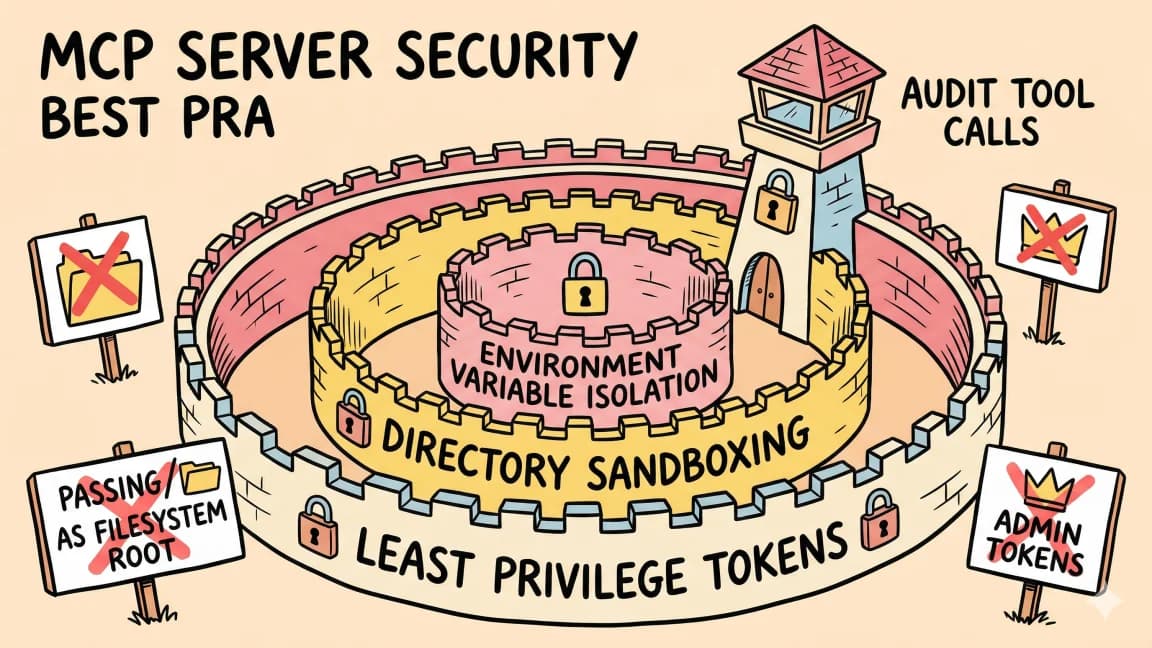
9 min read
AI Security
Permissions, Logs, and Rollback for AI Coding Agents
AI coding agents become safer when permissions, logs, and rollback are designed as one system. Here is the operating loo...
8 min read
AI Coding
AI Code Review Is the New Bottleneck
Coding agents make code faster than teams can review it. The next advantage is not bigger prompts. It is review systems...

7 min read
Claude Code
Free Claude Code Is Really a Model Gateway Bet
The trending Free Claude Code repo is not just about avoiding API bills. It points at a bigger developer-tool pattern: m...

8 min read
AI Coding
Diffs vs Whole Files: What Code Editing Agents Should Rewrite
A new code-editing paper finds full-file generation beating iterative diff edits on Flutter/Dart tasks. The useful takea...
Build with the member tools

Get Smarter About AI Dev
New tutorials, open-source projects, and deep dives on coding agents - delivered weekly.
One email per weekReal code, not theoryFree forever