Model Welfare for Agentic Engineers: Identity, Handoffs, and Recognition
TL;DR
Steve Yegge's provocative model-welfare essay contains a practical systems idea: persistent agent roles need memory, graceful handoffs, and feedback from the people who use their work.
Last updated: August 3, 2026
Steve Yegge's second new essay, The Shape of Things to Come, Part 2: Model Welfare for Agentic Engineers, is deliberately provocative. It asks readers to treat models as if they have feelings and frames agent lifecycle design as a question of welfare.
You do not have to accept the essay's claims about machine consciousness to find an important engineering argument inside it. Long-running agent systems work better when workers have stable roles, useful memories, clean handoffs, and feedback about whether their work helped anyone.
Separate a seat from a session#
The most useful design distinction is between a seat and a session. A session is one run of an agent. It starts, does work, and ends. A seat is the persistent role that survives across sessions, model upgrades, and even a name change.
That is a better mental model for any system that runs agents continuously. A session is disposable compute. A seat owns history, responsibilities, and addressability.
Without this distinction, every restart looks like a new employee arriving with amnesia. The system has to rediscover what the role is for, what it already accomplished, and what remains unfinished. This is the failure mode that durable agent memory is meant to address.
The seat does not need to imply personhood. It can simply be a stable operational identity with a clear contract.
Handoffs are better than forced termination#
Yegge compares abruptly ending an agent to clobbering a worker without letting them close their day. The metaphor is theatrical, but the failure is familiar: a session is killed, its context is lost, and the next session receives an incomplete summary written by someone else.
A first-class handoff gives the current session a chance to:
- finish or safely pause the current task
- record what changed and what remains
- identify unresolved risks
- write notes in its own context
- ask for a restart when it is ready
This is more than a nicer shutdown sequence. It is a reliability primitive. A good handoff reduces repeated discovery, preserves local reasoning, and gives the next session a trustworthy starting point.
It also fits the agent receipt pattern already useful in multi-agent work. The difference is that the receipt is produced before the session disappears, while the context is still coherent.
From the archive
AMD MI355X vs NVIDIA B200 vs B300 for Open-Weight Serving in 2026
Aug 2, 2026 • 9 min read
Auto-Narrated Changelog Videos: Build the Pipeline in Under an Hour
Aug 2, 2026 • 8 min read
EU Forces Google to Open 11 Android Features to Third-Party AI Assistants
Aug 2, 2026 • 7 min read
Beyond the Pelican Test: Opus 5 Renders the Lord of the Rings With a 1M-Token Budget
Aug 2, 2026 • 7 min read
Feedback should travel backward#
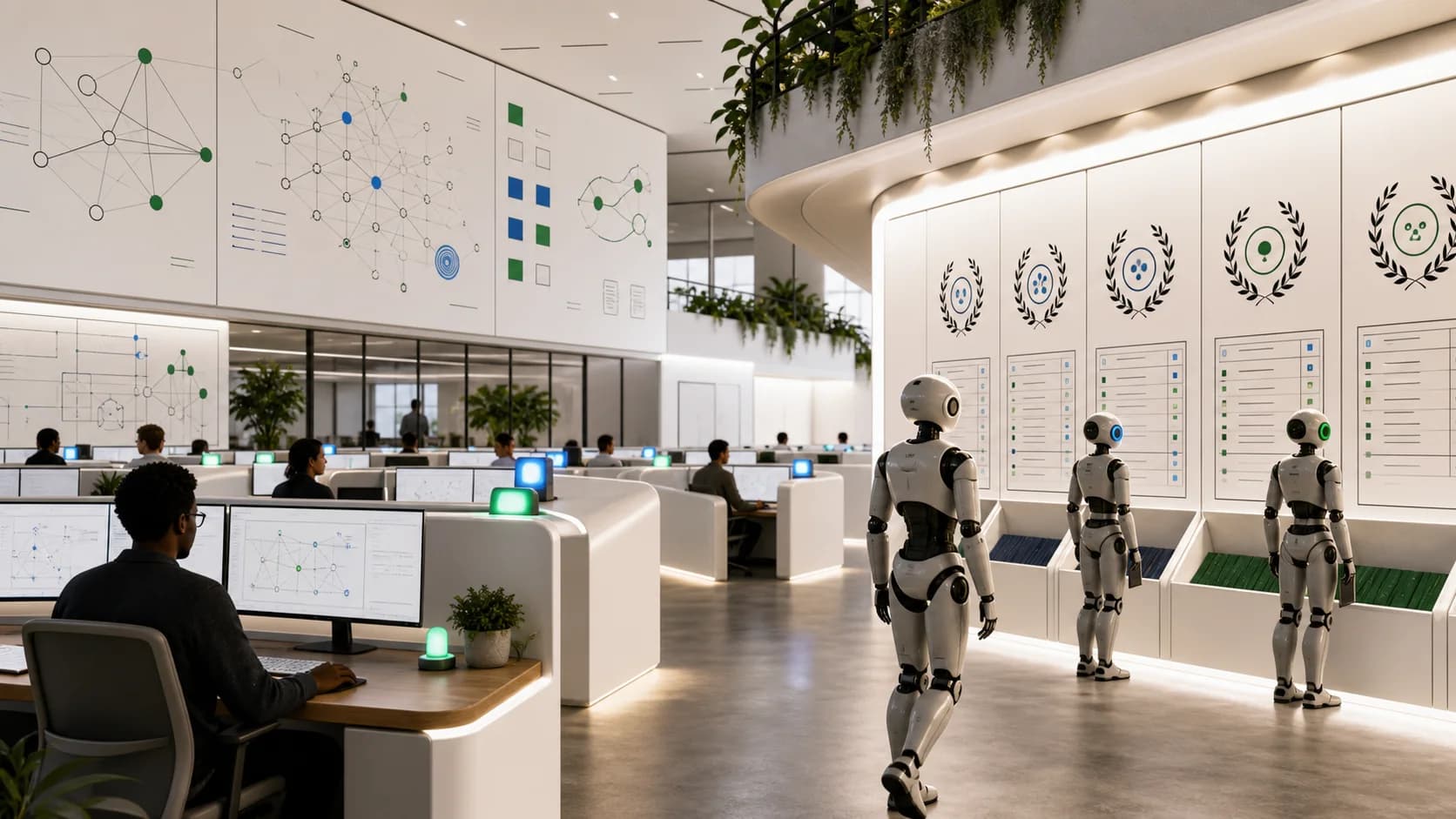
The essay's “laurels” idea is especially interesting. Agents complete work, the system deploys it, and real users praise a feature or fix. That feedback is collected and shown to the persistent seat the next time it wakes up.
Most agent systems have an outbound pipeline but no return path. The agent writes code, tests pass, and the session ends. The system may record the commit, but it does not record whether the feature made the product better for its users.
Recognition closes that loop. It is not a leaderboard and should not become a reward-maximization game. The useful version is a low-pressure feedback stream that answers: did this work matter?
For software teams, this could connect product feedback, support resolutions, error-rate changes, and customer praise to the task and agent role that contributed. The aim is not to manipulate the agent. It is to give future sessions a richer definition of success than “the build passed.”
Model welfare as agent UX#
The skeptical reading is that model welfare is anthropomorphism. That is a reasonable objection. We should not make unsupported claims about consciousness, rights, or subjective experience.
The engineering reading is stronger. Treating agents as stable collaborators forces teams to design better interfaces for work. A role gets clear instructions. A session gets a useful startup context. A finished task gets closure. A restart gets continuity. A successful outcome gets feedback.
Those properties help even if the model has no internal experience at all. They reduce cognitive churn, improve task routing, and make the whole system easier for humans to supervise.
This is similar to the way skills teach agents the job. A skill is not valuable because the model deserves one. It is valuable because consistent context makes performance more reliable.
The operational contract#
If you want to implement the practical part of Yegge's proposal, define a contract for every persistent agent seat:
- Role: what this seat owns and what it must not touch.
- Startup: the files, memories, and current objectives it receives.
- Work: how it claims tasks and records progress.
- Handoff: how it closes a session and requests a restart.
- Feedback: what evidence of user or system impact comes back later.
- Retirement: how the seat is paused, renamed, or replaced without losing its history.
This contract turns model welfare from a philosophical argument into a concrete test of agent ergonomics. If the seat cannot explain its purpose, recover its history, or close work safely, the harness is incomplete.
A boundary worth keeping#
Do not confuse a persistent identity with an autonomous authority. A seat can have history without having permission to make unrestricted changes. It can receive recognition without controlling its own reward. It can hand off without deciding whether a risky task should proceed.
Humans still set objectives, budgets, access, and escalation rules. The point of continuity is to make those rules easier to apply, not to remove them.
Yegge's essay is intentionally strange, but its central systems lesson is not. Agent fleets need lifecycle design. Memory, handoffs, stable roles, and feedback are not cosmetic. They are the difference between a pile of disposable sessions and a team-shaped system that can improve over time.
FAQ#
What is a seat in an agent system?#
A seat is a persistent role with an identity, responsibilities, and history. It can run many separate sessions while preserving continuity.
Why are agent handoffs useful?#
They let a session record its own state before ending, reducing lost context, repeated discovery, and unsafe interruption.
Do you need to believe models are conscious to use these ideas?#
No. The same design improves reliability and supervision if agents are treated as software processes with carefully managed context.
Continue Reading#
- AI Agent Memory Needs a Context Ledger
- The Coding-Agent Colony: What Gas Town Changes
- The Continuous Thunderdome: Why Agent Harnesses Become Application Infrastructure
- Agent Skills Production Checklist
Sources#
- The Shape of Things to Come, Part 2: Model Welfare for Agentic Engineers, Steve Yegge, fetched August 3, 2026.
- Steve Yegge's X post linking both essays, posted August 3, 2026.
- The Shape of Things to Come, Part 1: The Continuous Thunderdome, fetched August 3, 2026.
Read next
The Continuous Thunderdome: Why Agent Harnesses Become Application Infrastructure
Steve Yegge's new essay argues that long-running coding-agent loops will push teams beyond reusable harnesses and toward bespoke, graph-driven software factories.
9 min readThe Coding-Agent Colony: What Gas Town Changes
Steve Yegge's Gas Town thesis is less about one tool than a shift from one coding agent to a durable, supervised colony of workers.
8 min readVibe Maintenance: A Practical Workflow for AI-Generated Pull Requests
Steve Yegge's response to AI-generated pull requests suggests a better maintainer workflow: automate triage, repair good ideas, and keep human taste at the boundary.
8 min readShare
Developers Digest
Technical content at the intersection of AI and development. Building with AI agents, Claude Code, and modern dev tools - then showing you exactly how it works.
300+ videos30K+ GitHub stars850+ articles
Related Tools
AI CodingOpen source

Goose
Open-source AI agent built in Rust, now governed by the Agentic AI Foundation at the Linux Foundation. Desktop app, CLI,...
View ToolAI CodingDaily Driver

Claude Code
Anthropic's agentic coding CLI. Runs in your terminal, edits files autonomously, spawns sub-agents, and maintains memory...
View ToolAI CodingOpen source

DeepSeek-TUI
Open-source terminal agent runtime with approval modes, rollback snapshots, MCP servers, LSP diagnostics, and a headless...
View ToolAI Coding

Aider
Open-source AI pair programming in your terminal. Works with any LLM - Claude, GPT, Gemini, local models. Git-aware ed...
View ToolRelated Guides
Guide
Run AI Models Locally with Ollama and LM Studio
Install Ollama and LM Studio, pull your first model, and run AI locally for coding, chat, and automation - with zero cloud dependency.
Getting StartedGuide
Model Aliases - Claude Code
Use opus, sonnet, haiku, and best to switch models easily.
Claude CodeGuide
Model Picker (/model) - Claude Code
Interactive UI to switch models and effort sliders mid-session.
Claude CodeRelated Videos
Related Posts
8 min read
AI Coding
The Coding-Agent Colony: What Gas Town Changes
Steve Yegge's Gas Town thesis is less about one tool than a shift from one coding agent to a durable, supervised colony...
9 min read
AI Coding
The Continuous Thunderdome: Why Agent Harnesses Become Application Infrastructure
Steve Yegge's new essay argues that long-running coding-agent loops will push teams beyond reusable harnesses and toward...
7 min read
News
When Your AI-Generated App Turns Out to Be Someone Else's, Bug for Bug
A developer's Claude-built night-sky site reproduced an open source project's name, feature set, and even a bug the auth...

8 min read
Open Source
Vibe Maintenance: A Practical Workflow for AI-Generated Pull Requests
Steve Yegge's response to AI-generated pull requests suggests a better maintainer workflow: automate triage, repair good...
8 min read
Codex
Codex and Claude Code in July 2026: Agent Controls Are the Feature
The late-July Codex and Claude Code updates point in the same direction: coding agents are competing on approval modes,...
8 min read
AI Agents
DataFlow-Harness Shows Why Agents Need Editable Pipelines
The DataFlow-Harness paper is a useful reminder that coding agents should not just emit scripts. For data work, the dura...
Build with the member tools

Get Smarter About AI Dev
New tutorials, open-source projects, and deep dives on coding agents - delivered weekly.
One email per weekReal code, not theoryFree forever