Skills Are How Agents Learn the Job
TL;DR
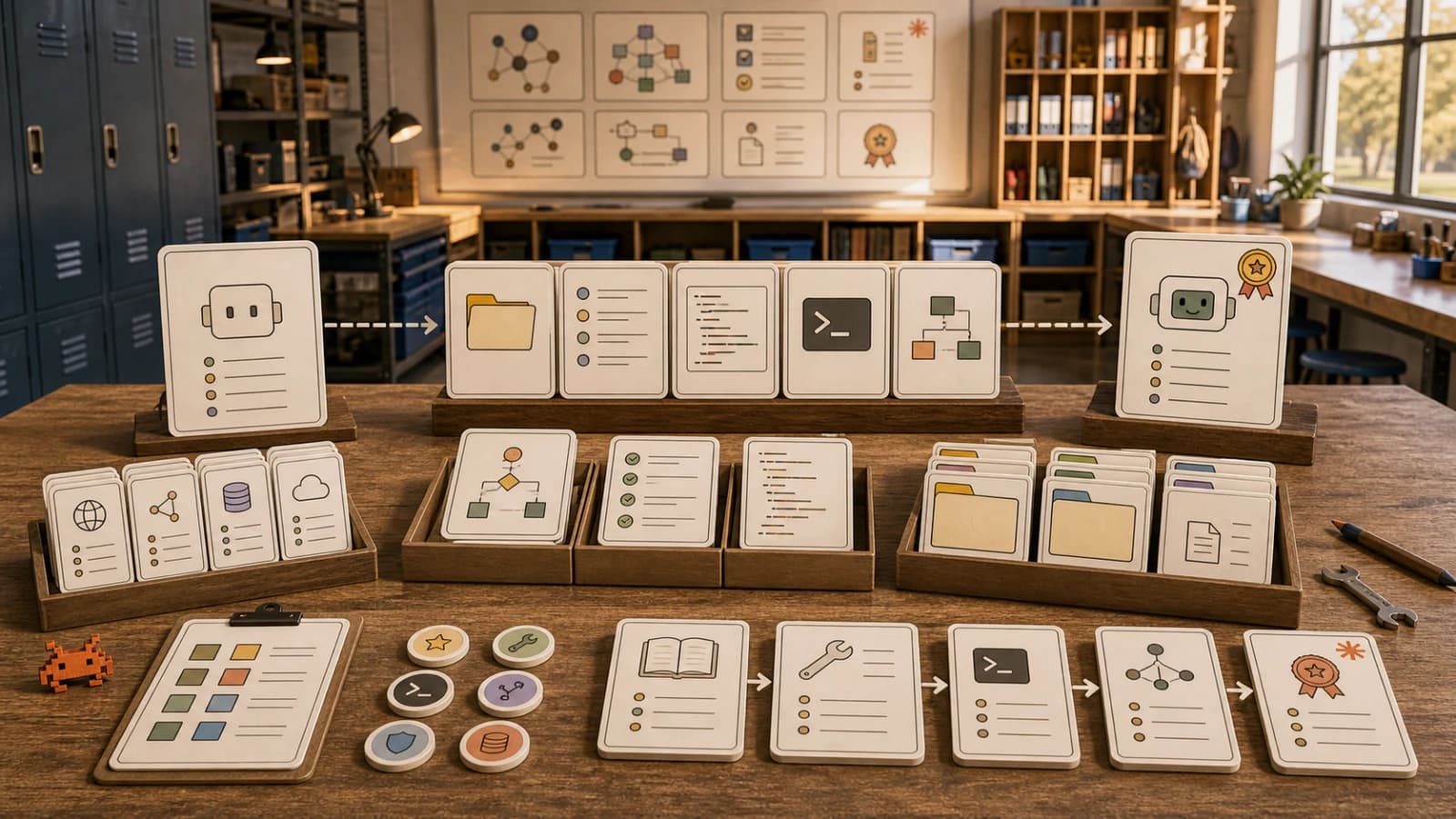
Skills turn a general coding agent into a trained teammate by packaging runbooks, scripts, examples, and domain-specific judgment into reusable instructions.
A general coding agent is smart. A skilled coding agent knows the job.
That distinction matters. Most agent failures are not caused by the model being unable to write code. They are caused by missing local knowledge:
- how this repo deploys
- what tests actually matter
- which files are generated
- how design tokens work
- what language the brand never uses
- how to debug the recurring production issue
- what "done" means for this team
You can repeat that context in every prompt. Or you can package it as a skill.
Anthropic's framing of skills is useful: a skill is not just a prompt. It is a folder of instructions, scripts, examples, and resources that the agent can load when a task calls for it. That is closer to a runbook than a chat trick.
For the broader control-stack argument, read why skills beat prompts and the context engineering guide. This post is the operating model.
Prompts Teach the Task. Skills Teach the Job.#
A prompt is usually about the immediate request:
Text
Add a pricing page with three tiers.
A skill teaches the recurring method:
Text
When adding a public marketing page:
- use the Gumroad card pattern
- no gradients
- no emojis
- no em dashes
- update the navigation only if the route is strategic
- add internal links to related comparison posts
- run the route locally and check mobile layout
The prompt changes every day. The skill compounds.
That is the core value. Skills let the agent carry team knowledge across tasks without turning every user prompt into a 4,000-token policy document.
The Best Skills Are Boring#
The most useful skills are not magical.
They are boring workflows that happen often:
- add a blog post
- fix CI
- debug a deploy
- review a PR
- add a database table
- generate a hero image
- test a checkout flow
- publish release notes
- triage a production incident
These tasks have a right shape. They have known pitfalls. They have commands that usually work and commands that usually waste time.
That is exactly what belongs in a skill.
From the archive
Skills Are the New Agent Operating System
May 2, 2026 • 9 min read
VS Code Copilot Co-Author Attribution: The Real Problem Is Workflow Consent
May 2, 2026 • 8 min read
Warp Open Sourced the Terminal. The Real Story Is Agent Operations
May 2, 2026 • 8 min read
12 Tools in One Night: An Honest Overnight Agent Report
Apr 29, 2026 • 11 min read
What Goes Inside a Skill#
A strong skill usually has five pieces.
Trigger. When should the agent use it?
Workflow. What sequence of steps works?
Constraints. What should the agent avoid?
References. Which files, docs, or examples matter?
Scripts. Which helper commands reduce repeated work?
For example, a deployment-debugging skill might include:
Text
Trigger: user reports deploy failure, Coolify issue, 502, failed build, or missing env var.

Workflow:
1. Inspect latest build logs.
2. Check environment variables.
3. Reproduce locally only if needed.
4. Search Obsidian runbooks before guessing.
5. Verify health route after fix.

Pitfalls:
- Do not assume Vercel.
- Do not restart production before reading logs.
- Do not expose secrets in chat.
That is not a fancy prompt. It is operational memory.
Skills Reduce Context Waste#
Skills also solve a context problem.
Without skills, durable instructions live in one of three bad places:
- the user's memory
- the model's prompt
- stale documentation no agent reads
With skills, the agent can discover the skill list and load only the relevant skill body when needed. The current task gets the right method without dragging every possible workflow into context.
This is the same logic behind progressive disclosure in Claude Code: keep the full library available, but only load what matters for the current job.
Skills Beat Specialized Agents More Often Than You Think#
Teams love creating specialized agents:
- frontend agent
- backend agent
- security agent
- docs agent
- deploy agent
Sometimes that is right. But a lot of the time, what you actually need is one strong general agent with better skills.
The difference:
- A specialized agent changes the persona and permissions.
- A skill changes the method and knowledge.
If the task needs different tool access, use a subagent. If the task needs a known workflow, use a skill. Mixing those up creates agent sprawl.
Skills Should Improve#
The strongest skills are living artifacts.
When the agent makes a recurring mistake, update the skill. When a command changes, update the skill. When a new pitfall appears, update the skill. When a workflow gets simpler, remove old steps.
This is how teams teach agents the same way they teach people: by turning repeated corrections into reusable training.
The habit matters more than the file format.
The Bottom Line#
Skills are how agents learn the job.
They turn scattered corrections into durable method. They keep prompts shorter. They make repeated work more reliable. They let a general agent behave like it has worked in the repo before.
The future of coding agents is not just better models. It is better training material around the models: skills, runbooks, examples, scripts, and receipts.
That is what makes the agent useful on day ten, not just impressive on day one.
Continue Reading#
Sources#
- Anthropic: Building agents with Skills
- Anthropic: How Anthropic teams use Claude Code
- DevDigest: Why Skills Beat Prompts for Coding Agents
- DevDigest: Self-Improving Skills
FAQ#
What is the difference between a skill and a prompt?#
A prompt describes the immediate task. A skill packages the recurring method for a job - instructions, scripts, examples, and constraints - so the agent does not need that context repeated every time. See why skills beat prompts for the fuller argument.
When should I use a skill instead of a specialized agent?#
Use a specialized agent when the task needs different tool access or permissions. Use a skill when the task needs a known workflow or domain knowledge but the same general agent can do the work. Mixing the two up leads to agent sprawl.
What are the core parts of a strong skill?#
A strong skill usually includes a trigger (when to use it), a workflow (the steps that work), constraints (what to avoid), references (relevant files or docs), and scripts (helper commands that reduce repeated work).
How do skills relate to context engineering?#
Skills let an agent discover a list of available capabilities and only load the relevant skill body when a task calls for it, instead of loading every possible workflow into context. This is the same idea behind progressive disclosure in Claude Code and the broader context engineering guide.
Read next
Why Skills Beat Prompts for Coding Agents in 2026
The coding-agent workflow is maturing past giant hand-written prompts. The winning pattern in 2026 is a control stack: project rules, reusable skills, bounded sub-agents, and deterministic tools around the model.
9 min readWhat Are Claude Code Skills? A Complete Beginner Guide
Skills are how you stop copy-pasting the same workflow into Claude Code every session. What they are, how to write one, and where to find hundreds ready to use. Fact-checked against Anthropic's docs.
11 min readSelf-Improving Skills: Claude Code That Learns From Every Session
Claude Code skills can now reflect on sessions, extract corrections, and update themselves with confidence levels. Your agent gets smarter every time you use it.
7 min readShare
Developers Digest
Technical content at the intersection of AI and development. Building with AI agents, Claude Code, and modern dev tools - then showing you exactly how it works.
300+ videos30K+ GitHub stars850+ articles
Related Tools
ProductivityNew
A
AgentCanvas
A hosted infinite canvas your headless AI agents drive over MCP. Any MCP-speaking agent - Claude Code, Codex, Cursor, or...
View ToolAI CodingDaily Driver

Claude Code
Anthropic's agentic coding CLI. Runs in your terminal, edits files autonomously, spawns sub-agents, and maintains memory...
View ToolAI Frameworks
C
Composio
Gives AI agents access to 250+ external tools (GitHub, Slack, Gmail, databases) with managed OAuth. Handles the auth and...
View ToolAI Frameworks

OpenAI Agents SDK
Lightweight Python framework for multi-agent systems. Agent handoffs, tool use, guardrails, tracing. Successor to the ex...
View ToolApps from Developers Digest
Developer ToolsIn Progress
Skill Builder
Turn a one-liner into a working Claude Code skill. From idea to installed in a minute.
View AppDeveloper ToolsPlus $20/mo
Skills Pro
Unlock pro skills and share private collections with your team.
View AppDeveloper ToolsIn Progress
SkillForge CI
Catch broken SKILL.md files in CI before they hit your team.
View AppRelated Guides
Guide
Skills System - Claude Code
Reusable markdown files with instructions and workflows.
Claude CodeGuide
Bundled Skills - Claude Code
/simplify, /batch, /debug, /fast, and other built-in skills.
Claude CodeGuide
Skill Arguments - Claude Code
Pass arguments to skills with string substitution support.
Claude CodeRelated Videos
Self-Improving Skills in Claude Code
Setting Up Self-Improving Skills in Claude Code: Manual & Automatic Methods In this video, you'll learn how to set up self-improving skills within Claude Code. The tutorial addresses the key problem
Video·

Buzz: Open-Source Collaboration for Humans + AI Agents
Buzz by Block: Open-Source Slack-Style Collaboration for Humans + AI Agents (Demo & Setup) Check out Arcade: https://arcade.dev.plug.dev/xiDRwlA Repo: https://github.com/block/buzz The video introd...
Video·
Agents 101: How to Build and Deploy Anything with AI Agents
Build Anything with Vercel, the Agentic Infrastructure Stack Check out Vercel: https://vercel.plug.dev/cwBLgfW The video shows a behind-the-scenes walkthrough of how the creator rapidly builds and d...
Video·
Related Posts

9 min read
AI Coding
Why Skills Beat Prompts for Coding Agents in 2026
The coding-agent workflow is maturing past giant hand-written prompts. The winning pattern in 2026 is a control stack: p...

11 min read
Claude Code
What Are Claude Code Skills? A Complete Beginner Guide
Skills are how you stop copy-pasting the same workflow into Claude Code every session. What they are, how to write one,...
7 min read
Claude Code
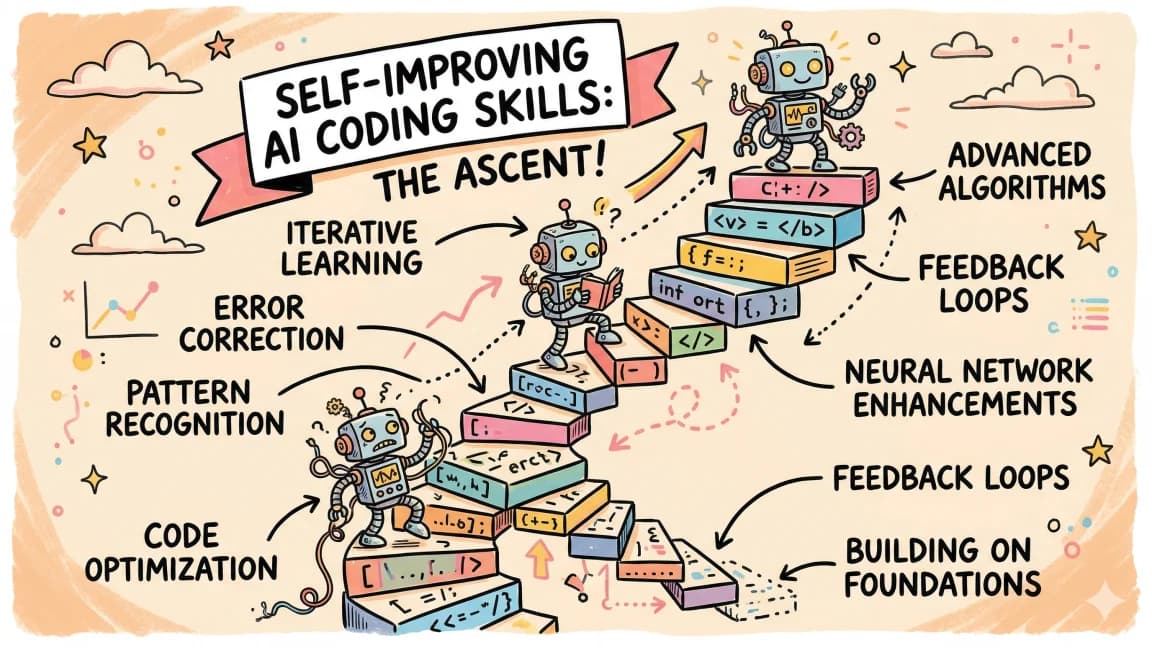
Self-Improving Skills: Claude Code That Learns From Every Session
Claude Code skills can now reflect on sessions, extract corrections, and update themselves with confidence levels. Your...

14 min read
Context Engineering
Context Engineering: The Highest-Leverage Skill in AI-Assisted Development
Context engineering is the practice of designing the persistent information that surrounds every AI interaction. CLAUDE....

8 min read
Context Engineering
The 98% Context Reduction Pattern
Efficient agents do not stuff every tool result into the model context. They keep intermediate state in code, files, and...

10 min read
Claude Code
Progressive Disclosure: How Claude Code Cut Token Usage by 98%
CloudFlare, Anthropic, and Cursor independently discovered the same pattern: don't load all tools upfront. Let agents di...
Build with the member tools

Get Smarter About AI Dev
New tutorials, open-source projects, and deep dives on coding agents - delivered weekly.
One email per weekReal code, not theoryFree forever