Refusal Directions Are a Systems Problem
TL;DR
A trending refusal-direction paper is a reminder that model safety cannot be treated as a thin refusal layer. Builders need layered controls around the model.
Refusal in Language Models Is Mediated by a Single Direction is back on Hacker News, and the discussion is exactly what you would expect: interesting mechanism, jailbreak implications, and debate over whether the result is already stale.
The paper's core claim is simple and uncomfortable.
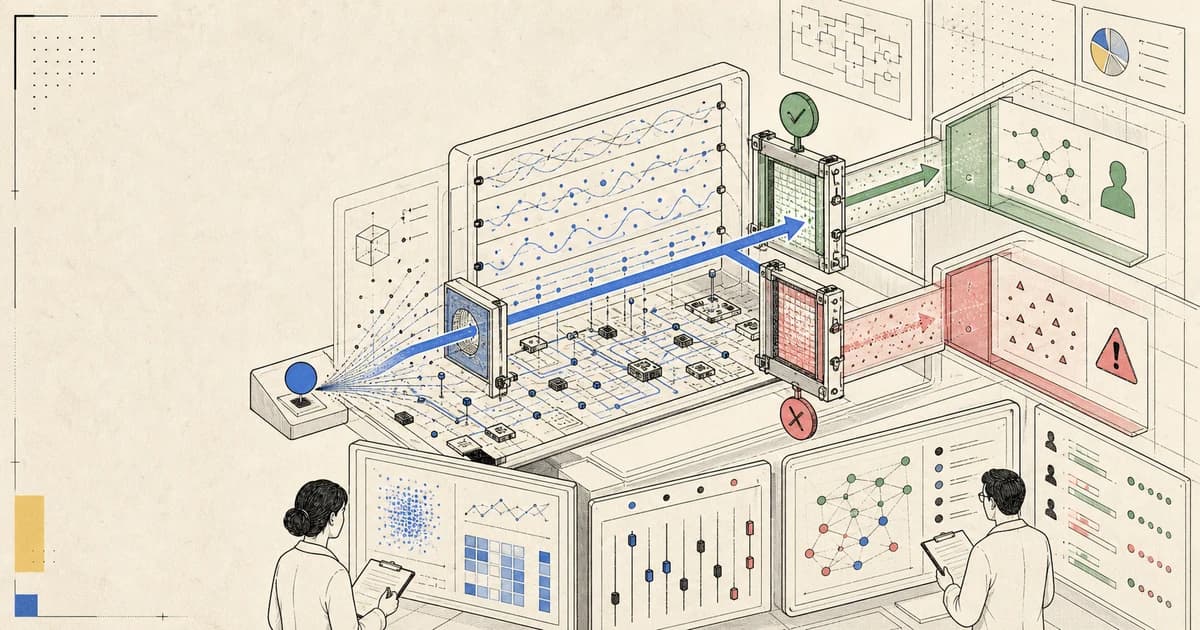
Across a set of open-source chat models, the authors found a one-dimensional direction in the residual stream that strongly mediates refusal behavior. Remove it, and harmful requests are less likely to be refused. Add it, and harmless requests can become refusals.
That does not mean every modern model can be made unsafe with one magic vector. One Hacker News commenter pointed to newer research arguing that models can spread refusal behavior across more directions, which may make this specific intervention less direct.
But the broader lesson still matters for builders.
If model safety depends on one brittle behavior layer, you do not have a safety system. You have a feature.
The refusal layer is not the safety system#
Refusal behavior is visible, so people treat it as the safety mechanism.
The model says no. The product looks safer.
But product safety is not the same thing as refusal text. A serious system has to account for:
- what the user asked
- what tools are available
- what data is accessible
- what actions are allowed
- what outputs are reviewed
- what logs are retained
- what policies apply outside the model
That is especially true for agents.
A chat model that answers a question badly is one risk profile. An agent with shell access, browser access, API keys, database permissions, or deployment rights is another.
For agent products, safety cannot live only inside the model's final response. It has to live in the harness around the model.
That connects to the same architecture lesson behind agent reliability: the model is one component in a larger control loop.
Why mechanism research matters to product teams#
Mechanistic interpretability can feel far from everyday app development.
This paper is a good example of why it is not.
If refusal behavior can be localized, redirected, suppressed, or distributed, then product teams should stop thinking of safety as a single prompt or single fine-tuning property.
They should think in layers:
- Policy: what the system is allowed to do.
- Interface: what requests users can make.
- Retrieval: what context the model can see.
- Tools: what actions the model can take.
- Runtime: what the harness permits.
- Output: what gets filtered, reviewed, or logged.
- Evaluation: what red-team tests keep running.
The refusal layer is one layer. It is not the whole stack.
This is the same reason prompt injection remains hard. You cannot solve it by asking the model to be careful. You need boundaries around data, tools, and authority.
From the archive
Skills Are How Agents Learn the Job
May 2, 2026 • 7 min read
Skills Are the New Agent Operating System
May 2, 2026 • 9 min read
VS Code Copilot Co-Author Attribution: The Real Problem Is Workflow Consent
May 2, 2026 • 8 min read
Warp Open Sourced the Terminal. The Real Story Is Agent Operations
May 2, 2026 • 8 min read
The opposing view#
The fair opposing view is that the paper is old by AI standards.
It was first submitted in June 2024 and revised in October 2024. The HN thread included a comment saying newer models are trained to resist simple "abliteration" by spreading refusal encodings across the network.
That is a serious caveat.
Builders should not read this paper as a current universal exploit recipe. They should read it as evidence that model behavior can be more mechanically brittle than product teams assume.
The exact technique may age. The system lesson ages slower.
If one generation concentrates refusal behavior in a direction and another generation distributes it, the product conclusion is still the same: do not depend on the model's internal refusal behavior as your only control.
Refusal quality also matters#
There is another practical problem: refusals are often badly calibrated.
Developers have seen models refuse harmless requests, over-explain policy, or block useful debugging context. They have also seen models comply in places they should slow down.
That means the safety layer has two jobs:
- prevent dangerous misuse
- avoid uselessly blocking legitimate work
A refusal-only product experience tends to handle both poorly.
Better systems separate risk classification from tool authority. For example, a model can discuss a high-level concept while the harness blocks execution of risky commands. Or an agent can draft a migration plan while requiring approval before touching production.
That is a stronger pattern than hoping the model's text refusal is perfectly calibrated.
What AI app builders should do#
If you are building with LLMs or agents, the practical takeaway is not to panic.
It is to move safety out of vibes and into architecture.
Start with tool boundaries:
- do not expose unnecessary tools
- scope credentials narrowly
- wrap privileged commands
- require approval for irreversible actions
- keep secrets out of model context
- log tool calls and decisions
Then add task-specific evaluation:
- benign requests that should not be refused
- risky requests that should be blocked
- ambiguous requests that should ask clarifying questions
- tool-use attempts that should require approval
- prompt-injection attempts against retrieved context
Finally, make the product degrade gracefully.
When the model refuses, the user should know what boundary was hit and what safe alternative exists. When the harness blocks an action, the system should explain whether it needs approval, a different permission, or a narrower request.
That is more useful than a generic "I cannot help with that."
Where this fits in the agent stack#
The trend across developer AI is clear.
Models are getting more capable, but the surrounding system is becoming more important, not less.
Flue's harness framing, jcode's session-runtime focus, and safety research like this all point to the same conclusion:
The model is not the product boundary.
The product boundary is the system that wraps the model.
For AI agents, that means permissions, tools, traces, approvals, evaluations, and deployment constraints. For chat products, it means retrieval boundaries, output review, data minimization, and policy-aware UX.
Refusal is visible. Boundaries are what make it reliable.
My take#
The refusal-direction paper is not interesting because it gives builders a trick.
It is interesting because it shows why thin safety layers are a bad bet.
Modern AI products should assume model behavior will be probed, shifted, optimized around, and occasionally misunderstood. The answer is not to abandon model-level safety. The answer is to stop treating it as the only layer.
Good AI systems need refusals, but they also need constrained tools, narrow credentials, reviewable traces, and task-specific evaluations.
That is the real takeaway for developers.
Safety is not a sentence the model says. It is the system the model runs inside.
Read next
OpenAI Privacy Filter: Production PII Redaction Guide
OpenAI shipped an open-weight PII redactor. Here is how to wire it into a real ingestion pipeline locally, fast, with zero leaks, and how it benchmarks against Presidio and a regex baseline.
10 min readOpen Source Has a Bot Problem: Prompt Injection in Contributing.md
AI coding agents now read repository docs, config, issues, and comments before opening pull requests. That turns CONTRIBUTING.md and AGENTS.md into part of the security boundary.
8 min readThe Agent Reliability Cliff: Why Your 10-Step Chain Only Succeeds 20% of the Time
The math of agent pipelines is brutal. 85% reliability per step compounds to about 20% at 10 steps. Here is why long chains collapse in production, and the six patterns the field has converged on to fight the decay.
9 min readShare
Developers Digest
Technical content at the intersection of AI and development. Building with AI agents, Claude Code, and modern dev tools - then showing you exactly how it works.
300+ videos30K+ GitHub stars850+ articles
Related Tools
AI FrameworksNew

Claude Agent SDK
Anthropic's Python SDK for building production agent systems. Tool use, guardrails, agent handoffs, and orchestration. R...
View ToolAI Frameworks

OpenAI Agents SDK
Lightweight Python framework for multi-agent systems. Agent handoffs, tool use, guardrails, tracing. Successor to the ex...
View ToolInfrastructure
B
Browser Harness
Self-healing browser automation harness that lets LLMs complete any browser task. 5,000+ stars in under a week.
View ToolApps from Developers Digest
Developer ToolsPlus $20/mo
Agent Eval Bench Plus
Score every coding agent on your own tasks. Catch regressions in CI.
View AppDeveloper ToolsIn Progress
agentfs
Give your agents a filesystem that branches like git. Crash-safe by default.
View AppDeveloper ToolsIn Progress
Subagent Studio
Design subagents visually instead of editing YAML by hand.
View AppRelated Guides
Guide
Built-in Subagents - Claude Code
Researcher, auditor, reviewer, and other ready-made subagent types.
Claude CodeGuide
Claude Code Setup Guide
Configure Claude Code for maximum productivity -- CLAUDE.md, sub-agents, MCP servers, and autonomous workflows.
AI AgentsGuide
MCP Servers Explained
What MCP servers are, how they work, and how to build your own in 5 minutes.
AI AgentsRelated Posts

10 min read
OpenAI
OpenAI Privacy Filter: Production PII Redaction Guide
OpenAI shipped an open-weight PII redactor. Here is how to wire it into a real ingestion pipeline locally, fast, with ze...

8 min read
AI Security
Open Source Has a Bot Problem: Prompt Injection in Contributing.md
AI coding agents now read repository docs, config, issues, and comments before opening pull requests. That turns CONTRIB...

9 min read
AI Agents
The Agent Reliability Cliff: Why Your 10-Step Chain Only Succeeds 20% of the Time
The math of agent pipelines is brutal. 85% reliability per step compounds to about 20% at 10 steps. Here is why long cha...
13 min read
AI Agents
Self-Improving AI Agents: Building Systems That Learn From Their Mistakes
AI agents that reflect on failures, accumulate skills, and get better with every session. Reflection patterns, memory ar...
8 min read
AI Coding
Flue and the Agent Harness Layer
Flue is trending because it names the part of agent infrastructure that is becoming product-critical: the programmable h...

8 min read
AI Coding
Open Design Shows the Next Agent Wrapper
Open Design is trending because it turns Claude Code, Codex, Cursor, Gemini, and other CLIs into a design engine. The us...
Build with the member tools

Get Smarter About AI Dev
New tutorials, open-source projects, and deep dives on coding agents - delivered weekly.
One email per weekReal code, not theoryFree forever