OpenAI Codex, Managed Agents, and AWS: What Developers Should Watch

TL;DR
OpenAI is moving Codex from a coding assistant into an enterprise agent platform. Here is what changed with Codex, Managed Agents, AWS, and the Responses API.
Official Sources#
| Source | Link |
|---|---|
| OpenAI Codex Changelog | developers.openai.com/codex/changelog |
| Codex for Almost Everything | openai.com/index/codex-for-almost-everything |
| New Tools for Building Agents | openai.com/index/new-tools-for-building-agents |
| OpenAI on AWS | openai.com/index/openai-on-aws |
| Amazon Bedrock Agents | aws.amazon.com/bedrock/agents |
| OpenAI Responses API | platform.openai.com/docs/api-reference/responses |
OpenAI's developer story is no longer just "call a model from your app." The current direction is broader: Codex for software work, the Responses API for custom agents, and managed agent infrastructure for teams that do not want to assemble the whole harness themselves. The companion read is Codex as a general-purpose AI agent, which covers the non-code workflow angle.
That matters for search intent because developers are no longer asking one question. They are asking a stack of related questions:
- What is Codex now?
- Is Codex just for code, or for wider knowledge work?
- What are Managed Agents?
- Should I build on the Responses API, Codex, or AWS Bedrock?
- How does this compare to Claude Code, GitHub Copilot, and Cursor?
This is the map.
OpenAI Agent Platform Map#
The nearby posts split the OpenAI story by layer:
| Layer | Best next read |
|---|---|
| Codex product basics | OpenAI Codex guide |
| Recent Codex product direction | Codex changelog April 2026 |
| Long-running agent control | Codex /goal vs Claude Managed Outcomes |
| OpenAI versus Anthropic platform choice | Anthropic vs OpenAI developer experience |
| Agent implementation layer | OpenAI Agents SDK TypeScript and Responses API migration |
| Tool and budget choice | AI coding tools pricing 2026 |
Primary sources to verify while this category moves: OpenAI's Codex changelog, Codex for almost everything, new tools for building agents, and OpenAI on AWS.
Codex Is Becoming an Agent Workspace#
OpenAI's April update, Codex for almost everything, is the clearest signal. Codex is being positioned as a workspace for running agents across the software development lifecycle, not just a terminal coding tool.
For the OpenAI side of the agent stack, read OpenAI Codex: Cloud AI Coding With GPT-5.3 with Codex vs Claude Code in April 2026: Which Agent for Which Job; that gives the product and workflow context behind this update.
The new surface includes computer use, an in-app browser, image generation, plugins, memory, multiple terminals, PR review workflows, SSH devboxes, automations, and scheduled follow-up work. The important part is not any single feature. The important part is the product shape.
Codex is turning into an agent operating surface.
For developers, that means the competitive frame changes. The old comparison was:
Codex vs Claude Code vs Cursor for writing code.
The new comparison is:
Which tool can safely coordinate agents across code, browser QA, review comments, docs, design, CI, and repeated operational tasks?
That is a bigger market.
From the archive
AWS Makes Codex an Enterprise Procurement Story#
OpenAI's AWS partnership announcement adds the enterprise side. OpenAI models, Codex, and Amazon Bedrock Managed Agents are coming to AWS in limited preview.
For developers inside companies, this changes the adoption path. A lot of teams cannot simply swipe a card for a new AI coding tool and point it at production code. They need procurement, security review, data controls, billing alignment, compliance, and support.
Codex on Bedrock gives those teams a path where the agent can be powered through the infrastructure they already use. OpenAI says customers can configure Codex to use Bedrock as the provider, starting with Codex CLI, the Codex desktop app, and the VS Code extension.
That puts Codex closer to the category GitHub has been aiming at with Copilot coding agent: asynchronous work inside enterprise controls. It also makes the Codex vs Claude Code comparison less about model taste and more about operating model.
Managed Agents Are the Real Trend#
The phrase "Managed Agents" is worth watching. It means teams are moving past the basic model-call layer.
An unmanaged agent stack usually means you own:
- The prompt loop
- Tool execution
- State and memory
- Sandboxing
- Secrets
- Observability
- Eval traces
- Deployment
- Retry behavior
- Governance
That is a lot of infrastructure before the agent does anything useful.
Managed Agents are an attempt to package more of that operational layer. Amazon Bedrock Managed Agents, powered by OpenAI, is pitched as a way to maintain context, execute multi-step workflows, use tools, and operate inside AWS security and compliance controls.
For app builders, this means the question becomes less "can I build an agent?" and more "which layer should I own?"
If you need full product control, build on the Responses API. If you need a coding agent for repo work, use Codex. If you need governed enterprise deployment inside AWS, watch Managed Agents.
Responses API Is Still the Build Layer#
The Responses API is the OpenAI primitive for custom agents. It combines model calls, built-in tools, streaming, structured output patterns, and hosted state into a more agent-friendly API. If you are migrating older OpenAI agent code, the Responses API migration guide is the implementation-level companion to this strategy post.
OpenAI has been clear that the Responses API is the preferred direction for new agent integrations. The older Assistants API is being folded toward this model.
The practical decision tree:
| Need | Best starting point |
|---|---|
| Codebase edits, tests, PRs | Codex |
| Custom agent inside your app | Responses API |
| Enterprise agent deployment on AWS | Bedrock Managed Agents |
| Low-level framework control | Agents SDK or your own loop |
Do not force Codex to be your product runtime. Do not rebuild Codex if the job is mostly repo work. Pick the layer that matches the ownership boundary.
What This Means for Developers#
The highest leverage move is to separate three workflows:
- Build agents with the Responses API when the agent is part of your product.
- Run coding agents with Codex when the task is repo-centered.
- Deploy managed agents when governance, observability, security, and procurement matter more than framework flexibility.
This is the same pattern we are seeing across the market. Claude Code owns the local terminal agent workflow. GitHub Copilot owns the GitHub-native workflow. Codex is trying to own the broader agent workspace.
The trend is not "AI writes code now." That was 2024. The 2026 trend is managed delegation: agents that can work across tools, remember context, run in controlled environments, and hand back reviewable artifacts.
SEO Keywords to Watch#
If you are tracking this market, these are the queries worth owning:
- OpenAI Codex AWS
- Codex Managed Agents
- Bedrock Managed Agents OpenAI
- Codex vs Claude Code
- Codex desktop app
- Responses API agents
- OpenAI Agents SDK vs Responses API
- managed AI agents for developers
The content opportunity is still early because the terminology is moving faster than the docs. Developers will search for "managed agents" before they fully know whether they mean OpenAI, AWS, Claude, GitHub, or a homegrown orchestration stack.
That is exactly when practical explainers win.
FAQ#
What is OpenAI Codex in 2026?#
OpenAI Codex has evolved from a code completion tool into an agent workspace. It now supports computer use, an in-app browser, image generation, plugins, memory, multiple terminals, PR review workflows, SSH devboxes, and scheduled automations. The product is positioned as an agent operating surface for the full software development lifecycle, not just a terminal coding assistant.
What are Managed Agents?#
Managed Agents are packaged agent infrastructure that handles the operational complexity of running AI agents. Instead of building your own prompt loop, tool execution, state management, sandboxing, secrets, observability, and deployment, Managed Agents provide these layers as a service. Amazon Bedrock Managed Agents powered by OpenAI is the enterprise-focused example.
How does Codex on AWS work?#
OpenAI's AWS partnership allows customers to configure Codex to use Amazon Bedrock as the model provider. This works with Codex CLI, the Codex desktop app, and the VS Code extension. For enterprises, this means Codex can run inside existing AWS security controls, billing, and compliance frameworks rather than requiring separate procurement.
What is the difference between the Responses API and Codex?#
The Responses API is OpenAI's primitive for building custom agents inside your own applications. It combines model calls, built-in tools, streaming, structured output, and hosted state. Codex is a finished product for coding and software work. Use the Responses API when the agent is part of your product. Use Codex when the task is repo-centered work like edits, tests, and PRs.
Should I use Codex, the Responses API, or Bedrock Managed Agents?#
Pick the layer that matches your ownership boundary. Use Codex for codebase edits, tests, and PRs. Use the Responses API for custom agents inside your app. Use Bedrock Managed Agents when enterprise governance, observability, security, and procurement matter more than framework flexibility. Do not force Codex to be your product runtime.
How does Codex compare to Claude Code and GitHub Copilot?#
Claude Code owns the local terminal agent workflow. GitHub Copilot owns the GitHub-native workflow. Codex is positioning as the broader agent workspace with computer use, browser QA, and operational automations. The competitive frame is shifting from "which writes better code" to "which can safely coordinate agents across code, browser, CI, docs, and repeated tasks."
What is the Responses API replacing?#
The Responses API is replacing the older Assistants API as OpenAI's preferred direction for agent integrations. OpenAI has been clear that new agent work should start with the Responses API rather than the legacy Assistants patterns.
Is Codex just for code or for broader work?#
OpenAI's April 2026 announcement positioned Codex for "almost everything" - not just code. The product now includes workflows for research, QA, documentation, design review, and operational tasks. The companion read on Codex as a general-purpose agent covers the non-code workflow angle.
Read next
Codex Is Becoming a General-Purpose AI Agent, Not Just a Coding Tool
OpenAI is turning Codex from a coding assistant into a broader agent workspace for files, apps, browser QA, images, automations, and repeatable knowledge work.
8 min readGPT-5 Codex: OpenAI's Agentic Coding Model
OpenAI is drawing a line in the sand. GPT-5 Codex is not an API release.
7 min readOpenAI Codex: Terminal and Cloud AI Coding Agent
Codex works from the terminal, cloud tasks, IDEs, GitHub, Slack, and Linear. Here is how to use it and how it compares to Claude Code.
5 min readShare
Developers Digest
Technical content at the intersection of AI and development. Building with AI agents, Claude Code, and modern dev tools - then showing you exactly how it works.
300+ videos30K+ GitHub stars850+ articles
Related Tools
AI CodingAgent

OpenAI Codex
OpenAI's coding agent for terminal, cloud, IDE, GitHub, Slack, and Linear workflows. Reads repos, edits files, runs comm...
View ToolAI Models

ChatGPT
OpenAI's flagship. GPT-4o for general use, o3 for reasoning, Codex for coding. 300M+ weekly users. Tasks, agents, web br...
View ToolAI Coding
Codex CLI
OpenAI's open-source terminal coding agent built in Rust. Runs locally, reads your repo, edits files, and executes comma...
View ToolAI Coding
C
Conductor
Mac app for running parallel Claude Code, Codex, and Cursor agents in isolated workspaces. Watch every agent work at onc...
View ToolApps from Developers Digest
Developer Tools
Agent Hub
Every coding agent in one window. Stop alt-tabbing between Claude, Codex, and Cursor.
View AppDeveloper ToolsIn Progress
Migrate
Beat the August 2026 Assistants API sunset. Paste old code, get Responses API.
View AppSaaS ProductsIn Progress
RSS Radar
Watch any list of changelogs/blogs, get a single daily digest of what shipped - filtered by your stack and with AI-written one-liners.
View AppRelated Guides
Guide
Claude Code Setup Guide
Configure Claude Code for maximum productivity -- CLAUDE.md, sub-agents, MCP servers, and autonomous workflows.
AI AgentsGuide
MCP Servers Explained
What MCP servers are, how they work, and how to build your own in 5 minutes.
AI AgentsGuide
Chronicle Research Preview Setup Guide
Set up Codex Chronicle on macOS, manage permissions, and understand privacy, security, and troubleshooting.
Getting StartedRelated Videos
OpenAI Codex in 7 Minutes
OpenAI Codex Desktop App: Plan/Goal Modes, Plugins, Multi-Agent Workflows & UI Annotation Demo The video showcases OpenAI’s Codex desktop app, which the creator calls OpenAI’s best product and a prem...
Video·
OpenAI Codex in ChatGPT in 5 Minutes
In this video, we delve into OpenAI's latest release, Codex, a cloud-based software engineering agent designed for various coding tasks. Unlike tools like Cursor or Windsurf, Codex integrates...
Video·
OpenAI Open Sources Codex: The CLI Coding Agent
Exploring Codex: AI Coding in Terminal In this video, I explore Codex, a new lightweight CLI tool for AI coding that runs in the terminal. This tool, possibly a response to Anthropic's CLI,...
Video·
Related Posts
8 min read
Codex
Codex Is Becoming a General-Purpose AI Agent, Not Just a Coding Tool
OpenAI is turning Codex from a coding assistant into a broader agent workspace for files, apps, browser QA, images, auto...

7 min read
OpenAI
GPT-5 Codex: OpenAI's Agentic Coding Model
OpenAI is drawing a line in the sand. GPT-5 Codex is not an API release.

5 min read
OpenAI
OpenAI Codex: Terminal and Cloud AI Coding Agent
Codex works from the terminal, cloud tasks, IDEs, GitHub, Slack, and Linear. Here is how to use it and how it compares t...
10 min read
OpenAI
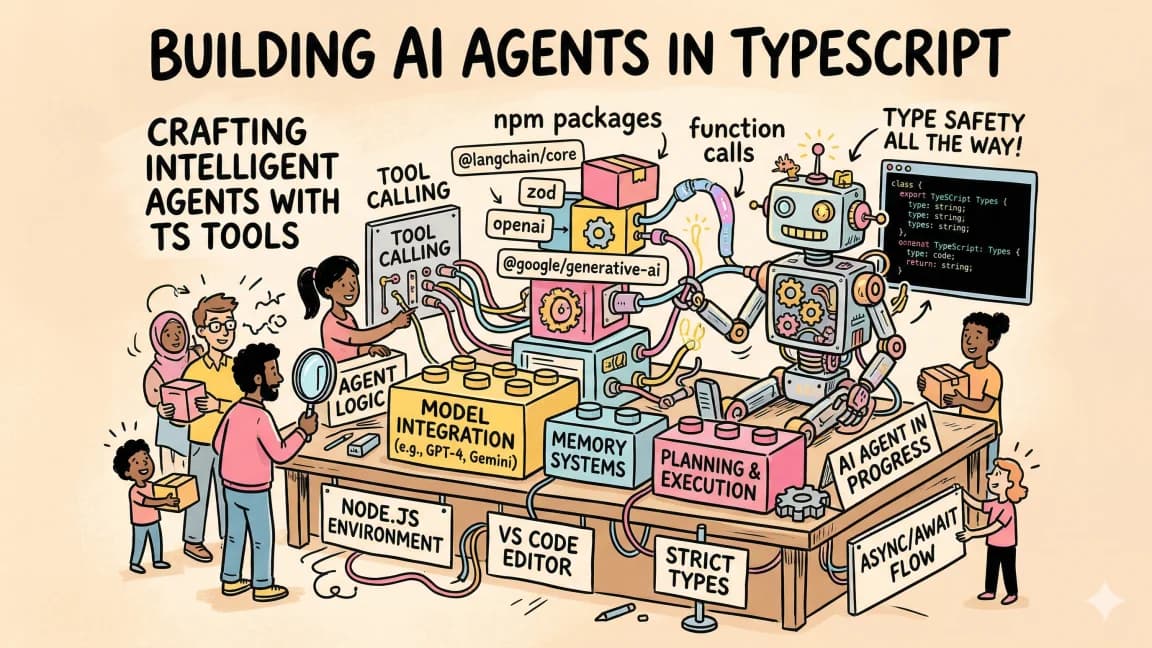
OpenAI Agents SDK for TypeScript: A Practical Guide
OpenAI released their Agents SDK for TypeScript with first-class support for tool calling, structured outputs, multi-age...
10 min read
AI Coding
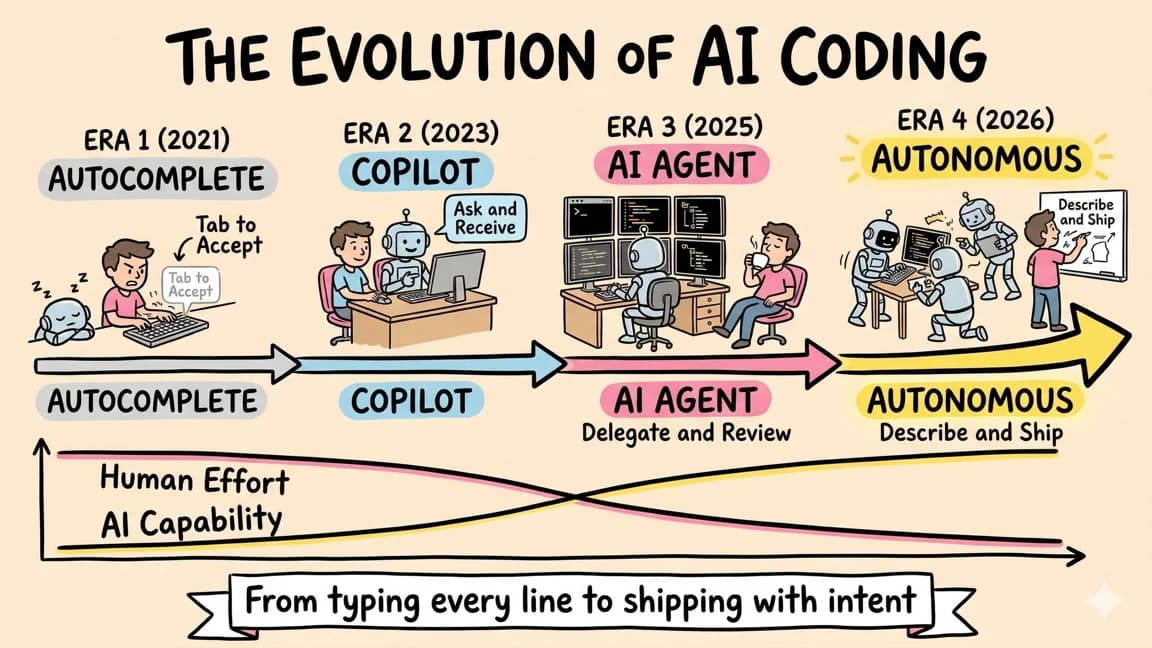
State of AI Coding: April 2026
The AI coding market just passed 90% developer adoption. Here's what the data actually says about which tools are winnin...

9 min read
Codex
Codex Changelog April 2026: Goals, Browser Use, GPT-5.5, and Safer Agents
OpenAI's April 2026 Codex changelog shows a clear product shift: Codex is becoming a full agent workspace with goals, br...
11 min read
Claude Code
Claude Code vs Codex App in 2026: Local Agent Pairing vs Cloud Agent Orchestration
A deep comparison of Claude Code and OpenAI Codex app based on official docs and product updates: execution model, secur...
Build with the member tools

Get Smarter About AI Dev
New tutorials, open-source projects, and deep dives on coding agents - delivered weekly.
One email per weekReal code, not theoryFree forever