State of AI Coding: April 2026
TL;DR
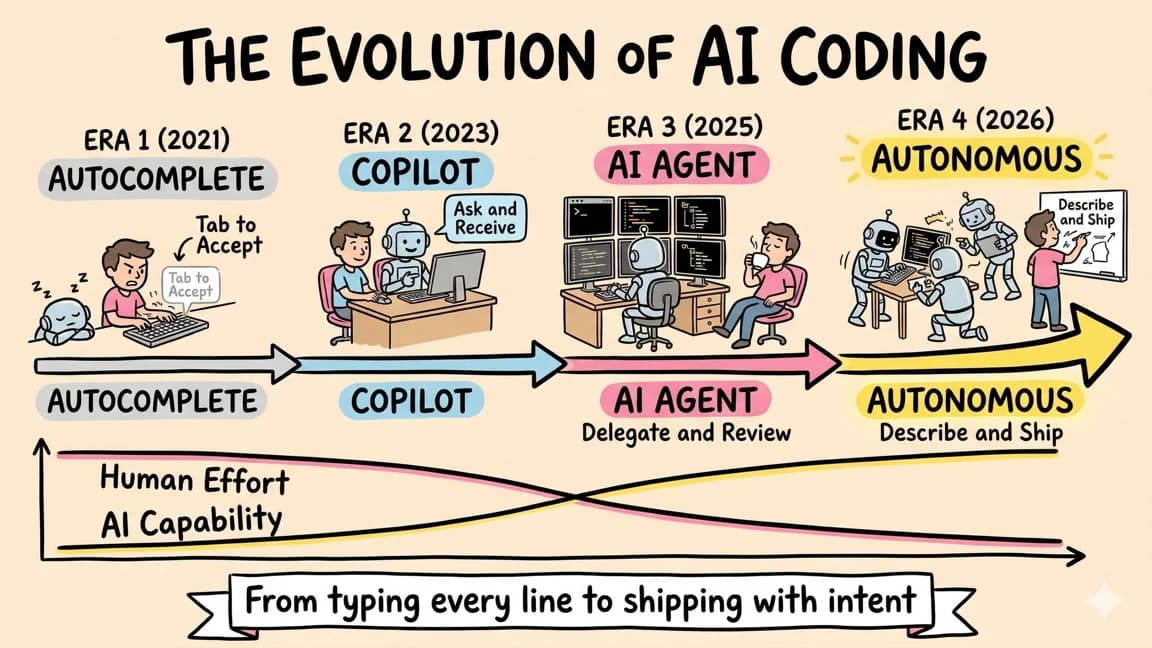
The AI coding market just passed 90% developer adoption.
90% of developers now use AI coding tools. The adoption debate is over. What matters now: which tool, for what work, at what price.
Pick your tool#
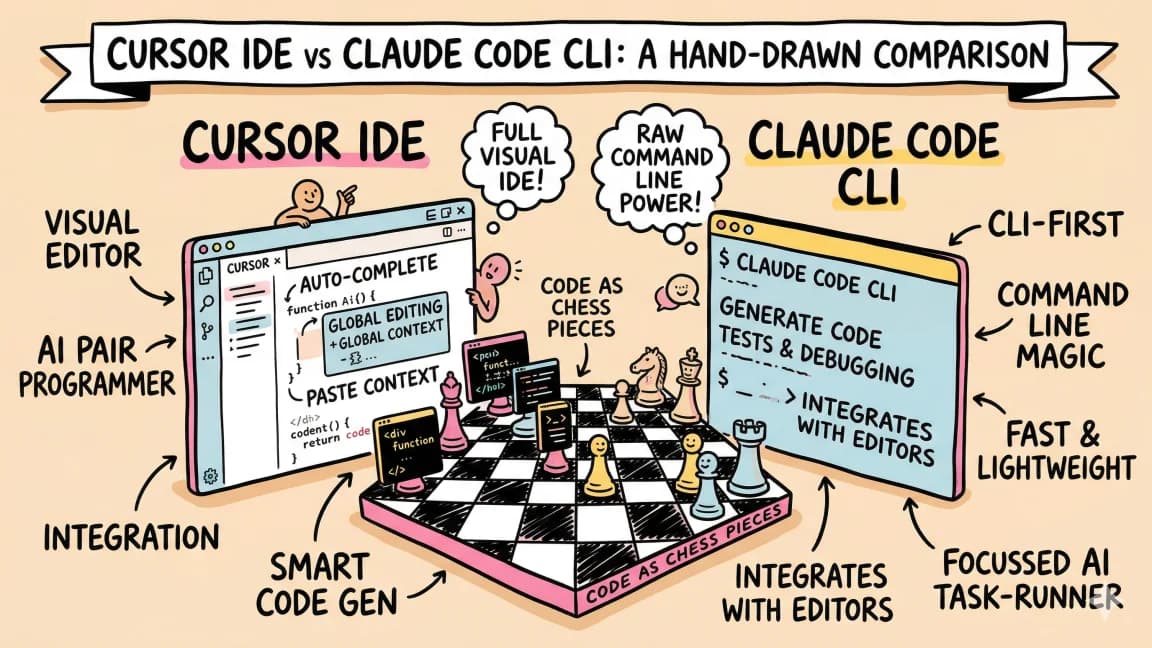
For autonomous multi-file work: Claude Code leads. 91% satisfaction, 6x growth in 9 months. Terminal-native architecture means it works outside any editor. Best for: overnight feature builds, large refactors, test generation at scale.
For fast IDE iteration: Cursor holds the IDE segment. Visual diffs, inline suggestions, tight feedback loops. Best for: iterative edits where you want to stay in the editor and review changes visually.
For async background coding: Codex runs tasks while you're away. Persistent sessions, file uploads, ChatGPT integration. Best for: teams already on OpenAI stack who want scheduled agent work.
For enterprise compliance: GitHub Copilot integrates with existing GitHub workflows. Slower to innovate, but IT teams trust it. Best for: companies over 5,000 employees with Microsoft procurement in place.
Need a direct comparison? See Claude Code vs Cursor, Claude Code vs Codex, or the full comparison hub.
Need pricing? The AI coding tools pricing guide has current rates and a calculator.
The numbers behind these picks#
The AI coding landscape shifts structurally every quarter. Tools that dominated six months ago are losing share. New categories are forming. The way developers write software is being rewired in real time.
This is the April 2026 data roundup. No speculation, no hype. What the surveys show, what shipped, and what is coming.
The picks above come from three major surveys covering 12,000+ developers. Here's what the data actually says.
| Survey | Sample | Key finding |
|---|---|---|
| JetBrains AI Pulse (Jan 2026) | 10,000+ devs | 90% use AI tools regularly; 74% use specialized dev tools, not just chatbots |
| Sonar State of Code (Oct 2025) | 1,100+ devs | 72% daily usage; verification bottleneck is the new constraint |
| Pragmatic Engineer (Jan-Feb 2026) | 900+ subs | 95% weekly usage; staff+ engineers adopt agents fastest |
Market share at a glance#
| Tool | Awareness | Work adoption | Growth signal |
|---|---|---|---|
| GitHub Copilot | 76% | 29% | Flat - enterprise procurement keeps it alive |
| Cursor | 69% | 18% | Slowing - IDE market fragmenting |
| Claude Code | 57% | 18% | 6x growth in 9 months; 24% in North America |
| Codex | 27% | 3% | Pre-desktop-app data; expect jump |
| Antigravity | - | 6% | 2 months old; aggressive traction |
| Junie CLI | - | 5% | LLM-agnostic, BYOK model |
Source: JetBrains AI Pulse Survey, January 2026
Key insight: Claude Code's 91% CSAT and 54 NPS are the highest in the category. Product quality now outweighs ecosystem lock-in. When a tool is clearly better at the core job, developers migrate regardless of switching costs.
Chatbots still matter: 28% use ChatGPT for coding, 8% use Gemini, 7% use Claude. Developers use both - chatbots for quick questions, agents for production work.
Four trends shaping tool choice#
1. Terminal agents won. Claude Code proved the model: give an agent filesystem + shell + git access, and it operates with autonomy IDE plugins can't match. The same execution-first shape now shows up across multiple vendors and products.
2. MCP is required infrastructure. The Model Context Protocol connects AI tools to databases, APIs, docs, and deployment platforms. JetBrains built Agent Client Protocol (ACP) for the same reason. Tools that don't speak a standard protocol are increasingly isolated. Learn more: What is MCP?
3. Multi-agent is production-ready. The tooling layer is catching up to how teams actually work. Practical use: spawn agents in parallel for refactoring, tests, and docs - they work simultaneously without stepping on each other.
4. Verification is the new bottleneck. Sonar found that reviewing AI-generated code is now a major time sink. GitHub Octoverse 2025 reports that 72.6% of developers using Copilot code review said it improved their effectiveness. Stack Overflow's 2025 survey shows 22.6% of current AI users use AI for committing and reviewing code, while 47.1% use it for debugging or fixing code. The next wave of tooling will help you trust AI output faster.
What shipped in April 2026 (high level)#
This section is intentionally conservative. If a claim is not backed by a durable public source, it does not belong in a market roundup.
| Theme | What it means for you |
|---|---|
| Terminal-first agent workflows | Tooling is converging on "agent runs code and commands" instead of chat-only workflows. |
| Multi-agent orchestration | Teams are starting to treat parallel agents as normal, not experimental. |
| Protocols and integrations | MCP-like integration layers are turning into table stakes for serious use. |
| Review and verification | The next differentiation is trust: diff review, test automation, and evaluation loops. |
How developers actually work#
- 72-95% use AI tools daily or weekly. The 5% who don't are falling behind on patterns that compound.
- Most use 2-4 tools. Chatbot for quick questions, agent for production coding, IDE tool for completions.
- Staff+ engineers adopt agents fastest. Seniority correlates with agent adoption - judgment becomes more valuable when reviewing AI output.
- Satisfaction varies wildly. Claude Code: 91% CSAT, 54 NPS. The gap between best and worst tools is wider than ever.
- Enterprise lags 6-12 months. Copilot holds 40% in 5,000+ employee companies; Claude Code grows faster among individual developers.
What's next#
Predictions for end of 2026:
- Claude Code passes Copilot in individual developer adoption. 3% to 18% in nine months; the trajectory continues.
- AI IDE fragments into two camps: terminal agent + lightweight editor, or full AI IDE. Traditional IDE + plugin loses share.
- Agent orchestration becomes required infrastructure - like CI/CD was a decade ago.
- Verification tooling gets its own investment cycle. The bottleneck is clear; someone builds the definitive solution.
- $200/mo becomes standard for power users. Claude Code Max set the ceiling; competitors follow.
FAQ#
Which AI coding tool should I use right now?#
Autonomous multi-file work: Claude Code. IDE iteration: Cursor. Enterprise compliance: Copilot. Most developers use 2-3 for different tasks. Start at the comparison hub or pricing guide.
Is GitHub Copilot still worth it in 2026?#
For enterprise teams already on GitHub, yes - the ecosystem integration matters. For individual developers, Claude Code and Cursor offer stronger reasoning at similar prices.
How fast is Claude Code growing?#
6x in nine months (3% to 18% work adoption). In North America: 24%. Source: JetBrains AI Pulse Survey, 10,000+ developers.
Are AI tools replacing developers?#
No. Verification bottleneck means experienced developers are more valuable - someone needs judgment to review AI output. Staff+ engineers adopt agents fastest for this reason.
What's MCP and why does it matter?#
Model Context Protocol connects AI tools to external systems (databases, APIs, docs). Every major platform builds around it now. Tools without protocol support are isolated. Learn more.
Should I wait or adopt now?#
Adopt now. Start with a free tier or $20/mo plan. Workflow patterns compound - you can switch tools later, but you can't make up months of experience.
Sources: JetBrains AI Pulse Survey (January 2026), Sonar State of Code (PDF), Pragmatic Engineer AI Tooling Survey, GitHub Octoverse 2025, Stack Overflow Developer Survey 2025.
Continue Reading#
Get the next deep dive like this in your inbox
One email a week on AI Coding and the rest of the AI dev stack. Free.
Read next on AI coding tools
State of AI Coding: What Changed This Month
May 2026 was not about one more coding model leaderboard. The useful signal was control planes, UI-agent contracts, durable TypeScript workflows, usage economics, and runtime security.
10 min readThe 10 Best AI Coding Tools in 2026
From terminal agents to cloud IDEs - these are the AI coding tools worth using for TypeScript development in 2026.
8 min readAI Coding Tools Pricing Comparison 2026
AI coding tools pricing, verified September 28, 2026: Claude Code, Codex, Cursor (including Composer 2.5), GitHub Copilot, Google Antigravity, Claude Cowork, Windsurf, and more. Free tiers, pro plans, hidden costs, and what you actually get for your money.
12 min readNew here? Start with
Technical content at the intersection of AI and development. Building with AI agents, Claude Code, and modern dev tools - then showing you exactly how it works.