Open Design Shows the Next Agent Wrapper
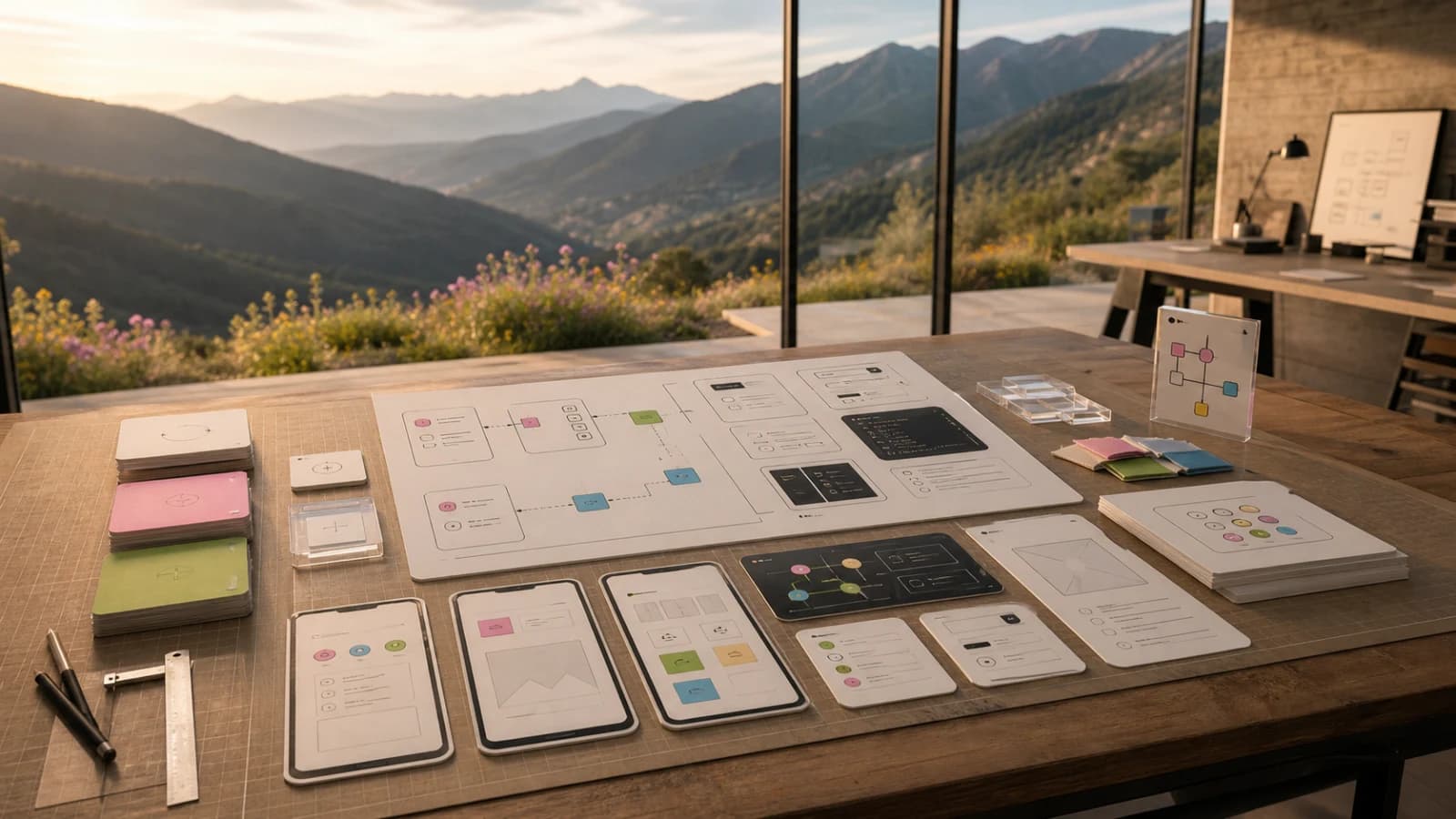
TL;DR
Open Design is trending because it turns Claude Code, Codex, Cursor, Gemini, and other CLIs into a design engine. The useful lesson is not design automation. It is artifact-first agent wrappers.
The most interesting Hacker News thread today is not really about design.
It is about what happens when coding agents stop being a terminal box and start becoming product engines.
Open Design hit the front page with a big promise: use your coding agent as a design engine. The repo describes itself as a local-first, open-source alternative to Claude Design. It auto-detects a long list of coding-agent CLIs on your machine, including Claude Code, Codex, Cursor Agent, Gemini CLI, OpenCode, Qwen, Copilot CLI, Hermes, and Kimi. Then it wraps those agents with skills, design systems, prompt templates, a local daemon, sandboxed previews, exports, and persistence.
That is a lot of machinery.
The obvious take is "AI can design now." That is too shallow.
The better take is this: agent products are moving from chat interfaces to artifact wrappers.
The wrapper is becoming the product#
Most coding agents already have the raw abilities Open Design wants to use.
For the design side of the same problem, read AI Agents Explained: A TypeScript Developer's Guide with How to Build AI Agents in TypeScript; they show how agent-generated interfaces fail and how to give coding agents better visual constraints.
They can read files. They can write files. They can run shell commands. They can open docs. They can generate HTML. They can revise based on feedback. In a strong repo, they can even follow local design rules if you give them a good [DESIGN.md](/blog/design-md-for-ai-agents).
Open Design does not win by making the model smarter.
It wins, if it wins, by narrowing the loop:
- choose a surface
- choose a design system
- ask clarifying questions before generating
- stream a plan
- write a real project folder
- render a sandboxed preview
- export the artifact
- keep the project state around for tomorrow
That is not a chatbot. That is a product wrapper around a coding agent.
This is the pattern worth paying attention to. The frontier models are becoming broadly capable enough that the valuable layer is less "can the model make a thing?" and more "can the product force the model into the right workflow for this kind of thing?"
Design is a good stress test#
Frontend and design work expose agent weakness faster than backend work.
Backend code has sharper receipts. A test passes or fails. A typecheck catches a broken contract. A database migration applies or it does not.
Design has softer receipts. The page can render and still look wrong. The hierarchy can technically fit and still feel cheap. The colors can come from the system and still clash. A screenshot can be "correct" while the product feels incoherent.
That is why Open Design is interesting as a stress test. It tries to add structure where agents usually freestyle:
- built-in skills
- brand-grade design systems
- visual direction choices
- device frames
- critique passes
- sandboxed previews
- export formats
Some of that may be too much. The Hacker News skepticism was direct: the README reads like a sales deck, the workflow can be token-heavy, and the output risks becoming more generic visual noise. That criticism is fair.
But the presence of criticism does not make the category unimportant. It points to the real bar.
Agent design tools will not be judged by whether they can make a slick first draft. They will be judged by whether they can preserve taste across revisions.
From the archive
OpenAI Codex, Managed Agents, and AWS: What Developers Should Watch
May 2, 2026 • 8 min read
Refusal Directions Are a Systems Problem
May 2, 2026 • 8 min read
Skills Are How Agents Learn the Job
May 2, 2026 • 7 min read
VS Code Copilot Co-Author Attribution: The Real Problem Is Workflow Consent
May 2, 2026 • 8 min read
The opposing view is right about generic output#
The strongest pushback in the thread was that infinitely generated design work becomes background noise.
That is already happening. AI can produce endless pitch decks, landing pages, social cards, dashboards, mockups, diagrams, and brand systems. Most of them look like they came from the same expensive template pack. They are polished, empty, and hard to trust.
This is the trap for artifact-first agents.
If the wrapper only helps the model generate more output, it accelerates slop.
If the wrapper helps the model preserve constraints, compare alternatives, revise against a critique, and keep evidence attached to decisions, it becomes useful.
That distinction matters more than the model provider.
A design agent does not need to be "creative" in the vague sense. It needs to be constrained in the useful sense:
- use this brand system
- respect this layout density
- preserve this component hierarchy
- keep this product promise visible
- avoid this banned language
- show the next section above the fold
- run the screenshot check
- revise only the broken part
That is not magic. It is workflow.
The CLI aggregator angle is underrated#
One underrated part of Open Design is that it does not assume one agent.
The repo positions the local daemon as the privileged process and treats the agent CLI as swappable. That is a subtle but important product bet.
Developers already live in a multi-agent world. Claude Code, Codex, Cursor, Gemini, Kimi, Qwen, OpenCode, Copilot, and local models all have different strengths, prices, limits, and ergonomics. A serious artifact tool cannot assume the user wants one model forever.
The wrapper pattern gives you a cleaner abstraction:
- the product owns the workflow
- the local daemon owns execution
- the agent owns generation and revision
- the design system owns constraints
- the preview owns feedback
That is more durable than betting the whole product on one provider's chat surface.
It also explains why these wrappers keep appearing. The agent layer is powerful but unstable. The product layer can stabilize the task.
What I would steal for developer tools#
Open Design is framed around design, but the pattern applies to developer workflows more broadly.
Imagine the same artifact-first wrapper for:
- API migration plans
- code review reports
- incident postmortems
- database schema changes
- docs refreshes
- release notes
- synthetic monitoring checks
- agent run replays
The user should not have to prompt from scratch every time. The product should know the artifact shape, the review loop, the export target, and the evidence requirements.
For a database migration, that means schema diff, rollback plan, dry-run output, generated SQL, and test evidence.
For a code review, it means changed files, behavioral risk, line comments, missed tests, and a confidence level.
For a docs refresh, it means source docs, changed claims, screenshots, and a stale-link check.
That is the lesson from Open Design: the future is not one giant agent prompt. It is many narrow artifact factories.
The practical test#
If you are evaluating tools like this, ignore the launch copy and ask five questions:
- Does it produce a real artifact I can inspect outside the chat?
- Does it preserve state between sessions?
- Does it force the agent to ask for missing constraints before generating?
- Does it provide a preview or test surface that catches obvious failures?
- Does it make revision cheaper than starting over?
If the answer is no, it is probably just a fancy prompt box.
If the answer is yes, it may be the shape of the next wave of developer tools.
Open Design might not be the final version of this category. The HN thread is right that the current surface can feel heavy, and the category is already crowded with demos that overpromise.
But the architecture signal is real.
The next serious agent products will not ask users to watch a model think. They will wrap the model in a workflow that produces something inspectable, revisable, and exportable.
That is the shift.
Continue Reading#
Read next
Skills Are the New Agent Operating System
GitHub trending is full of agent skill frameworks. The real shift is not bigger prompts or more agents. It is turning team process into inspectable, reusable operating instructions.
9 min readAgent Swarms Need Receipts
GitHub is filling with multi-agent frameworks, skills, and coding harnesses. The useful lesson is not that every team needs a swarm. It is that every agent needs receipts: tests, logs, diffs, and reviewable checkpoints.
8 min readDESIGN.md: The Contract That Keeps AI Agents On Brand
A repo-root DESIGN.md gives Claude Code, Codex, and other agents the design rules they need to honor so generated UI does not drift into generic territory.
9 min readShare
Developers Digest
Technical content at the intersection of AI and development. Building with AI agents, Claude Code, and modern dev tools - then showing you exactly how it works.
300+ videos30K+ GitHub stars850+ articles
Try These Tools
Related Tools
AI CodingAgent

OpenAI Codex
OpenAI's coding agent for terminal, cloud, IDE, GitHub, Slack, and Linear workflows. Reads repos, edits files, runs comm...
View ToolAI CodingOpen source

DeepSeek-TUI
Open-source terminal agent runtime with approval modes, rollback snapshots, MCP servers, LSP diagnostics, and a headless...
View ToolAI Coding

Kimi Code
Open-source terminal coding agent from Moonshot AI. Powered by Kimi K2.5 (1T params, 32B active). 256K context window. A...
View ToolAI Coding

Droid
Factory AI's terminal coding agent. Runs Anthropic and OpenAI models in one subscription. Handles full tasks end-to-end...
View ToolApps from Developers Digest
Developer ToolsIn Progress
Subagent Studio
Design subagents visually instead of editing YAML by hand.
View AppDeveloper ToolsIn Progress
Agent Benchmark Lab
Compare AI coding agents on reproducible tasks with scored, shareable runs.
View AppDeveloper ToolsIn Progress
Browser Flow Design
Plan browser automation flows as inspectable product journeys before agents run them.
View AppRelated Guides
Guide
Claude Code Setup Guide
Configure Claude Code for maximum productivity -- CLAUDE.md, sub-agents, MCP servers, and autonomous workflows.
AI AgentsGuide
MCP Servers Explained
What MCP servers are, how they work, and how to build your own in 5 minutes.
AI AgentsGuide
Building Your First MCP Server
Step-by-step guide to building an MCP server in TypeScript - from project setup to tool definitions, resource handling, testing, and deployment.
AI AgentsRelated Videos

Buzz: Open-Source Collaboration for Humans + AI Agents
Buzz by Block: Open-Source Slack-Style Collaboration for Humans + AI Agents (Demo & Setup) Check out Arcade: https://arcade.dev.plug.dev/xiDRwlA Repo: https://github.com/block/buzz The video introd...
Video·

Replit Agent 4: Design-to-Full App with Parallel Agents & Infinite Canvas
Check out Replit: https://replit.com/refer/DevelopersDiges The video demos Replit’s Agent 4, explaining how Replit evolved from a cloud IDE into a platform where users can build, deploy, and scale ap
Video·
OpenAI's New TypeScript Agents SDK
Getting Started with OpenAI's New TypeScript Agents SDK: A Comprehensive Guide OpenAI has recently unveiled their Agents SDK within TypeScript, and this video provides a detailed walkthrough...
Video·
Related Posts
9 min read
AI Coding
Skills Are the New Agent Operating System
GitHub trending is full of agent skill frameworks. The real shift is not bigger prompts or more agents. It is turning te...
8 min read
AI Coding
Agent Swarms Need Receipts
GitHub is filling with multi-agent frameworks, skills, and coding harnesses. The useful lesson is not that every team ne...
9 min read
AI
DESIGN.md: The Contract That Keeps AI Agents On Brand
A repo-root DESIGN.md gives Claude Code, Codex, and other agents the design rules they need to honor so generated UI doe...
9 min read
AI Coding
Why Skills Beat Prompts for Coding Agents in 2026
The coding-agent workflow is maturing past giant hand-written prompts. The winning pattern in 2026 is a control stack: p...
8 min read
AI Coding
Flue and the Agent Harness Layer
Flue is trending because it names the part of agent infrastructure that is becoming product-critical: the programmable h...
8 min read
AI Coding
The 10 Best AI Coding Tools in 2026
From terminal agents to cloud IDEs - these are the AI coding tools worth using for TypeScript development in 2026.
Build with the member tools

Get Smarter About AI Dev
New tutorials, open-source projects, and deep dives on coding agents - delivered weekly.
One email per weekReal code, not theoryFree forever