GPT Image 2 Prompt Libraries Are Becoming Production Infrastructure
TL;DR
The latest GPT Image 2 prompt-library repos are not just galleries. They point at a practical workflow for repeatable visual systems, agent-friendly templates, and cheaper creative iteration.
The GPT Image 2 prompt-library wave looks like another pile of examples.
It is more useful than that.
The OpenAI image-generation docs frame GPT Image as a programmable generation and editing system, with the Image API for single prompts and the Responses API for conversational image workflows. The current prompt-library repos are the missing practical layer on top: reusable recipes for layout, lighting, materials, product shots, diagrams, UI screens, and visual consistency.
One current example, awesome-gpt-image-2, describes itself as a prompt-as-code library with hundreds of reverse-engineered cases and industrial templates. The README says its goal is to turn scattered examples into structured protocols that agents and automation workflows can reuse.
That is the right framing.
The take#
Image prompts are becoming build artifacts.
For a blog, product page, app directory, course hero, or social campaign, the prompt is not just creative prose. It is the spec that tells the image model what the asset should do, what it should avoid, what layout constraints matter, and how it fits the rest of the system.
That is why a prompt library can be more valuable than another gallery. A gallery helps you admire outputs. A library helps you reproduce a direction.
This is the same shift we are seeing with agent skills, skills as an agent operating system, and DESIGN.md for AI agents. The useful artifact is the reusable instruction layer.
Why developers should care#
Developers are getting pulled into visual production.
Landing pages need hero images. Docs need diagrams. Product launches need social cards. Internal tools need empty states and onboarding graphics. The image model can generate the pixels, but the team still needs repeatability.
OpenAI's docs call out practical controls such as size, quality, output format, compression, and the distinction between the Image API and Responses API. They also note limitations around text rendering, consistency, and composition control. Those limitations are exactly why structured prompts matter.
A production prompt should capture:
- asset type
- subject
- scene and backdrop
- composition
- lighting
- color constraints
- material details
- exact text rules
- avoid list
- validation criteria
That is not artistic overkill. It is how you keep a site from turning into 30 unrelated stock images.
From the archive
OpenAI's Codex Mac Certificate Deadline Is a Runbook Test
May 5, 2026 • 7 min read
Agent Skills Need Exit Criteria, Not More Prompt Lore
May 4, 2026 • 7 min read
GitHub Copilot Agent Metrics Are the Real Product Update
May 4, 2026 • 7 min read
Google Skills Shows the Next Agent Playbook
May 4, 2026 • 6 min read
The opposing view#
The fair criticism is that prompt libraries can become cargo cults.
Copying a viral prompt rarely gives you a production asset. It gives you someone else's taste, aspect ratio, subject, and hidden assumptions. Worse, many prompt repos collect examples without source clarity, commercial-use clarity, or a real test harness.
That matters. If you are shipping public brand assets, you need to know what is original, what was inspired by community content, and what rights or licenses apply. The awesome-gpt-image-2 README includes a disclaimer that it organizes public prompts and examples for learning and research, and tells users to obtain authorization from original rights holders before commercial use.
That is the correct caution. Prompt libraries are reference material, not automatic rights clearance.
What a useful prompt library looks like#
The best libraries will not just store prompts. They will store decisions.
For each asset pattern, I want:
- A short use case label.
- A structured prompt schema.
- Example outputs.
- Known failure modes.
- Model and quality settings.
- Post-processing notes.
- Brand constraints.
- A checklist for accepting or rejecting the output.
That is why I like prompt-as-code framing. It turns "make it look better" into a repeatable workflow an agent can run.
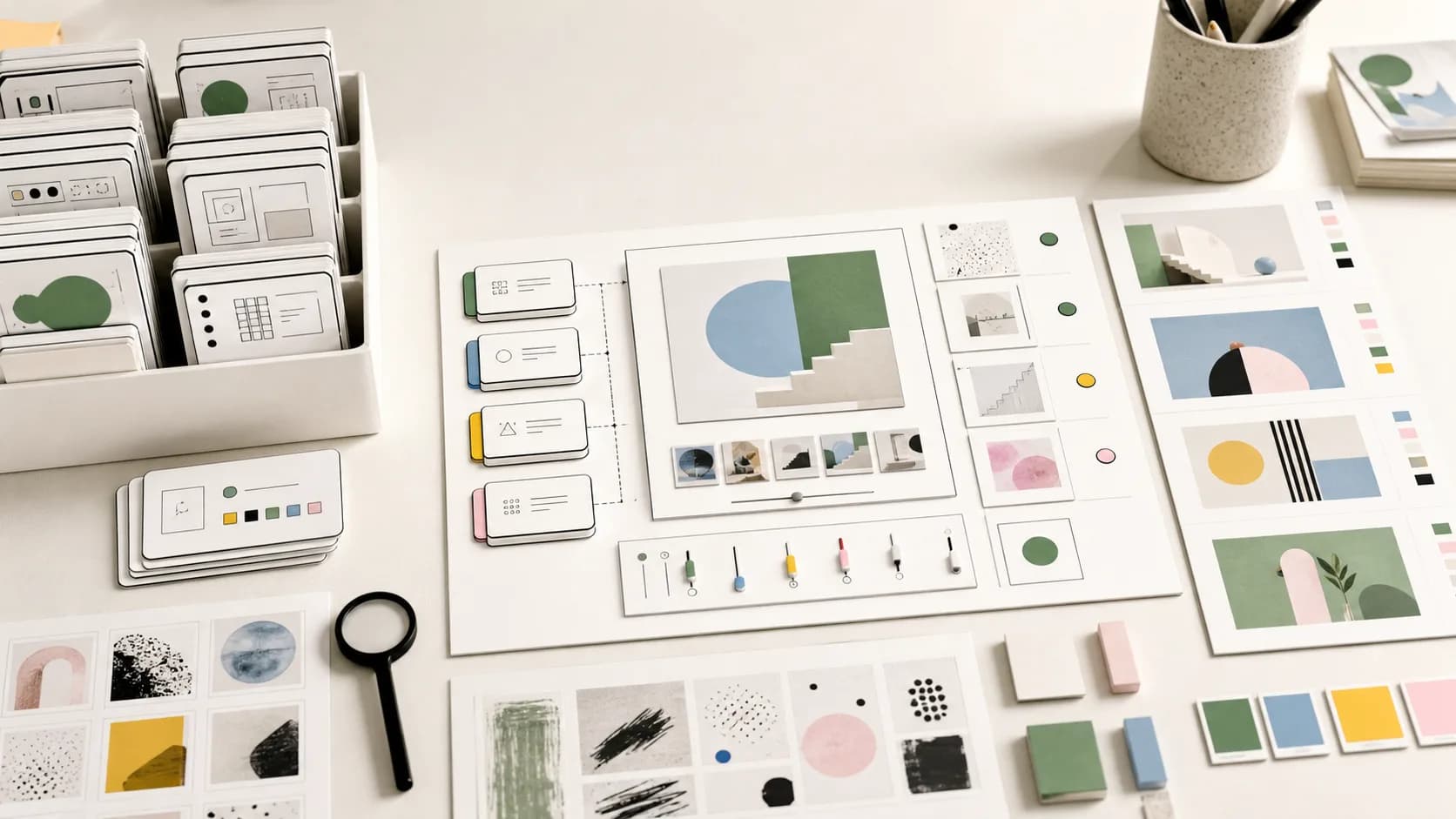
For example, a Developers Digest blog hero prompt should say: cream background, tactile cards, black outlines, no readable generated text, no logos, no gradients, no emojis, restrained accent colors, and a concrete abstraction of the topic. That is a reusable visual contract, not a moodboard.
How to use GPT Image 2 prompts in a real content workflow#
Start with one asset family, not the whole brand.
For a technical blog, I would make four prompt templates:
- article hero
- comparison table visual
- workflow diagram
- social preview
Then I would add a lightweight eval pass:
- Does it explain the topic visually?
- Does it match the brand system?
- Is there any readable fake text?
- Is the composition usable at mobile crop?
- Is the file size acceptable?
- Does the post reference the asset from a permanent repo path?
That last one is boring, but critical. A generated image under a temporary path is not a published asset. Move it into the project, compress it, reference it in frontmatter, and verify the route.
This is where prompt libraries become production infrastructure. They do not replace taste. They make taste easier to repeat.
Frequently Asked Questions#
What is GPT Image 2?#
GPT Image 2 is OpenAI's current image-generation model available through image-generation workflows in the OpenAI API. The docs describe generation, editing, quality, size, format, and cost controls.
Why are GPT Image 2 prompt libraries trending?#
Because strong image outputs are easier to repeat when prompts are structured into reusable schemas instead of one-off prose. Developers want templates for UI, infographics, product shots, brand visuals, and content assets.
Can I use community prompt-library images commercially?#
Do not assume that. Treat community prompt libraries as references, then check the repo license, disclaimers, original sources, and rights for any examples you reuse.
How should teams store image prompts?#
Store them near the content or design system, with the final asset path, model settings, known failure modes, and acceptance checklist. The prompt is part of the production artifact.
Continue Reading#
Read next
Sandboxed Agents Are Becoming the Team Control Plane
Runtime's Launch HN thread is a useful signal: teams do not just want isolated coding agents. They want a control plane for approvals, secrets, telemetry, review, and merge policy.
8 min readYour Agent Has a Five-Constraint Budget
Give an agent one instruction and it obeys. Give it eight and it obeys all of them about five percent of the time, no matter which frontier model you bought. The phase transition is measured, the constraints also die in compaction and handoff notes, and in security-critical code the failure ships as infrastructure. The fix is not a better prompt. It is a smaller simultaneous budget and a side channel for the rules that must survive.
10 min readNon-Developers Using AI Agents Need Platform Engineering
OpenAI's workplace agent data points to a practical shift: non-developers are starting to use agents for real work, so engineering teams need paved paths, policy, and receipts.
7 min readShare
Developers Digest
Technical content at the intersection of AI and development. Building with AI agents, Claude Code, and modern dev tools - then showing you exactly how it works.
300+ videos30K+ GitHub stars850+ articles
Try These Tools
Related Tools
InfrastructurePopular

Vercel
Deployment platform behind Next.js. Git push to deploy. Edge functions, image optimization, analytics. Free tier is gene...
View ToolAI Frameworks
A
Agency Swarm
Multi-agent orchestration framework built on the OpenAI Agents SDK. Define agent roles, typed tools, and directional com...
View ToolInfrastructure

Replicate
Run 50,000+ ML models with a simple API. No infrastructure management. Pay-per-second billing. Deploy custom models with...
View ToolInfrastructure

Cerebras
Wafer-scale AI inference at 3,000+ tokens/sec. The WSE-3 chip has 4 trillion transistors and 900K AI cores. 20x faster t...
View ToolApps from Developers Digest
Related Guides
Guide
Interactive Mode - Claude Code
Real-time prompt loop with history, completions, and multiline input.
Claude CodeGuide
Vim Editor Mode - Claude Code
Full vim keybindings (normal and insert modes) for prompt editing.
Claude CodeGuide
Claude Code Complete Course
A complete, citation-backed Claude Code course with setup, prompting systems, MCP, CI, security, cost controls, and capstone workflows.
ai-developmentRelated Videos

OpenAI's New GPT Image Model API in 5 Minutes 📸
OpenAI's New GPT Image Model API📸 Today OpenAI released their new GPT Image one model via API! 🌟 Last month, ChatGPT introduced Image Generation, and it quickly became a hit with over...
Video·
OpenAI GPT 4o Image Generation in 7 Minutes
Unveiling GPT-4o Image Generation: A Game-Changing Multimodal AI OpenAI has released the revolutionary GPT-4o image generation capabilities, which can produce stunning visuals from text and...
Video·
DALL-E: A Full Stack OpenAI Image Gallery App
Welcome to this app, where you'll learn how to build a full-stack DALL-E image generator. We'll be using vanilla HTML and JavaScript without frameworks, so it's easy to understand and get started...
Video·
Related Posts
10 min read
Research
Your Agent Has a Five-Constraint Budget
Give an agent one instruction and it obeys. Give it eight and it obeys all of them about five percent of the time, no ma...
7 min read
AI Agents
Non-Developers Using AI Agents Need Platform Engineering
OpenAI's workplace agent data points to a practical shift: non-developers are starting to use agents for real work, so e...
8 min read
AI Security
Spreadsheet Agents Need Permission Ledgers
The ChatGPT for Google Sheets exfiltration report is not just a spreadsheet bug. It is a warning about agentic office to...
8 min read
Codex
Codex SDK vs CLI vs GitHub Action: Which Surface Should You Build On?
Codex is no longer just a terminal agent. Here is when to use the Codex SDK, Codex CLI, or openai/codex-action, and how...
9 min read
Codex
Karpathy's Loopy Era Is the Best Way to Understand Codex
Andrej Karpathy's loopy era frame explains why Codex is becoming less like a chatbot and more like an agent loop manager...
7 min read
OpenAI
OpenAI's Codex Mac Certificate Deadline Is a Runbook Test
OpenAI's May 8 macOS certificate rotation for ChatGPT, Codex, Codex CLI, and Atlas is not just a one-off update. It is a...
Build with the member tools

Get Smarter About AI Dev
New tutorials, open-source projects, and deep dives on coding agents - delivered weekly.
One email per weekReal code, not theoryFree forever