Claude Code 2.1.128 Is an Ops Release, Not a Feature Drop
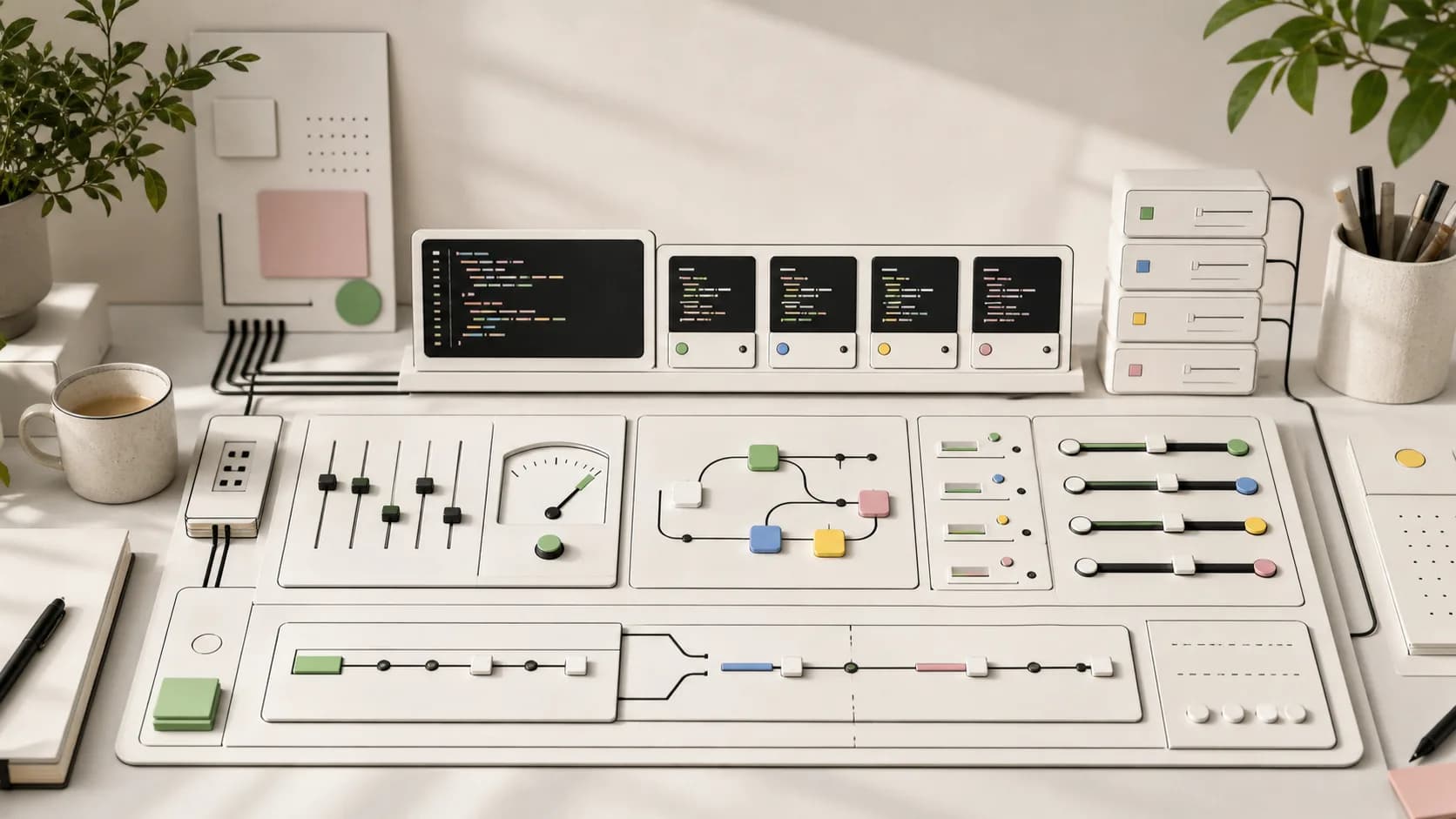
TL;DR
Claude Code 2.1.128 is full of small fixes around MCP, worktrees, OTEL, plugins, and permissions. That is exactly why it matters for teams running agents every day.
Official Sources#
| Resource | Link |
|---|---|
| Claude Code 2.1.128 Release Notes | GitHub Releases |
| Claude Code Documentation | Anthropic Docs |
| MCP Server Configuration | MCP Docs |
| Claude Code GitHub | anthropics/claude-code |
| Anthropic Pricing | anthropic.com/pricing |
Claude Code 2.1.128 does not look like a launch.
That is the point. The interesting part of the 2.1.128 release notes is how much of the work is about agent operations: MCP visibility, worktree correctness, telemetry isolation, plugin packaging, permission persistence, and noisy reconnect behavior.
For people treating Claude Code as a daily coding agent instead of a demo, this is the kind of release that matters.
Quick verdict#
If you use MCP, worktrees, hooks, plugins, or OTEL-instrumented local commands, upgrade. This is the kind of maintenance release that prevents expensive agent sessions later.
If you are still choosing between coding agents, start with /compare and the cost side of the decision at /pricing.
The take#
Claude Code is moving from "agent that edits files" toward "agent runtime you can operate."
The new release says /mcp now shows tool counts for connected servers and flags servers that connect with 0 tools. That sounds tiny until you debug a broken MCP server in a real project. A server that connects but exposes no useful tools is one of the worst failure modes because the agent appears integrated while silently losing capability.
The release also reserves workspace as an MCP server name, summarizes reconnecting MCP tools by server prefix, and fixes MCP image results when structured content and content blocks are returned together. This is plumbing. It is also the difference between "MCP is cool" and "MCP is supportable."
That pairs with the direction in Claude Code hooks, Claude Code subagents, and parallel agent merge discipline: once agents touch real repos, observability becomes product functionality.
From the archive
Codex Automations: Where Scheduled AI Agents Actually Help
May 5, 2026 • 9 min read
Codex Is Becoming a General-Purpose AI Agent, Not Just a Coding Tool
May 5, 2026 • 8 min read
Codex Loops: What Boris Cherny Gets Right About Managing Agent Work
May 5, 2026 • 8 min read
Codex SDK vs CLI vs GitHub Action: Which Surface Should You Build On?
May 5, 2026 • 8 min read
The worktree fix is the sleeper#
The release note that jumped out: EnterWorktree now creates the new branch from local HEAD as documented, instead of origin/<default-branch>.
That means unpushed local commits are no longer dropped when entering a new worktree session.
If you use Claude Code agent teams, this matters immediately. Parallel agents often start from the current local state, not from pristine remote main. If a worktree is created from the wrong base, the agent can produce a valid-looking patch that is missing the exact context it needed.
This is the practical version of the argument in long-running agents need harnesses. The agent is not just the model. It is the git base, working directory, permission layer, tool registry, and handoff log around the model.
OTEL isolation is a real production concern#
Another small but important change: subprocesses such as Bash, hooks, MCP, and LSP no longer inherit OTEL_* environment variables from Claude Code.
That prevents OTEL-instrumented apps run through the Bash tool from accidentally using the CLI's own OTLP endpoint. If you have ever run local traces while an agent is executing tests, this is not cosmetic. It prevents telemetry from becoming polluted or misrouted.
The same theme shows up in local OTEL traces for agents and agent finops: measurement is only useful when you know which process produced the span.
The opposing view#
The fair critique is that these are not headline features.
No new model capability. No giant context-window claim. No magic "agent does everything" demo. Some users will skip the changelog because the bullet list feels like maintenance.
But maintenance is exactly what agent tools need now. The AI coding market has enough demos. The scarce thing is operational discipline: reliable worktrees, visible tool counts, quieter reconnects, clean telemetry, persistent permission choices, and predictable plugin loading.
That is also why skills need exit criteria. Teams are not blocked by a lack of agent ambition. They are blocked by missing control surfaces.
What to do after upgrading#
If Claude Code is part of your daily workflow, this release suggests a short checklist:
- Run
/mcpand check every connected server has the expected tool count. - Rename any MCP server called
workspace. - Test one worktree-based agent flow from a branch with unpushed local commits.
- Confirm local test commands still emit OTEL traces to the endpoint you expect.
- Review which Bash permission prompts should persist into
.claude/settings.local.json.
That is less exciting than installing a new model. It is also more likely to prevent a bad agent session.
Frequently Asked Questions#
What changed in Claude Code 2.1.128?#
The release includes MCP tool-count visibility, workspace reserved as an MCP server name, cleaner MCP reconnect summaries, a worktree base fix for EnterWorktree, OTEL environment isolation for subprocesses, plugin archive support, and multiple terminal and permission fixes.
Why does MCP tool count matter?#
It makes broken integrations easier to spot. If an MCP server connects but exposes 0 tools, the agent may appear connected while missing the capabilities you expected.
Should teams upgrade immediately?#
If your workflow uses MCP, hooks, worktrees, plugins, or OTEL-instrumented local commands, yes. This is an operational reliability release more than a feature release.
How does this relate to parallel agents?#
Parallel agents depend on correct worktree state and clean tool visibility. A wrong branch base or silent MCP failure can make a parallel agent produce a patch that looks valid but was built from the wrong context.
Continue Reading#
Read next
Codex and Claude Code in July 2026: Agent Controls Are the Feature
The late-July Codex and Claude Code updates point in the same direction: coding agents are competing on approval modes, resumable work, MCP auth, artifacts, and review surfaces as much as raw model quality.
8 min readWhy Skills Beat Prompts for Coding Agents in 2026
The coding-agent workflow is maturing past giant hand-written prompts. The winning pattern in 2026 is a control stack: project rules, reusable skills, bounded sub-agents, and deterministic tools around the model.
9 min readMicrosoft's CLI Coding Agent Study: The Rollout Pattern Teams Should Copy
A Microsoft field study found that CLI coding-agent adoption spreads through peers and managers, while adopters merged roughly 24% more pull requests. The lesson is not to buy more seats. It is to instrument rollout, retention, cost, and review quality from day one.
9 min readShare
Developers Digest
Technical content at the intersection of AI and development. Building with AI agents, Claude Code, and modern dev tools - then showing you exactly how it works.
300+ videos30K+ GitHub stars850+ articles
Related Tools
AI Coding
C
Conductor
Mac app for running parallel Claude Code, Codex, and Cursor agents in isolated workspaces. Watch every agent work at onc...
View ToolAI CodingDaily Driver

Claude Code
Anthropic's agentic coding CLI. Runs in your terminal, edits files autonomously, spawns sub-agents, and maintains memory...
View ToolProductivityNew
A
AgentCanvas
A hosted infinite canvas your headless AI agents drive over MCP. Any MCP-speaking agent - Claude Code, Codex, Cursor, or...
View ToolAI Coding
Z
Zed
High-performance code editor built in Rust with native AI integration. Sub-millisecond input latency. Built-in assistant...
View ToolApps from Developers Digest
Developer Tools
Agent Hub
Every coding agent in one window. Stop alt-tabbing between Claude, Codex, and Cursor.
View AppDeveloper ToolsIn Progress
Skill Builder
Turn a one-liner into a working Claude Code skill. From idea to installed in a minute.
View AppDeveloper ToolsPlus $20/mo
Skills Pro
Unlock pro skills and share private collections with your team.
View AppRelated Guides
Guide
Claude Code Setup Guide
Configure Claude Code for maximum productivity -- CLAUDE.md, sub-agents, MCP servers, and autonomous workflows.
AI AgentsGuide
Claude Code Complete Course
A complete, citation-backed Claude Code course with setup, prompting systems, MCP, CI, security, cost controls, and capstone workflows.
ai-developmentGuide
Skill Frontmatter - Claude Code
Configure model, effort, tools, MCP servers, and invocation scope.
Claude CodeRelated Videos

Generate Videos in Codex + Claude Code with This...
Check out HeyGen! https://heygen.1stcollab.com/developersdigest The video introduces HeyGen, an AI video generation platform with a rich API and a CLI that lets developers create, fetch, and manipula...
Video·

10x Design in Claude Code and Codex
Try Higgsfield: https://higgsfield.ai/s/higgsfield-general-campaign-developersdigest-juDMTi AI coding agents can build entire websites in minutes, but the default results often still look generic and...
Video·
Self Improving Applications with Claude Code & Codex
Build a Self‑Improving Next.js App: Supabase + Vercel Eve + GitHub Issues + Agent Loops Check out Supabase: https://supabase.plug.dev/1wWOTGS The video demonstrates how to build and deploy a self-im...
Video·
Related Posts
8 min read
Codex
Codex and Claude Code in July 2026: Agent Controls Are the Feature
The late-July Codex and Claude Code updates point in the same direction: coding agents are competing on approval modes,...
9 min read
AI Coding
Microsoft's CLI Coding Agent Study: The Rollout Pattern Teams Should Copy
A Microsoft field study found that CLI coding-agent adoption spreads through peers and managers, while adopters merged r...

9 min read
AI Coding
Why Skills Beat Prompts for Coding Agents in 2026
The coding-agent workflow is maturing past giant hand-written prompts. The winning pattern in 2026 is a control stack: p...
8 min read
AI Agents
DataFlow-Harness Shows Why Agents Need Editable Pipelines
The DataFlow-Harness paper is a useful reminder that coding agents should not just emit scripts. For data work, the dura...
8 min read
AI Coding
Spec-Driven Agent Workflows: GitHub Spec Kit, gstack, and the New Handoff Layer
GitHub Spec Kit and gstack are trending for the same reason: coding agents need durable specs, plans, and task ledgers m...

8 min read
GitHub Copilot
GitHub Copilot Agent Finder: What ARD Means for Third-Party AI Tools in 2026
GitHub's Agent Finder discovers and invokes Claude, Codex, MCP servers, and skills automatically. Here is how the new AR...
Build with the member tools

Get Smarter About AI Dev
New tutorials, open-source projects, and deep dives on coding agents - delivered weekly.
One email per weekReal code, not theoryFree forever