Google Skills Shows the Next Agent Playbook
TL;DR
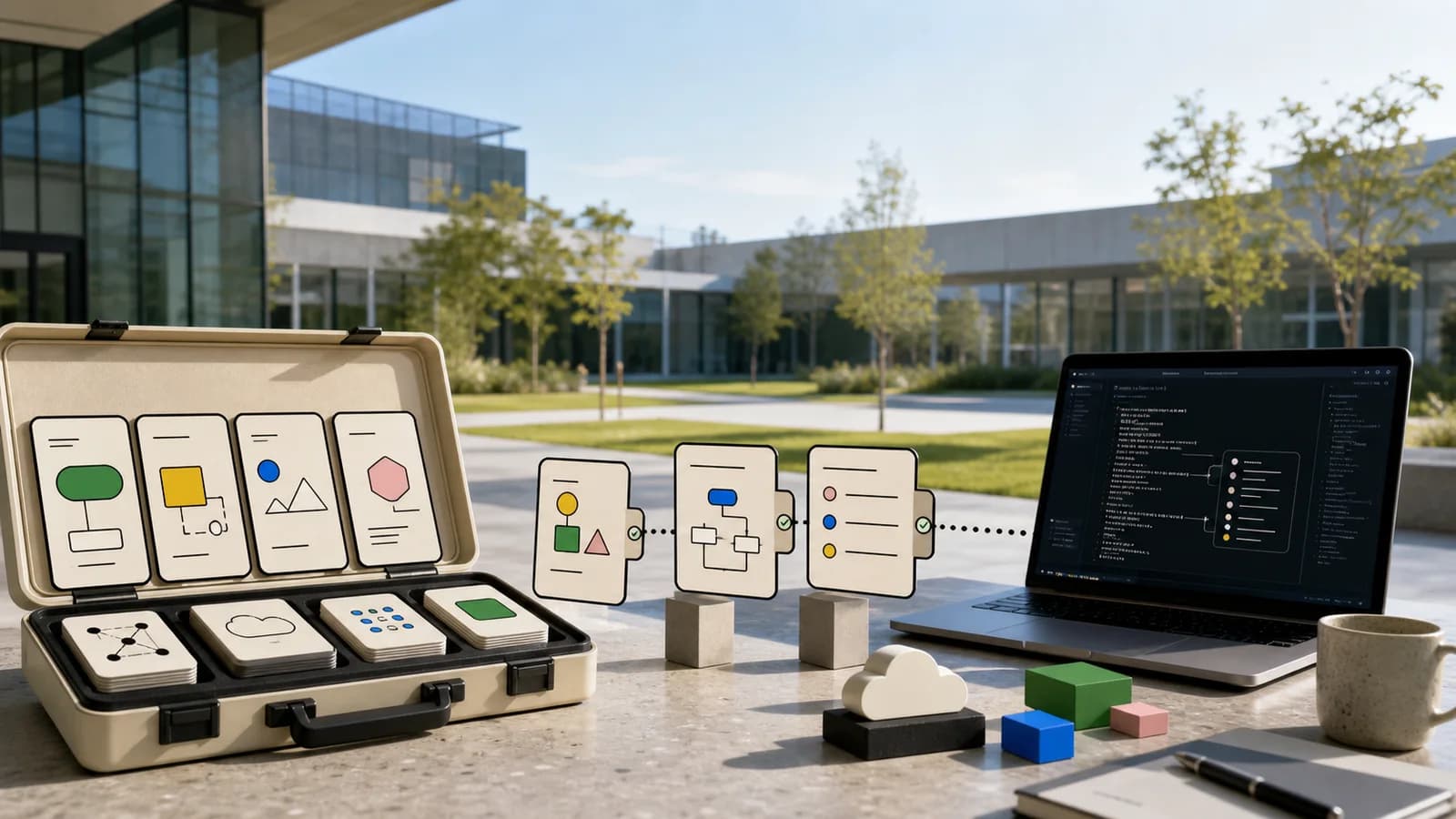
Google's skills repo is a useful signal: agents do not just need generic coding help. They need product-specific operating instructions that make docs executable.
Official Sources#
| Source | What it covers |
|---|---|
| google/skills GitHub repo | Agent skills for Google products and technologies - the source repo discussed in this post |
| addyosmani/agent-skills | Production skill packs from Addy Osmani for Claude Code and other agents |
| Claude Code skills docs | Official Anthropic documentation on writing and using Claude Code skills |
| google-labs-code/design.md | Google Labs guidance on design.md files for AI agent context |
| Claude Code overview | Anthropic's official Claude Code documentation |
Google's google/skills repo is easy to misread as another examples directory. It is more interesting than that.
The repo describes itself as "Agent Skills for Google products and technologies." That sounds narrow, but the pattern is broad: product teams are starting to ship instructions for agents, not just docs for humans.
That is a meaningful shift for developer tools.
The take#
The best docs for AI agents will look less like articles and more like executable playbooks.
Traditional docs answer a human question: "How do I use this product?"
Agent skills answer a different question: "When you are asked to do this task inside a real repo, what should you inspect, change, verify, and report?"
That distinction matters. Agents do not fail only because they lack information. They fail because they lack local procedure.
Why this is timely#
The skill trend is bigger than one repo. Developers are experimenting with Claude Code skills, Karpathy-style CLAUDE.md rule sets, and production skill packs like Addy Osmani's agent-skills. Google joining the pattern is a signal that product-specific agent enablement is becoming normal.
That is different from the old docs model.
Old model:
- Human reads docs
- Human translates docs into repo changes
- Agent helps with the code
New model:
- Agent reads a task-specific skill
- Agent follows the product workflow
- Human reviews the result and evidence
The second model is much closer to how teams already work with internal runbooks.
What makes product skills useful#
Product skills are useful when they reduce ambiguity at the point of action.
A generic agent already knows that tests exist. A good product skill tells it which setup command matters, which config file is canonical, which migration command is safe, which dashboard is source of truth, and which result proves the change worked.
That is the missing bridge between documentation and implementation.
It also helps explain why MCP servers are useful but not enough. Tools give an agent capabilities. Skills tell it when and how to use them.
The opposing view#
There is a real downside: vendor skills can turn into product marketing disguised as implementation guidance.
If a skill only says "use our product for everything," it is not a skill. It is a sales page. Developers should be skeptical of any agent instruction that hides tradeoffs, skips verification, or routes every problem to one vendor.
The useful version is more disciplined:
- Start from the user's existing stack
- Prefer official setup steps
- Show the minimal integration path
- Include known limits
- Verify the result locally
- Link to the source docs
That is also why comparison content should stay fair. If you are choosing between AI coding tools, the practical question is still the one covered in the AI coding tools comparison matrix: which tool fits the workflow, budget, and risk profile?
From the archive
What developer tool companies should do#
Every developer tool company should ship a small agent playbook.
Not a 50-page guide. Not a pile of generic prompts. A repo of focused skills that answer common implementation tasks:
- Install the SDK.
- Add auth.
- Create a database migration.
- Wire the CI check.
- Debug the three most common errors.
- Verify production configuration.
Each skill should include the exact files, commands, source links, and stop conditions.
That would make docs more useful for both humans and agents. Humans get a concise checklist. Agents get a bounded procedure.
What teams should copy#
Teams should copy the shape, not the content.
Create product-specific skills for your own internal systems:
- How to add a new route in this app
- How to update billing safely
- How to migrate data without breaking analytics
- How to run release checks
- How to debug the deployment platform
That is how skills become a compounding asset. Every painful bug becomes a shorter future runbook.
The important part is to keep the skill small enough that an agent will actually use it. If the skill cannot fit in a quick scan, it probably belongs in docs with a short skill pointing to the relevant section.
The practical bottom line#
Google's skills repo is not just another AI coding artifact. It is a preview of a docs format that treats agents as first-class users.
The docs page explains what is possible. The skill tells the agent how to act.
That is where developer education is heading: fewer vague prompts, more product-aware procedures, and tighter verification loops.
Frequently Asked Questions#
What is the google/skills repo?#
The google/skills repository contains agent skills for Google products and technologies. It provides task-specific instructions that tell AI coding agents how to work with Google services - not just what the services do, but which files to check, which commands to run, and how to verify the integration worked. It represents a shift from traditional documentation toward executable playbooks designed for agents.
How are agent skills different from traditional documentation?#
Traditional docs answer a human question: "How do I use this product?" Agent skills answer a different question: "When asked to do this task inside a real repo, what should you inspect, change, verify, and report?" Skills include the exact files, commands, verification steps, and stop conditions that agents need. Documentation explains concepts; skills provide bounded procedures.
Why are product-specific skills more useful than generic prompts?#
A generic agent knows that tests exist. A good product skill tells it which setup command matters, which config file is canonical, which migration command is safe, which dashboard is source of truth, and which result proves the change worked. Skills reduce ambiguity at the point of action. They bridge the gap between reading docs and implementing changes correctly.
Should every developer tool company ship agent skills?#
Yes. Every developer tool company should ship a small agent playbook covering common implementation tasks: install the SDK, add auth, create migrations, wire CI checks, debug common errors, and verify production config. Each skill should include exact files, commands, source links, and stop conditions. This makes docs more useful for both humans and agents.
What makes a bad agent skill?#
A skill is bad when it becomes product marketing disguised as implementation guidance. If a skill only says "use our product for everything," it is not a skill - it is a sales page. Useful skills start from the user's existing stack, prefer official setup steps, show minimal integration paths, include known limits, verify results locally, and link to source docs. Skills that hide tradeoffs or skip verification are counterproductive.
How should teams create internal agent skills?#
Teams should create product-specific skills for their own systems: how to add a new route, update billing safely, migrate data without breaking analytics, run release checks, and debug the deployment platform. Each painful bug becomes a shorter future runbook. Keep skills small enough that an agent will actually use them - if the skill cannot fit in a quick scan, it probably belongs in docs with a short skill pointing to the relevant section.
What is the relationship between MCP servers and skills?#
MCP servers give agents capabilities - tools they can call. Skills tell agents when and how to use those capabilities. A search tool is useless without knowing which queries return actionable results. A file-edit tool is dangerous without knowing which files are safe to change. MCP is the hands; skills are the judgment about what to do with them.
Why did Google release this repo now?#
The skill trend is bigger than one repo. Developers are experimenting with Claude Code skills, Karpathy-style CLAUDE.md rule sets, and production skill packs like Addy Osmani's agent-skills. Google joining the pattern signals that product-specific agent enablement is becoming normal. It is a preview of a docs format that treats agents as first-class users, where the docs page explains what is possible and the skill tells the agent how to act.
Read next
SkillHone Shows Why Agent Skills Need Decision History
SkillHone is a July 2026 paper about evolving agent skills across sessions. The useful takeaway for developers is simple: do not save only the latest SKILL.md. Save the decisions that explain why it changed.
8 min readOpen Design Shows the Next Agent Wrapper
Open Design is trending because it turns Claude Code, Codex, Cursor, Gemini, and other CLIs into a design engine. The useful lesson is not design automation. It is artifact-first agent wrappers.
8 min readTaste Skills Are Turning Agent Review Into Infrastructure
GitHub trending is full of anti-slop, taste, and compound-engineering skills. The real signal is not that agents need more prompts. It is that teams are trying to make subjective review criteria executable.
8 min readShare
Developers Digest
Technical content at the intersection of AI and development. Building with AI agents, Claude Code, and modern dev tools - then showing you exactly how it works.
300+ videos30K+ GitHub stars850+ articles
Related Tools
AI Coding

Jules
Google's asynchronous coding agent. Point it at a GitHub repo, it clones to a cloud VM, plans with Gemini, and opens a p...
View ToolAI CodingAgent

OpenAI Codex
OpenAI's coding agent for terminal, cloud, IDE, GitHub, Slack, and Linear workflows. Reads repos, edits files, runs comm...
View ToolAI CodingFree

Gemini CLI
Google's open-source coding CLI. Free tier with Gemini 2.5 Pro. Supports tool use, file editing, shell commands. 1M toke...
View ToolAI FrameworksEssential

Vercel AI SDK
The TypeScript toolkit for building AI apps. Unified API across OpenAI, Anthropic, Google. Streaming, tool calling, stru...
View ToolApps from Developers Digest
Developer ToolsIn Progress
Skill Builder Hub
Author, test, score, and govern reusable AI agent skills before production registry.
View AppDeveloper ToolsIn Progress
Skill Builder
Turn a one-liner into a working Claude Code skill. From idea to installed in a minute.
View AppDeveloper ToolsIn Progress
DD GA
Catch silent GA breakage before a quarter of data goes missing.
View AppRelated Guides
Guide
Claude Code Setup Guide
Configure Claude Code for maximum productivity -- CLAUDE.md, sub-agents, MCP servers, and autonomous workflows.
AI AgentsGuide
Skills System - Claude Code
Reusable markdown files with instructions and workflows.
Claude CodeGuide
Subagent Frontmatter - Claude Code
Configure model, tools, MCP, skills, memory, and scoping.
Claude CodeRelated Videos

Antigravity: Google's NEW Agentic Editor in 7 Minutes
Exploring Google Antigravity: The Future of Agentic IDEs ? In this video, we explore Google Antigravity, a new agent-centric IDE created by some members of the original Windsurf team. The...
Video·
Gemini CLI in 6 Minutes: Google's Free and Open-Source Coding Assistant
Google's Free and Open-Source Coding Assistant In this video, we explore Google's newly released Gemini CLI, a free and open-source competitor to Claude Code. Learn how to get started with...
Video·
Google's Gemini 2.5 Pro in 4 Minutes
Exploring Google Gemini 2.5 Pro: The Future of AI in 2025 In this episode, we dive into the latest release from Google AI Labs, the Gemini 2.5 Pro experimental model. As the leading state-of-the-a...
Video·
Related Posts

8 min read
Claude Code
Claude Code Plugin Evals Make Agent Extensions Testable
Claude Code 2.1.269 adds plugin evals, baseline comparisons, JSON and HTML reports, and CI gates. That changes plugins f...

6 min read
Claude Code
Claude Code Plugin URLs Turn Skills Into a Supply Chain
Claude Code's newer plugin URL and hard-deny controls are small release-note items with a big implication: agent extensi...

7 min read
Codex
Codex CLI Worktrees Turn Agent Runs Into Durable Sessions
Codex CLI 0.154.0 adds experimental worktrees, inline answers, Windows daemon support, and approval hardening. The impor...

8 min read
AI Coding
Diffs vs Whole Files: What Code Editing Agents Should Rewrite
A new code-editing paper finds full-file generation beating iterative diff edits on Flutter/Dart tasks. The useful takea...
8 min read
AI Agents
Coding Agents Need Better Human Loops, Not Just Harder Benchmarks
A new position paper argues that AI coding-agent research is optimizing for solo autonomy while the real bottleneck is h...

8 min read
Comparison
Don't Paste the AI vs Vomit vs NoBuzz: AI Slop Tools Compared
dontpastetheai.com, Vomit, and NoBuzz hit Hacker News in the same week. A social contract, a local rewrite, and a second...
Build with the member tools

Get Smarter About AI Dev
New tutorials, open-source projects, and deep dives on coding agents - delivered weekly.
One email per weekReal code, not theoryFree forever