Gleam Moves to Tangled: What the ATProto Code Forge Means for Developers
TL;DR
The Gleam programming language has migrated to Tangled, a new ATProto-based code hosting platform.
The Gleam programming language - a friendly, type-safe language that compiles to Erlang and JavaScript - has moved its primary repository hosting to Tangled, a new code forge built on the ATProto federation protocol. This is one of the most significant migrations to a non-GitHub platform in recent memory, and it signals growing momentum behind decentralized developer infrastructure.
What Is Tangled?#
Tangled is a federated code hosting platform built on ATProto - the same protocol that powers Bluesky. It raised a 3.8M euro ($4.5M) seed round led by byFounders, with participation from Bain Capital Crypto and Antler. Notable angel investors include Thomas Dohmke (former GitHub CEO) and Avery Pennarun (Tailscale CEO).
The platform currently has over 7,000 users and 5,000+ repositories. Key features include:
- Federation - repositories can be mirrored and discovered across instances
- Native stacked PRs - built-in support for stacked pull request workflows
- Vouch system - Mitchell Hashimoto's web-of-trust identity verification
- Self-hostable knots - run your own git storage server that federates with the network
- Nix-first CI - Spindle runners with microVM support
The core premise is that your code and social identity live in your own PDS (personal data server), not locked into any single platform. You can migrate between Tangled instances - or run your own - without losing your commit history, issues, or social graph.
What HN Is Saying#
The Hacker News discussion has 113 comments and surfaces several themes:
GitHub fatigue is real. Multiple commenters cited GitHub outages as motivation for exploring alternatives. As one user put it: "GitHub outages (especially when just viewing repos!) are getting way too disrupting." The centralization risk of having most open source infrastructure on one Microsoft-owned platform is increasingly uncomfortable for some.
Feature gaps remain. Tangled lacks private repositories, protected branches, and GitHub Actions equivalents. The CI system (Spindles) is Nix-first, which some see as a barrier. One commenter noted: "I also think being primarily nix/jj focused turns a lot of people away. Those techs are not my cup of tea."
Business model questions. With VC funding but no clear revenue path, some are cautious about migrating. Potential monetization paths mentioned include paid hosting tiers, bypassing rate limits, SLAs and support contracts, and paid PDS hosting for enterprises.
The ATProto advantage. Unlike ActivityPub-based federation (which powers Forgejo Federation and ForgeFed), ATProto's design means you can interact with any repository without knowing which instance hosts it. As one user explained: "My experience with Bluesky vs Mastodon really showed that the friction of federation in the latter can really kill the experience."
Radicle comparison. Some mentioned Radicle as an alternative decentralized approach, but noted it's more focused on the data plane than the social layer. Tangled's richer identity system gives it an advantage for community-oriented open source.
Why This Matters#
The Gleam migration is notable because it's not just an experiment - it's a production move by a real programming language with over 11,000 commits and an active community. Gleam maintainer lpil confirmed in the thread that GitHub outages were a factor in the decision.
This matters for three reasons:
1. Proof of concept for serious projects. Tangled needed a high-profile early adopter to demonstrate it can handle production workloads. Gleam's migration removes the "but has anyone actually used it?" objection.
2. ATProto's expanding footprint. We're seeing ATProto move beyond social media into developer infrastructure. The protocol's approach to portable identity and federated data has advantages over both centralized platforms and previous federation attempts.
3. GitHub's quiet monopoly. GitHub has about 100 million developers. Most open source happens there. Most CI/CD integrates with it. Most developer identity is tied to it. That concentration creates risk - both for developers who rely on it and for the ecosystem's long-term health.
The Technical Picture#
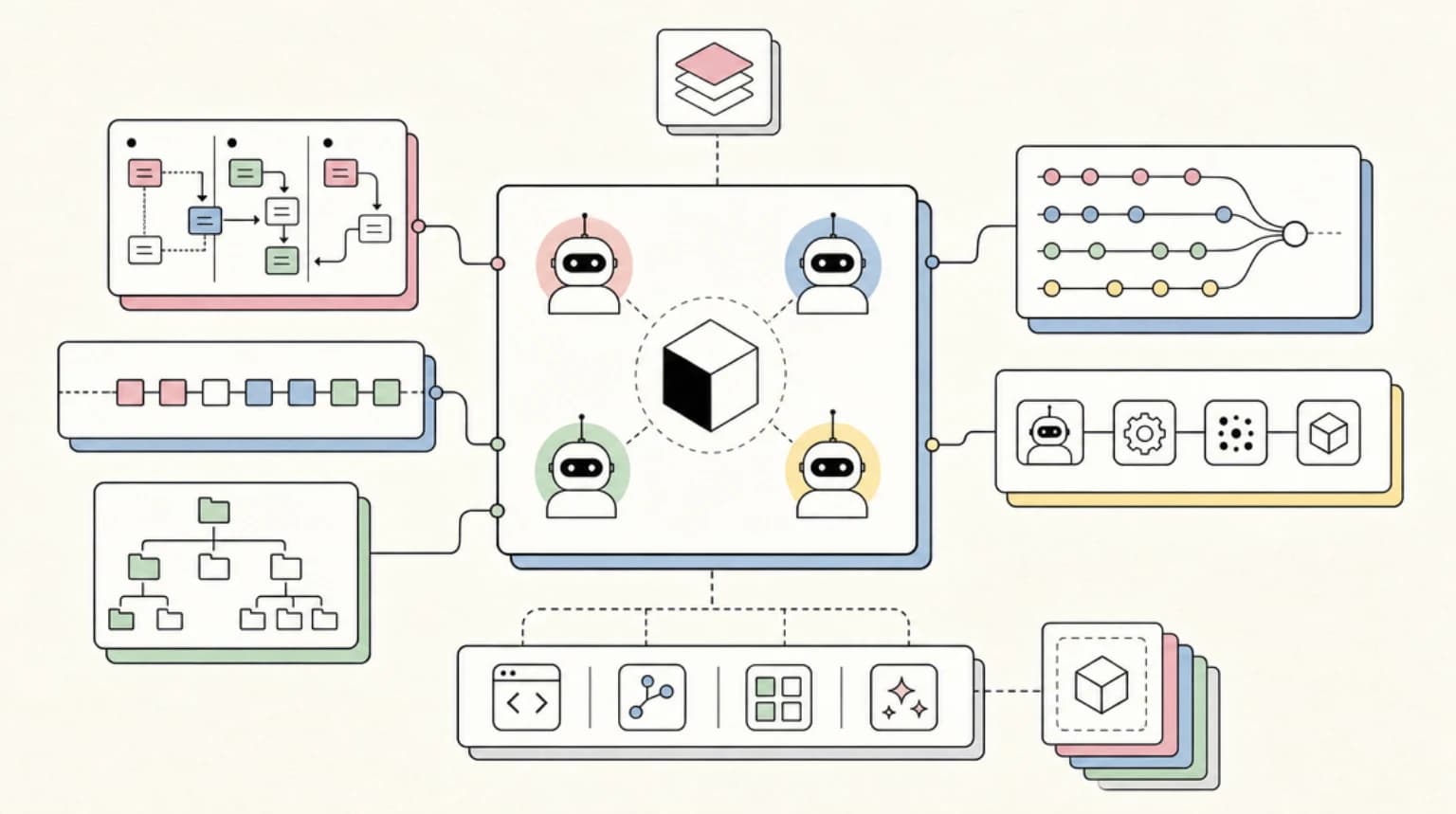
Tangled's architecture separates concerns:
- Knots - git storage servers that hold repository data
- Appview - the web UI and API (recently made self-hostable via Bobbin)
- Spindles - CI runners with engine-agnostic design
- PDS - personal data servers that store identity and social data
You can clone repos via HTTPS, SSH, or DID (decentralized identifier). The federation model means your issues and PR comments belong to you - they're stored in your PDS and can follow you if you migrate.
The CI system uses Nix by default but supports pluggable engines. Projects like Tack (a bridge interface) and Loom (Kubernetes-based) extend beyond the default Nixery and microVM runners.
Should You Try It?#
For personal projects and experimentation - absolutely. The sign-up flow uses your Bluesky identity, making onboarding trivial if you already have an account.
For production open source, the calculus is trickier. You'll lose:
- GitHub Actions and marketplace
- Network effects of GitHub's 100M user base
- Private repositories (coming soon)
- Protected branches
- Enterprise SSO integration
You'll gain:
- Portable identity and data ownership
- Federation and self-hosting options
- Stacked PR workflows out of the box
- Independence from a single corporate platform
The honest answer is that Tangled is early. But Gleam's migration suggests it's mature enough for serious use. If GitHub's centralization bothers you - or you're building in the ATProto ecosystem anyway - it's worth a look.
Continue Reading#
- Echo Claims Fable-Level Results at One-Third the Cost Using Open-Weight Models
- Emacs 31 is Around the Corner: The Features Worth Daily Driving
- Entire Distributed Git Network: A Developer Guide to the Ex-GitHub CEO's Agent-Era Platform
- How My Images Are Dithered - Simulating Halftone Printing with ImageMagick
- Superlogical: Mitchell Hashimoto's New Company Building a Multiplexer for All Work
- Elm's Road to 1.0: Faster Builds and the Acadia Future
- There Are No Instances in ATProto - Dan Abramov Explains the Architecture
Sources#
Get the next deep dive like this in your inbox
One email a week on News and the rest of the AI dev stack. Free.
Read next on AI coding tools
Godot Bans AI-Authored Code Contributions - What It Means for Open Source
The Godot Foundation has established a policy banning autonomous AI agent code and substantial AI-generated contributions, citing reviewer burnout and concerns about maintainer mentorship.
6 min readRuff v0.16.0: 413 Default Rules, Markdown Formatting, and What Zero-Config Linting Means for Python
Ruff v0.16.0 ships 413 default rules (up from 59), Markdown code-block formatting, and a new ruff: ignore system. Here is what changed, what HN is saying, and why zero-config linting matters more with AI coding agents.
5 min readAnthropic CEO Dario Amodei on open-weights models: the position, the pushback, and what it means for developers
Dario Amodei published Anthropic's stance on open-weights models this week - no total ban, but support for chip export controls, distillation crackdowns, and mandatory safety testing. HN responded with 800+ comments calling it regulatory capture. Here is what the CEO said, what the thread argued, and why the debate matters for every developer deploying AI.
8 min readNew here? Start with
Technical content at the intersection of AI and development. Building with AI agents, Claude Code, and modern dev tools - then showing you exactly how it works.