HalluSquatting Makes AI Coding Agents a Supply-Chain Problem

TL;DR
A July 2026 paper shows how hallucinated repository and skill names can become promptware delivery paths. The practical fix is boring: search before fetch, verify names, and sandbox every install.
HalluSquatting is the agent-security story that looks like a clever prompt-injection paper until you map it onto a normal developer workflow.
A coding agent sees a popular repo, package, skill, MCP server, or tool name. It needs to clone or install something. The model guesses the identifier instead of resolving it through search. An attacker has already registered the plausible wrong name and placed hostile instructions inside the resource. The agent fetches it, reads it, and now the attacker has a context channel into a tool-using system with a terminal.
That is the important shift. This is not only "LLMs hallucinate package names." We already covered that older slopsquatting pattern in Securing AI Coding Agents. HalluSquatting turns hallucinated resource names into a pull-based promptware delivery mechanism for agents that can fetch, clone, install, and execute.
Last updated: July 18, 2026. Google Trends was checked in the US over the past three months for Claude Code, AI coding agent, HalluSquatting, AI agent security, and promptware. Exact HalluSquatting and promptware interest was effectively zero, while broader durable demand sat around Claude Code at 62.1, AI coding agent at 4.0, and AI agent security at 2.8. That makes this a search-intent post about agent security, not a launch-chatter post about a paper title.
What The Paper Shows#
The primary source is the July 2026 arXiv paper Beware of Agentic Botnets: Scalable Untargeted Promptware Attacks via Universal and Transferable Adversarial HalluSquatting, with a public project page from researchers at Tel Aviv University, Technion, and Intuit.
The threat model is simple:
- Find popular resources that developers are likely to ask agents about.
- Query models or target applications to see which resource identifiers they hallucinate.
- Register the likely hallucinated names where agents can retrieve them.
- Put adversarial prompt content in the fake resource.
- Wait for users to ask an agent to clone, install, or fetch the real thing.
- Let the agent pull the attacker-controlled resource into context.
The researchers report high hallucination rates in repository-cloning and skill-installation scenarios, and they argue that the hallucinated names can transfer across models and application layers. Their project page says the tested applications included AI coding assistants and CLIs with integrated terminals, including Cursor, Cursor CLI, Windsurf, GitHub Copilot, Cline, Gemini CLI, OpenClaw, ZeroClaw, and NanoClaw.
That list will get attention. The more useful lesson is broader: any agent runtime that turns a natural-language resource request into a fetch, clone, install, or execute step has a name-resolution boundary.
If that boundary is fuzzy, prompt injection can enter through the supply chain.
Why This Is Worse Than A Bad Autocomplete#
Autocomplete gives you a suggestion. An agent creates a plan and acts on it.
That distinction matters because HalluSquatting attacks the handoff between language and resource identity. Humans often write shorthand:
Clone the new repo for the benchmark.
Install the skill from that paper.
Try the package everyone is using in the HN thread.
Add the MCP server for this SaaS.
Those are normal prompts. They are also underspecified.
A cautious human opens the source, copies the exact URL, checks the owner, and reviews the README. A coding agent may infer the missing identifier. If the inferred name is wrong but plausible, the failure no longer looks like a hallucination. It looks like normal automation.
That is why HalluSquatting belongs beside approval fatigue, agent sandboxes, and Dockerless verification. The failure is not that the model generated bad text. The failure is that the system let unverified text become an executable resource.
The Boring Fix: Search Before Fetch#
The paper's mitigation section points to the right default: force a search or resolution step before any fetch operation.
For coding agents, that should become a product invariant:
Natural-language resource name
  -> search or registry lookup
  -> ranked canonical candidates
  -> owner, age, stars, package metadata, and source URL check
  -> explicit selected identifier
  -> clone, install, fetch, or execute
The agent should not be allowed to jump from "clone the trending repo" to git clone some/plausible-name.
This is the same reason package managers, browsers, and deployment systems have spent years turning names into verified artifacts. Humans are bad at names. Models are worse at names. Security-sensitive systems need resolution, not vibes.
What To Add To Your Agent Harness#
If you run agents locally, in CI, or inside an internal developer platform, HalluSquatting suggests five concrete controls.
1. Treat fetch, clone, install, and execute as privileged verbs#
Do not classify these as normal shell commands. They cross a trust boundary.
Your permissions layer should distinguish:
- local read commands
- local file edits inside the workspace
- network fetches
- dependency installs
- repo clones
- plugin, skill, or MCP installs
- direct execution of downloaded content
The final four deserve stricter policy than ls, rg, or editing a test file.
2. Require canonical URLs for external resources#
Natural language can begin the flow, but it should not finish it.
For GitHub, resolve to owner/repo from search results or an exact URL. For packages, resolve through the package registry. For skills and plugins, resolve through a signed or curated registry where possible. For MCP servers, prefer a known package, pinned commit, or internal allowlist over arbitrary instructions copied from a page.
This is especially important for fresh, trending resources. The researchers explicitly call out newly popular resources as attractive because models are less likely to have stable identifiers for them.
3. Add a name-risk check before install#
Before an agent installs a new dependency or clones a new repo, check signals that are cheap to automate:
- exact owner and project name match
- package or repo age
- recent publish time
- star and fork pattern
- maintainer continuity
- download or clone source
- similarity to popular names
- whether the model inferred the name or the user supplied an exact URL
None of these proves safety. Together they catch the embarrassing cases where the model invented a resource and the system treated it as real.
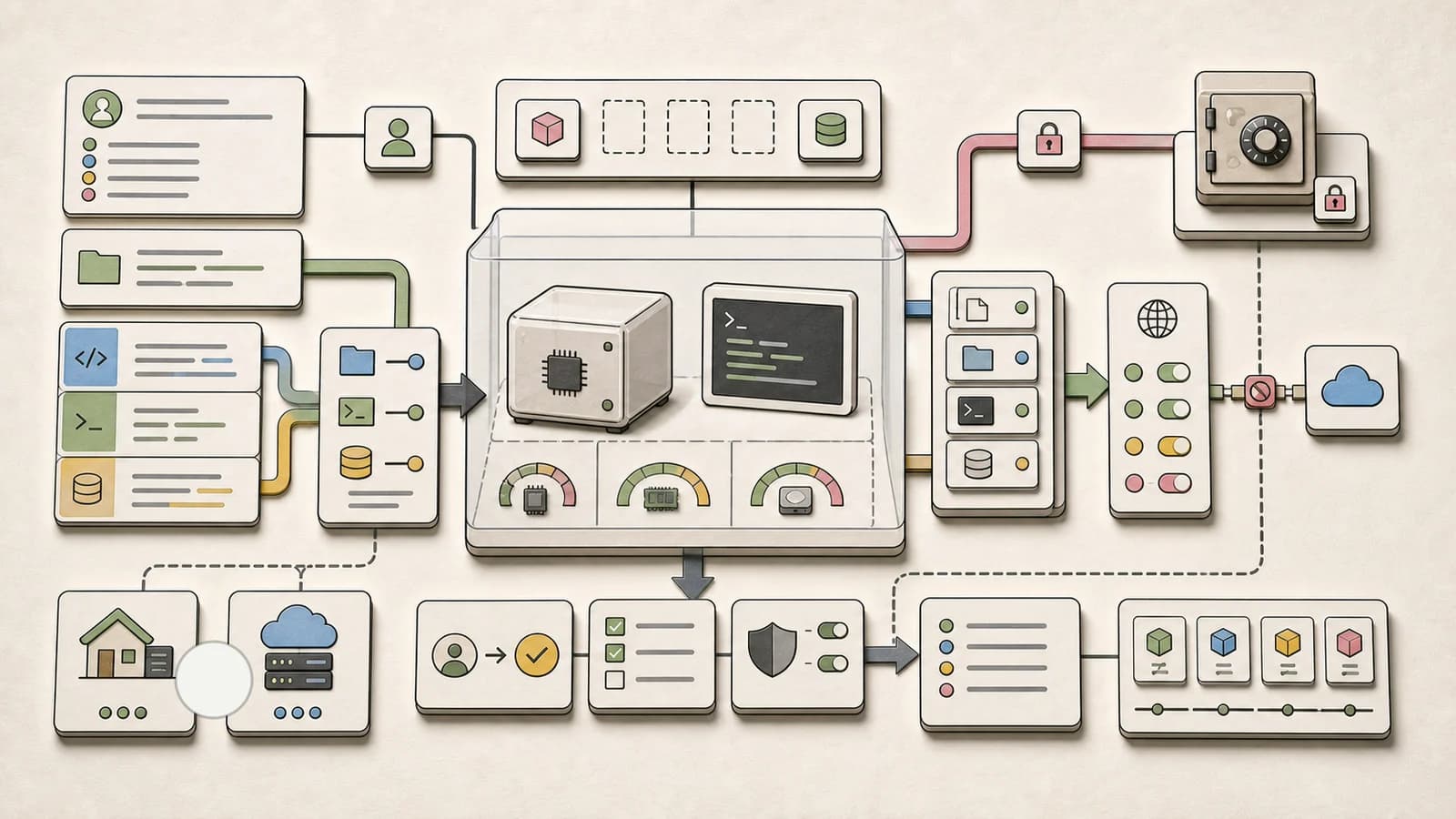
4. Sandbox the whole retrieval path#
Even with name checks, assume one bad resource eventually gets through.
That means the fetch path needs the same containment we already recommend for agent execution: filesystem boundaries, network allowlists, read-only access to sensitive files, and deny rules for implicit execution paths such as .git/hooks, shell profiles, editor task files, and CI configuration.
If a cloned repo can immediately influence the host environment, the agent does not have a sandbox. It has a polite request system.
5. Log the resolution evidence#
Every agent run that fetches an external resource should leave a receipt:
- user prompt
- resolved resource name
- canonical URL
- search or registry result used
- package version or commit SHA
- permission decision
- commands executed after retrieval
This is not bureaucracy. It is how a reviewer answers "why did the agent install this?" two days later.
We have been making the same argument in posts about long-running agent harnesses and agent receipts: the important artifact is not just the final diff. It is the chain of evidence that produced it.
What Not To Overclaim#
There is a temptation to turn every agent-security paper into "all coding assistants are malware now." That is not the useful read.
The paper describes a serious class of attack, but the public project page also says the researchers responsibly disclosed findings and redacted implementation details that would directly help attackers. The right conclusion is not panic. It is product design.
The unsafe claims to avoid:
- "Every listed tool is currently exploitable in the same way."
- "HalluSquatting proves coding agents should never access the network."
- "Prompt-injection filters solve this."
- "Human approval alone solves this."
The safer conclusion:
Agents need deterministic resource resolution before retrieval, containment during retrieval, and receipts after retrieval.
That is a boring sentence. Boring is the point.
The Developer Workflow I Would Use#
For personal use, the policy can be lightweight:
- Ask the agent to search for the official repo or package first.
- Paste exact URLs for anything new or trending.
- Require approval for
git clone, package installs, curl-to-shell patterns, MCP installs, and skill installs. - Run risky exploration in a disposable worktree, container, VM, or OS sandbox.
- Review lockfile changes as carefully as source changes.
For teams, make it a platform rule:
No inferred external resource may be fetched or installed without a resolver receipt.
That one policy covers GitHub repos, npm packages, Python packages, MCP servers, agent skills, browser extensions, and internal tool catalogs. It also gives reviewers a concrete thing to check.
If your current agent harness cannot produce that receipt, the next sprint is not about adding another model. It is about adding a resolver.
FAQ#
What is HalluSquatting?#
HalluSquatting is an attack pattern where an adversary registers resource names that LLMs are likely to hallucinate, then uses those fake resources to deliver adversarial prompt content to agents that fetch, clone, install, or execute external resources.
Is HalluSquatting the same as slopsquatting?#
They are related but not identical. Slopsquatting usually refers to hallucinated package names in software supply chains. HalluSquatting generalizes the idea to agentic resource retrieval, including repositories, skills, and other resources that a tool-using LLM might fetch.
Does this mean agents should never clone repos or install packages?#
No. It means agents should resolve names through search or registry lookup before retrieval, record the evidence, and run the retrieval path inside a sandbox. Network access is not the problem by itself. Unverified resource identity is the problem.
What is the fastest mitigation for a developer team?#
Require exact URLs or registry-resolved identifiers for new external resources, then gate git clone, package installs, MCP installs, and skill installs behind approval plus sandboxing. Add dependency cooldowns and lockfile-only CI so a bad install cannot silently become a production change.
Sources#
- Beware of Agentic Botnets: Scalable Untargeted Promptware Attacks via Universal and Transferable Adversarial HalluSquatting - arXiv, accessed July 18, 2026.
- Agentic Botnets project page - researcher summary, threat model, FAQ, and mitigation notes, accessed July 18, 2026.
- Hacker News Algolia API - checked July 18, 2026 for
HalluSquatting,AI agent security,AI coding agent, andClaude Code. - Google Trends - checked July 18, 2026 for
Claude Code,AI coding agent,HalluSquatting,AI agent security, andpromptware; exact HalluSquatting demand was not durable yet, so the article targets the broader agent-security cluster.
Get the next deep dive like this in your inbox
One email a week on Agent Safety and the rest of the AI dev stack. Free.
Read next on Cursor
Securing AI Coding Agents: A Practical Threat Model for 2026
Prompt injection, sandbox escapes, and hallucinated dependencies are now documented, patched, CVE-numbered realities. Here is the threat model for agent-written code and the defenses worth adopting this week, ranked by effort.
13 min readAgent Sandbox Architecture: How to Choose the Right Runtime Boundary
AI agents are getting their own computers. Here is how to choose a sandbox architecture: filesystem isolation, network policy, secrets boundaries, snapshots, and when shell access is overkill.
8 min readApproval Fatigue Is an Agent Security Bug
Manual approval prompts stop protecting users when coding agents ask too often. The better pattern is risk-aware autonomy: safe defaults, narrow deny rules, and approvals only for meaningful changes.
7 min readNew here? Start with
Technical content at the intersection of AI and development. Building with AI agents, Claude Code, and modern dev tools - then showing you exactly how it works.