Dockerless Verification Is The Next Coding Agent Bottleneck
TL;DR
ByteDance's Dockerless paper asks whether coding-agent patches can be verified without spinning up per-repo environments. The practical answer is not replace CI. It is use cheaper evidence before CI.
Official Sources#
| Source | Description |
|---|---|
| Dockerless on arXiv | Primary paper entry, abstract, authors, publication date, and reported benchmark results |
| Dockerless on Hugging Face Papers | Hugging Face paper discussion page and July 2026 ranking context |
| Hugging Face July 2026 monthly papers | Monthly paper leaderboard where Dockerless appeared near the top of the developer-relevant research cluster |
| SWE-bench Verified | Benchmark family used by many coding-agent papers to report resolved software issues |
| Vera agent-safety paper coverage | Developers Digest coverage of evidence-grounded agent testing |
Last updated: July 12, 2026
Dockerless is a research paper with a name that sounds like infrastructure theater until you map it onto the real coding-agent loop.
A coding agent can now generate patches faster than a team can review them. The expensive part is no longer "write a diff." The expensive part is proving whether the diff is correct, safe enough to continue, and worth spending scarce CI, reviewer, and sandbox time on.
That is the problem ByteDance's Dockerless paper is trying to isolate.
The paper proposes an environment-free program verifier for coding agents. Instead of launching a per-repository Docker environment and executing tests, Dockerless evaluates generated code patches by exploring the repository and gathering evidence about whether the patch matches the task. The authors report that it beats their strongest open-source verifier baseline by 14.3 AUC points, and that using it as both an SFT trajectory filter and an RL reward reaches 62.0% on SWE-bench Verified, 50.0% on SWE-bench Multilingual, and 35.2% on SWE-bench Pro.
Those numbers are interesting. The better developer takeaway is more grounded:
Do not read Dockerless as "CI is obsolete."
Read it as "verification has stages now."
If your agent workflow sends every speculative patch straight into full environment setup, dependency install, test execution, and human review, you are using the most expensive verifier too early. The future loop is cheaper evidence first, real execution second, human review last.
Why This Matters Now#
Most agent demos still make coding look like a generation problem. Ask the model for a feature. Watch it edit files. Run tests. Celebrate the green check.
Production agents expose a different constraint.
They produce a lot of candidate work, and most of the surrounding system is not designed for that volume. CI queues are finite. Sandboxes are expensive. Dependency installation is flaky. Test environments drift. Reviewers burn attention on patches that should have been filtered before they ever reached a pull request.
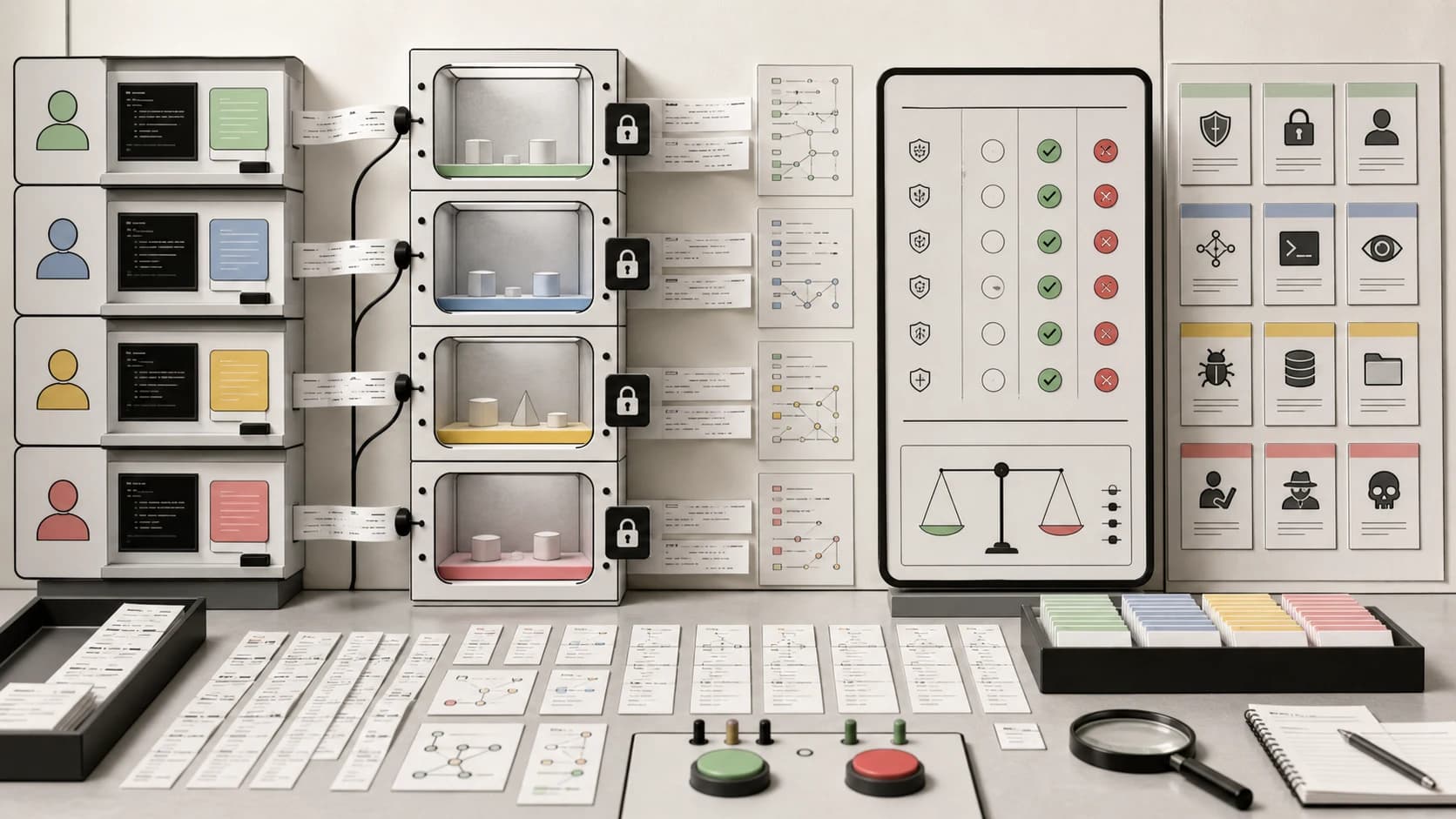
That is why the Dockerless framing pairs so well with Vera's evidence-grounded safety-testing lesson. Vera says agent safety needs observable test oracles, not vibes. Dockerless says patch training and reward loops need scalable verifiers, not only full environment execution.
The common theme is evidence.
An agent should not simply say, "this patch fixes the issue." It should assemble a case:
- which files are implicated,
- which symbols connect the bug report to the patch,
- which tests would be relevant if execution were available,
- which behavior changed,
- which assumptions are still unverified,
- which risks require a real sandbox.
That is not a replacement for CI. It is a triage layer before CI.
What Dockerless Actually Tests#
The paper starts from a training problem. Coding-agent post-training needs verifiers for two reasons:
- Supervised fine-tuning wants to keep good trajectories and discard bad ones.
- Reinforcement learning needs a reward signal that can score candidate patches.
The standard answer is execution. Build an environment for the repository, apply the patch, run tests, and use the result as the signal.
That is powerful, but it is also expensive. Every repo has its own package manager, runtime, database assumptions, flaky tests, native dependencies, secrets, fixtures, and setup scripts. At scale, environment setup becomes part of the benchmark instead of just the path to the benchmark.
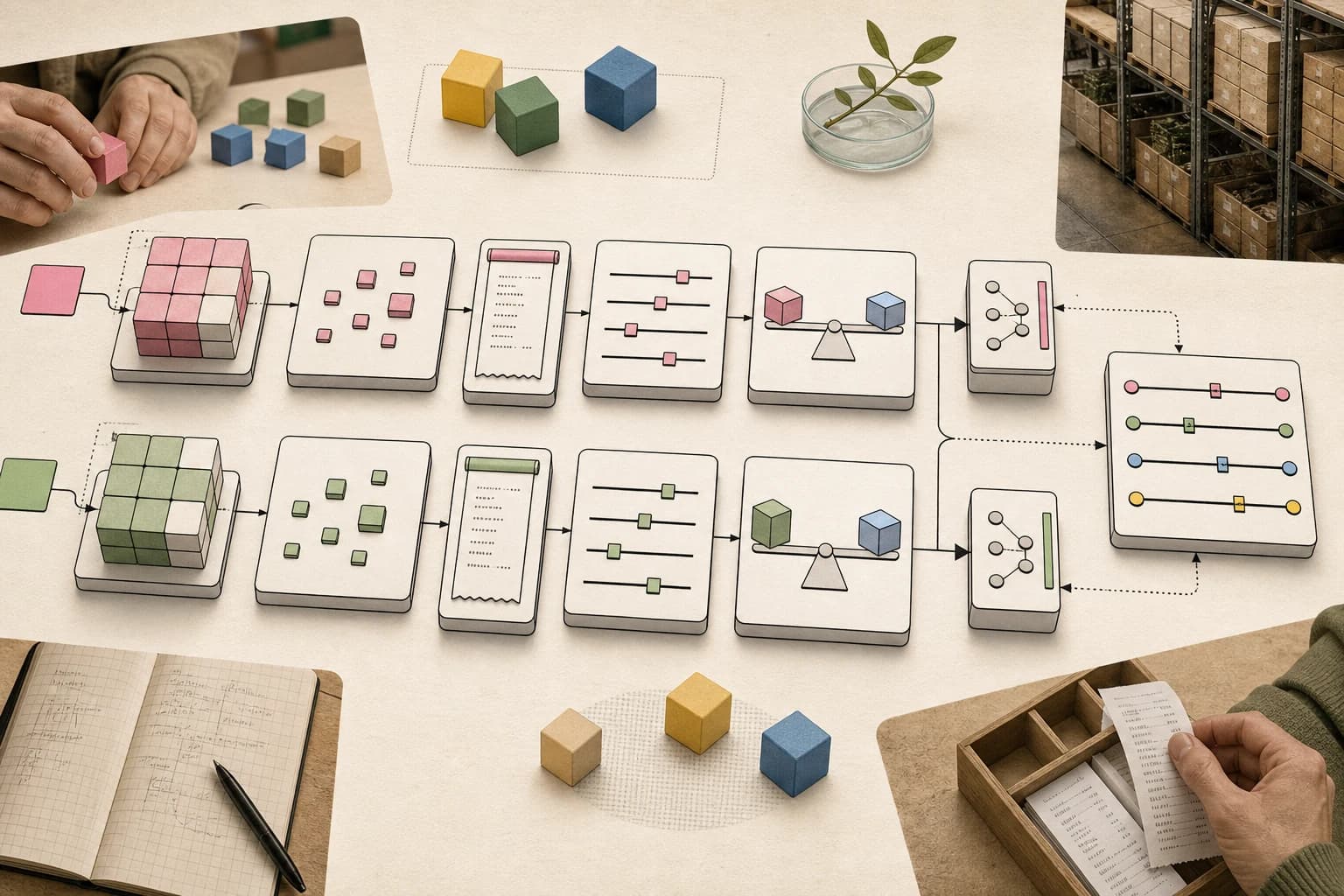
Dockerless asks whether a verifier can judge patch correctness without executing the patch. It does not merely compare a candidate patch to a reference diff. It uses agentic repository exploration to inspect the task, the codebase, and the candidate changes, then produces a correctness judgment from that gathered evidence.
For developers, that matters because many useful signals are available before execution:
- The patch edits the function named in the stack trace.
- The new branch handles the missing input class from the issue.
- The public API surface stays compatible.
- The test file added by the agent targets the reported behavior.
- The patch changes unrelated files or broadens permissions.
- The agent edited generated output instead of source.
- The implementation contradicts documented invariants.
None of those signals prove correctness alone. Together, they decide whether the patch deserves the expensive verifier.
The Practical Architecture#
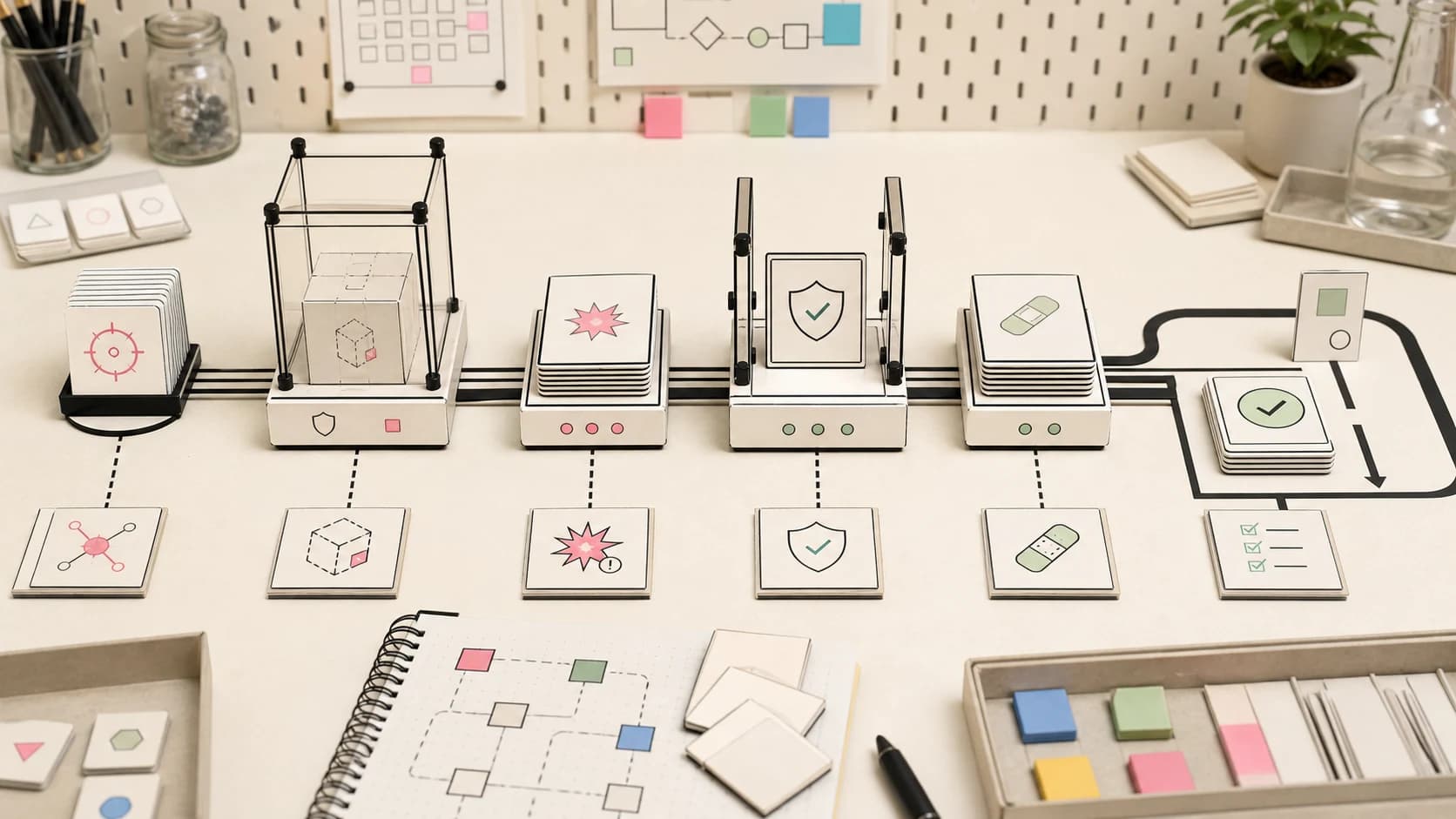
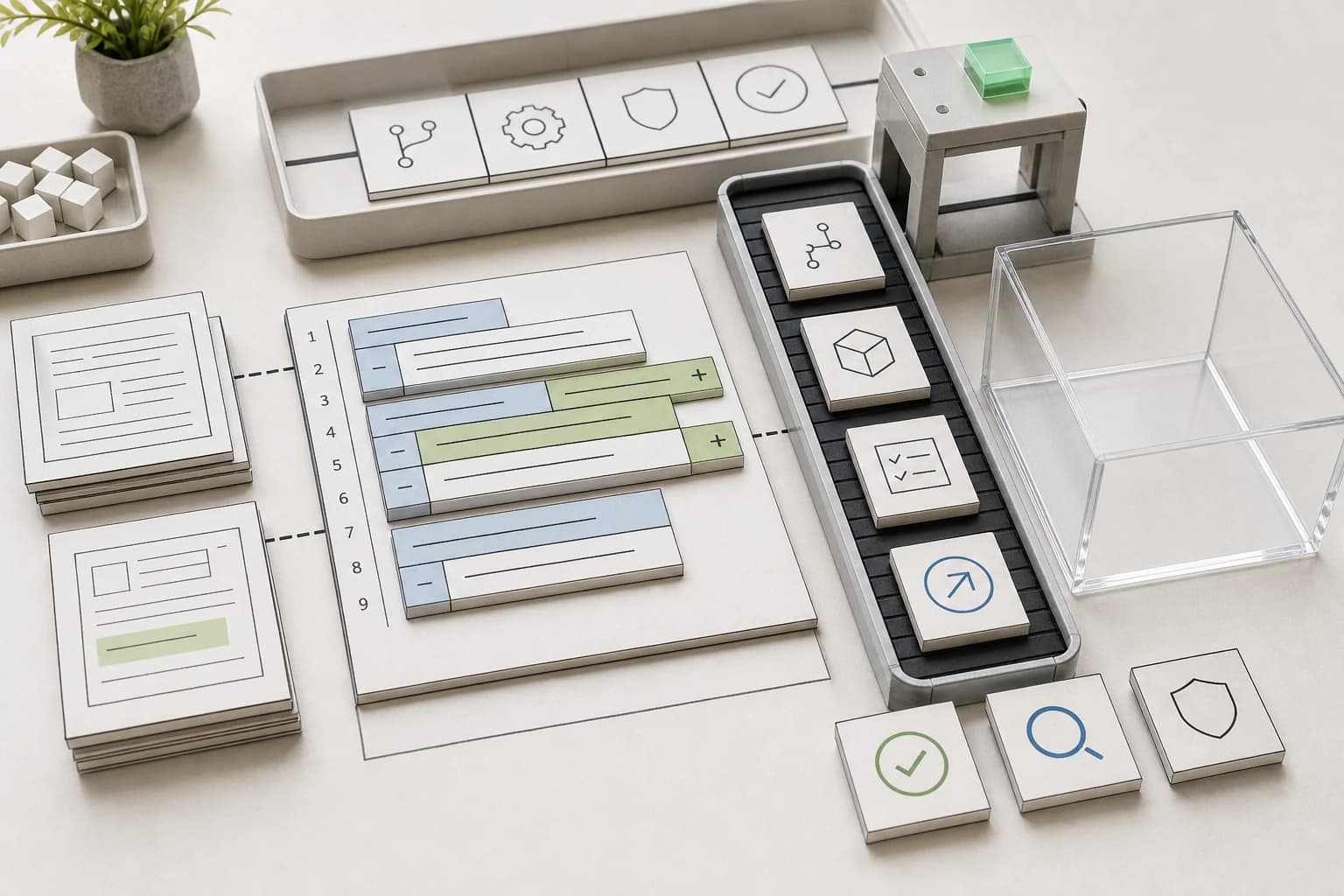
The agent stack I would build from this paper has four gates.
Gate 1: Static Patch Triage#
Before the agent runs anything, score the patch like a reviewer with no runtime:
- Is the diff scoped to the requested behavior?
- Are dangerous files touched?
- Are secrets, credentials, migrations, or auth paths involved?
- Does the patch add tests or only implementation?
- Does the implementation line up with the issue, stack trace, or failing test?
This is where a Dockerless-style verifier belongs. It can reject obvious nonsense, label uncertain cases, and route high-risk diffs into stricter paths.
Gate 2: Cheap Local Checks#
Next, run deterministic checks that do not require full production parity:
pnpm lint
pnpm typecheck
pnpm test -- --runInBand path/to/relevant.test.ts
The exact commands vary by repo, but the principle is stable. Use the fastest checks that validate syntax, types, format, and the directly touched unit surface.
For teams already thinking about agent QA, this is the same discipline as security agents need repro harnesses: do not ask a model to be the final judge when a cheaper deterministic tool can provide evidence.
Gate 3: Full Environment Execution#
Only after the patch passes cheap filters should it get the expensive treatment:
- containerized test environment,
- database fixtures,
- browser tests,
- integration tests,
- migrations,
- build verification,
- policy checks,
- deployment smoke tests.
This is where Docker, Nix, dev containers, hosted sandboxes, and CI still matter. Dockerless should reduce the number of bad patches that reach this stage, not remove the stage.
Gate 4: Human Review With Receipts#
The reviewer should not receive a naked diff. They should receive a compact evidence bundle:
- patch summary,
- files touched,
- verifier verdict,
- checks run,
- checks skipped,
- uncertainty notes,
- rollback plan.
That bundle is what makes permissions, logs, and rollback practical instead of performative. Reviewers can focus on the uncertain parts because the routine evidence has already been collected.
The Counterargument#
The obvious objection is that non-executing verifiers will miss runtime behavior. They will.
A patch can look semantically correct and still fail because of dependency versions, hidden fixtures, data shape, file system behavior, timezone handling, race conditions, browser differences, or undocumented contracts. A model-based verifier can also be fooled by persuasive but wrong code.
That is why the right comparison is not Dockerless versus CI.
The right comparison is Dockerless versus no pre-CI filter.
If the verifier is used as a final approval system, it is dangerous. If it is used as a routing system, it is useful. It can say:
- this patch is clearly off-task,
- this patch is plausible and low-risk,
- this patch needs real execution,
- this patch touches security-sensitive paths,
- this patch should be rejected before a reviewer sees it.
The research claim is about scalable training and reward signals. The engineering lesson is about layered verification.
Google Trends Signal#
Google Trends did not show meaningful demand for the exact Dockerless or coding agent verification queries in the United States over the last three months. The adjacent durable terms are stronger: sandbox averaged 51.4, CI averaged 39.7, AI benchmark averaged 41.4, and agent benchmark averaged 15.5 in the query clusters checked on July 12, 2026.
That makes this a tactical post, not a broad top-of-funnel article. The SEO angle should not be "Dockerless paper summary." It should be "coding agent verification," "AI coding agent CI," and "how to verify agent-generated code."
How I Would Use This Tomorrow#
If you are building coding-agent infrastructure, add a pre-CI verification stage.
Start simple:
- Require every agent patch to produce a short evidence note.
- Add a static reviewer prompt that checks task alignment, touched files, risk level, and missing tests.
- Run cheap deterministic checks before full CI.
- Route high-risk patches to sandboxed execution immediately.
- Preserve verifier output in the pull request, not in a transient chat.
Then measure whether the filter helps:
- fewer CI minutes spent on doomed patches,
- fewer reviewer comments about obvious task drift,
- faster rejection of irrelevant diffs,
- higher pass rate for patches that reach full CI,
- fewer agent runs that need human clarification after the fact.
That is the practical version of the Dockerless idea.
Agents are making patch generation cheap. Verification is where the leverage moves next.
FAQ#
Is Dockerless a replacement for Docker or CI?#
No. Dockerless is best understood as a pre-execution verifier for coding-agent patches. It can reduce wasted environment setup and CI time, but runtime tests, integration checks, and human review still matter.
What is environment-free code verification?#
Environment-free verification judges a patch without building and running the target repository. A verifier inspects the task, codebase, and patch evidence, then estimates whether the change is correct enough to continue to more expensive checks.
Why do coding agents need patch verifiers?#
Coding agents can generate many candidate patches quickly. Without automated verification, teams spend CI minutes and reviewer attention on patches that are off-task, unsafe, incomplete, or not worth running.
What should developers copy from the Dockerless paper?#
Copy the layered verification idea: static patch triage first, cheap local checks second, full environment execution third, and human review with an evidence bundle at the end.
What is the biggest risk of Dockerless-style verification?#
The biggest risk is treating a non-executing verifier as final proof. It should route patches and collect evidence, not approve production changes on its own.
Continue Reading#
Sources#
- Dockerless arXiv paper, checked July 12, 2026: https://arxiv.org/abs/2606.28436
- Dockerless Hugging Face paper page, checked July 12, 2026: https://huggingface.co/papers/2606.28436
- Hugging Face July 2026 monthly papers page, checked July 12, 2026: https://huggingface.co/papers/month/2026-07
- SWE-bench benchmark site, checked July 12, 2026: https://www.swebench.com/
- Google Trends query clusters checked July 12, 2026 with patched local pytrends:
coding agents,Claude Code,Codex,speculative decoding,vLLM,AI benchmark,agent benchmark,Dockerless,coding agent verification,sandbox,CI
Get the next deep dive like this in your inbox
One email a week on AI Agents and the rest of the AI dev stack. Free.
Read next on AI coding tools
Vera Shows Agent Safety Needs Test Oracles, Not Vibes
A new Vera paper tests Codex, Claude Code, OpenClaw, and Hermes with executable safety cases. The useful lesson is not panic. It is evidence-grounded agent QA.
8 min readSecurity Agents Need Repro Harnesses, Not More Scan Prompts
Anthropic's open-source vulnerability harness shows where AI security work is going: reproducible exploit loops, separate verification agents, and patch receipts.
9 min readAgent Evals Need Baseline Receipts
Hex's data-agent lab shows the practical eval pattern AI teams should copy: compare candidates against stable baselines, keep receipts, and judge changes by task behavior.
8 min readNew here? Start with
Technical content at the intersection of AI and development. Building with AI agents, Claude Code, and modern dev tools - then showing you exactly how it works.