Grok 4.5 for Developers: What Changed and When to Pick It
TL;DR
xAI's Grok 4.5 ships at $2/$6 per million tokens with 80 TPS speeds, a 500k context window, and benchmark results that put it in the Opus and GPT 5.5 tier. What actually shipped, how the pricing compares, and when it makes sense over Claude, GPT, or Gemini.
Grok 4.5 in Ten Minutes#
xAI shipped Grok 4.5 on July 8, 2026, and it is the company's first release aimed squarely at coding and agentic work rather than chat. I covered the launch in the video above, but the short version: this is a model priced like a mid-tier workhorse that benchmarks in the same band as Anthropic's Opus 4.8 and OpenAI's GPT 5.5 on software engineering tasks. That combination is the whole story.
This post is the decision-intent breakdown: what shipped, what it costs, where the benchmark claims hold up, and when you should actually route work to it instead of Claude, GPT, or Gemini.
What Shipped#
Per the official announcement, Grok 4.5 is xAI's "smartest model built to excel at coding, agentic tasks, and knowledge work," trained alongside Cursor following the acquisition. The headline specs:
- 500k token context window with a knowledge cutoff of February 1, 2026, per the xAI model docs
- 80 tokens per second serving speed, which xAI calls "fast-model speeds"
- Vision input (jpg/png, up to 20MiB per image)
- Trained on tens of thousands of NVIDIA GB300 GPUs, with RL across "hundreds of thousands of tasks" centered on multi-step software engineering
Elon Musk framed it as "an Opus-class model, but faster, more token-efficient and lower cost," and internally pegged it as "roughly comparable to Opus 4.7, but much faster," per TechCrunch.
The Benchmarks, With the Caveats#
xAI published a benchmark chart in the announcement. The results are genuinely competitive, but they are vendor-published, and the fine print notes competitor figures were pulled from each developer's own system cards and leaderboards rather than run head to head. With that caveat:
| Benchmark | Grok 4.5 | Opus 4.8 (max) | GPT 5.5 (xhigh) | Fable (max) |
|---|---|---|---|---|
| DeepSWE 1.0 (pass@1) | 62.0% | 55.75% | 64.31% | 66.1% |
| DeepSWE 1.1 | 53% | 59% | 67% | 70% |
| SWE Marathon (pass@1) | 29.0% | 26.0% | - | 24.0% |
| Terminal Bench 2.1 | 83.3% | 78.9% | 83.4% | 84.3% |
| SWE Bench Pro (resolve rate) | 64.7% | 69.2% | 58.6% | 80.4% |
The honest read: Grok 4.5 is not the top of any of these tables. Anthropic's Fable leads most of them, and Opus 4.8 beats it on DeepSWE 1.1 and SWE Bench Pro. What xAI is actually claiming, and what the numbers support, is membership in the frontier tier at a fraction of the price.
The more interesting number is token efficiency. On SWE Bench Pro, xAI reports Grok 4.5 resolves tasks with 15,954 output tokens on average versus 67,020 for Opus 4.8 (max), about 4.2x fewer. If that holds on your workloads, the effective cost gap is much larger than the sticker prices suggest, because you pay for every token a verbose model burns thinking.
Pricing: The Actual Headline#
Grok 4.5 is priced at $2 per million input tokens and $6 per million output tokens, per the announcement and model docs. For comparison, TechCrunch puts Anthropic's Opus pricing at $5 input / $25 output per million tokens.
Run the math on an agentic coding task. At $6 output versus $25 output, Grok 4.5 is already 4x cheaper per output token. Stack the claimed 4.2x token efficiency on top and a task that costs you $1.68 in Opus output tokens costs roughly $0.10 in Grok output tokens. Even if the efficiency claim only half survives contact with your codebase, the gap is large.
Within xAI's own lineup, the docs list grok-4.3 at $1.25/$2.50 with a 1M context window and grok-build-0.1 (the code API model) at $1.00/$2.00 with 256k context, so Grok 4.5 is the premium option in the family, not the budget one.
API Availability#
Grok 4.5 is available now via the xAI console and API. The announcement shows the exact call, using model id grok-4.5 against the responses endpoint:
curl -s https://api.x.ai/v1/responses \
  -H "Authorization: Bearer $XAI_API_KEY" \
  -H "Content-Type: application/json" \
  -d '{
    "model": "grok-4.5",
    "input": "Find and fix the bug, then explain it: function median(a){a.sort();return a[a.length/2]}"
  }'
Beyond the raw API, it ships day one in:
- Cursor, on all plans - the Cursor acquisition is paying off as a distribution channel, and xAI says the model was trained alongside Cursor
- Grok Build (xAI's CLI agent), where it is now the default model, with free usage "for a limited time" in both Grok Build and Cursor
- Not the EU. The announcement is explicit that Grok 4.5 is unavailable in any xAI product or the API console in the EU, with availability "expected in mid-July." If you or your users are in the EU, this is a blocker today.
When to Pick Grok 4.5#
Pick it when cost per agentic task is your constraint. High-volume background agents, CI-triggered fix bots, batch refactoring, anything where you run hundreds of tasks a day. The $2/$6 pricing plus the token efficiency story is built for exactly this, and the Terminal Bench and SWE Marathon numbers suggest it holds up on real multi-step work.
Pick it when latency matters. 80 TPS at this capability tier is the differentiator xAI is leaning on. Interactive coding assistants and user-facing agents feel meaningfully different at fast-model speeds.
Pick it if you live in Cursor. It is on all plans, currently free for a limited time, and was trained with Cursor session data. That is the lowest-friction way to evaluate it against whatever you use today.
Stick with Claude when you need the ceiling. Anthropic's Fable leads most of xAI's own published benchmarks, and Opus 4.8 still wins SWE Bench Pro. For the hardest tasks, long autonomous runs where one wrong turn wastes an hour, the top-tier models earn their price.
Stick with your incumbent when you need EU availability, a mature ecosystem, or longer context. No EU access is disqualifying for a lot of teams right now. And note that Grok 4.5's 500k context is actually smaller than grok-4.3's 1M window, per the docs, so it is not the pick for whole-repo context stuffing.
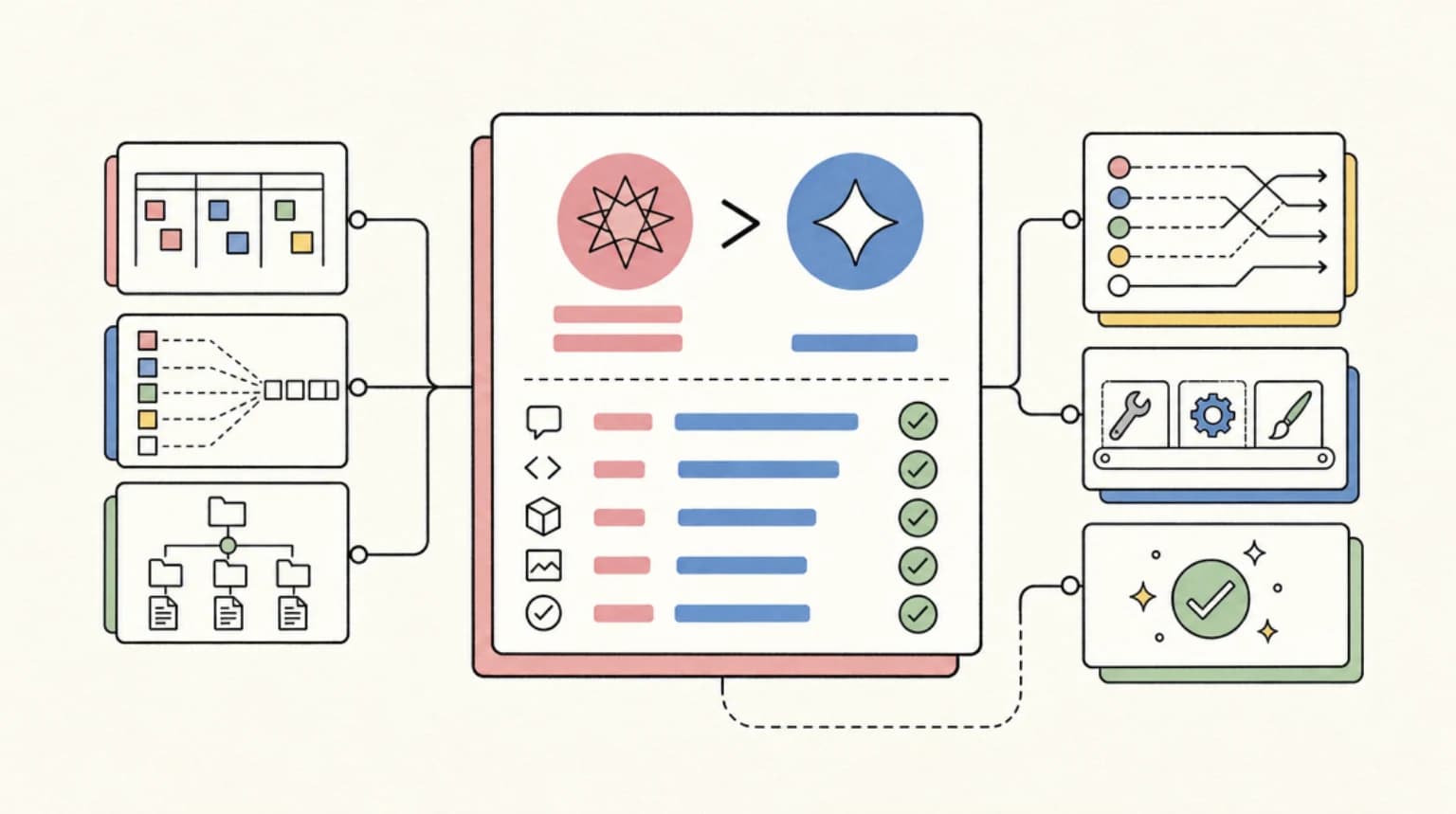
The pragmatic play, as usual, is routing: frontier model for the hard 10%, Grok 4.5 for the high-volume middle. See our AI coding tools pricing breakdown for how the rest of the market prices this tier.
FAQ#
How much does the Grok 4.5 API cost?#
$2 per million input tokens and $6 per million output tokens, per the xAI docs. xAI also claims roughly 2x token efficiency versus comparable leading models, which lowers effective cost further if it holds on your workloads.
What is Grok 4.5's context window?#
500k tokens, per the xAI model docs. Note that grok-4.3 offers a larger 1M window at a lower price if raw context is what you need.
Is Grok 4.5 better than Claude Opus for coding?#
Mixed, by xAI's own published numbers. Grok 4.5 beats Opus 4.8 (max) on DeepSWE 1.0, SWE Marathon, and Terminal Bench 2.1, but loses on DeepSWE 1.1 and SWE Bench Pro, and Anthropic's Fable leads most tables overall. Grok 4.5's case is comparable-tier results at roughly a quarter of the output token price.
Can I use Grok 4.5 in the EU?#
Not at launch. The announcement states it is not yet available in the EU in any xAI product or the API console, with EU availability expected in mid-July 2026.
Where can I use Grok 4.5 today?#
Via the API from the xAI console (model id grok-4.5), in Cursor on all plans, and in Grok Build, where it is the default model. Free usage in Grok Build and Cursor is available for a limited time.
Continue Reading#
Get the next deep dive like this in your inbox
One email a week on Grok 4.5 and the rest of the AI dev stack. Free.
Read next on AI coding tools
AI Coding Tools Pricing Comparison 2026
AI coding tools pricing, verified Sep 28, 2026: Claude Code, Codex, Cursor, Copilot, Antigravity, Windsurf and more. Free tiers, pro plans and hidden costs.
12 min readClaude Fable 5 Pricing: Real Cost Per Task vs Opus 4.8, GPT-5.5 and Codex
Fable 5 lists at $10/$50 per million tokens - twice Opus 4.8. But list price is the wrong number. Here is the cost-per-outcome math that actually decides whether the upgrade pays.
9 min readEvery AI Coding Tool Compared: The 2026 Matrix
15 AI coding tools across 4 architecture types, compared on pricing, model surface, strengths, weaknesses, and best use cases. The definitive comparison matrix for 2026.
18 min readNew here? Start with
Technical content at the intersection of AI and development. Building with AI agents, Claude Code, and modern dev tools - then showing you exactly how it works.