GPT-5.6 vs Claude 5: What the New Tiers Mean for Choosing a Coding Model

TL;DR
OpenAI's GPT-5.6 Sol, Terra, and Luna tiers versus Anthropic's Claude Fable 5 and Mythos 5. Verified pricing, benchmarks, and a practical framework for picking a coding model in July 2026.
Two Frontier Launches in One Month#
Within roughly a month, both major labs reshaped the top of the model market. Anthropic shipped Claude Fable 5 and Claude Mythos 5, with Fable 5 generally available on the Claude API since June 9, 2026. OpenAI followed with the GPT-5.6 family - three tiers named Sol, Terra, and Luna - which hit general availability on July 9, 2026 after a limited preview of Sol that started in late June.
This post was refreshed on July 26, 2026. Frontier model pricing and availability change fast, so treat every number here as a snapshot and verify against the linked pricing pages before committing budget. Since the original publication, Anthropic launched Opus 5 (July 24) at $5/$25 per MTok, adding a third Claude 5 tier between Sonnet 5 and Fable 5. See the Opus 5 comparison for full pricing and benchmarks.
The interesting part for developers is not just raw capability. Both launches change how you think about model selection: OpenAI has moved to durable capability tiers that version independently, and Anthropic has split its frontier into a broadly available model and a restricted high-capability sibling. Here is what actually shipped, with sources, and how to choose between them for coding work.
Official Sources#
| Source | Link |
|---|---|
| OpenAI GPT-5.6 announcement | openai.com/index/gpt-5-6/ |
| OpenAI API pricing | openai.com/api/pricing |
| OpenAI models reference | developers.openai.com |
| Anthropic Fable 5 + Mythos 5 announcement | anthropic.com/news |
| Anthropic models overview | platform.claude.com/docs |
| Anthropic API pricing | anthropic.com/pricing |
| Anthropic Opus 5 announcement (July 24) | anthropic.com/news |
| Programmatic Tool Calling guide | developers.openai.com |
| Prompt caching breakpoints | developers.openai.com |
The GPT-5.6 Lineup: Sol, Terra, Luna#
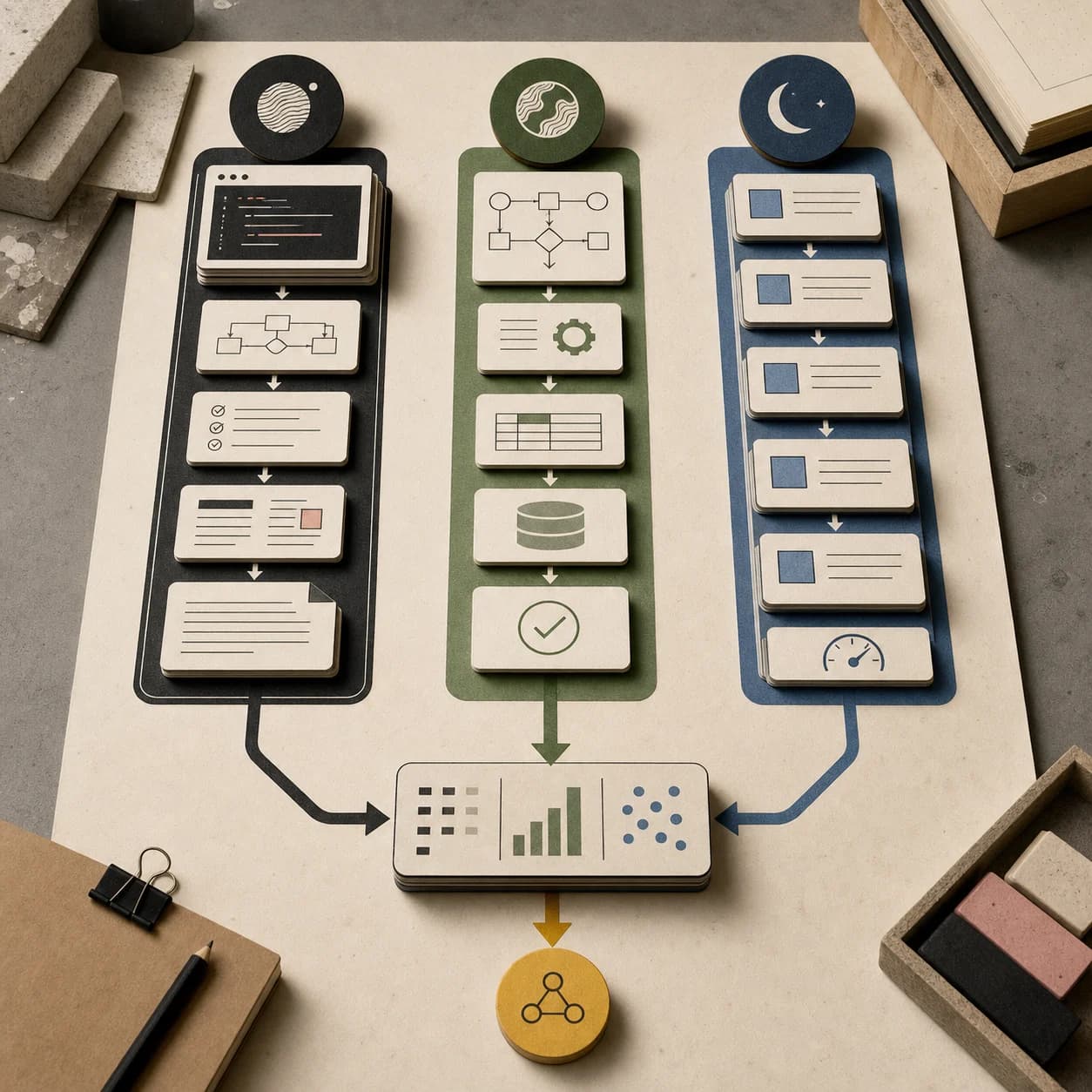
OpenAI's GA announcement introduces a new naming scheme: the number (5.6) identifies the generation, while Sol, Terra, and Luna are durable capability tiers that can advance on their own cadence. The tiers:
- Sol - the flagship, built for frontier reasoning and long-horizon agentic work
- Terra - a balanced model, competitive with GPT-5.5 at a lower price
- Luna - the fastest and most affordable model in the family
API pricing per 1M tokens, from the announcement:
| Tier | Input | Output |
|---|---|---|
| GPT-5.6 Sol | $5.00 | $30.00 |
| GPT-5.6 Terra | $2.50 | $15.00 |
| GPT-5.6 Luna | $1.00 | $6.00 |
Three other launch details matter for anyone building coding agents:
Compute settings, not just model sizes. Beyond the familiar reasoning-effort levels, GPT-5.6 adds max (more reasoning time than xhigh) and ultra, which coordinates four agents in parallel by default. OpenAI reports Sol Ultra hitting 91.9% on Terminal-Bench 2.1 versus 88.8% for single-agent Sol. In the API, ultra-style workflows use a multi-agent beta in the Responses API.
Programmatic Tool Calling. The Responses API can now let the model write and run lightweight programs that coordinate tools and filter intermediate results instead of passing every tool response back through the model. OpenAI's customer quotes cite token reductions from 24% up to 63.5% on tool-heavy workflows.
Predictable prompt caching. GPT-5.6 introduces explicit cache breakpoints and a 30-minute minimum cache life. Cache writes are billed at 1.25x the uncached input rate; cache reads keep the 90% discount. If you run long-lived coding agents with big stable system prompts, this materially changes cost modeling.
Product availability, per OpenAI's help center: in standard ChatGPT, only Sol is selectable (it powers the Medium, High, and Extra High reasoning options on Plus and above; Sol Pro is Pro/Business/Enterprise). Terra and Luna are available in ChatGPT Work, Codex, and the API. In Codex, Free and Go users get Terra; paid plans can choose among all three.
The Claude 5 Family: Fable 5 and Mythos 5#
Anthropic's launch is structured differently. Per the announcement, Claude Fable 5 and Claude Mythos 5 are the same underlying model; Fable 5 is the version made safe for general availability, while Mythos 5 has certain safeguards lifted and is restricted to approved customers in Project Glasswing plus select biology researchers under a trusted access program. There is no self-serve sign-up for Mythos 5.
Fable 5 specs, from Anthropic's model documentation:
| Spec | Claude Fable 5 |
|---|---|
| API model ID | claude-fable-5 |
| Pricing | $10 / 1M input, $50 / 1M output |
| Context window | 1M tokens |
| Max output | 128K tokens |
| Thinking | Adaptive thinking, always on |
| Availability | Claude API, AWS Bedrock, Google Cloud, Microsoft Foundry (GA June 9, 2026) |
Anthropic positions Fable 5 as "next-generation intelligence for long-running agents" and reports state-of-the-art results on most tested benchmarks, including the top score on Cognition's FrontierCode evaluation at medium effort and long-context performance well ahead of Opus 4.8 on memory-dependent tasks. The announcement highlights a Stripe engagement where the model worked on a 50-million-line codebase migration.
At $10 / $50 per million tokens, Fable 5 is the most expensive mainstream frontier model right now - double Sol's input rate and two-thirds more on output - though Anthropic notes it is less than half the price of the earlier Claude Mythos Preview. One deployment detail worth knowing: Fable 5 uses the newer tokenizer introduced with Opus 4.7, which produces roughly 30% more tokens for the same text than pre-4.7 Claude models, so naive cost comparisons against older Claude bills will understate the difference.
Fable 5 also ships with classifier-based safeguards that redirect flagged cybersecurity, biology, and distillation-adjacent requests to Claude Opus 4.8. Anthropic says this fallback triggers in under 5% of sessions on average. For most application development that is a non-issue, but if you work in security tooling it is a real consideration - OpenAI is meanwhile routing advanced defensive-cyber capability through its own verified trusted access program.
What the Benchmarks Actually Say#
Cross-lab benchmark comparisons deserve skepticism, and most of the head-to-head numbers below come from OpenAI's own launch post, so weigh that. That said, OpenAI's published tables include results where Claude wins, which makes them more useful than the usual cherry-picking:
| Coding eval | GPT-5.6 Sol | GPT-5.6 Terra | GPT-5.6 Luna | Claude Fable 5 | Claude Opus 4.8 |
|---|---|---|---|---|---|
| Artificial Analysis Coding Agent Index v1.1 | 80 | 77.4 | 74.6 | 77.2 | 72.5 |
| SWE-Bench Pro | 64.6% | 63.4% | 62.7% | 80% | 69.2% |
| Terminal-Bench 2.1 | 88.8% | 87.4% | 84.7% | 83.1% | 78.9% |
| DeepSWE v1.1 | 72.7% | 69.6% | 67.2% | 69.7% | 59% |
The pattern is more interesting than a single winner:
- Fable 5 dominates SWE-Bench Pro at 80% versus Sol's 64.6% - a 15-point gap on the benchmark closest to real repository-level bug fixing, reported in OpenAI's own table.
- Sol leads the broader coding-agent indexes (Artificial Analysis Coding Agent Index, Terminal-Bench, DeepSWE), and OpenAI claims it does so using less than half the output tokens and less than half the time of Fable 5.
- The cheap tiers are close behind. Terra at 77.4 on the coding index effectively matches Fable 5's 77.2 at one-quarter the input price, and Luna beats Opus 4.8 at one-fifth the price.
OpenAI's efficiency claims are the through-line of its whole launch: on Agents' Last Exam it reports Sol beating Fable 5 by double digits at roughly one-quarter the estimated cost. Anthropic's counter-position is depth on long-horizon autonomous work, where its announcement emphasizes multi-day task persistence and long-context memory. Both stories can be true at once; they optimize different points on the cost-capability curve.
A Practical Decision Framework#
For choosing a coding model this month:
Default coding agent on a budget: GPT-5.6 Terra. At $2.50 / $15 it benchmarks at or above last generation's flagships and roughly matches Fable 5 on the Artificial Analysis coding index. This is the price-performance anchor of the whole market right now.
Hardest repository-scale work: Claude Fable 5. The SWE-Bench Pro gap is large, the 1M-token context window with strong long-context recall suits monorepo work, and Anthropic's positioning (and customer evidence) centers on multi-day autonomous engineering. You pay for it: budget roughly 2x Sol per token, more once the tokenizer difference is counted.
Terminal-heavy and multi-agent workflows: GPT-5.6 Sol. Best published Terminal-Bench numbers, ultra parallel-agent mode, and Programmatic Tool Calling that meaningfully cuts token spend on tool-heavy loops.
High-volume, latency-sensitive tasks: GPT-5.6 Luna. At $1 / $6 it outperforms Opus 4.8 on OpenAI's coding-index comparison. For code review comments, test generation, and CI helpers, this tier is hard to argue with. Note Luna's long-context scores drop off sharply in OpenAI's own MRCR tables, so keep its inputs short.
Don't plan around Mythos 5. It is invitation-only via Project Glasswing. For general development, Fable 5 is the Claude 5 model that exists for you.
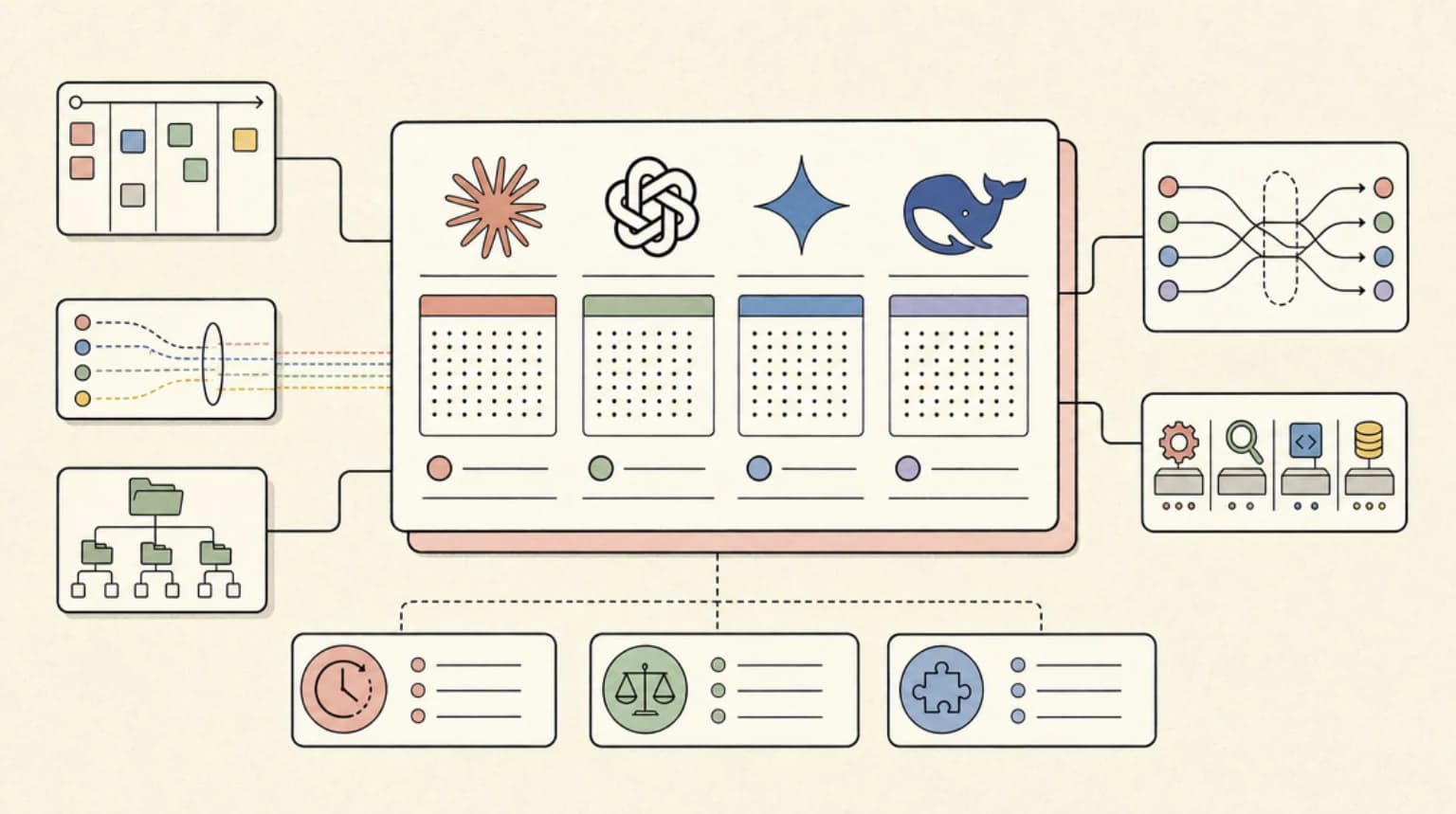
The bigger takeaway is structural. OpenAI now versions capability tiers independently, and Anthropic now splits general-availability and restricted variants of one model. Model choice is becoming a portfolio decision - route easy tasks to cheap tiers, escalate hard ones - rather than a single-vendor bet. If your stack does not already support per-task model routing, that is the infrastructure gap to close before the next wave of releases.
Continue Reading#
- Claude Opus 5 vs Opus 4.8 vs Fable 5 Comparison 2026 - full Opus 5 pricing, benchmarks, and decision guide
- GPT-5.6 Sol Developer Guide - deep dive on the three-tier model family with code examples
- Frontier Model API Pricing 2026 - live pricing comparison across all major providers
- AI Coding Tools Pricing 2026 - tool-level pricing for Cursor, Claude Code, Codex, and more
- Web Dev Arena: How to Test AI Coding Models on Real Frontend Work
FAQ#
Is GPT-5.6 cheaper than Claude Fable 5?#
Yes, at every tier as of July 2026. GPT-5.6 Sol is $5 / $30 per 1M tokens versus Fable 5's $10 / $50, per OpenAI and Anthropic. Terra ($2.50 / $15) and Luna ($1 / $6) are far cheaper. Effective cost also depends on token efficiency and caching, so benchmark on your own workload.
Which model is better for coding, GPT-5.6 Sol or Claude Fable 5?#
It depends on the work. In OpenAI's published results, Fable 5 leads SWE-Bench Pro by about 15 points (80% vs 64.6%), while Sol leads the Artificial Analysis Coding Agent Index (80 vs 77.2), Terminal-Bench 2.1, and DeepSWE, reportedly with far fewer output tokens. For repository-scale autonomous engineering, Fable 5 has the stronger case; for terminal-driven agents and cost-sensitive pipelines, Sol or Terra.
What are the API model IDs?#
Claude Fable 5 is claude-fable-5 on the Claude API per Anthropic's docs. OpenAI exposes the tiers as Sol, Terra, and Luna through the API; check the OpenAI models documentation for the exact identifiers for your integration.
Can I use Claude Mythos 5?#
Almost certainly not directly. Mythos 5 is limited to approved Project Glasswing customers and select biology researchers under Anthropic's trusted access program, with no self-serve sign-up, per the announcement. It shares Fable 5's specs and pricing, so Fable 5 is the practical option.
What context windows do these models have?#
Claude Fable 5 has a documented 1M-token context window with 128K max output (Anthropic docs). OpenAI's GA post does not state GPT-5.6 context windows, and third-party reports conflict, so check the OpenAI model pages for current limits before designing around a number.
Do the new tier names mean OpenAI is dropping version numbers?#
No. Per the GA announcement, the number (5.6) still identifies the generation; Sol, Terra, and Luna are durable capability tiers that can now advance on their own schedules. Expect future releases to update individual tiers rather than the whole family at once.
Get the next comparison like this in your inbox
One email a week on GPT-5.6 and the rest of the AI dev stack. Free.
Read next on AI coding tools
Claude vs GPT for Coding: Which Model Writes Better TypeScript?
Claude vs GPT for real TypeScript work: benchmarks, pricing, model families, and the practical differences that matter when picking a coding model.
9 min readClaude Fable 5 vs GPT-5.6 Sol: Benchmarks, Pricing, and When Each Wins
Fable 5 is API-only at 2x GPT-5.6 Sol's price with a 15-point SWE-Bench Pro gap. Here is the decision framework for choosing between them in August 2026.
12 min readAI Model Routing Strategies for Cost-Effective Coding in 2026
A practical guide to routing between Claude Opus 5, Sonnet 5, Haiku 4.5, GPT-5.6 Sol/Terra/Luna, and Kimi K3 based on task complexity, cost budget, and latency requirements - with decision frameworks and code examples.
10 min readNew here? Start with
Technical content at the intersection of AI and development. Building with AI agents, Claude Code, and modern dev tools - then showing you exactly how it works.