Claude vs GPT for Coding: Which Model Writes Better TypeScript?

TL;DR
Claude vs GPT for real TypeScript work: benchmarks, pricing, model families, and the practical differences that matter when picking a coding model.
Direct answer
Claude vs GPT for Coding: Which Model Writes Better TypeScript?
Claude vs GPT for real TypeScript work: benchmarks, pricing, model families, and the practical differences that matter when picking a coding model.
Best for
Developers comparing real tool tradeoffs before choosing a stack.
Covers
Verdict, tradeoffs, pricing signals, workflow fit, and related alternatives.
Picking between Claude and GPT for coding is no longer a coin flip. Both model families shipped major upgrades in July 2026, and the differences matter depending on what you build, how you build it, and what your budget looks like.
This is a practical comparison. No synthetic benchmarks, no cherry-picked prompts. Just real TypeScript work across both model families, with every price verified against the live vendor pages on July 31, 2026.
If you are choosing an actual coding product rather than a model API, use this as the model layer and then read Claude Code vs Codex, OpenAI Codex guide, and Claude Code usage limits. For budget checks, use the AI coding tools pricing comparison.
Last updated: July 31, 2026
What Changed on July 31, 2026#
- Opus 5 replaced Opus 4.8 as Anthropic's workhorse on July 24 at $5/$25 per million tokens - same price as the model it replaced, with near-Fable-5 benchmark scores. Sonnet 5 launched at an introductory $2/$10 per million through August 31, 2026.
- GPT-5.6 Sol/Terra/Luna replaced GPT-5.5 and GPT-5.4 as OpenAI's coding lineup. Sol is the flagship at $5/$30, Terra the workhorse at $2/$12, and Luna the budget tier at $0.20/$1.20 after the July 30 price cut.
- The pricing spread widened dramatically. The gap between a Sol-powered session and a Luna-powered one is now 25x on input tokens, which changes the routing conversation for teams that only used to buy one model.
Official Sources#
Always verify current pricing and model capabilities against the official documentation:
| Provider | Models | Pricing |
|---|---|---|
| Anthropic | docs.anthropic.com/models | anthropic.com/pricing |
| OpenAI | developers.openai.com/api/docs/models | developers.openai.com/api/docs/pricing |
All links verified July 31, 2026. Model capabilities and pricing change frequently. The official pages are the source of truth.
The models#
Claude Opus 5 is Anthropic's most capable generally available model. It launched July 24, 2026 at $5/$25 per million tokens - the same price as Opus 4.8 - and took the #1 spot on the Artificial Analysis Intelligence Index. It powers the API and sits behind the highest-end Claude coding workflows, while Claude Code can run through Claude subscriptions or API usage depending on how your team configures it. The model excels at deep reasoning, multi-step planning, and maintaining coherence across long conversations. Sonnet 5 is the cost-optimized sibling at $2/$10 (introductory pricing through August 31, 2026, then $3/$15).
For model-selection context, compare this with What Is Claude Code? The Complete Guide for 2026 and 60 Claude Code Tips and Tricks for Power Users; the useful question is not only benchmark quality, but where the model fits in a real developer workflow. The full head-to-head against the rest of the Claude lineup is in our Opus 5 vs Opus 4.8 vs Fable 5 comparison.
GPT-5.6 Sol is OpenAI's latest flagship coding model. It powers the API and sits alongside Codex's specialized coding models. The GPT-5.6 family also includes Terra ($2/$12, the workhorse) and Luna ($0.20/$1.20, the budget tier) - see our GPT-5.6 Sol/Terra/Luna guide for the family breakdown. Sol is faster at generation and handles broader general knowledge than its predecessors.
Context window#
This is one of the biggest practical differences.
| Model | Context Window | Output Limit |
|---|---|---|
| Claude Opus 5 | 1M tokens | 128K tokens |
| GPT-5.6 Sol | 1M tokens (128K standard, up to 1M via API) | 128K tokens |
The top-end Claude and GPT models now publish similar long-context ceilings, so context size alone does not tell the full story. What matters is how reliably the model keeps constraints, files, and prior decisions straight at the edges of a large prompt. Verify exact limits against the official model docs before planning a migration because model cards change quickly.
In practice, both models handle typical TypeScript projects without hitting context limits. The difference shows up on monorepo-scale work where you need 50+ files in context simultaneously.
Intelligence and reasoning#
Claude Opus 5 is the stronger reasoner. This shows up clearly in three areas:
Complex refactoring. When you ask Claude to migrate a codebase from one pattern to another (say, moving from REST to tRPC, or restructuring a Convex schema), it plans the migration path before writing code. It identifies dependencies, handles edge cases, and produces changes that compile on the first try more often.
TypeScript
// Claude plans the full migration before writing code
// It identifies every file that imports from the old pattern,
// maps the dependency graph, and generates changes in order

// GPT tends to start writing immediately
// Fast output, but you catch more issues in review
Type-level TypeScript. Both models handle standard generics and utility types. But when you get into conditional types, template literal types, or recursive type definitions, Claude produces correct solutions more consistently. GPT-5.6 Sol sometimes generates types that look right but fail on edge cases.
Multi-file coherence. When editing 10+ files in a single task, Claude maintains consistency across all of them. Shared interfaces stay in sync, import paths resolve correctly, and naming conventions stay consistent. GPT-5.6 Sol occasionally drifts on conventions between files when the task is large enough.
From the archive
Cursor Composer 2: Everything You Need to Know
Mar 19, 2026 • 5 min read
Cursor vs Claude Code in 2026 - Which Should You Use?
Mar 19, 2026 • 9 min read
Cursor vs Codex: IDE Agent vs Terminal and Cloud Agent for TypeScript
Mar 19, 2026 • 5 min read
Gemini CLI: Free AI Coding With 1M Token Context
Mar 19, 2026 • 4 min read
Speed#
GPT-5.6 Sol wins on raw generation speed. It produces tokens faster, which translates to shorter wait times on every interaction. For rapid prototyping and iterative UI work, this speed advantage compounds across dozens of small edits per session.
Claude Opus 5 is slower per token but often faster end-to-end on complex tasks. It spends more time "thinking" before generating, which means fewer rounds of revision. You wait longer for the first response, but the response is more likely to be correct.
The tradeoff: GPT is better for tight feedback loops where you iterate quickly. Claude is better for "do it right the first time" tasks where rework costs more than wait time.
TypeScript quality#
Both models write production-quality TypeScript. The differences are subtle but consistent:
Claude strengths:
- Stricter type safety by default. Avoids
anyand type assertions unless necessary. - Better at inferring complex generic constraints.
- More consistent use of
readonly,as const, and discriminated unions. - Produces more idiomatic patterns for the frameworks you are using.
GPT strengths:
- Faster at generating boilerplate (API routes, CRUD operations, form components).
- Better at pulling in correct third-party library APIs from memory.
- Slightly better at generating comprehensive test cases.
- More willing to use newer TypeScript features (satisfies operator, using declarations).
TypeScript
// Claude tends to write this:
type Result<T> = { success: true; data: T } | { success: false; error: string };

function processResult<T>(result: Result<T>): T {
  if (!result.success) {
    throw new Error(result.error);
  }
  return result.data;
}

// GPT tends to write this (also correct, different style):
function processResult<T>(result: Result<T>): T {
  if (result.success) return result.data;
  throw new Error(result.error);
}
Both approaches are valid. Claude leans toward explicit exhaustiveness. GPT leans toward brevity.
Pricing#
All prices verified July 31, 2026 on the live pricing pages.
| Plan | Price | What you get |
|---|---|---|
| Claude Max | From $100/mo | 5x or 20x Pro usage, with usage limits |
| Claude Pro | $20/mo | Claude subscription access with lower usage limits |
| GPT Plus | $20/mo | ChatGPT access to GPT-5 family models |
| Codex | Token-based usage | GPT-5.6 Sol/Terra/Luna, rates vary by model |
| Claude API (Opus 5) | $5 / $25 per 1M tokens (in/out) | Pay per use |
| Claude API (Sonnet 5) | $2 / $10 per 1M tokens (intro through Aug 31, 2026) | Pay per use |
| GPT API (GPT-5.6 Sol) | $5 / $30 per 1M tokens (in/out) | Pay per use |
| GPT API (GPT-5.6 Terra) | $2 / $12 per 1M tokens (in/out) | Lower-cost pay per use |
| GPT API (GPT-5.6 Luna) | $0.20 / $1.20 per 1M tokens (in/out) | Budget pay per use |
Claude and GPT are now close enough on flagship API pricing that the cheapest choice depends on model, context mode, cache usage, and output volume. The interesting shift in July 2026: OpenAI now spans a 25x input-price range within one model family, so a single OpenAI account can route between Sol, Terra, and Luna per workload - something model routing strategies exploit directly. Claude Max is the premium subscription option for heavy Claude users, while Codex usage varies by model and token volume.
Pricing changes quickly, so verify against Anthropic pricing, Claude plan pricing, Claude Code costs, and OpenAI API pricing before making a team purchase.
When Claude wins#
- Deep refactoring across many files with complex dependencies
- Reasoning-heavy tasks where correctness matters more than speed
- Long-running autonomous work via Claude Code's sub-agent architecture
- Codebase-aware edits where understanding project conventions is critical
- Type-heavy TypeScript with advanced generics, conditional types, and inference
If you are building production systems and need the model to reason about architecture, Claude is the better choice.
When GPT wins#
- Rapid prototyping where iteration speed matters most
- Broad knowledge tasks that reference many third-party libraries
- Large context needs when you need long-context GPT model options in a single prompt
- Budget-sensitive work where API costs need to stay low - Luna at $0.20/$1.20 is the cheapest coding-tier output from either vendor
- General-purpose coding across many languages and frameworks
If you are moving fast, testing ideas, and need the model to keep up with your pace, GPT is the better choice.
The bottom line#
Use both. Seriously.
Claude Opus 5 is the better model for serious TypeScript engineering. It reasons more carefully, produces more correct code on the first pass, and handles complex multi-file tasks with less supervision. If you only pick one model for production codebases, pick Claude.
GPT-5.6 Sol is the better model for speed and breadth. It generates faster, and the Terra and Luna siblings give you a per-task cost dial that nothing on the Claude side matches in granularity. It is the better choice for prototyping, exploration, and high-volume work.
The real power move is using both strategically. Claude for the hard problems, GPT for the fast ones. That is what the best developers are doing right now.
Frequently Asked Questions#
Is Claude or GPT better for coding?#
Claude Opus 5 is better for serious TypeScript engineering - it reasons more carefully and produces more correct code on complex multi-file tasks. GPT-5.6 Sol is better for speed, rapid prototyping, and tasks requiring broad general knowledge. The best approach is using both strategically.
Which AI model is best for TypeScript?#
Claude Opus 5 currently leads for TypeScript-heavy work due to its superior reasoning on type inference, generics, and multi-file refactoring. GPT-5.6 Sol is a close second and generates faster. Both outperform open-source alternatives on production TypeScript codebases.
How much does Claude cost vs GPT for coding?#
Claude Max starts at $100/month for heavier Claude usage, while Claude Pro and ChatGPT Plus start at $20/month. On the API, Opus 5 is $5/$25 per million tokens and Sonnet 5 is $2/$10 (introductory through August 31, 2026). GPT-5.6 Sol is $5/$30, Terra $2/$12, and Luna $0.20/$1.20 (all verified July 31, 2026). Codex and OpenAI API costs depend on the exact GPT model you choose and the token volume you burn.
Can I use Claude and GPT together?#
Yes. Many developers use Claude for deep reasoning tasks like architecture decisions and complex refactors, and GPT for fast prototyping, exploration, and high-volume work. Tools like Aider and Cursor support switching between models within the same workflow.
Is GPT-5.6 Luna good enough for coding?#
Luna is the budget member of the GPT-5.6 family at $0.20/$1.20 per million tokens (verified July 31, 2026). It is a solid choice for high-volume, well-defined tasks like boilerplate generation, tests, and small refactors, but for complex multi-file work the Sol and Opus 5 gap shows up as extra revision rounds. Route per task rather than per session.
Compare both models side by side on real tasks at subagent.developersdigest.tech/compare.
Continue Reading#
- Opus 5 vs Opus 4.8 vs Fable 5 Comparison - how the new Claude flagship stacks against the rest of the family
- GPT-5.6 Sol/Terra/Luna Guide - the OpenAI family breakdown with per-tier pricing
- AI Coding Tools Pricing 2026 - the full pricing map across tools and providers
- Model Routing Strategies for Cost-Effective Coding - when to send each task to which model
- Claude Code vs Codex - the tool-level comparison once you pick a model family
- OpenAI's GPT 5.4 in 10 Minutes
Sources#
- Claude Models Documentation - Official Anthropic model specifications and capabilities (verified July 31, 2026)
- OpenAI Models Documentation - Official OpenAI model reference (verified July 31, 2026)
- Anthropic Pricing - Claude API and subscription pricing (verified July 31, 2026)
- Claude Plan Pricing - Claude subscription tiers (verified July 31, 2026)
- Claude Code Costs - Claude Code usage and cost guidance (verified July 31, 2026)
- OpenAI API Pricing - GPT model API rates (verified July 31, 2026)
- Claude Code Documentation - Official Claude Code features and usage
Read next
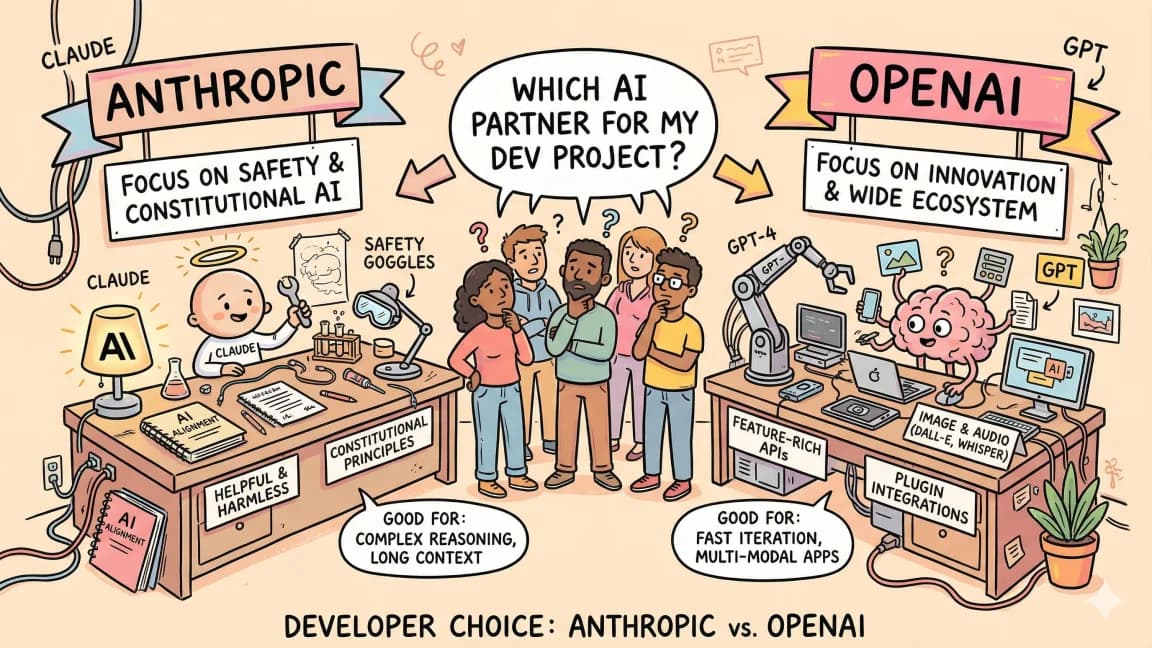
Anthropic vs OpenAI: Developer Experience Compared
Two platforms, two philosophies. Here is how Anthropic and OpenAI compare on APIs, SDKs, documentation, pricing, and the actual experience of building with each.
8 min readOpenAI vs Anthropic in 2026 - Models, Tools, and Developer Experience
A developer's comparison of OpenAI and Anthropic ecosystems - models, coding tools, APIs, pricing, and which to choose for different use cases.
18 min readThe 10 Best AI Coding Tools in 2026
From terminal agents to cloud IDEs - these are the AI coding tools worth using for TypeScript development in 2026.
8 min readShare
Developers Digest
Technical content at the intersection of AI and development. Building with AI agents, Claude Code, and modern dev tools - then showing you exactly how it works.
300+ videos30K+ GitHub stars850+ articles
Related Tools
AI Coding

Aider
Open-source AI pair programming in your terminal. Works with any LLM - Claude, GPT, Gemini, local models. Git-aware ed...
View ToolAI Coding
Z
Zed
High-performance code editor built in Rust with native AI integration. Sub-millisecond input latency. Built-in assistant...
View ToolAI CodingOpen source

OpenCode
Open-source AI coding agent for terminal, desktop, and IDE. Works with 75+ LLM providers including Claude, GPT, Gemini,...
View ToolAI ModelsDaily Driver

Claude
Anthropic's AI. Opus 4.6 for hard problems, Sonnet 4.6 for speed, Haiku 4.5 for cost. 200K context window. Best coding m...
View ToolApps from Developers Digest
Developer ToolsIn Progress
ctx-peek
Inspect Claude Code transcripts to see which files, tools, and tokens are filling the context window.
View AppDeveloper Tools
Agent Hub
Every coding agent in one window. Stop alt-tabbing between Claude, Codex, and Cursor.
View AppDeveloper ToolsIn Progress
Skill Builder
Turn a one-liner into a working Claude Code skill. From idea to installed in a minute.
View AppRelated Guides
Guide
AI Agent Frameworks Compared: LangGraph vs CrewAI vs Mastra vs CopilotKit
Deep comparison of the top AI agent frameworks - LangGraph, CrewAI, Mastra, CopilotKit, AutoGen, and Claude Code.
AI AgentsGuide
Model Aliases - Claude Code
Use opus, sonnet, haiku, and best to switch models easily.
Claude CodeGuide
Model Picker (/model) - Claude Code
Interactive UI to switch models and effort sliders mid-session.
Claude CodeRelated Videos
ChatGPT Canvas Full Review & Comparison to Claude, Cursor, V0, Replit Agent & Bolt.new
Learn The Fundamentals Of Becoming An AI Engineer On Scrimba; https://v2.scrimba.com/the-ai-engineer-path-c02v?via=developersdigest My AI-powered Video Editor; https://dub.sh/dd-descript ...
Video·
OpenAI's GPT 4.5 ChatGPT Compared to Anthropic Claude 3.7 Sonnet
In this video, I dive into an in-depth comparison between the latest AI models GPT-4.5 and Claude 3.7 Sonnet. 📊 You'll learn about the strengths and weaknesses of each model, as well as...
Video·
Claude 3.5 Sonnet 👑: Anthropic's Answer to GPT-4o
In this video, I discuss the latest release from Anthropic, the Claude 3.5 Sonnet model. This new AI model has significantly outperformed its predecessor, Claude 3 Opus, in most benchmarks,...
Video·
Related Posts
8 min read
Anthropic
Anthropic vs OpenAI: Developer Experience Compared
Two platforms, two philosophies. Here is how Anthropic and OpenAI compare on APIs, SDKs, documentation, pricing, and the...
18 min read
OpenAI
OpenAI vs Anthropic in 2026 - Models, Tools, and Developer Experience
A developer's comparison of OpenAI and Anthropic ecosystems - models, coding tools, APIs, pricing, and which to choose f...

8 min read
AI Coding
The 10 Best AI Coding Tools in 2026
From terminal agents to cloud IDEs - these are the AI coding tools worth using for TypeScript development in 2026.

15 min read
Claude Code
What Is Claude Code? The Complete Guide for 2026
Claude Code is Anthropic's AI coding agent for terminal, IDE, desktop, and browser workflows. Learn what it does, how it...

12 min read
AI Coding
AI Coding Tools Pricing Comparison 2026
Complete pricing breakdown for every major AI coding tool. Claude Code, Cursor, Copilot, Windsurf, Codex, Augment, and m...

11 min read
Claude Code
Claude Code vs Codex App in 2026: Local Agent Pairing vs Cloud Agent Orchestration
A deep comparison of Claude Code and OpenAI Codex app based on official docs and product updates: execution model, secur...
22 min read
Claude
Claude Opus 5 vs Opus 4.8 vs Fable 5: Benchmark Comparison (July 2026)
Claude Opus 5 launched July 24, 2026 at $5/$25 per MTok - matching Opus 4.8 pricing while delivering near-Fable 5 intell...

8 min read
OpenAI
GPT-5.6 Sol, Terra, and Luna: A Developer's Guide to OpenAI's New Model Family
A practical guide to choosing GPT-5.6 Sol, Terra, and Luna, using programmatic tool calling, caching, and the multi-agen...
Build with the member tools

Get Smarter About AI Dev
New tutorials, open-source projects, and deep dives on coding agents - delivered weekly.
One email per weekReal code, not theoryFree forever