xAI Grok 3 Launch: The Smartest AI on Earth?
TL;DR
xAI launched Grok 3 with 200,000 GPUs, outperforming GPT-4o, Sonnet 3.5, and DeepSeek R1 on reasoning benchmarks.
xAI announced Grok 3 with a bold claim: the smartest AI on Earth. The launch followed months of speculation after a mysterious "Chocolate" model appeared on the Chatbot Arena leaderboard and caught the attention of the AI community. People guessed it was a new Anthropic model. Others thought it was from OpenAI. It turned out to be an early version of Grok 3.
The announcement centered on three things: an enormous GPU cluster, benchmark results that beat the previous generation of frontier models, and a new suite of features including deep search, a "big brain" mode, and a reworked UI at grok.com.
The Hardware Behind Grok 3#
The initial training cluster for Grok 3 used 100,000 GPUs, which was widely reported during the training phase. What the launch revealed is that xAI expanded this to 200,000 GPUs in just 92 additional days. The original 100,000-GPU cluster was built and wired in 122 days.
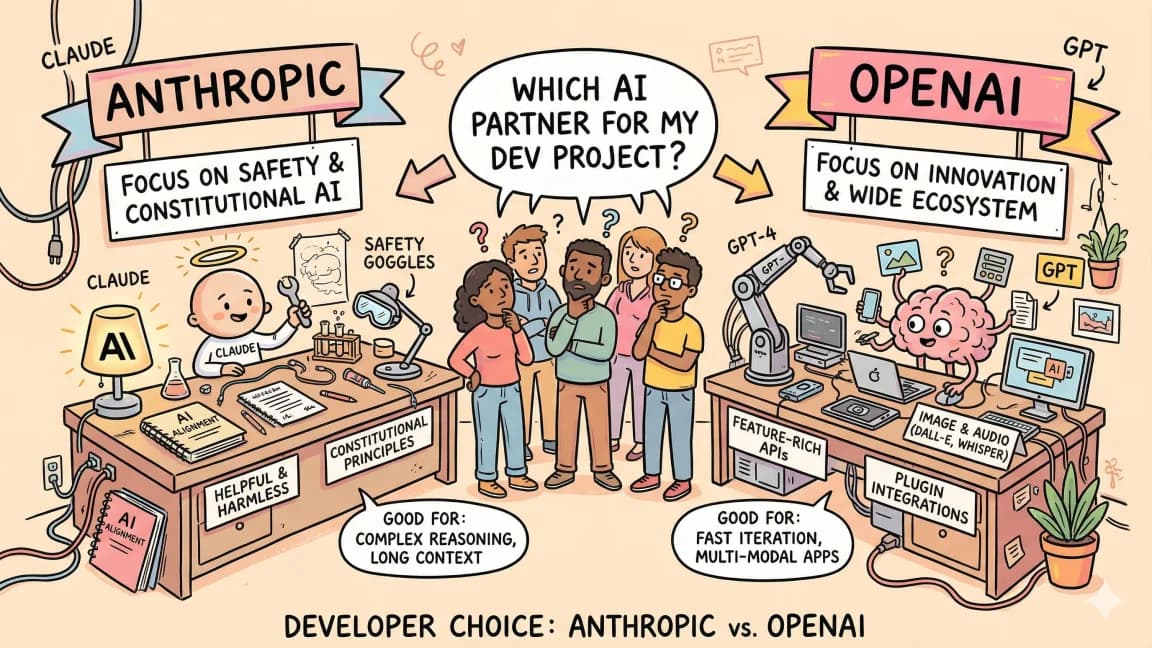
For model-selection context, compare this with Claude vs GPT for Coding: Which Model Writes Better TypeScript? and OpenAI vs Anthropic in 2026 - Models, Tools, and Developer Experience; the useful question is not only benchmark quality, but where the model fits in a real developer workflow.
To put this in perspective: Grok 3 was trained with more than 10 times the compute of Grok 2. The 200,000-GPU cluster is the largest publicly reported training infrastructure at the time of announcement. This compute advantage feeds directly into model capability. More training compute generally produces better models, and xAI is clearly willing to invest at a scale that few organizations can match.
The same cluster presumably handles inference as well, which means Grok 3 has significant capacity to serve requests at scale. This matters for API availability and latency once the API opens up.
Benchmark Results#
Base Model Performance#
Grok 3 and Grok 3 Mini were benchmarked against the previous generation of frontier models: Gemini 2 Pro, GPT-4o, and Sonnet 3.5. These are the non-reasoning models, and the comparison is important context. Grok 3 as a base model (before reasoning capabilities are layered on) already outperforms these competitors across standard evaluations.
One key distinction xAI made during the announcement is that the reasoning capabilities sit on top of Grok 3's base model. The reasoning model is not a separate architecture. It is a layer that adds test-time compute to the already capable base model. This mirrors the approach other labs have taken with models like O1 and R1, but xAI was explicit about the relationship between the two.
Reasoning and Test-Time Compute#
The reasoning variants of Grok 3 and Grok 3 Mini were benchmarked against O3 Mini (high), O1, DeepSeek R1, and Gemini 2 Flash Thinking. Across math, science, and coding benchmarks, both the full reasoning model and the mini variant outperformed all competitors.
Similar to OpenAI's approach with O3 Mini where users can control how much compute is allocated to reasoning, Grok 3 offers a similar mechanism. Benchmark charts showed both a "low" compute setting (solid bars) and a "high" compute setting (lighter bars at the top). The high-compute results pushed performance even further ahead of competitors.
One interesting finding is that Grok 3 Mini with reasoning sometimes outperformed the full Grok 3 reasoning model on certain tasks. This suggests that the mini model's efficiency combined with reasoning capabilities can produce results competitive with the larger model in specific domains.
Generalization Validation#
To address concerns about benchmark overfitting, xAI ran Grok 3 on the AIME exam that had just been released and would not have appeared in any training data. Both Grok 3 and Grok 3 Mini, with maximum compute allocated, outperformed all competitors on this unseen evaluation. This is a meaningful data point because benchmark overfitting is a legitimate concern in the field. Demonstrating strong performance on a previously unseen exam provides evidence that the capabilities are generalized rather than memorized.
The Chatbot Arena Reveal#
The "Chocolate" model that appeared on the Chatbot Arena roughly two weeks before launch turned out to be an early version of Grok 3. The Chatbot Arena works by showing two anonymous LLM responses side by side and letting users vote on which one is better. It is one of the more reliable public evaluation methods because it captures human preference directly rather than relying on automated benchmarks.
What made the Chocolate model interesting is that experienced users - people who test frontier models regularly - thought it was from Anthropic or OpenAI. Nobody guessed xAI. This is significant because it suggests Grok 3's response quality was indistinguishable from what people expected of the leading labs. The reveal that it was actually xAI's model shifted the conversation about where xAI sits in the competitive landscape.
New Features and UI#
The grok.com Interface#
Grok 3 launched with a redesigned web interface at grok.com. The new UI includes several notable features:
- Think mode - For harder questions where you want the model to reason through the problem before responding. Similar to O1's thinking process where you wait through the reasoning phase before getting the output.
- Deep Search - A research agent that searches the internet, reasons about findings, and synthesizes detailed reports. This competes directly with OpenAI's Deep Research, Google's Gemini Deep Research, and DeepSeek's deep research capabilities.
- Big Brain mode - For the most difficult problems. This allocates substantially more compute to reasoning, effectively giving the model more GPU power and time to work through complex tasks.
The interface itself draws comparisons to ChatGPT's design, with an expandable thoughts panel on the right side that shows the model's reasoning process. The layout is clean and functional.
Deep Search in Practice#
Deep Search works like other deep research tools in the market. You submit a query, the model creates a research plan, searches the internet across multiple sources, verifies information across those sources, and produces a detailed report. Tabular data gets formatted into tables automatically. Sources are cited throughout.
The key differentiator xAI claims is the reasoning backbone. Because Grok 3's reasoning capabilities sit beneath deep search, the research process benefits from the model's ability to think through what information is actually needed, whether sources are reliable, and how to synthesize conflicting data.
Creative Problem Solving#
The launch included several demonstrations that went beyond standard benchmarks. One example asked Grok 3 to generate code for an animated 3D plot showing a space mission launch from Earth to Mars and back. The model produced a Python visualization showing orbital mechanics with spinning trajectories at different intervals.
A more interesting demonstration used the "big brain" mode to create a hybrid game combining Tetris and Bejeweled. The significance here is not the game itself but what it represents: creative combination of two well-known concepts into something new. Training data contains plenty of Tetris implementations and plenty of Bejeweled implementations. But combining them into a coherent new game requires the model to understand both concepts deeply enough to merge them in a way that makes sense. In the demo, blocks fell like Tetris, but matching three in a row (like Bejeweled) cleared them.
Access and Availability#
At launch, Grok 3 is available through two channels:
- X Premium - Paying X subscribers get access to Grok 3 within the X platform.
- grok.com - The standalone web interface where users can access deep search, think mode, and other features. Higher image generation limits and early access to new features are included.
The API was announced as coming within a few weeks of launch. Additionally, xAI committed to open-sourcing Grok 2 once Grok 3 is fully released. The stated plan going forward is to open-source each previous generation of models once the latest generation is stable.
Voice Mode#
xAI mentioned that a voice mode is in development, similar to OpenAI's voice capabilities in ChatGPT. The voice mode would allow conversational interaction with the model, including understanding intonation, emotion, and speech cadence. The model could respond naturally, support whispering, and adjust its communication style based on context.
At launch, voice mode was not yet available. But its inclusion in the roadmap signals that xAI sees multimodal interaction as a competitive necessity, not just a feature.
What Grok 3 Means for the Competitive Landscape#
The Grok 3 launch shifted the conversation about xAI from "Elon Musk's AI lab" to a legitimate competitor in the frontier model space. The benchmark results, particularly on unseen evaluations, demonstrate that throwing massive compute at training does produce real capability improvements.
For developers, the practical question is whether the API (once available) offers something that existing models do not. The deep search capability, the reasoning quality, and the creative problem-solving demonstrations all suggest that Grok 3 will be competitive for tasks requiring extended reasoning. Whether it becomes a default choice depends on pricing, latency, and reliability once the API opens up.
The open-source commitment is also worth watching. If xAI follows through on open-sourcing Grok 2 as Grok 3 stabilizes, and continues this pattern with future releases, it provides a steady stream of capable open-weight models for the community to build on. This mirrors what Meta has done with Llama but at a potentially higher capability tier.
The 200,000-GPU training cluster is perhaps the most important detail from the launch. In a field where compute is the primary bottleneck, having the largest publicly known training infrastructure gives xAI the ability to iterate quickly and scale aggressively. Whether that translates to sustained leadership depends on the team's ability to turn compute into consistently better models across each successive generation.
Official Sources#
| Resource | Description |
|---|---|
| xAI Homepage | Official xAI company site with announcements and research |
| Grok Web Interface | Standalone Grok chat with Think mode, Deep Search, and Big Brain |
| xAI News | Official announcements and technical posts about Grok releases |
| xAI API Documentation | Developer documentation for Grok API access |
| xAI on X | Official xAI updates and launch announcements |
| Arena | Model leaderboard (formerly LMArena / LMSYS Chatbot Arena) where Grok 3 debuted anonymously as "Chocolate" |
FAQ#
What is Grok 3 and how does it compare to GPT-4o and Claude?#
Grok 3 is xAI's frontier language model, trained on 200,000 GPUs - the largest publicly reported training cluster at launch. On standard benchmarks, the base model outperforms GPT-4o, Sonnet 3.5, and Gemini 2 Pro. The reasoning variants (Grok 3 and Grok 3 Mini with think mode) outperform O3 Mini, O1, and DeepSeek R1 on math, science, and coding evaluations. xAI validated generalization by testing on a just-released AIME exam that could not have appeared in training data.
What is the difference between Grok 3, Grok 3 Mini, and the reasoning modes?#
Grok 3 is the full-size model optimized for quality; Grok 3 Mini is a smaller, faster variant. Both support reasoning through "Think mode" which adds test-time compute for harder problems. "Big Brain mode" allocates substantially more compute for the most difficult tasks. Interestingly, Grok 3 Mini with reasoning sometimes outperforms full Grok 3 on specific tasks, making it cost-effective for certain workloads.
How does Grok Deep Search work?#
Deep Search is a research agent built on Grok 3's reasoning backbone. It creates a research plan, searches across multiple internet sources, verifies information cross-reference, and synthesizes detailed reports with citations and formatted tables. It competes directly with OpenAI Deep Research, Google Gemini Deep Research, and DeepSeek's research capabilities. The reasoning layer helps evaluate source reliability and synthesize conflicting data.
How do I access Grok 3?#
Grok 3 is available through X Premium subscriptions (within the X platform) and through the standalone web interface at grok.com. The grok.com interface includes Think mode, Deep Search, Big Brain mode, and higher image generation limits. The API was announced for release within weeks of the February 2025 launch.
Is Grok 3 open source?#
Grok 3 itself is not open source at launch, but xAI committed to open-sourcing Grok 2 once Grok 3 is fully released. The stated plan is to open-source each previous generation once the latest generation stabilizes - similar to Meta's approach with Llama but at a higher capability tier.
What was the "Chocolate" model on Chatbot Arena?#
About two weeks before the Grok 3 launch, a model called "Chocolate" appeared on the LMSYS Chatbot Arena leaderboard. Experienced users thought it was from Anthropic or OpenAI based on response quality. It turned out to be an early Grok 3 version. The fact that nobody guessed xAI demonstrates that Grok 3's capabilities reached parity with what users expected from leading labs.
What hardware was used to train Grok 3?#
Grok 3 was trained on 100,000 GPUs initially, then expanded to 200,000 GPUs in just 92 days. This represents more than 10x the compute used for Grok 2. The original cluster was built in 122 days. This is the largest publicly reported AI training infrastructure and gives xAI significant capacity for both training future models and serving inference at scale.
Does Grok 3 have voice capabilities?#
Voice mode was announced as in development at launch but not yet available. The planned capabilities include understanding intonation, emotion, and speech cadence, plus natural responses with adjustable communication style - similar to OpenAI's voice mode in ChatGPT.
Watch the Video#
Continue Reading#
Get the next deep dive like this in your inbox
One email a week on xAI and the rest of the AI dev stack. Free.
Read next
Grok 4: xAI's Most Powerful AI Model
xAI has launched Grok 4, claiming the title of the world's most powerful AI model. With a $300/month Super Grok tier, saturated AMI benchmarks, and a coding model on the horizon, this is xAI's bigge...
7 min readGrok Code Fast 1: xAI's Speed-Optimized Coding Model
xAI's Grok Code Fast 1 arrives with a specific mission: eliminate the friction in agentic coding workflows. While models like GPT-5, Claude 4, and Gemini 2.5 Pro deliver impressive benchmark scores...
7 min readOpenAI Deep Research: The AI Agent That Does Your Homework
OpenAI's Deep Research is an AI agent inside ChatGPT that plans and executes multi-step research workflows, browsing dozens of websites and producing cited reports in minutes instead of hours.
7 min readNew here? Start with
Technical content at the intersection of AI and development. Building with AI agents, Claude Code, and modern dev tools - then showing you exactly how it works.