Grok Code Fast 1: xAI's Speed-Optimized Coding Model
TL;DR
Grok Code Fast 1 is xAI's speed-optimized coding model for agentic workflows. See its pricing, where to use it, and how it handled three real Next.js tasks.
Last verified: 2026-08-25
The Problem with Fast Models That Feel Slow#
xAI's Grok Code Fast 1 arrives with a specific mission: eliminate the friction in agentic coding workflows. While models like GPT-5, Claude 4, and Gemini 2.5 Pro deliver impressive benchmark scores, they often feel sluggish when running iterative agentic loops. Tool calls stack up. Reasoning chains drag. The experience of watching an AI coding assistant work becomes an exercise in patience.
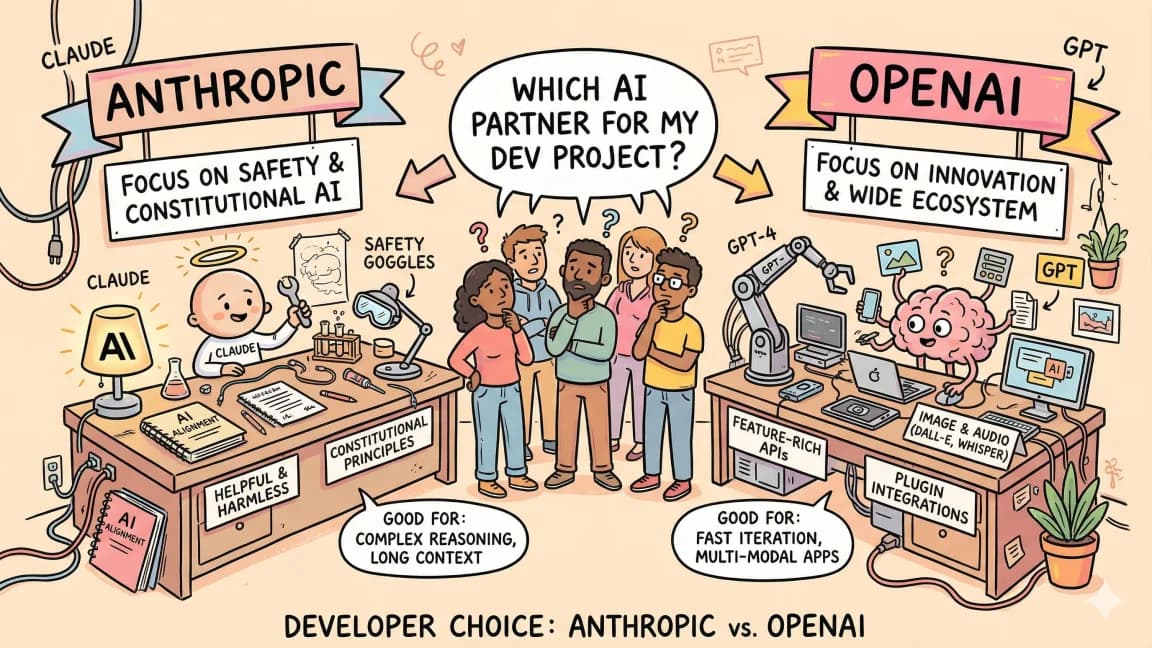
For model-selection context, compare this with Claude vs GPT for Coding: Which Model Writes Better TypeScript? and OpenAI vs Anthropic in 2026 - Models, Tools, and Developer Experience; the useful question is not only benchmark quality, but where the model fits in a real developer workflow.
The engineers at xAI built Grok Code Fast 1 because they experienced this pain directly. As heavy users of agentic tools themselves, they wanted something purpose-built for day-to-day development tasks - nimble, responsive, and optimized for real-world workflows rather than leaderboard optimization.
How It Was Built#
The training approach reveals xAI's priorities. Pre-training used a large corpus of programming-related content, standard for coding models. The differentiator sits in the post-training phase: curated high-quality datasets drawn from actual pull requests and real-world coding tasks.
This addresses a persistent criticism of benchmark-tuned models. Many score well on SWE-bench or HumanEval but stumble when confronted with messy production codebases, incomplete requirements, and the iterative reality of professional software development. Grok Code Fast 1 scored 70.8% on SWE-Bench Verified using xAI's own internal harness - competitive with top-tier models - but xAI acknowledges the limitation in the announcement: benchmarks like SWE-Bench "don't fully reflect the nuances of real-world software engineering, particularly the end-user experience in agentic coding workflows."
The community response validates the approach. Early adopters from the agentic coding ecosystem describe the model as both fast and accurate, with particular strength in autonomous coding workflows.
Pricing and Availability#
Grok Code Fast 1 is available now across major AI coding platforms including GitHub Copilot, Cursor, Cline, Roo Code, Kilo Code, opencode, and Windsurf. xAI offered free access through launch partners for a limited time post-launch.
The pricing structure undercuts flagship competitors significantly:
- Input: $0.20 per million tokens
- Output: $1.50 per million tokens
- Cached input: $0.02 per million tokens
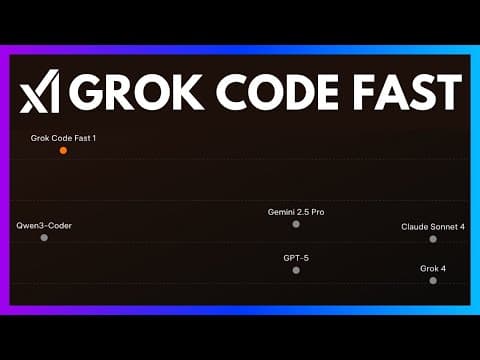
When compared to general-purpose models like Gemini 2.5 Pro, GPT-5, Claude 4, or Grok 4, the throughput-to-price ratio positions Grok Code Fast 1 as a cost-efficient workhorse for high-volume coding tasks.
Real-World Performance Test#
To evaluate Grok Code Fast 1 in practice, I tested it within Cursor on a Next.js application across three tasks of increasing complexity.
Task 1: SaaS Landing Page#
The prompt: "Create a modern SaaS landing page."
The model immediately generated an eight-step implementation plan, then executed iteratively. It produced a hero section, features grid, pricing component, FAQ section, testimonials, and navigation - all structured as separate components with Framer Motion animations throughout.
The output demonstrated solid architectural decisions. Instead of defaulting to emojis for visual elements, it installed a proper icon library. The components used client-side rendering where appropriate while preserving server rendering for the page shell. Generated files ranged from hundreds of lines each, showing substantial depth rather than stub implementations.
Task 2: Design Refinement#
Next, I requested: "Remove all linear gradients and switch to a modern white and black aesthetic."
The model created a to-do list, then methodically updated each component. The result replaced gradient backgrounds with clean white and black styling while preserving the layout structure and animations. The edit demonstrated contextual awareness across the entire codebase - no orphaned styles or inconsistent elements remained.
Task 3: Complex Feature Implementation#
The final test involved two simultaneous requests: a Three.js interactive cube environment and a data dashboard with multiple visualization types.
Grok Code Fast 1 decomposed both tasks and delivered functional prototypes in one shot. The Three.js implementation included an interactive cube with hover states (red highlight) and click interactions (size change). The dashboard page incorporated line charts, interactive bar charts, and pie charts using a proper charting library.
Both implementations worked immediately. The cube rendered with correct library integration. The dashboard displayed responsive visualizations with interactive elements. While the visual design required refinement - expected when prioritizing functionality over aesthetics - the underlying architecture was sound.
The Velocity Problem#
At approximately 200 tokens per second, Grok Code Fast 1 exposes an emerging UX challenge. In Cursor, the model's planning and reasoning phases flash by too quickly to read. The intermediate thinking steps appear for fractions of a second before disappearing as the model advances to implementation.
This raises questions about interface design for increasingly fast models. Do developers need to see every reasoning step by default? Or should agentic coding interfaces evolve toward more graceful representations of rapid cognitive processing - progress indicators rather than streaming thought dumps?
What's Next#
Grok Code Fast 1 was the opening shot in xAI's coding-model push, and it has since been superseded by newer, faster offerings in the same family: Grok 4.5, a Cursor-trained coding model at $2/M input tokens, and Grok 4.6, which xAI now recommends as the default model for code across its API. The rapid iteration xAI promised at launch materialized - newer coding models arrived within the year, moving the price point from Grok Code Fast 1's $0.20/M input up to Grok 4.5 and Grok 4.6's $2/M.
The model filled a clear gap at the time: a coding specialist optimized for speed and agentic workflows rather than general-purpose reasoning. For developers running high-frequency coding agents, the throughput and pricing advantages sustained through the successor releases.
Official Sources#
| Resource | Link |
|---|---|
| Grok Code Fast 1 Announcement | x.ai/news/grok-code-fast-1 |
| xAI Homepage | x.ai |
| xAI API Documentation | docs.x.ai |
| xAI API Console | console.x.ai |
| xAI News | x.ai/news |
| Grok Web Interface | grok.com |
| xAI on X | @xai |
FAQ#
How fast is Grok Code Fast 1 compared to other coding models?#
Grok Code Fast 1 runs at approximately 200 tokens per second, significantly faster than general-purpose models like GPT-5, Claude 4, and Gemini 2.5 Pro. This speed is purpose-built for agentic coding workflows where tool calls and reasoning chains need to execute quickly without the lag that makes iterative development feel sluggish.
What is the pricing for Grok Code Fast 1?#
Grok Code Fast 1 costs $0.20 per million input tokens and $1.50 per million output tokens. Cached input tokens are just $0.02 per million. This pricing significantly undercuts flagship models while delivering competitive quality, making it cost-efficient for high-volume coding tasks.
Where can I use Grok Code Fast 1?#
Grok Code Fast 1 is available across major AI coding platforms including GitHub Copilot, Cursor, Cline, Roo Code, Kilo Code, opencode, and Windsurf. xAI offered free access through launch partners for a limited time post-launch, with API access available through console.x.ai.
How does Grok Code Fast 1 perform on benchmarks?#
Grok Code Fast 1 scored 70.8% on SWE-Bench Verified, measured with xAI's own internal harness, competitive with top-tier models. However, xAI acknowledges that benchmarks don't fully reflect real-world software engineering. The model was specifically trained on curated pull requests and real coding tasks to optimize for actual developer workflows rather than leaderboard performance.
What makes Grok Code Fast 1 different from Grok 4?#
Grok Code Fast 1 is a coding specialist optimized for speed and agentic workflows, while Grok 4 is a general-purpose frontier model. Grok Code Fast 1 trades some reasoning depth for dramatically faster throughput, making it ideal for iterative development tasks where response latency directly impacts productivity.
What types of coding tasks is Grok Code Fast 1 best for?#
Grok Code Fast 1 excels at iterative agentic coding workflows - tasks like building UI components, implementing features across multiple files, design refinements, and complex feature implementations. Testing showed it handles everything from SaaS landing pages to Three.js 3D environments and data dashboards effectively.
Does Grok Code Fast 1 support autonomous coding?#
Yes. Grok Code Fast 1 was specifically designed for autonomous coding workflows. In testing, it decomposed complex tasks into implementation plans, executed iteratively, and made architectural decisions like choosing proper icon libraries over emojis. The model's speed makes it particularly effective for agentic tools that run multiple iterations.
Is Grok Code Fast 1 open source?#
Grok Code Fast 1 is not open source. It's available through xAI's API and integrated coding platforms. xAI has previously open-sourced Grok 2, but Grok Code Fast 1 is a proprietary offering accessed through API keys or supported development environments.
Watch the Video#
Continue Reading#
Get the next deep dive like this in your inbox
One email a week on Grok and the rest of the AI dev stack. Free.
Read next
Grok 4: xAI's Most Powerful AI Model
xAI has launched Grok 4, claiming the title of the world's most powerful AI model. With a $300/month Super Grok tier, saturated AMI benchmarks, and a coding model on the horizon, this is xAI's bigge...
7 min readClaude vs GPT for Coding: Which Model Writes Better TypeScript?
Claude vs GPT for real TypeScript work: benchmarks, pricing, model families, and the practical differences that matter when picking a coding model.
9 min readThe 10 Best AI Coding Tools in 2026
From terminal agents to cloud IDEs - these are the AI coding tools worth using for TypeScript development in 2026.
8 min readNew here? Start with
Technical content at the intersection of AI and development. Building with AI agents, Claude Code, and modern dev tools - then showing you exactly how it works.