10 CLI Tools Reshaping AI Development in 2026

TL;DR
From Claude Code to Gladia, the ten CLIs every AI-native developer should know. Install commands, trade-offs, and when to reach for each.
Last updated: October 9, 2026. Gemini CLI was corrected: since June 18, 2026 it no longer serves free or Google AI Pro/Ultra users, who moved to Antigravity CLI (Google's announcement). Other entries were last verified September 3, 2026.
Official Sources#
| Resource | Link |
|---|---|
| Claude Code Overview | code.claude.com/docs |
| OpenAI Codex Repository | github.com/openai/codex |
| Gemini CLI Repository | github.com/google-gemini/gemini-cli |
| Aider Documentation | aider.chat |
| Cursor Documentation | cursor.com/docs |
| Ollama | ollama.com |
| LLM by Simon Willison | llm.datasette.io |
| AIChat Repository | github.com/sigoden/aichat |
| Fabric Repository | github.com/danielmiessler/fabric |
| GitHub CLI | cli.github.com |
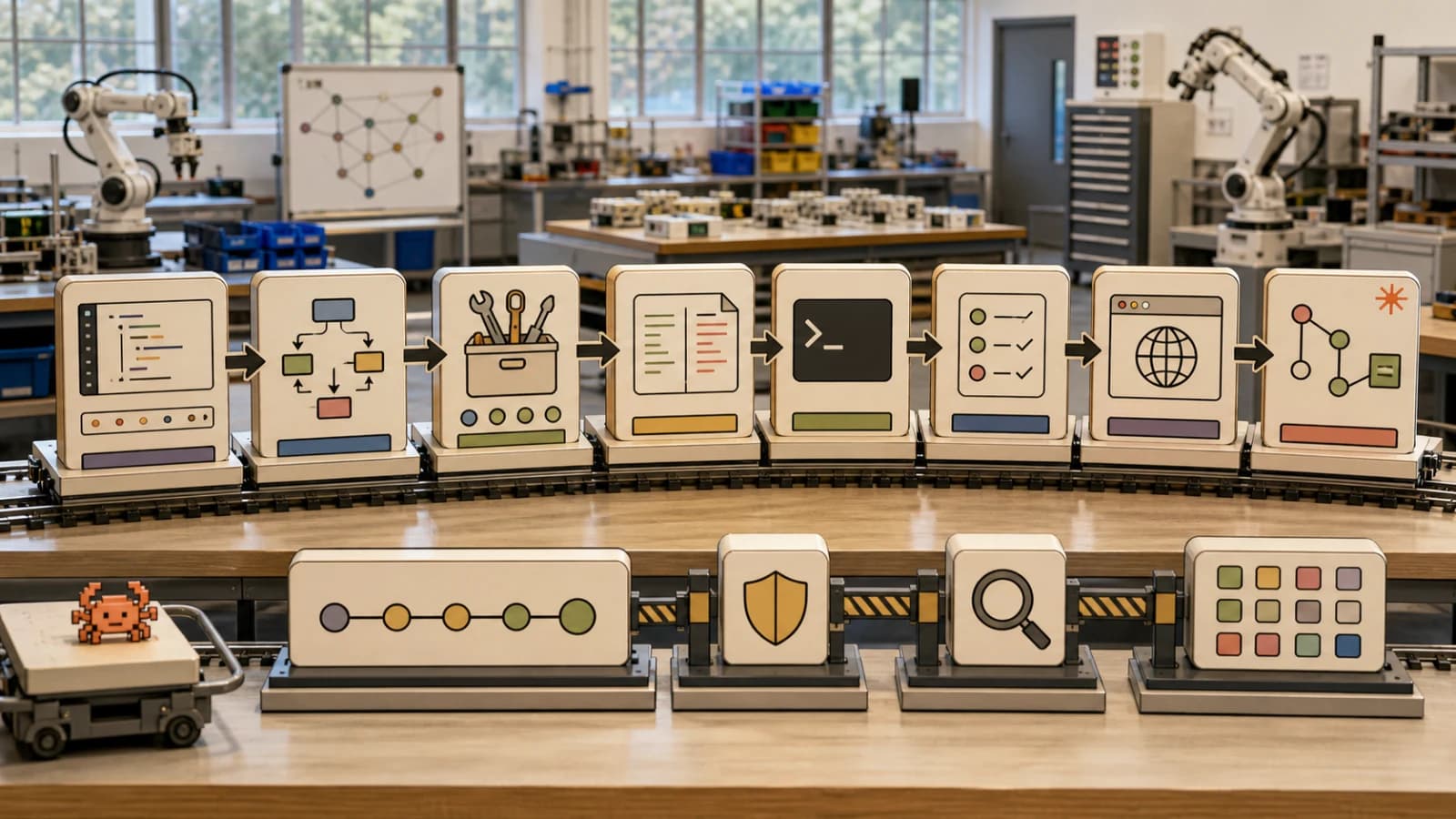
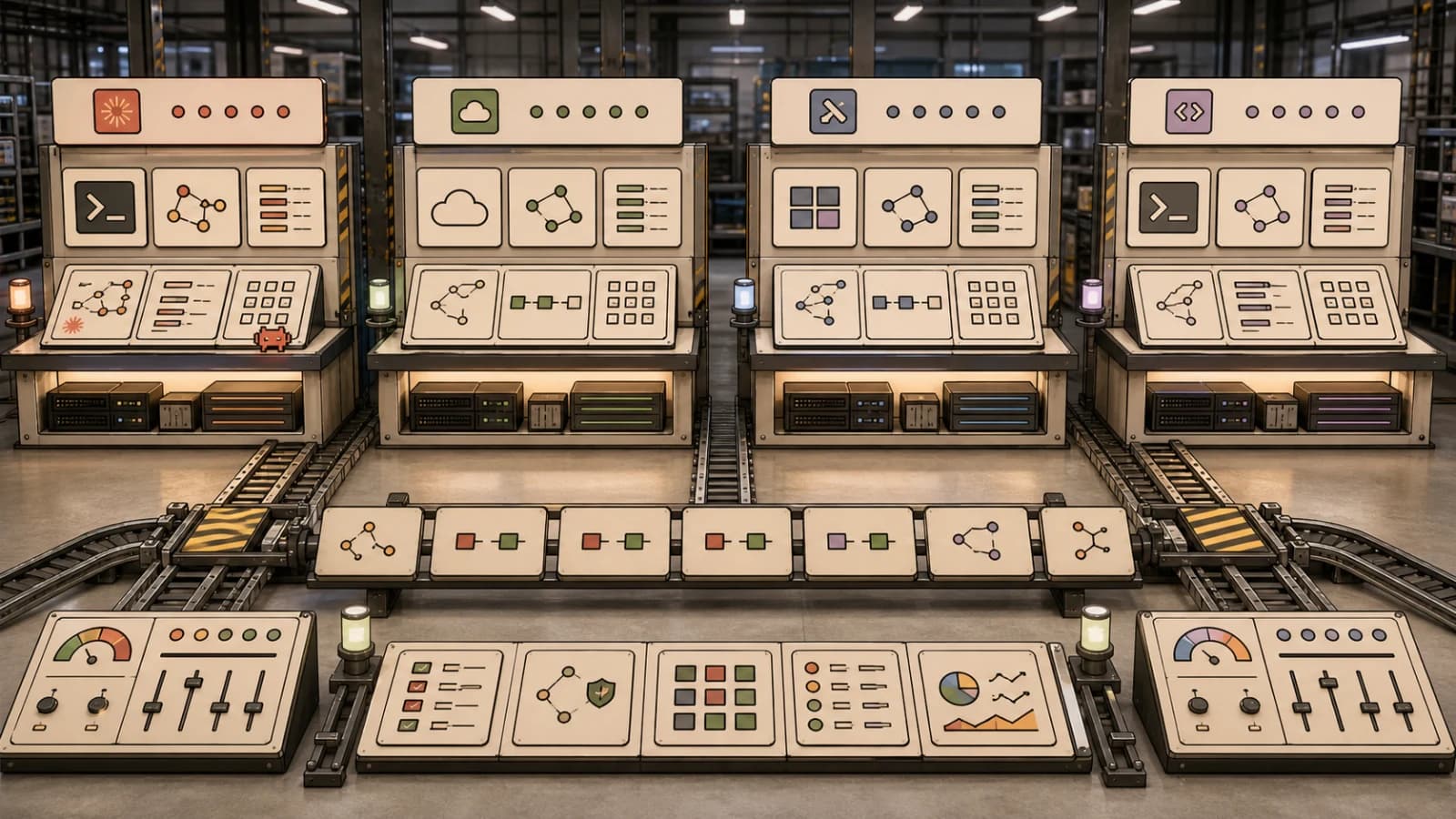
The terminal is the new IDE. In 2026, the best developer CLIs do not just wrap APIs, they host agents, stream tokens, sandbox file edits, and plan multi-step work across your repo. An "AI-native" CLI in 2026 has three traits: it understands natural language as a first-class input, it can take action on your machine (files, shell, git, HTTP), and it leans on a frontier model as its runtime brain rather than a scripted state machine.
The list below is the shortlist. Ten CLI tools for AI development that earn a spot on a 2026 developer workstation, drawn from the full 50-tool directory. Install commands are real. Opinions are honest. If you want to build your own, start with the Building CLIs with TypeScript course.
Source Trail and Related Guides#
CLI tooling changes faster than most blog posts age. Use official project pages for install commands and DevDigest posts for the workflow comparison:
| CLI | Official source | Related DevDigest guide |
|---|---|---|
| Claude Code | Claude Code docs | Claude Code complete guide |
| Codex | OpenAI Codex repo and Codex changelog | Codex changelog April 2026 |
| Cursor | Cursor pricing and Cursor docs | Cursor vs Claude Code |
| Gemini CLI | Gemini CLI repo | AI coding tools pricing 2026 |
| MCP-enabled agents | MCP docs | Complete MCP server guide |
If you are choosing one primary CLI, read the Claude Code vs Codex vs Cursor vs OpenCode comparison after this list. The install command is the easy part. The harder question is which loop you want to live in every day.
1. Claude Code#
Hook: The agentic coding CLI that kicked off the terminal-as-IDE wave.
For broader context, pair this with What Is Claude Code? The Complete Guide for 2026 and 60 Claude Code Tips and Tricks for Power Users; those companion pieces show where this fits in the wider AI developer workflow.
Anthropic's Claude Code plans, reads, edits, and runs commands across your codebase with permission prompts and tool use built in. It is the AI coding CLI that feels closest to having a senior engineer in your tmux pane. Skills, subagents, hooks, and MCP servers make it extensible in ways that matter for real work.
Reach for it when you want an agent that can actually finish a multi-file task, not just autocomplete a line. If you are choosing between Claude Code and the OpenAI stack, the Claude Code vs Codex vs Cursor vs OpenCode comparison is the cleaner next read.
npm install -g @anthropic-ai/claude-code2. Codex#
Hook: OpenAI's answer to Claude Code, open-source and sandboxed.
Codex is OpenAI's coding agent for the terminal. It reads and modifies your codebase with sandboxed execution, which means destructive commands need explicit approval. It pairs naturally with GPT-5.x models and is a strong pick if you already live inside the OpenAI ecosystem. For recent product direction, read the Codex April changelog.
Reach for it when you want parity with Claude Code on a different model stack, or when open-source and sandboxing are non-negotiable.
npm install -g @openai/codex3. Gemini CLI#
Hook: Google's 1M-context coding agent for teams that already pay for Gemini.
Gemini CLI is Google's terminal agent powered by Gemini models, with /model Auto routing across Gemini 3 and Gemini 2.5. Since June 18, 2026 it runs on paid Gemini API keys, Vertex AI and Gemini Code Assist Standard/Enterprise only (free users were moved to Antigravity CLI - see the migration guide). The million-token context makes it a uniquely good fit for very large monorepos, long log files, and "read this whole folder" tasks where other agents need to summarize first.
Reach for it when context length matters more than anything else and your team already has Gemini API or Code Assist billing.
npm install -g @google/gemini-cli4. Aider#
Hook: The OG AI pair programmer that still punches above its weight.
Aider is a Python CLI that works with any LLM to edit code inside your local git repo. It auto-commits each change with a descriptive message, which turns your git log into a readable audit trail of what the AI touched. It supports repo maps, voice mode, and dozens of models.
Reach for it when you want clean git hygiene by default, or when you want to bring your own model (local Llama, Kimi, DeepSeek, whatever you have).
pip install aider-chat
5. Cursor#
Hook: The AI-first editor with a surprisingly capable CLI.
Cursor is best known as the AI code editor, but its CLI (invoked as agent) now runs headless agents from the terminal, opens projects, and triggers background jobs. It is the bridge between GUI-first and CLI-first workflows, and the Cursor vs Claude Code comparison explains when that bridge beats a terminal-first loop.
Reach for it when your team lives in Cursor already and you want scripted agents without leaving the stack.
brew install --cask cursor
6. Ollama#
Hook: One command to run frontier-class local models.
Ollama is the easiest way to run large language models locally. One command pulls Llama, Mistral, Gemma, Qwen, DeepSeek, and dozens more, with a clean OpenAI-compatible API on localhost:11434. It is the foundation of most offline and privacy-first AI coding setups.
Reach for it when you need to run models on your own hardware, whether that is a MacBook, a homelab, or a DGX Spark.
curl -fsSL https://ollama.com/install.sh | sh
7. LLM#
Hook: Simon Willison's swiss-army knife for prompting from the shell.
LLM is a CLI for running prompts against any provider, with first-class support for plugins, templates, embeddings, and SQLite-backed logs. It is unglamorous and indispensable. You pipe things into llm, you pipe things out, and you keep every prompt you ever ran in a queryable database.
Reach for it when you want scriptable, composable AI that plays nicely with Unix pipes and cron jobs. If you need actual prompt content to pipe through it, our prompt library has a starter set tagged by use case.
brew install llm
8. AIChat#
Hook: One CLI, every major model, with RAG and sessions built in.
AIChat is a Rust CLI that talks to OpenAI, Claude, Gemini, Ollama, and more behind a single unified interface. Roles, sessions, RAG, and function calling are first-class. It is the fastest way to hot-swap models without learning a new command for each provider.
Reach for it when you want to A/B test models for the same prompt, or when you want one tool that survives provider churn.
brew install aichat
9. Fabric#
Hook: Curated prompt patterns turned into Unix commands.
Fabric is Daniel Miessler's AI CLI that ships with a library of reusable "patterns" for summarizing, extracting, rewriting, and analyzing content. Pipe any text into a pattern like summarize, extract_wisdom, or write_essay and you get structured output tailored to that task.
Reach for it when you want AI that behaves like a Unix tool: deterministic input, deterministic output, composable with everything else on your PATH.
go install github.com/danielmiessler/fabric/cmd/fabric@latest
10. GitHub CLI#
Hook: Not AI, but the connective tissue every AI agent needs.
GitHub CLI is not an AI tool on paper, but in practice it is the most common thing AI agents shell out to. gh pr create, gh issue list, gh run watch. Claude Code, Codex, Aider, and every other agent on this list is more useful when gh is installed and authenticated.
Reach for it as the glue between your AI CLI and the rest of your delivery pipeline.
brew install gh
Honorable mentions worth your attention#
A few tools that did not make the top ten but deserve a callout on any best developer CLI 2026 list:
- Bun for a single runtime that bundles, tests, and installs faster than anything else in the Node ecosystem.
- ripgrep and fzf for the fuzzy-search duo every AI agent secretly depends on under the hood.
- Wrangler for shipping AI workloads to Cloudflare Workers AI without leaving the terminal.
- Supabase CLI for standing up a Postgres, auth, and vector-search backend for your agents in one command.
We also ship a handful of small, opinionated CLIs here at Developers Digest. dd for project scaffolding, hue for Gumroad-flavored terminal theming, and skill-builder for turning working knowledge into reusable Claude Code skills. They are not for everyone, but if you live in this stack they are worth a look.
Pick two, master them, then expand#
The honest advice on AI coding CLIs in 2026 is not to install all ten on day one. Pick a primary agent (Claude Code or Codex), pair it with a model-flexible runner (LLM or AIChat), and add gh plus ripgrep so your agent can navigate the world. Everything else is additive.
Then, when you hit a job that does not fit, reach for the specialist. Huge codebase? Gemini CLI. Local and offline? Ollama. Need reproducible prompt patterns? Fabric. Want clean git history from your AI? Aider. Need external systems like Postgres, GitHub, or browsers? Add the right MCP servers instead of forcing everything through shell commands.
The full directory of 50+ CLI tools for AI development, filtered by category and ranked by GitHub stars, lives at clis.developersdigest.tech. Bookmark it, search it when you are picking tools for a new project, and come back when the landscape shifts again, because it will.
Frequently Asked Questions#
What is the best CLI tool for AI coding in 2026?#
Claude Code is the most capable agentic coding CLI in 2026. It plans multi-step tasks, reads and edits files across your codebase, runs shell commands with permission prompts, and supports extensibility through skills, subagents, and MCP servers. If you want one tool that can actually finish complex multi-file tasks autonomously, Claude Code is the default choice. Codex from OpenAI is the strongest alternative if you prefer the GPT model family or need open-source sandboxing.
Should I use Claude Code or Codex?#
Choose based on your model preference and ecosystem. Claude Code runs on Anthropic's Claude models and has deeper integration with MCP servers and the skills system. Codex runs on OpenAI's GPT-5.x models and emphasizes sandboxed execution with explicit approval for destructive commands. Both can handle multi-file refactors, test generation, and code review. If you already use Anthropic for other work, Claude Code has less friction. If you are invested in OpenAI, Codex integrates more naturally.
Can I use AI coding CLIs with local models?#
Yes. Ollama makes it trivial to run Llama, Mistral, Qwen, DeepSeek, and other models locally with an OpenAI-compatible API. Aider supports Ollama and other local backends out of the box. AIChat can also connect to Ollama as a provider. For offline or privacy-sensitive work, combine Ollama with one of these model-agnostic CLIs. The trade-off is that local models are generally less capable than frontier models for complex agentic tasks.
What CLI should I use for very large codebases?#
Gemini CLI handles large monorepos better than most alternatives because of its 1 million token context window. Where Claude Code or Codex might need to summarize or chunk files, Gemini CLI can ingest entire directories in a single pass. It needs a paid Gemini API key, Vertex AI or a Code Assist seat, so budget for per-token costs on whole-repo reads. For extremely large repos, combine Gemini CLI for reading and analysis with Claude Code or Codex for editing.
How do AI coding CLIs compare to AI code editors like Cursor?#
AI code editors like Cursor provide a full IDE experience with inline completions, chat panels, and GUI-based agent controls. AI coding CLIs like Claude Code and Codex run in your terminal and are designed for scripting, automation, and integration with other Unix tools. Many developers use both - the editor for interactive work and the CLI for batch tasks, CI integration, or running agents overnight. Cursor also ships an agent CLI that bridges the two worlds.
What is the difference between LLM and AIChat?#
Both LLM and AIChat are model-agnostic CLIs for running prompts from the terminal. LLM (by Simon Willison) emphasizes Unix-style composability, plugins, templates, and SQLite-backed logging of every prompt. AIChat emphasizes a unified interface across providers with built-in roles, sessions, RAG, and function calling. Use LLM if you want to pipe prompts through shell scripts and keep a queryable history. Use AIChat if you want to hot-swap models and need session state or RAG out of the box.
Do I need MCP servers for AI coding CLIs?#
MCP servers are optional but powerful. They let your AI agent connect to databases, browsers, GitHub, Slack, and other external systems through a standardized protocol. Claude Code has first-class MCP support. Without MCP, your agent is limited to file operations and shell commands. With MCP, it can query your Postgres database, open browser tabs, read GitHub issues, and interact with any service that exposes an MCP interface. Start without MCP, then add servers as you hit limitations.
What is the minimum setup for AI coding from the terminal?#
Install Claude Code or Codex as your primary agent, GitHub CLI for repository operations, and ripgrep for fast code search. These three tools cover 90% of AI-assisted coding workflows. Add Ollama if you need local models, and LLM or AIChat if you want scriptable prompts for automation. Everything else is additive based on specific needs - Gemini CLI for huge context, Aider for clean git commits, Fabric for reusable prompt patterns.
Continue Reading#
- CLI-Anything Turns Any Software Into an Agent-Ready Command Line
- The Shell Colon Does Nothing. You Should Use It Anyway.
- Claude Code 2.1.128 Is an Ops Release, Not a Feature Drop
- Codex in June 2026: What Changed Since the Spring Wave
- OpenCode 2: How to Upgrade From v1 - what breaks in the v2 migration and a safe checklist
Get the next comparison like this in your inbox
One email a week on CLI and the rest of the AI dev stack. Free.
Read next on Claude Code
What Is Claude Code? The Complete Guide for 2026
Claude Code is Anthropic's AI coding agent for terminal, IDE, desktop and browser. What it does, how it works, setup, pricing, MCP, skills, hooks and subagents.
15 min readWhat Is an AI Coding Agent? The Complete 2026 Guide
An AI coding agent takes a task, uses tools like editors and shells, and loops until done. The five kinds, the top agents compared, and what they get wrong.
13 min readAider vs Claude Code: Open Source vs Commercial AI Coding CLI
Aider is open source and works with any model. Claude Code is Anthropic's commercial agent. Here is how they compare for TypeScript.
5 min readTechnical content at the intersection of AI and development. Building with AI agents, Claude Code, and modern dev tools - then showing you exactly how it works.