How I'm Building 24 AI-Powered Apps in Parallel
TL;DR
One dev, one CLI, 24 subdomains, and a lot of parallel agents. The stack, registry, agent loop, and honest lessons behind shipping an AI app portfolio.
Last updated: June 3, 2026
| Official Sources | |
|---|---|
| Claude Code Overview | Anthropic's agentic coding assistant documentation |
| Claude Code Sub-agents | Parallel agent orchestration and task delegation |
| Next.js 16 Documentation | App Router, React 19, and deployment guides |
| Convex Documentation | Reactive backend with real-time sync and server functions |
| Clerk Documentation | Authentication, OAuth, and organization support |
| Coolify Documentation | Self-hosted PaaS for deploying and managing applications |
One Dev, 24 Subdomains#
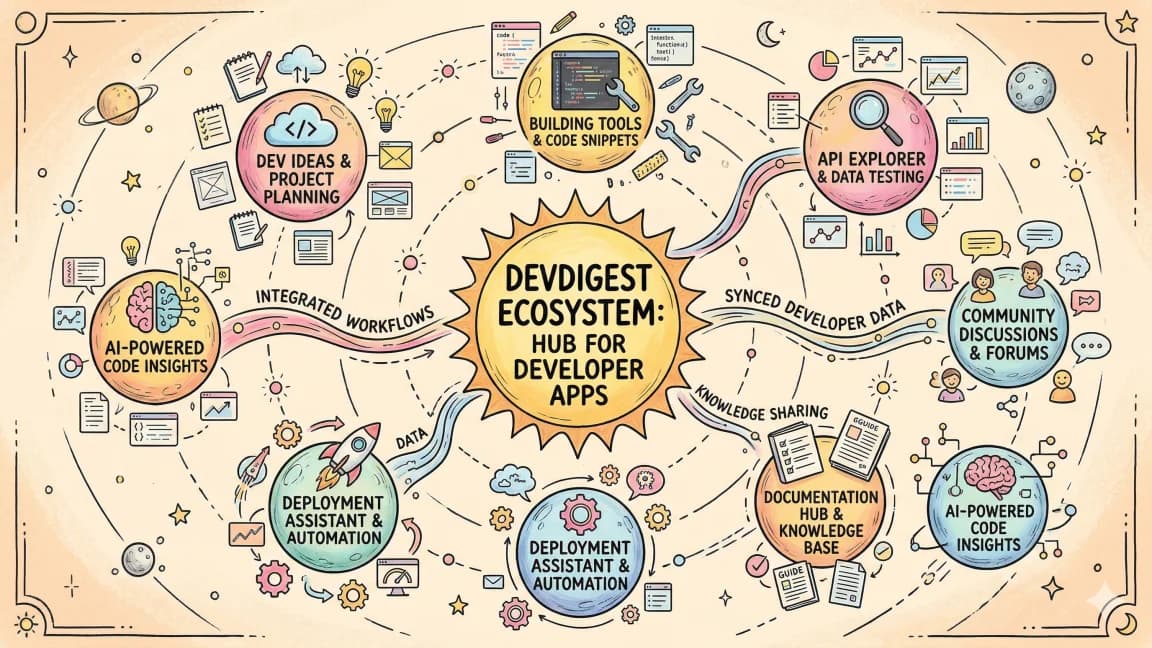
There are currently 24 apps on the Developers Digest network. Fitness tracker, cron scheduler, video clipper, CLI directory, MCP directory, skills marketplace, AI model comparison, overnight agents, agent hub, content calendar, voice tools, and a dozen more. Every one lives on its own subdomain under developersdigest.tech.
For the implementation path around this, pair it with Claude Code Agent Teams, Subagents, and MCP: The 2026 Playbook and Why Skills Beat Prompts for Coding Agents in 2026; those guides connect the idea to a shippable TypeScript stack.
One developer. No team. Most are running in production. Some are fully shipped. A lot of them are half working. I want to be honest about that because the interesting thing is not that they all work. The interesting thing is that 24 of them exist at all, and that a single dev can keep pushing them forward in parallel without the whole thing collapsing.
This post is the meta-story. The stack, the pattern, the agent loop, what broke, and the tactical lessons I would give to anyone trying to run a similar portfolio.
The Stack#
Every app uses the same spine so I do not have to think about infrastructure per project:
- Next.js 16 with React 19 and the App Router. One mental model for every app.
- Convex for the reactive backend. Schemas, server functions, and cron jobs in one place.
- Clerk for auth. Drop-in, works everywhere, OAuth providers handled.
- Drizzle where I need a relational store instead of Convex. Same schema language across apps.
- Kimi and Claude Code as the coding agents. Kimi for unlimited volume, Claude Code for the harder refactors.
- Coolify on Hetzner for hosting. One box, one Coolify, every app a separate project, Cloudflare pointing each subdomain at the same ingress.
That is it. No Vercel. No AWS. No Kubernetes. No per-app decisions about hosting, auth, or database. The stack is the same every time, so bootstrapping a new app is closer to copy-paste than to architecture.
The reason this matters: when the stack is identical, the agents do not need to relearn anything. Whatever works for one app works for the next.
The Pattern: Registry + Subdomain Per Sub-Brand#
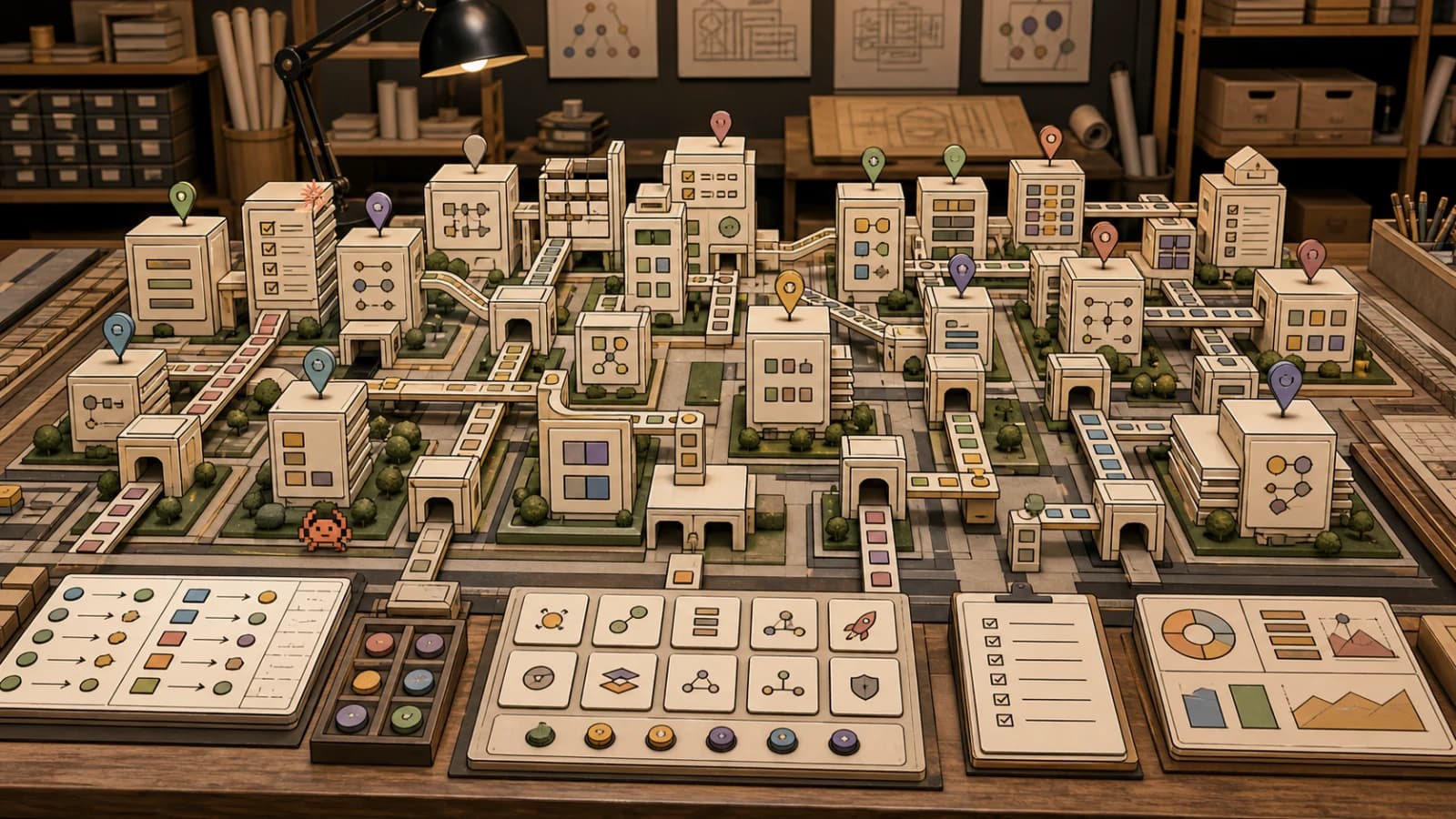
The hub is the /apps page on developersdigest.tech. It is driven by a single file, app/apps/apps-data.ts, which is the source of truth for every product in the network. Each entry looks like this:
{
  slug: "fit",
  name: "Fit",
  host: "fit.developersdigest.tech",
  url: "https://fit.developersdigest.tech",
  description: "Log workouts in plain English...",
  category: "SaaS Products",
  badge: "Popular",
  searchKeywords: ["fitness", "habits", "tracking"],
}
One row per app. The registry feeds the /apps directory, the JSON-LD metadata, the search index, and the hero terminal. Adding a new product is one commit to apps-data.ts plus a Cloudflare DNS record. That is the whole onboarding.
Each sub-brand gets its own subdomain because the alternative (everything under one domain) would turn every design and auth decision into a coordination problem. Subdomains give each app its own identity, its own design freedom, its own deploy cadence, and crucially its own blast radius when something breaks.
The Agent Loop#
The loop that keeps 24 apps moving forward without me turning into a tech lead in my own life:
- Audit. One agent per app reads the repo, runs the build, checks what is real versus what is mock, and produces a short status report. The output goes to a shared status file (
APPS-TIGHTEN-STATUS.md) that I can skim in 60 seconds. - Parallel subagents. Based on the audit, I spawn a batch of agents, each scoped to one app and one concrete fix. Kill the fake API key in
dd-cron. Consolidate magic numbers indd-fitness. Delete the dead/appdirectory indd-canvas. Each agent has one target, one set of files, zero coordination overhead. - Commit. Each agent commits to its own repo with a scoped message. Small atomic commits, one fix per commit, so anything can be reverted without taking down the rest.
- Staggered deploy. Coolify does not love 10 builds firing at once on a single Hetzner box. So the deploy queue is explicit and ordered. One deploy per iteration. Verify health. Move to the next.
A real slice from this week's status file:
iter 1 (cron 73814f48, first run)
- dd-clipper 8fe1af6: mockClips/Transcript/runMockPipeline deleted, empty state honest
- dd-fitness 8452cd7: DEFAULT_TARGETS consolidated across 5 components, tests green

Deploy queue (staggered):
1. contentcal (credit check fix)
2. dd-academy (real streak)
3. dd-cron (fake key gone)
4. dd-content-engine (fake key gone)
5. dd-fitness (rebuild)
6. dd-canvas (rebuild)
That is the whole workflow. Audit, fan out, commit, deploy one at a time. The cron runs the loop on its own. I check in, read the status file, approve or redirect.
What Broke#
The honest tier list looks like this:
- Shipped and working: Fit, ContentCal, Hue, Voice, AI Models directory, CLI directory, MCP directory. These have real APIs behind them, real data, real flows.
- Half built: Cron, Canvas, Academy, Content Engine, Video Clipper, DD Traces, DD Starter, Demos. Mock data is mostly killed, but the core value prop is not fully wired. DD Traces, for example, advertises local OTLP capture. The OTLP receiver is not done yet. That is the gap between the landing page and the product.
- Scaffolding only: Overnight Agents, Auto Company, DD Orchestrator, Agent Generator. These have the marketing surface and some plumbing, but not the brain.
- Missing entirely: DD Build was on the apps page with no repo behind it. That is a bug. It gets removed or scaffolded from
dd-canvas.
Why put this in a public post? Because pretending the portfolio is 24-for-24 production apps would be a lie, and the interesting thing is the mechanism, not the polish. Half-built is the natural state of a portfolio that is growing faster than any single dev can finish individual products. The loop is designed to close those gaps over time, not to avoid ever having them.
The credibility move is saying "here is what is real, here is what is not, here is the queue." That beats a glossy launch page that falls over on first click.
Top Lessons#
Seven tactical takeaways from running this loop for the past few months:
1. Mock data is a commitment device#
Shipping an app with mockClips, mockTranscript, and runMockPipeline feels fast. It is not. It is a landmine. Every mock is a lie you will have to explain to a user who clicked something and got nothing back. Killing mocks early forces you to either wire the real thing or ship an honest empty state. Both are better than fake data.
2. Staggered deploys prevent OOMs#
A single Hetzner box running Coolify cannot build 10 Next.js 16 apps at the same time without tipping over. I learned this by watching my build queue return 500s while docker builder prune -f crawled. The fix is operational, not architectural. One deploy per iteration. Verify. Move on.
3. One audit agent per domain beats one big one#
I tried a single "audit the portfolio" agent. It produced beautiful generic slop. Switching to one agent per app, each reading only that app's repo, produced actionable status reports that fit on a page. Narrow scope, narrow context, narrow output.
4. Registry-driven directories scale better than per-route pages#
Every app in the network is one row in apps-data.ts. That single file drives the /apps page, search, metadata, and terminal navigation. When a new app ships, it is one commit. When an app gets renamed, it is one commit. There are no scattered references to update.
5. Identical stack everywhere is a productivity multiplier#
Next.js 16 plus Convex plus Clerk plus Coolify is the same every time. The agents do not waste context figuring out which auth system this app uses or how this one deploys. The marginal cost of a new app is the feature work, not the infrastructure tax.
6. Use the cheap unlimited agent for volume, the expensive one for judgment#
Kimi handles the high-volume grunt work. Killing mocks, renaming files, fixing lint, writing boilerplate. Claude Code gets the tasks that require judgment. Refactors that cross files. Decisions about architecture. Anywhere the wrong call costs a day of rework.
7. Half-built in public beats polished in private#
The temptation is to hide the half-working apps until they are done. The problem is they are never done. There is always another feature, always another edge case. Publishing the registry and the status file publicly forces the work to move forward because the gap is visible. "DD Build has no repo" is a lot harder to ignore when the row is live on the /apps page.
The CLI That Runs It All#
The entire loop is driven by the dd CLI. One command to scaffold a new app (dd new), one to audit (dd audit), one to deploy (dd deploy). Each command is a thin wrapper over the same agent and infrastructure stack, but it turns the workflow into muscle memory.
If you want to see the apps, the registry is live at /apps. If you want to see the CLI that glues the network together, it is at cli.developersdigest.tech. And if you want the longer writeup of how the main site was built, the case study has the receipts.
Not every idea earns a repo and a row in the registry right away. When you just want to feel out an app before scaffolding it, App Builder takes a prompt to a working single-file build with a live preview, which is a fast way to sketch a product before it becomes one of the rows.
Takeaway#
One developer running 24 apps works because the stack is identical, the registry is one file, the loop is automated, and the honesty is public. The agents do the grunt work. The CLI does the orchestration. The status file keeps me in the loop without making me the bottleneck.
It is not that any of these apps are individually revolutionary. They are not. The interesting thing is that 24 of them exist on the same spine, maintained by one person, with a system that lets them keep improving in parallel without any single app starving the others.
That is the playbook. The portfolio is the product.
Frequently Asked Questions#
How can one developer manage 24 apps at once?#
By using the same stack everywhere and automating the audit-fix-deploy loop. When every app uses Next.js 16, Convex, Clerk, and Coolify, the agents do not waste context learning infrastructure per project. The loop runs on its own: one audit agent per app produces a status file, parallel subagents fix specific issues, and staggered deploys prevent build queue overload. The developer reviews and redirects instead of doing the grunt work.
What is the best stack for building multiple AI apps in parallel?#
For a single developer running many apps, the stack should be identical everywhere. The recommended combination is Next.js 16 with React 19 and the App Router, Convex for the reactive backend, Clerk for auth, and Coolify on Hetzner for hosting. This removes per-app infrastructure decisions and lets coding agents reuse everything they learn from one project on the next.
How do you deploy 24 apps from one server without it crashing?#
Staggered deploys. A single Hetzner box running Coolify cannot build multiple Next.js 16 apps simultaneously without running out of memory. The fix is operational: deploy one app per iteration, verify health, then move to the next. The deploy queue is explicit and ordered in the workflow, not left to chance.
Should I use Claude Code or Kimi for building apps?#
Use both for different tasks. Kimi handles high-volume grunt work - killing mocks, renaming files, fixing lint, writing boilerplate - because it offers unlimited usage. Claude Code handles tasks that require judgment - refactors that cross files, architectural decisions, anything where the wrong call costs a day of rework. Match the agent to the complexity of the task.
What is a registry-driven app directory?#
A single file that is the source of truth for every product in your network. Each app is one row with its slug, name, host, URL, description, and category. That file drives the apps page, search index, JSON-LD metadata, and terminal navigation. Adding a new app is one commit to the registry file plus a DNS record. No scattered references to update.
How do you handle half-built apps in a portfolio?#
Ship them with honest empty states instead of mock data. Mock data is a lie that will break user trust on first click. An honest empty state says "this feature is coming" and lets users understand what is real. Publishing the status file publicly forces progress because the gap between promise and reality is visible.
What does an AI agent audit loop look like?#
One agent per app reads the repo, runs the build, and produces a short status report identifying what is real versus mock. The outputs go to a shared status file. Based on the audit, parallel subagents spawn to fix specific issues - each scoped to one app and one concrete fix. Every agent commits to its own repo with atomic, scoped messages. The loop runs automatically and surfaces only the decisions that need human input.
How long does it take to add a new app to the portfolio?#
Minutes. Copy the stack from an existing app, add one row to the registry file with the app's metadata, create a Cloudflare DNS record pointing the subdomain to the same ingress, and deploy. The identical stack means no infrastructure decisions per project. The registry-driven directory means no pages to update. The marginal cost of a new app is the feature work, not the setup.
Sources#
- Claude Code Overview - Anthropic
- Claude Code Sub-agents - Anthropic
- Next.js Documentation - Vercel
- Convex Documentation - Convex
- Clerk Documentation - Clerk
- Coolify Documentation - Coolify
- dd CLI - Developers Digest
Get the next deep dive like this in your inbox
One email a week on Claude Code and the rest of the AI dev stack. Free.
Read next on Claude Code
Build Log: Adding Product Paths to a Content Site Without Making It Salesy
Build log on adding pricing, Pro, apps, sponsor, hiring, consulting, and newsletter paths to a content site, with an anti-salesy checklist for each page.
8 min readBuild Log: Turning the DevDigest Blog Into an Agent Content System
How the DevDigest blog became an agent content system: posts, tags, RSS, search, llms.txt, and content expansion reports, plus what not to automate blindly.
9 min readBuild Log: How I Shipped a Tool Directory That Feeds Search, Compare, and RSS
How one DevDigest tool registry feeds tool pages, category filters, compare routes, RSS, JSON APIs, search, and sitemap discovery, and what not to automate.
9 min readTechnical content at the intersection of AI and development. Building with AI agents, Claude Code, and modern dev tools - then showing you exactly how it works.