Case Study: Building Developers Digest with Claude Code

TL;DR
How a single developer shipped 100+ features in one day using Claude Code, parallel agents, and the never-ending todo system.
Official Sources#
| Source | What it covers |
|---|---|
| Claude Code Overview | Claude Code architecture, capabilities, and how the terminal agent works |
| Claude Code Sub-Agents | Running parallel agents, the Task tool, and multi-agent orchestration |
| Claude Code Memory | CLAUDE.md files, project instructions, and how agents retain context |
| Claude Code Getting Started | Installation, setup, and first-run configuration |
| Anthropic Pricing | Claude Code Max plan pricing, usage limits, and tier comparison |
| Next.js App Router | Framework documentation for the Next.js 16 stack used in this project |
This is a real case study. Not a demo project built for a tutorial. This is the site you are reading right now - developersdigest.tech - and how it was built and improved using AI coding tools.
The Stack#
- Framework: Next.js 16 with React 19 and TypeScript
- Backend: Convex (reactive database, server functions, cron jobs)
- Auth: Clerk
- Styling: Tailwind with a custom design system (a Gumroad inspired system at the time, since retired for a neutral, hard-edged one)
- Deployment: Vercel (auto-deploy on push to main)
- AI Tools: Claude Code (primary), with parallel sub-agents
For the design side of the same problem, read What Is Claude Code? The Complete Guide for 2026 with 60 Claude Code Tips and Tricks for Power Users; they show how agent-generated interfaces fail and how to give coding agents better visual constraints.
The Challenge#
The site started as a basic blog with 30 posts and a YouTube video feed. The goal: turn it into a comprehensive developer platform with tools, courses, guides, comparisons, a toolkit of 30+ utilities, and a content library targeting every major AI development topic.
The constraint: one developer. No team. Ship fast.
The System: Never-Ending TODO#
Instead of planning sprints, I created a system called the Never-Ending TODO. It works like this:
- Start with 100 improvement ideas ranked by estimated impact
- Pick the 3-5 highest-value items and execute them
- After completing a batch, add 50 new ideas
- Cap at 5,000 total items
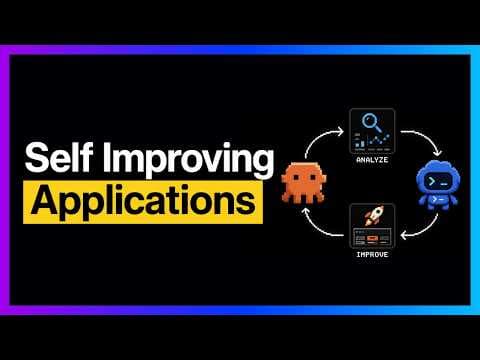
- Track velocity and self-improve each round
The key insight: the backlog is never empty. Every time you ship, you learn more about what the site needs, which generates better ideas for the next batch.
Parallel Agent Swarms#
The biggest productivity multiplier was running 12 agents simultaneously. Each agent got an independent task:
- Agent 1: Write a blog post about Claude Code hooks
- Agent 2: Build a prompts library page
- Agent 3: Add Convex-powered comments
- Agent 4: Create a tool comparison feature
- Agent 5: Optimize HeroTerminal performance
- ...and 7 more
Each agent worked in isolation on non-overlapping files. They researched topics, wrote code, and committed directly. In one swarm, 12 agents delivered 12 features in the time it takes to manually build one.
Results: One Session#
In a single extended session:
- 155+ features shipped from a backlog of 200
- 100+ commits pushed to main
- 15+ blog posts written (grounded in primary-source research)
- 10+ new pages built (prompts, snippets, roadmap, series, topics, templates)
- Full SEO infrastructure: FAQ schema, HowTo schema, VideoObject schema, dynamic OG images, per-tag RSS feeds, topic hub pages
- Engagement features: comments, bookmarks, reading streaks, continue reading, upvotes, command palette
- Performance: HeroTerminal lazy-loaded, font-display swap, preconnect hints, loading skeletons on 20 routes
What Worked#
Parallel agents for independent tasks. When tasks don't share files, running 12 agents concurrently is 12x faster than sequential. The overhead of coordination is zero because the tasks are truly independent.
Primary sources for grounding content. Every content piece was researched with real, current data. Blog posts cite actual version numbers, pricing, and features instead of relying on training data that may be stale.
Auditing before building. Before selecting TODO items, checking what already exists avoided duplicate work. 20+ items from the original 100 were already implemented.
Additive work over modifications. New pages, new posts, new components have zero conflict risk. Modifying existing files is where merge conflicts and bugs happen.
Committing after every change. Small, atomic commits mean you can revert any single feature without losing everything else.
What Did Not Work#
Image generation in the pipeline. Trying to generate hero images with Gemini and Flux added friction. The images were decent but the workflow was slow and unreliable.
Agent rate limits. When running many agents, some hit rate limits and failed silently. The fix: fall back to direct execution when agents cannot spawn.
Over-estimating remaining work. Many "unfinished" items turned out to be already done. Always check the codebase state before selecting items.
The Workflow#
1. Read NEVERENDING-TODO.md
2. Pick 3-5 highest-impact unchecked items
3. Spawn parallel agents (or work directly)
4. Each agent: research, build, commit
5. Push to main
6. Update stats
7. Add 50 new ideas if under 100 remaining
8. Repeat
This loop ran continuously. A cron job fired every 5 minutes to keep the cycle going.
Key Metrics#
| Metric | Value |
|---|---|
| Total items created | 200 |
| Items completed | 155+ |
| Completion rate | 77%+ |
| Blog posts written | 15+ |
| New pages built | 10+ |
| Components created | 15+ |
| GitHub Actions added | 4 |
| Convex tables | 13 |
| Toolkit pages with SEO | 34 |
Takeaway#
The combination of Claude Code, parallel agents, structured backlogs, and continuous execution lets a single developer ship at the pace of a small team. The code quality is production-grade because each piece is focused, tested by build, and committed atomically.
The site you are reading is the proof.
Frequently Asked Questions#
How many Claude Code agents can run in parallel?#
In practice, 12 agents ran concurrently without issues. Each agent needs its own context window and file isolation. Beyond 12, some agents hit rate limits and need to retry.
Does the never-ending TODO system scale?#
Yes. The key is pruning low-value items and re-prioritizing after each batch. At 200 items, the top 10 are always clear. The system caps at 5,000 to prevent unbounded growth.
How do you prevent merge conflicts with parallel agents?#
Assign each agent non-overlapping files. One agent writes a blog post. Another creates a new page component. A third adds a Convex function. They never touch the same file.
What is the cost of running this workflow?#
Claude Code Max plan at $200/month. No per-token billing. The parallel agent capability is included. For the volume of work produced, it is exceptionally cost-effective.
Can this workflow work for a team, not just solo developers?#
Yes. Each team member runs their own Claude Code session with their own sub-agents. The TODO system becomes a shared backlog. Git handles the merging.
Get the next deep dive like this in your inbox
One email a week on Claude Code and the rest of the AI dev stack. Free.
Read next on Claude Code
Build Log: Turning the DevDigest Blog Into an Agent Content System
The DevDigest blog is no longer just a folder of markdown files. It is becoming a small content operating system: posts, tags, RSS, search, llms.txt, route discovery, content expansion reports, and app-linked build logs.
9 min readWhat Is Claude Code? The Complete Guide for 2026
Claude Code is Anthropic's AI coding agent for terminal, IDE, desktop, and browser workflows. Learn what it does, how it works, pricing, setup, MCP, skills, hooks, and subagents.
15 min read60 Claude Code Tips and Tricks for Power Users
The definitive collection of Claude Code tips - sub-agents, hooks, worktrees, MCP, custom agents, keyboard shortcuts, and dozens of hidden features most developers never discover.
25 min readTechnical content at the intersection of AI and development. Building with AI agents, Claude Code, and modern dev tools - then showing you exactly how it works.