Building a SaaS with Claude Code: End-to-End Guide
Claude Code Mastery
20 parts- 1Claude Code: The Future of Coding?
- 2What Is Claude Code? The Complete Guide for 2026
- 360 Claude Code Tips and Tricks for Power Users
- 4Claude Code Sub Agents: Parallel AI Development
- 5Claude Code Worktrees: Parallel Development Without the Chaos
- 6Building Multi-Agent Workflows in Claude Code: A Practical Tutorial
- 7The Ralph Loop: Running Claude Code For Hours Autonomously
- 8Self-Improving Skills: Claude Code That Learns From Every Session
- 9Claude Code Usage Limits in 2026: The Practical Playbook for Pro and Max Teams
- 10Progressive Disclosure: How Claude Code Cut Token Usage by 98%
- 11Claude Code + Chrome: AI Agents That Use Your Browser
- 12Interview Mode: Let Claude Code Ask the Questions First
- 13Claude Code: Remote Control, Auto Memory, Plugins & More
- 14Claude Code Hooks Explained
- 15How to Use Claude Code with Next.js
- 16Claude Code Channels: Telegram, Discord, iMessage, and Webhooks
- 17How to Migrate from GitHub Copilot to Claude Code
- 18Building a SaaS with Claude Code: End-to-End GuideCurrent
- 19Create Beautiful UI with Claude Code: The Style Guide Method
- 20Claude Code Loops: Recurring Prompts That Actually Run
TL;DR
How to go from idea to deployed SaaS product using Claude Code as your primary development tool. Project setup, feature building, deployment, and iteration.
Official Sources#
| Tool | Official Documentation |
|---|---|
| Claude Code | Claude Code docs |
| Next.js | Next.js docs |
| Convex | Convex docs |
| Clerk | Clerk docs |
| Tailwind CSS | Tailwind CSS docs |
| Vercel | Vercel deployment docs |
This is how I build SaaS products now. Not by hand-coding every feature, but by directing Claude Code through the entire lifecycle - from scaffolding to deployment.
Phase 1: Scaffold#
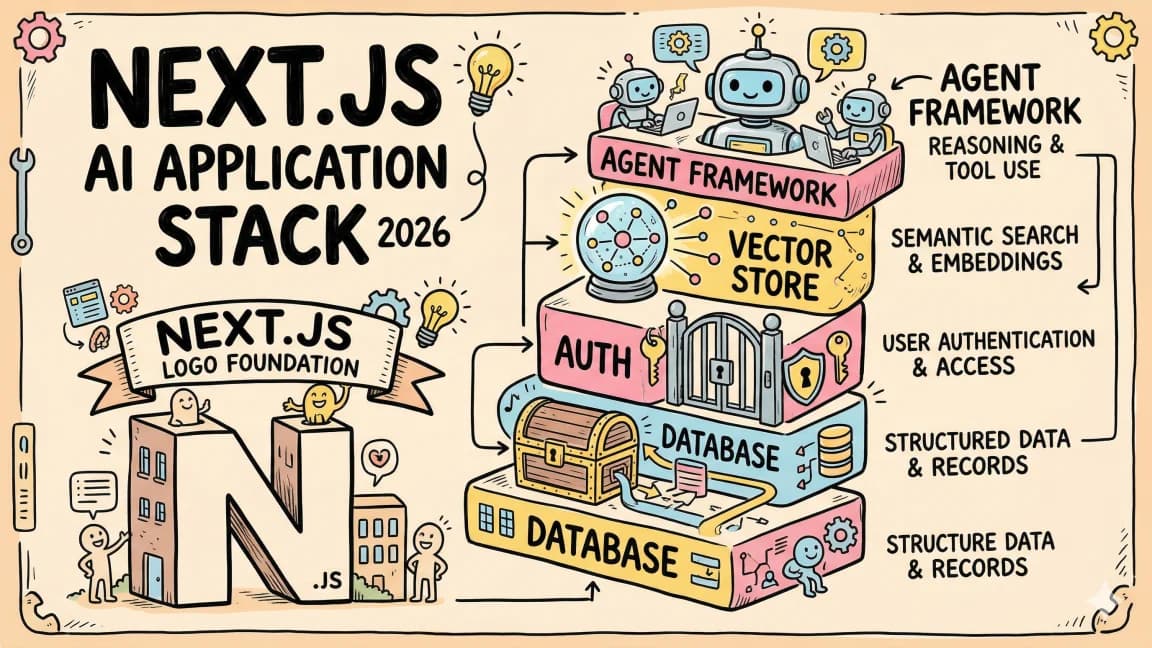
Start with the stack that Claude Code knows best.
For the design side of the same problem, read What Is Claude Code? The Complete Guide for 2026 with 60 Claude Code Tips and Tricks for Power Users; they show how agent-generated interfaces fail and how to give coding agents better visual constraints.
npx create-next-app@latest my-saas --typescript --tailwind --app --src-dir
cd my-saas
claude
First prompt to Claude Code:
Set up a SaaS project with:
- Convex for the backend (reactive database, server functions)
- Clerk for auth (sign up, sign in, organizations)
- Tailwind with a clean design system
- TypeScript strict mode

Install all dependencies and configure everything.
Create a CLAUDE.md with the stack details.
Claude Code installs dependencies, configures providers, creates the CLAUDE.md, and commits. You have a working authenticated app in under 5 minutes.
Phase 2: Data Model#
Describe your domain model in plain English.
Create a Convex schema for a project management SaaS:
- Users (synced from Clerk)
- Organizations with members
- Projects with name, description, status
- Tasks with title, description, assignee, priority, due date
- Comments on tasks

Add proper indexes for common queries. Create the mutation
and query functions for CRUD operations on each table.
Claude Code writes the schema, creates all Convex functions, adds indexes, and handles the TypeScript types end-to-end.
Phase 3: Core Features#
Build features one at a time. Each prompt is a feature.
Build the dashboard page at /dashboard that shows:
- Project count, task count, overdue tasks
- Recent activity feed
- Quick-add task form
Use the project's design system (match the existing cards and buttons).
Add a /projects/[id] page with:
- Project details header
- Kanban board showing tasks by status (Todo, In Progress, Done)
- Drag-and-drop between columns (use @hello-pangea/dnd)
- Task detail modal on click
Add a /settings page with:
- Organization name editing
- Member invitation via email
- Billing placeholder (link to Stripe)
Each feature is a single prompt. Claude Code reads the existing codebase, follows the patterns it established, and builds consistent UI. Before pasting a long feature spec, run it through our prompt critic - the failure mode at this phase is almost always a vague prompt, not a vague model.
Phase 4: Polish#
Audit the entire app for:
- Missing loading states (add loading.tsx for each route)
- Missing error boundaries
- Accessibility (aria-labels, focus indicators)
- Mobile responsiveness
Fix everything you find.
Add SEO metadata to all pages. Add a proper not-found page.
Add breadcrumbs to all nested routes. Run the build and
fix any TypeScript errors.
Phase 5: Deploy#
Configure for Vercel deployment:
- Set up environment variables in .env.example
- Add proper headers (security, caching)
- Configure Convex production deployment
- Add a health check endpoint
- Update the README with deployment instructions
Push to GitHub. Connect to Vercel. Every push to main auto-deploys.
Phase 6: Iterate#
This is where Claude Code shines. Every improvement is a conversation:
Users are asking for email notifications when they are
assigned a task. Add this using Convex actions + Resend
for email delivery.
The dashboard is slow with 100+ projects. Add pagination
to the projects list and optimize the Convex queries with
better indexes.
Add a public API at /api/v1/tasks for webhook integrations.
Include API key auth, rate limiting, and OpenAPI documentation.
The CLAUDE.md Compound Effect#
Every session makes the next one better. Your CLAUDE.md grows with:
- Architecture decisions and why they were made
- Component patterns to follow
- API conventions
- Testing requirements
- Deployment checklist
By week two, Claude Code builds features that match your exact coding style without being told. The memory compounds.
Cost Analysis#
| Phase | Time (traditional) | Time (Claude Code) |
|---|---|---|
| Scaffold | 2-4 hours | 5 minutes |
| Data model | 1-2 days | 15 minutes |
| Core features | 2-4 weeks | 2-4 days |
| Polish | 1 week | 1-2 hours |
| Deploy | Half day | 15 minutes |
The 10x claim for AI coding tools is conservative for greenfield SaaS projects. The real multiplier is closer to 20-50x for the initial build phase.
Frequently Asked Questions#
Can Claude Code handle a complex SaaS codebase?#
Yes. Claude Code reads and understands codebases with hundreds of files. The 200K+ token context window handles large projects. For very large monorepos, use sub-agents to divide work across domains.
Should I use Claude Code for everything or mix in manual coding?#
Mix. Use Claude Code for feature building, refactoring, and boilerplate. Code manually for novel algorithms, complex state machines, or anything where you need to think through the logic step by step.
How do I handle secrets and API keys?#
Never include secrets in CLAUDE.md or prompts. Use environment variables. Claude Code reads .env files but does not commit them. Keep .env in .gitignore.
What if Claude Code generates bad code?#
Review every change with git diff. The build step catches type errors. Writing good tests means bad code fails fast. The CLAUDE.md file prevents repeated mistakes.
Is this viable for a funded startup, not just side projects?#
Yes. The code quality from Claude Code is production-grade when configured properly. Several funded startups use this workflow. The speed advantage in early-stage development is significant.
Continue Reading#
Get the next deep dive like this in your inbox
One email a week on Claude Code and the rest of the AI dev stack. Free.
Read next on Claude Code
What Is Claude Code? The Complete Guide for 2026
Claude Code is Anthropic's AI coding agent for terminal, IDE, desktop, and browser workflows. Learn what it does, how it works, pricing, setup, MCP, skills, hooks, and subagents.
15 min readHow to Build Full-Stack TypeScript Apps With AI in 2026
A practical guide to building Next.js apps using Claude Code, Cursor, and the modern TypeScript AI stack.
7 min readThe Next.js AI App Stack for 2026
The definitive full-stack setup for building AI-powered apps in 2026. Next.js 16, Vercel AI SDK, Convex, Clerk, and Tailwind - why each piece matters and how they fit together.
12 min readTechnical content at the intersection of AI and development. Building with AI agents, Claude Code, and modern dev tools - then showing you exactly how it works.