SkillHone Shows Why Agent Skills Need Decision History

TL;DR
SkillHone is a July 2026 paper about evolving agent skills across sessions. The useful takeaway for developers is simple: do not save only the latest SKILL.md. Save the decisions that explain why it changed.
| Research notes | |
|---|---|
| Primary paper | arXiv:2606.08671 |
| Hugging Face paper page | HF Papers: SkillHone |
| Project page | SkillHone project |
| Code | Tencent/SkillHone |
| Google Trends check | Attempted July 15, 2026. pytrends reached the Google Trends widget endpoint after the local urllib3 compatibility patch, then failed with a retry error before returning numeric rows. No fresh Trends numbers are used here. |
Last updated: July 15, 2026
Agent skills are turning into the new team runbook layer for coding agents. That part is already clear.
The harder question is what happens after the first version works.
A skill is not a static prompt. APIs move, repo conventions change, evals get sharper, security rules tighten, and teams discover new failure modes after agents run the same workflow a hundred times. If all you preserve is the latest SKILL.md, the next agent inherits the artifact but loses the reason it looks that way.
That is why SkillHone, a July 2026 paper that surfaced on Hugging Face Papers, is worth reading if you build agent workflows. Its central idea is not "make a better skill once." It is "keep the decision history that lets future agents keep improving the skill without rediscovering every prior mistake."
That connects directly to the DevDigest skills cluster: skills are becoming the agent operating system, agent skills need exit criteria, and skills beat prompts when they encode reusable procedure. SkillHone adds the missing maintenance layer.
The Take#
The useful takeaway is simple:
Do not treat a skill as one markdown file. Treat it as a versioned operating procedure with an evidence ledger.
The paper frames the problem as artifact-centered skill evolution. Existing approaches can synthesize or optimize a skill, but they often keep only the final artifact. A later agent sees the current instructions, scripts, references, and output conventions. It does not necessarily see:
- which failure triggered a revision
- which alternative edits were rejected
- which probe exposed the issue
- which evidence justified the accepted change
- which old fix is now obsolete because the environment changed
That is not a documentation nicety. It is the difference between continuous improvement and recurring amnesia.
If your team has ever watched an agent "fix" a workflow by reintroducing an old workaround, this is the shape of the bug. The agent had the current file. It did not have the decision context.
What SkillHone Actually Proposes#
SkillHone keeps two linked repositories in the paper's setup.
The first is the skill repository: the current skill bundle, including SKILL.md, scripts, references, templates, and related files. The second is the skill-evaluation repository: practice probes, validators, traces, oracle targets, and redacted reports that tell the optimization side what failed.
The important design choice is separation.
Evaluation agents can run candidate skills against probes and inspect hidden targets, traces, and validators. Optimization agents can revise the skill. But the optimization side receives redacted reports rather than raw answers, which reduces the chance that practice feedback turns into memorization.
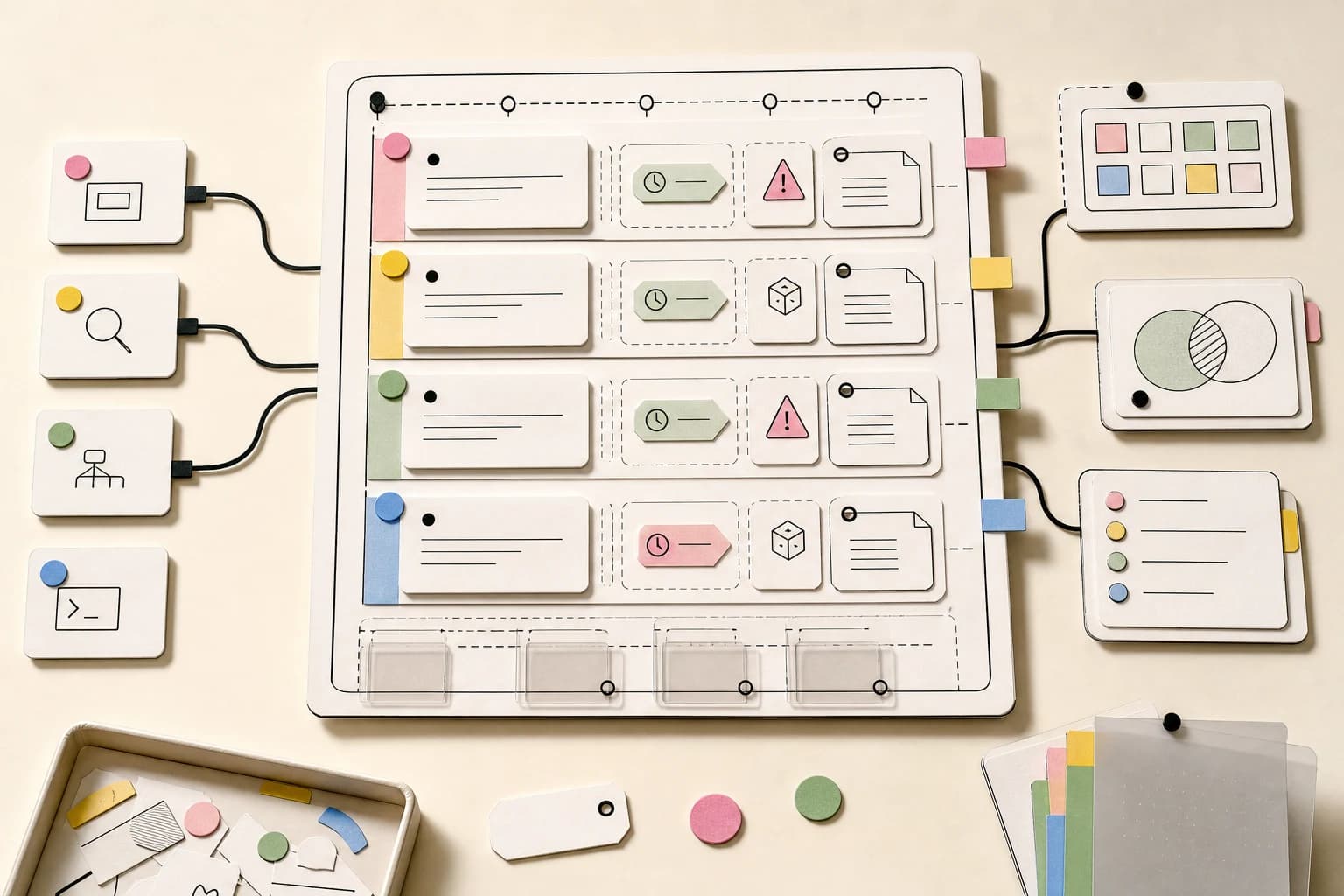
The paper describes each development step as a decision record with four parts:
| Field | Plain-English meaning |
|---|---|
| Diagnosis | What failure mode the agent thinks it is fixing |
| Revision | The proposed skill change |
| Evidence | The redacted evaluation report supporting or rejecting it |
| Outcome | Whether the change was accepted, rejected, deferred, or sent back |
That record is the real product.
The skill still matters, obviously. But the accumulated history gives future agents a map of why the current version exists. It lets a later optimization run continue from prior reasoning instead of starting from the surface text.
Why This Matters For Coding Agents#
Most teams are still designing agent skills as if the lifecycle ends at merge.
Write a SKILL.md. Add a few examples. Maybe include a script. Run it once. Commit it.
That is fine for a tiny workflow. It is not enough for a skill that governs production behavior: deploying, reviewing PRs, modifying billing code, handling customer data, running migrations, or writing public content.
Long-lived skills need the same kind of audit trail that serious code needs. Not because markdown deserves ceremony, but because skills encode policy. They decide what the agent will read, which tools it will call, when it will stop, and what evidence it must return.
This is the same reason agent memory needs a context ledger. Raw memory is not enough. You need provenance, recency, conflict handling, and a way to explain why a fact should still be trusted.
SkillHone applies that logic to skills:
- The skill is the procedure.
- The eval repo is the feedback harness.
- The decision history is the memory that makes maintenance possible.
That gives teams a cleaner operating model than "the agent changed the prompt and it got better."
The Benchmark Claims Are Interesting, But Not The Main Point#
The SkillHone paper reports strong results on deep-research benchmarks. The Hugging Face summary says SkillHone outperforms a commercially backed deep-research agent by 15.8 points on GAIA and 3.2 points on WebWalkerQA-EN, and improves internal tool-mediated analysis scenarios by an average of 18.8 points across seven settings.
Those are notable claims, and they are worth validating through the paper, code, and follow-up replication before turning them into purchasing decisions.
But for developers, the architecture matters more than the leaderboard.
Benchmarks are snapshots. Skill maintenance is a process. A team can copy the process idea without adopting the exact harness:
- Keep evaluation probes close to the skill.
- Redact target answers before optimization.
- Record why every accepted skill change happened.
- Preserve rejected alternatives.
- Make future agents read prior decisions before proposing another fix.
That is useful even if you never run GAIA or WebWalkerQA-EN.
It also pairs well with the current eval wave. Long-Horizon-Terminal-Bench argues that coding agents need dense progress signals across long tasks. Dockerless verification argues that agents need cheap, isolated checks before CI. SkillHone says the improvement loop itself needs a memory of its own.
The Opposing View#
The fair criticism is that this can become process bloat.
If every skill revision requires a huge ceremony, teams will stop doing it. If every failure report becomes a long essay, later agents will skim it. If the decision history is noisy, stale, or unaudited, it becomes another memory layer that sounds official while quietly rotting.
That is the failure mode to avoid.
The decision history should be small, structured, and test-linked. A useful record is not a diary. It is closer to:
failure: qa skill missed mobile viewport regression
evidence: screenshot probe showed overflowing toolbar at 390px
revision: add mobile-sm screenshot requirement before completion
outcome: accepted after probe passed on 390px and 1440px
That is enough for the next agent to understand the local rule without rereading an entire chat transcript.
The second caveat is security. Agent skills are a supply-chain surface. A harness that lets agents revise skills must also control who can change them, which files can be edited, whether scripts are allowed, and how generated instructions are reviewed. The same site cluster has covered this in agent skills package governance and agent config files as supply chain.
Skill evolution is powerful. It should not be automatic trust.
What To Copy Into Your Own Repo#
You do not need a full research harness to borrow the core idea.
Start with one important skill. Add a decision-log.md next to it. For each meaningful change, record:
- the failure mode
- the evidence that showed it
- the exact change made
- the verification command or probe used
- the result
- any rejected alternatives worth preserving
Then make the skill instructions tell future agents to read that log before editing the skill.
That is the smallest practical version of SkillHone's idea. It keeps the artifact and the rationale together. It also gives human reviewers a much better diff: not just "the agent changed the checklist," but "the agent changed the checklist because this probe failed and this verification passed."
For teams with more mature agent infrastructure, split the loop:
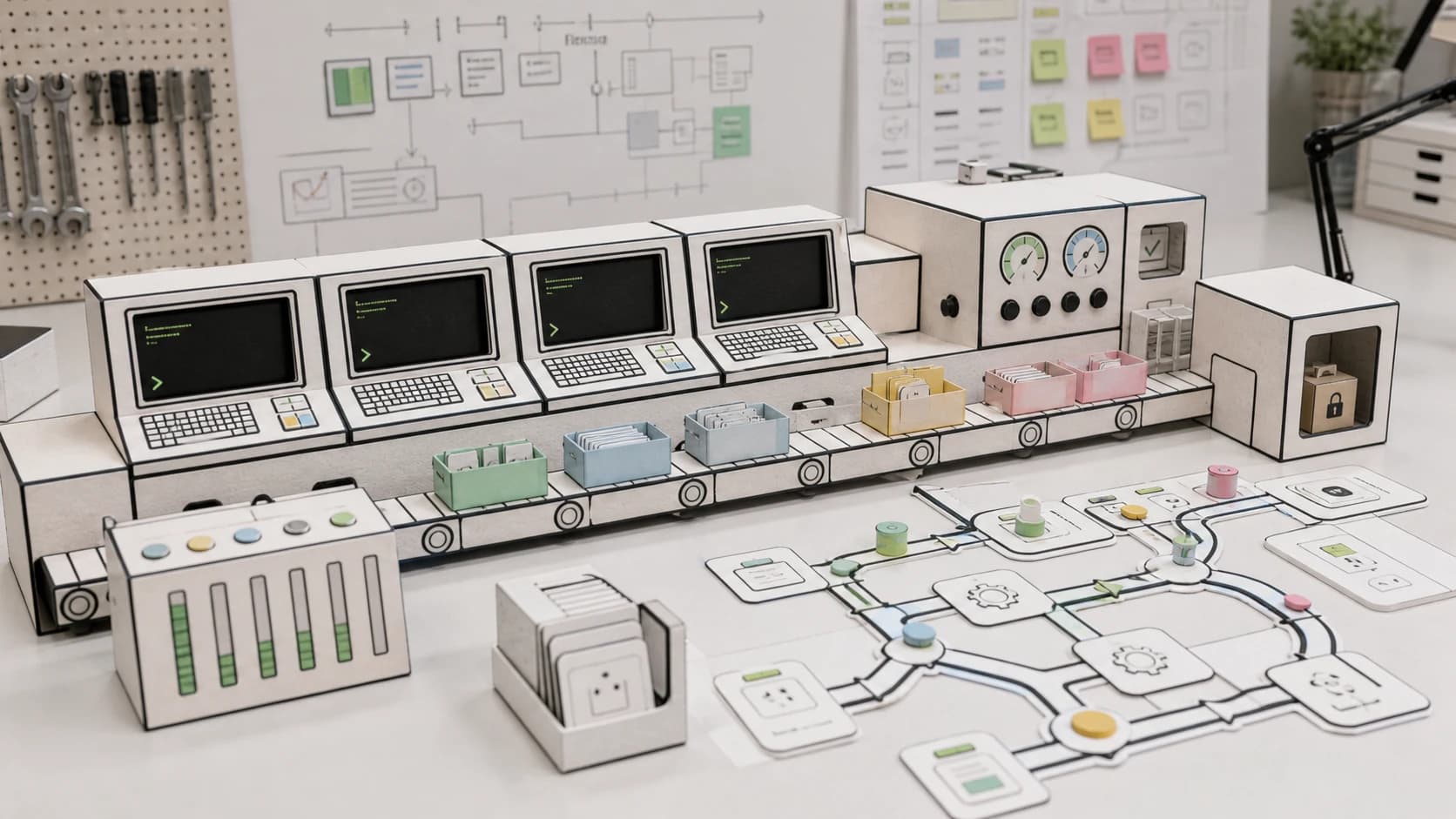
- Evaluation agents run probes and produce redacted reports.
- Optimization agents propose scoped skill changes.
- Review agents check the diff against prior decision records.
- Humans approve changes that affect security, deployment, billing, or public content.
That division maps naturally to the way modern coding agents already work with subagents, worktrees, and tool permissions.
My Read#
The next phase of agent skills is not bigger skill packs.
It is maintainable skill evolution.
The teams that win will not be the teams with the most markdown. They will be the teams that can answer:
- Why does this skill say what it says?
- Which failures shaped it?
- Which probes prove it still works?
- Which old fixes should not be repeated?
- Who reviewed the latest change?
That is the real lesson from SkillHone. A skill without decision history is just the latest version of a prompt. A skill with evidence, outcomes, and prior reasoning starts to look like engineering infrastructure.
FAQ#
What is SkillHone?#
SkillHone is a research harness for improving agent skills across sessions. It preserves the current skill, evaluation evidence, and structured decision records so later agents can continue improving the skill without losing prior rationale.
Why do agent skills need decision history?#
Decision history explains why a skill changed, which failure it addressed, what evidence supported it, and which alternatives were rejected. Without that context, later agents may repeat old fixes or undo useful constraints.
Is SkillHone only for research agents?#
No. The paper evaluates deep-research and internal tool-mediated analysis scenarios, but the underlying pattern applies to coding-agent skills, QA skills, deployment skills, content workflows, and any long-lived agent procedure.
How should a team start using this idea?#
Start by adding a small decision log next to one important skill. Record the failure mode, evidence, revision, verification command, and outcome for each meaningful change.
Does skill evolution create security risk?#
Yes. Agent-editable skills can become a supply-chain surface. Teams should review changes, restrict script execution, separate evaluation from optimization where possible, and require human approval for sensitive workflows.
Continue Reading#
Sources#
- SkillHone: A Harness for Continual Agent Skill Evolution Through Persistent Decision History, accessed July 15, 2026.
- Hugging Face Papers: SkillHone, accessed July 15, 2026.
- SkillHone project page, accessed July 15, 2026.
- Tencent/SkillHone on GitHub, accessed July 15, 2026.
hf papers read 2606.08671, run locally July 15, 2026.
Get the next deep dive like this in your inbox
One email a week on AI Agents and the rest of the AI dev stack. Free.
Read next on AI coding tools
Skills Are the New Agent Operating System
GitHub trending is full of agent skill frameworks. The real shift is not bigger prompts or more agents. It is turning team process into inspectable, reusable operating instructions.
9 min readAgent Skills Need Exit Criteria, Not More Prompt Lore
Addy Osmani's agent-skills repo is trending because it turns vague AI coding advice into reusable engineering checklists. The real value is not the markdown. It is the exit criteria.
7 min readWhy Skills Beat Prompts for Coding Agents in 2026
The coding-agent workflow is maturing past giant hand-written prompts. The winning pattern in 2026 is a control stack: project rules, reusable skills, bounded sub-agents, and deterministic tools around the model.
9 min readNew here? Start with
Technical content at the intersection of AI and development. Building with AI agents, Claude Code, and modern dev tools - then showing you exactly how it works.